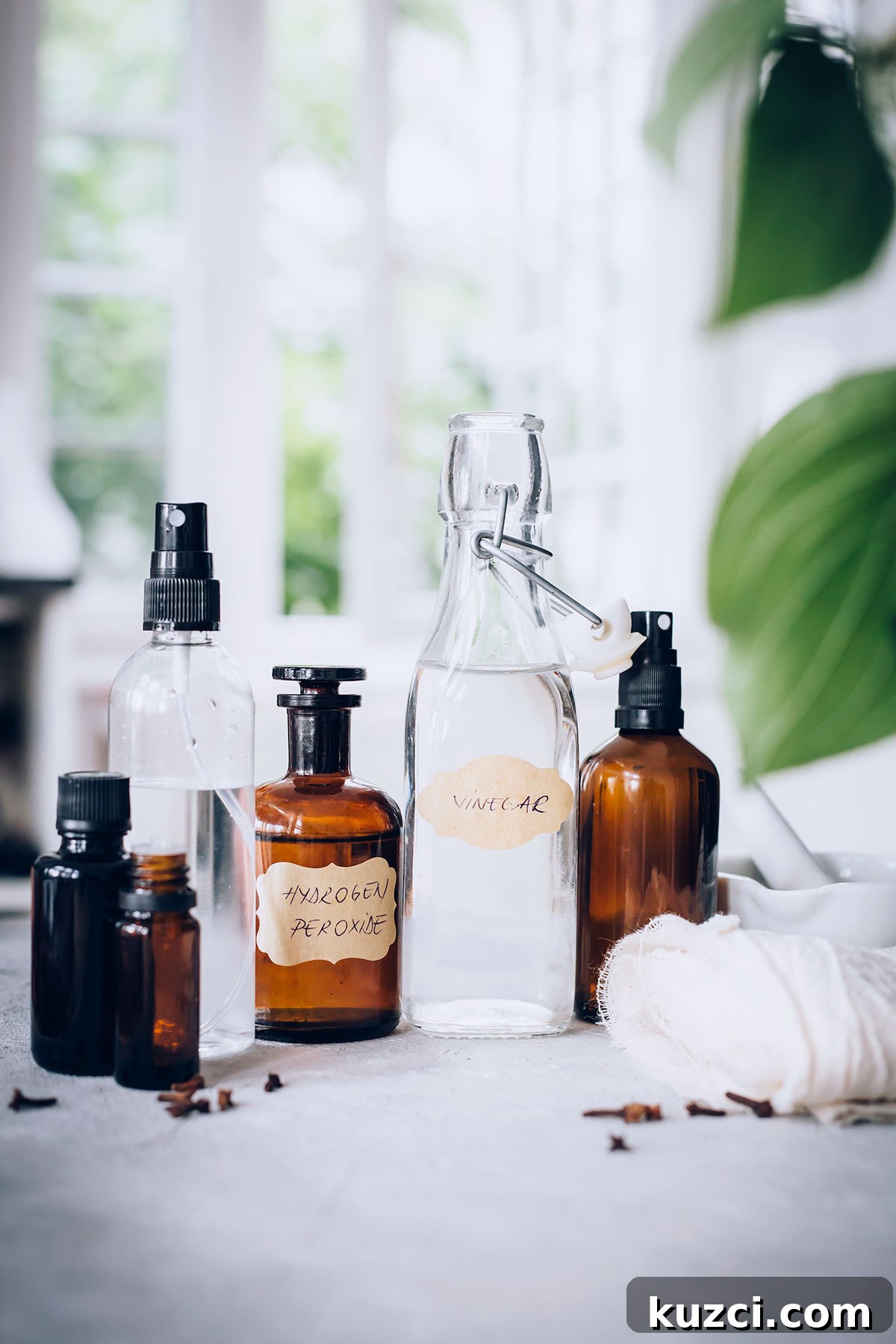
In recent years I’ve swung away from obsessive cleaning toward a more relaxed approach: quick wipe-downs with a damp cloth and a simple homemade foaming hand soap. Even so, I wanted an effective, food-safe all-purpose cleaner for the kitchen that wouldn’t leave harmful residue or require harsh chemicals. After experimenting, I settled on a simple, powerful routine using hydrogen peroxide and distilled white vinegar applied one after the other. It’s safe to use around food and children when used properly and can be far more effective than using either product alone.
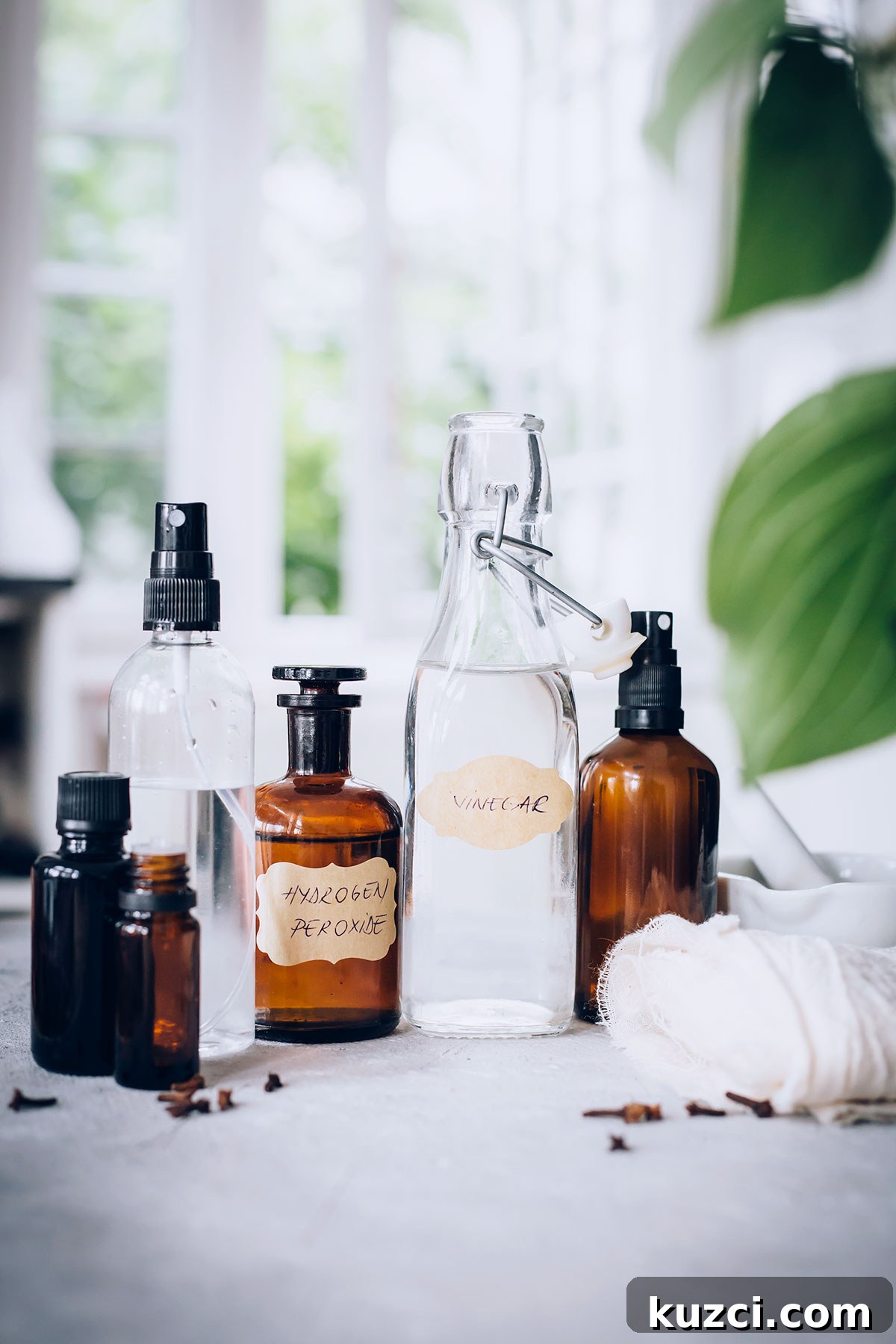
How to use hydrogen peroxide and vinegar together
The easiest method is to keep two separate spray bottles: one with diluted distilled white vinegar and the other with hydrogen peroxide. Spray the vinegar first, then follow with a mist of hydrogen peroxide over the same area. When applied in sequence, the two solutions work together to reduce bacteria on surfaces such as counters, cutting boards, and even produce. Tests cited in academic reports have shown that using the two mists in this way can significantly reduce pathogens like Salmonella, Shigella, and E. coli on contaminated foods and surfaces.
Studies have reported that pairing the two mists can kill virtually all Salmonella, Shigella, and E. coli on heavily contaminated surfaces when applied sequentially, making this approach more effective at reducing these bacteria than many single-product cleaners.
Simple all-purpose hydrogen peroxide + vinegar cleaner recipe
Prepare two spray bottles so the two solutions remain separate. Use clean bottles and label them clearly. For nicer bottles, choose sturdy glass or opaque plastic for the hydrogen peroxide bottle because peroxide degrades in light.
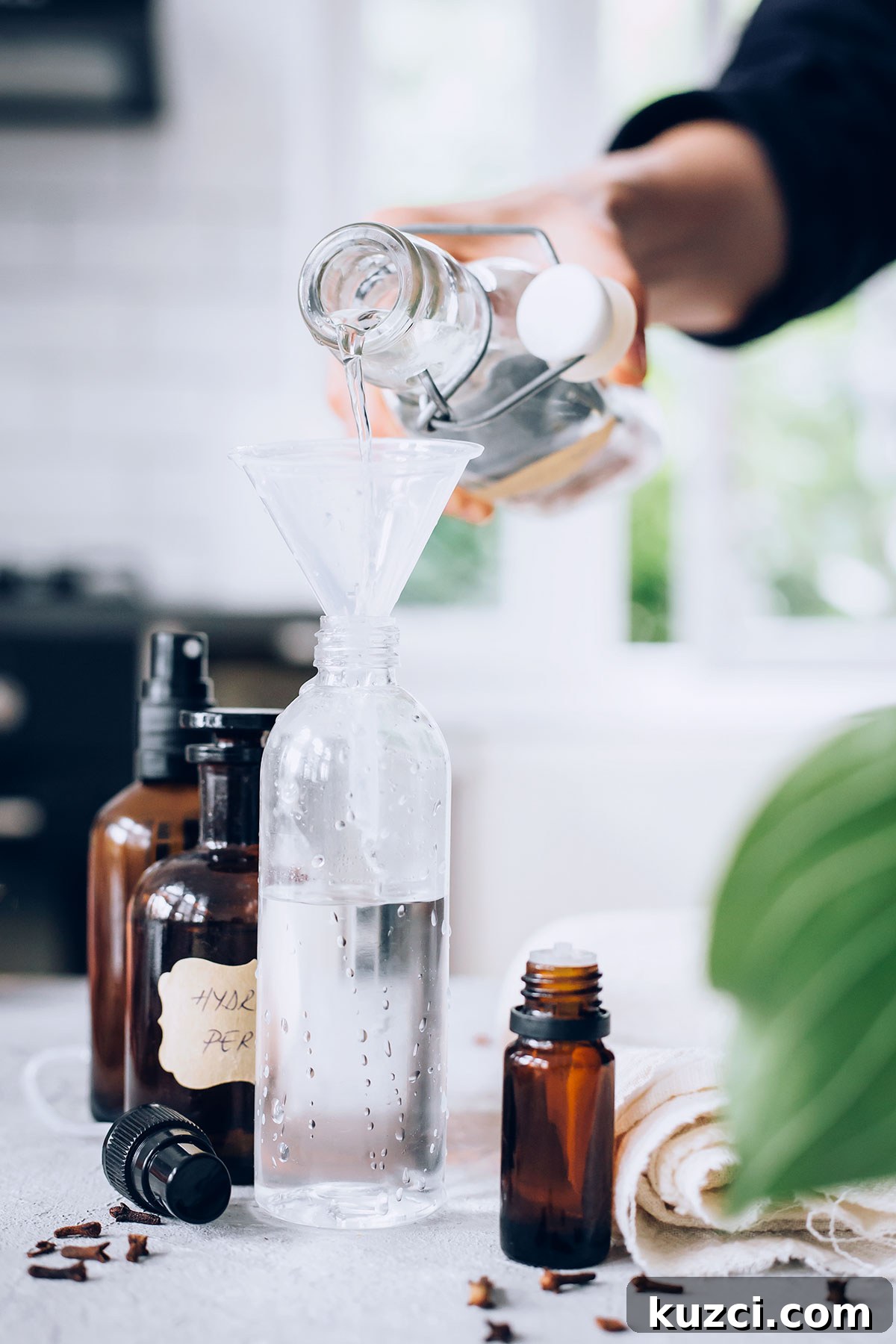
First bottle (Vinegar cleaner):
- 1 1/2 cups distilled white vinegar
- 5 drops tea tree essential oil (optional, for added antimicrobial support and fragrance)
- 5 drops clove essential oil (optional, helps mask the vinegar odor)
- Top up with water to fill the bottle
Notes: Vinegar has a strong smell. Clove, cinnamon, or citrus essential oils can help neutralize the odor while also providing natural antimicrobial properties. Diluting the vinegar with water reduces acidity while still helping with cleaning and deodorizing.
Second bottle (Hydrogen peroxide):
- 3% hydrogen peroxide (store-bought concentration)
Important: Use an opaque or dark-colored bottle for hydrogen peroxide, or keep a spray nozzle on the original dark container. Hydrogen peroxide breaks down when exposed to light, which reduces its effectiveness.
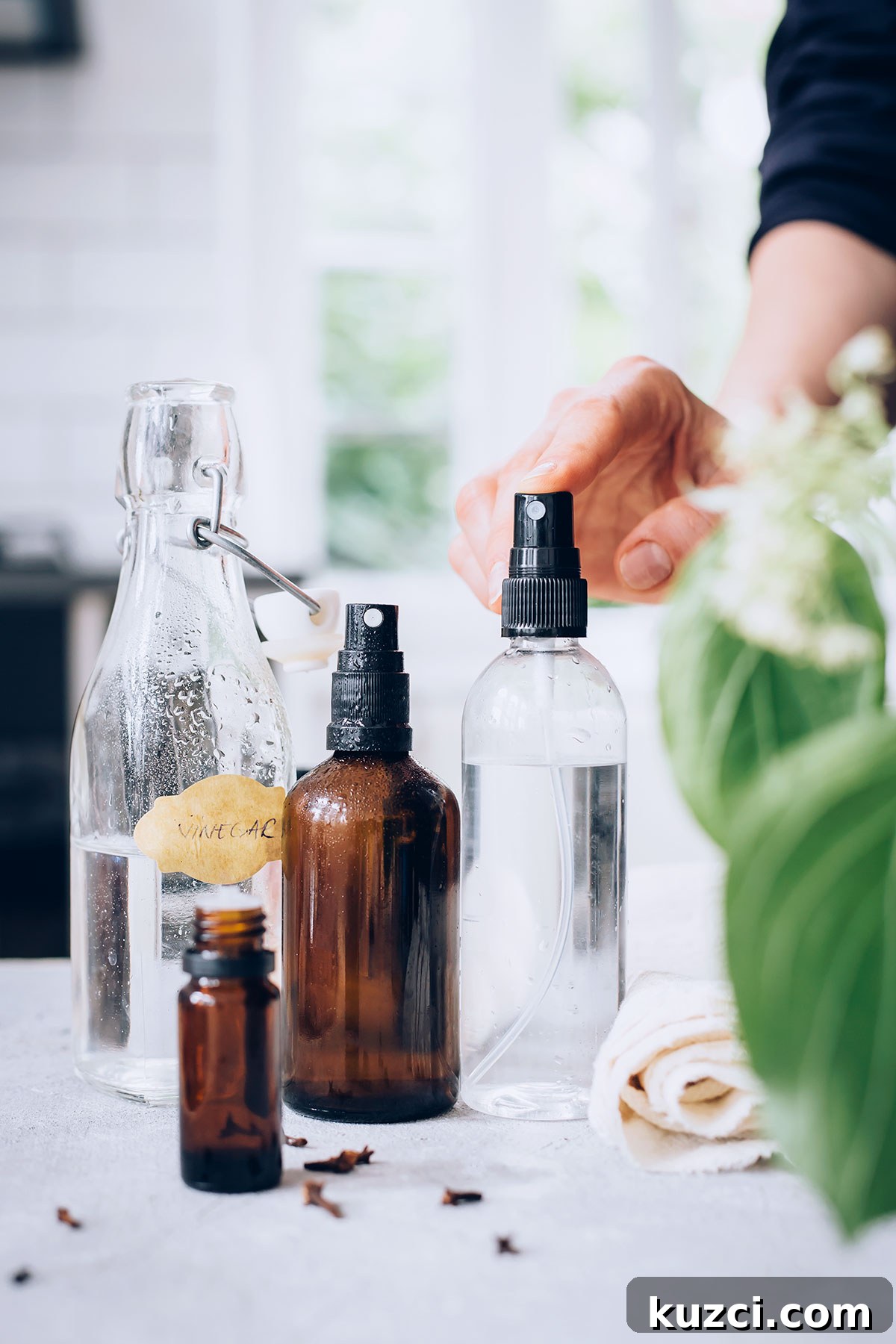
Warning: don’t mix vinegar and hydrogen peroxide in the same bottle
Do not combine the two liquids in a single container. Mixing them creates peracetic acid, a corrosive compound that can be harmful to breathe or touch. Keep the solutions in separate, clearly labeled bottles and apply them sequentially instead.
How to use the sprays safely and effectively
Spray the vinegar solution first, covering the surface evenly. Follow immediately with a light mist of hydrogen peroxide. Allow a short contact time so both solutions can work—typically a minute or two—then wipe clean with a damp cloth. For produce, rinse thoroughly with water after treatment. Always test on an inconspicuous area first when using on delicate surfaces like natural stone, wood finishes, or painted cabinetry.
Wear gloves if you have sensitive skin, and ventilate the area if you’re cleaning a lot at once to minimize strong odors. Store both bottles out of reach of children and pets and keep hydrogen peroxide in a cool, dark place.
Other ways to use distilled white vinegar around the home
Having distilled white vinegar on hand opens up many cleaning and household uses. Common kitchen tasks include refreshing cutting boards, cleaning the dishwasher, descaling coffee makers, servicing garbage disposals, washing produce, and restoring burnt or blackened pots and sheets. In laundry care, vinegar can act as a fabric softener substitute, help remove odors, and freshen washing machines. Around the rest of the house, vinegar helps remove sticker residue, deter ants, clean microfiber furniture, dust effectively when mixed into a gentle solution for dusting cloths, and maintain wooden or laminate floors when combined in appropriate dilutions.
Keep in mind that while vinegar is versatile and economical, it’s acidic and should not be used on natural stone, certain metals, or encaustic tiles without testing. When in doubt, patch-test a small area first and rinse well after use.