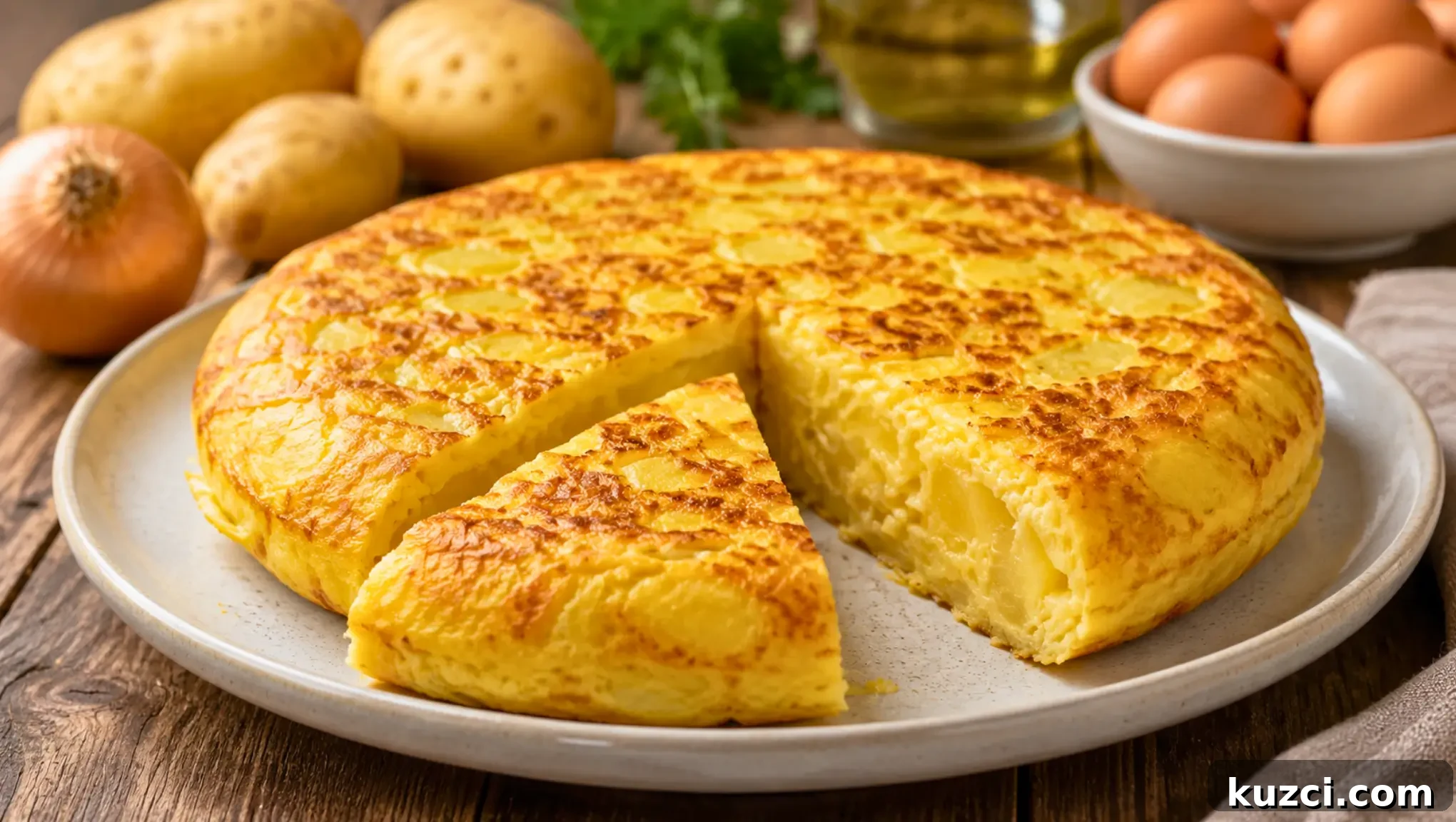
Should You Fry or Confit the Potatoes?
The first common mistake when making a Spanish tortilla is treating the potatoes as if you were cooking French fries. High heat may create a crisp, golden exterior, but it can also leave the potatoes firm, dry, or unevenly cooked. For a tender and creamy potato omelette, chefs usually prefer to confit the potatoes slowly over low heat in a generous amount of olive oil. This gentle cooking method allows the potatoes to become soft, silky, and almost melting, without turning hard or overly browned.
Olive oil is especially well suited to this preparation because it tolerates long, gentle cooking and adds flavor without overpowering the dish. Instead of creating a crunchy texture, it helps the potatoes absorb richness and remain moist. The goal is not to fry them aggressively, but to cook them slowly until they are tender enough to fold naturally into the eggs.
The choice of potato also matters. A floury, low-moisture variety, such as Kennebec, tends to hold its structure well while still becoming soft inside. Because it contains less water, it helps prevent the tortilla mixture from becoming watery during cooking. This gives the finished Spanish tortilla a firmer, more cohesive texture while keeping the center pleasantly moist.
With or Without Onion?
Onion in a Spanish tortilla is a matter of personal taste. Without it, the tortilla has a more direct, clean potato-and-egg flavor. With onion, it becomes sweeter, softer, and juicier. Both versions are traditional to many home cooks, so the best choice depends on the texture and flavor you prefer.
If you decide to add onion, the secret is slow cooking. The onion should be cooked gently over low heat until it reaches a golden brown color that brings out its natural sweetness without pushing it toward bitterness. A yellow onion, mildly sweet and sliced into thin strips, works particularly well. It can be cooked together with the potatoes or prepared separately, as long as it has enough time to soften and develop flavor.
The important point is balance. The onion should support the tortilla, not dominate it. When cooked correctly, it blends into the potatoes and eggs, adding moisture and a subtle sweetness that makes the tortilla feel richer and more rounded.
The Right Egg-to-Potato Ratio, Without Overbeating
A juicy Spanish tortilla depends on the right balance between eggs and potatoes. A useful chef’s guideline is about one large egg for every 100 g of potatoes, which usually means six to eight eggs for 500 g of potatoes. If there are too few eggs, the tortilla can become dry and heavy. If there are too many, the mixture may feel loose and overly eggy.
The eggs should be beaten only enough to combine the whites and yolks. They should not be whipped until foamy. Adding too much air to the eggs can make them coagulate more quickly in the pan, which may cause the tortilla to lose moisture and become drier than intended. A gentle mix is enough to create a smooth base that coats the potatoes evenly.
Once the cooked potatoes are added to the eggs, the mixture should look generous but not flooded. The potatoes need to be well coated, with enough egg to bind everything together during cooking. This simple ratio is one of the keys to a tortilla that slices cleanly while still feeling soft and creamy inside.
Why Rest the Mixture Before Cooking
After the confit potatoes are combined with the beaten eggs, a short resting time of 5 to 10 minutes can make a noticeable difference. During this pause, the potatoes absorb some of the egg, and the mixture becomes more uniform. As a result, the tortilla cooks more evenly and holds together better when sliced.
This resting step does not require any special equipment. It simply asks for a little patience before the mixture goes into the pan. It also gives you a useful moment to check the seasoning and adjust if needed before cooking begins. For a dish made from such simple ingredients, small details like this can have a major impact on the final texture.
Resting also helps the potatoes and eggs become a single mixture rather than two separate components. This is especially important if you want a Spanish tortilla that is tender in the center but still stable enough to turn, serve, and enjoy warm or at room temperature.
Medium Heat, Salt at the Right Time, and a Clean Flip
When it comes to cooking the tortilla, medium heat is essential. If the pan is too hot, the outside will brown before the inside has time to set. With moderate heat, the surface can turn gently golden while the center stays creamy. A few minutes on each side are usually enough, although the exact cooking time depends on whether you prefer the middle soft, custardy, or almost runny.
Salt should also be added at the right moment. Season the potatoes after they have been cooked, and season the onion after it has softened. Avoid adding all the salt directly to the beaten eggs. Final seasoning can be adjusted before the mixture goes into the pan, helping you keep better control over the flavor.
For turning the tortilla, the simplest tool is a large flat plate placed over the pan. Use a nonstick pan with curved edges, ideally around 20 to 24 cm wide, to make shaping and flipping easier. Slide the tortilla back into the pan carefully after turning it, then cook the second side just long enough to finish setting the surface.
A successful Spanish tortilla is not about complicated technique, but about patience and control: slow-cooked potatoes, balanced eggs, gentle heat, and a confident flip. With these details in place, the result is a soft, flavorful, and beautifully textured potato omelette.