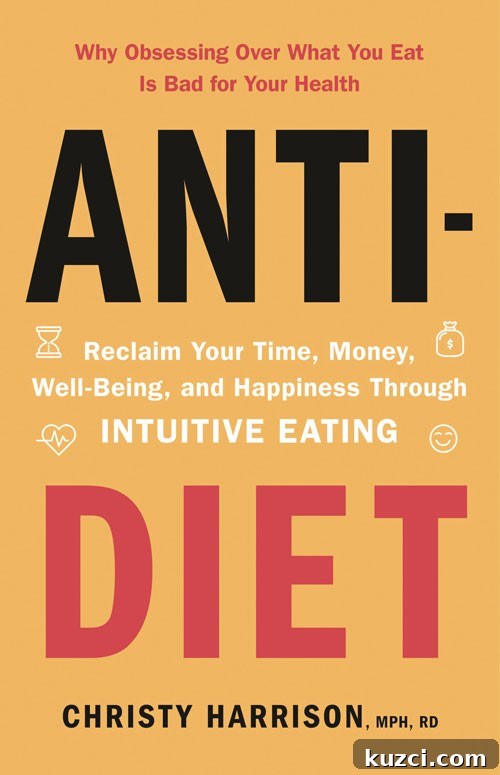
Dieting has become an obsession for many people. Nearly 70 percent of people in the United States have tried dieting at some point in their lives, yet research shows that 90 percent of those who lose weight regain some or all of it within five years. In her book Anti-Diet (Little, Brown Spark, 2019), Christy Harrison, R.D., host of the Food Psych podcast, examines the harm caused by toxic diet culture and offers a different path: intuitive eating. We spoke with Harrison about diet culture, disordered eating, body image, and how people can begin rebuilding a healthier relationship with food.
What inspired you to write Anti-Diet?
My work in the field of disordered eating, including supporting people with eating disorders and difficult relationships with food, introduced me to intuitive eating. It is considered a gold standard approach for helping people heal from these struggles, and in many ways it reflects how we are naturally born to eat. Babies and young children tend to respond to hunger, fullness, satisfaction, and preference without the layers of guilt and rules that many adults develop over time.
I also came to this work through personal experience. In my late 20s, while working as a health and wellness journalist, I struggled with disordered eating. I became increasingly preoccupied with food, weight loss, and trying to eat in the “right” or “healthy” way. What looked like a pursuit of wellness on the outside was actually creating stress, fear, and rigidity around eating.
When I later became a dietitian and began working with clients, I grew more interested in what pushes people toward dieting, food rules, and the constant pursuit of weight loss. Over time, I saw how deeply cultural pressure shapes our beliefs about bodies and food. Many people are taught that being thin and being healthy are the same thing, and that controlling the body is a sign of discipline or worth. That pressure is at the center of diet culture, and unfortunately, many people fall into its trap.
What is “diet culture”?
Diet culture is a system of beliefs that equates thinness, muscularity, or specific body shapes with health, success, and moral virtue. It promotes weight loss and body reshaping as ways to gain status, acceptance, or a sense of control. It also labels certain foods as “bad,” “toxic,” or “inflammatory,” while elevating other foods as morally superior or “clean.” Foods such as gluten, carbohydrates, and other commonly demonized ingredients often become targets, even when the fear around them is not based on an individual person’s needs.
This way of thinking does more than influence what people eat. It affects how people see themselves and others. Diet culture can make people feel that their bodies are problems to solve, rather than homes to care for. It also oppresses and stigmatizes people whose bodies do not match its narrow image of what “healthy” is supposed to look like. The result is often shame, anxiety, and a constant sense of failure around eating and body size.
When most of us think of “diet,” we relate it to food and reclaiming our bodies. But your book addresses reclaiming time, money, well-being and happiness. Tell us more.
Disordered eating and diet culture can steal our lives in quiet but powerful ways. They take time by encouraging people to focus endlessly on shrinking their bodies, tracking food, researching rules, planning restrictions, and trying to eat perfectly. They take money through weight-loss programs, diet products, supplements, and other tools that promise transformation but often fail to support lasting well-being.
Diet culture can also create significant mental distress. One example is orthorexia, an obsession with eating in a way that is considered healthy or pure. Even when the intention begins as self-care, it can become rigid and overwhelming. People may lose confidence in their own ability to make food choices, feel anxious in social situations, or believe they cannot trust their hunger and cravings. Over time, this can affect happiness, autonomy, and overall well-being.
When people move away from diet culture and toward intuitive eating, they can begin reclaiming those parts of their lives. Instead of spending energy on control and restriction, they can rebuild trust in their bodies, find more peace with food, and make room for pleasure, connection, and self-respect.
How can we practice intuitive eating?
Intuitive eaters often experience more pleasure and less stress around food than people who are constantly “trying” to eat healthy according to outside rules. Babies are a clear example of intuitive eating. They signal when they are hungry, turn toward foods that satisfy them, and turn away from foods they do not want. They do not attach guilt or morality to eating. Many adults, however, have developed complicated relationships with food. They may struggle with weight concerns, restrict themselves, and still spend much of the day thinking about what they should or should not eat.
A good place to start is by working to reject the diet mentality, which is the first principle of intuitive eating and often the most difficult one. Many of us have been conditioned to ignore hunger, outsmart cravings, and distrust our bodies. Relearning how to eat intuitively means tuning in again and allowing ourselves to be fed, both physically and emotionally.
It can help to question long-held beliefs about food and dieting. Ask yourself: “Where did I learn this belief? Do I still want to believe it? Did this diet work for me in the long term? Did it create mental distress, more bingeing, or more fear around food? What have I been restricting myself from eating?” These questions can reveal how many food rules come from diet culture rather than from true self-care.
From there, practice giving yourself permission to eat. At first, you may crave more of the foods you have been denying yourself. That is a normal response to restriction. Over time, when you truly allow yourself access to a variety of foods, those cravings often become less intense. You may find yourself wanting more balance, more variety, and more satisfaction. Intuitive eating is not about losing control; it is about honoring hunger, noticing fullness, finding pleasure, and learning to trust your body again.