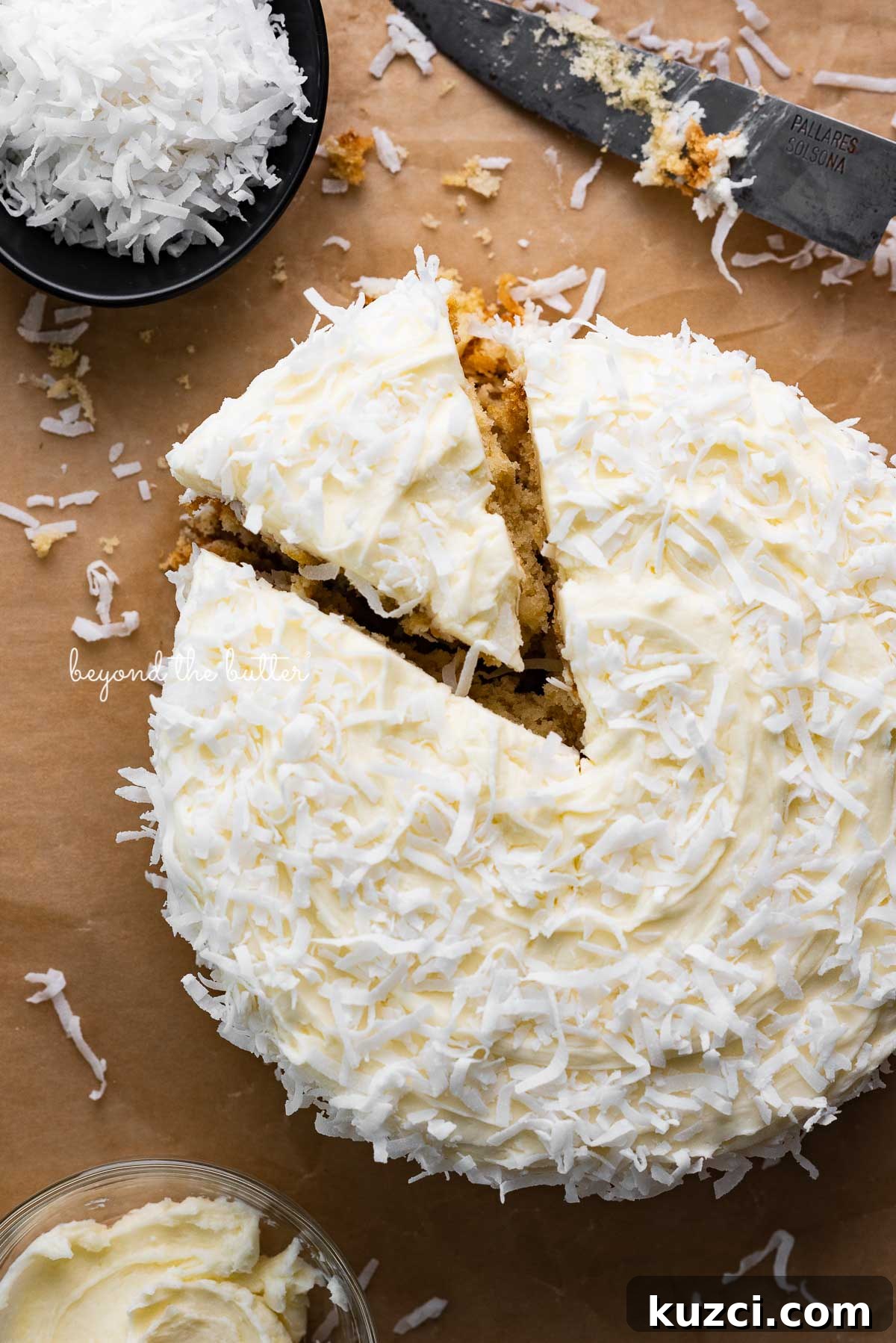
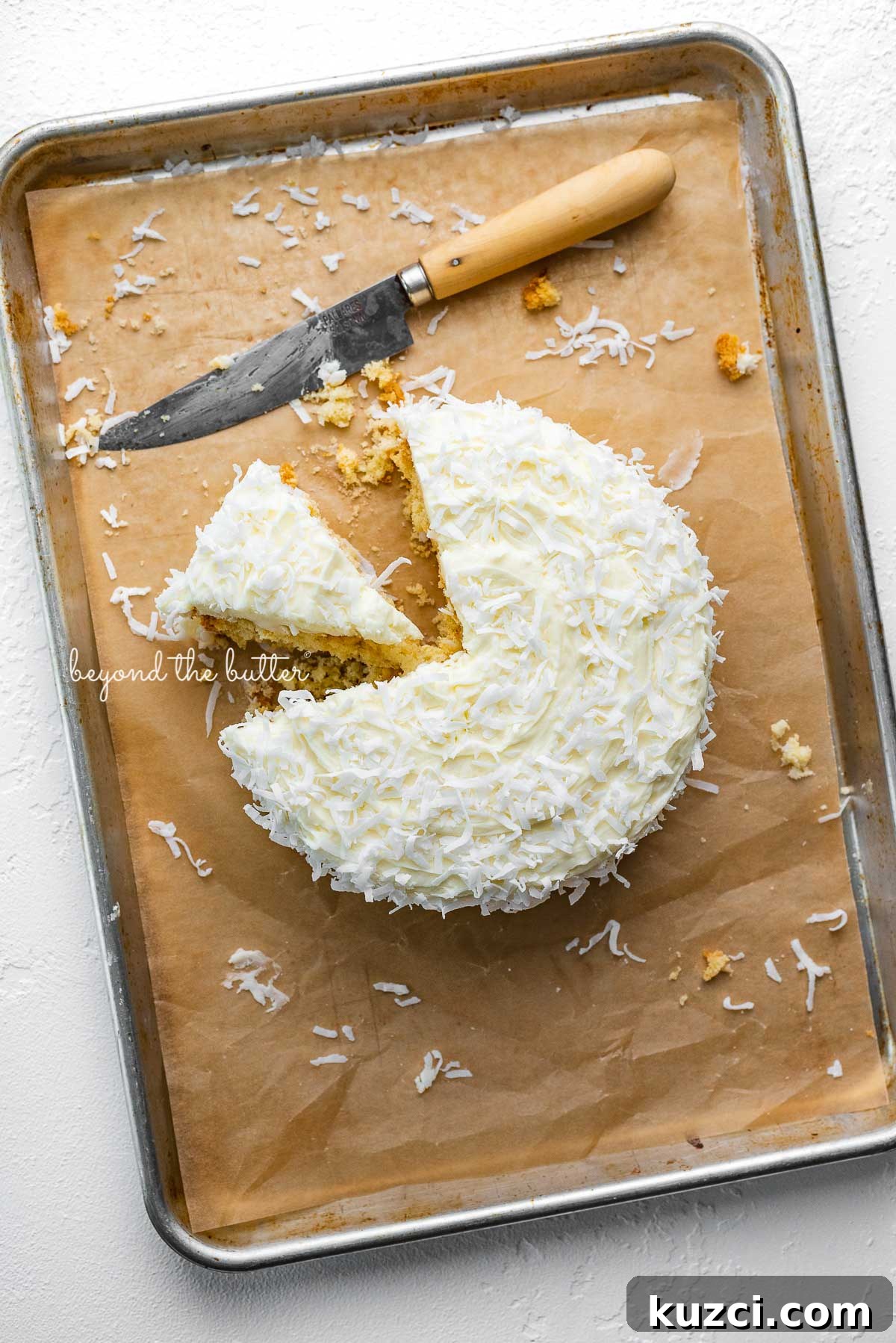
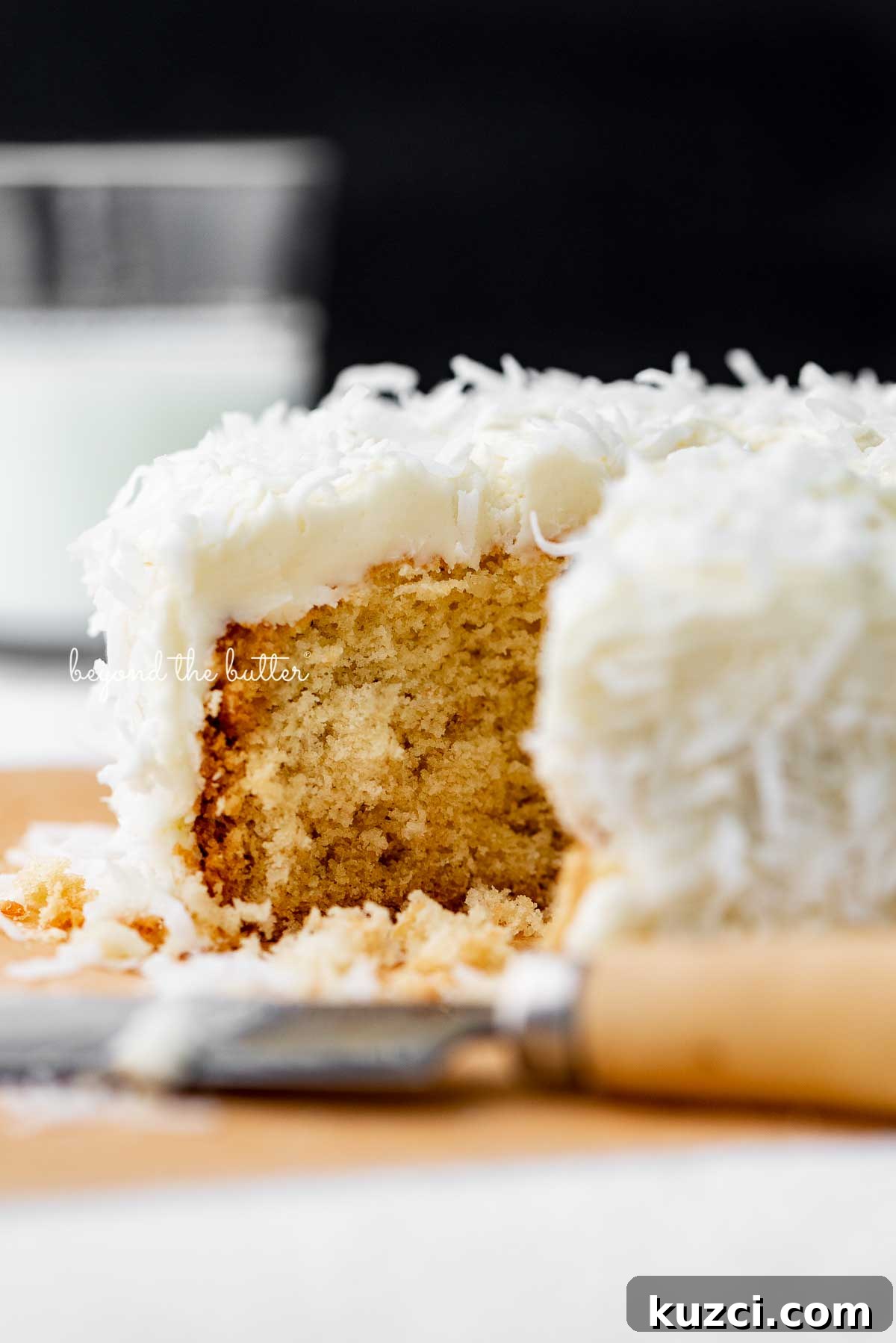
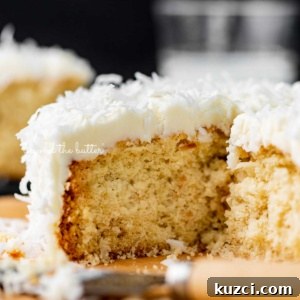
This Single Layer Coconut Cake is soft, fluffy, and full of coconut flavor. The tender 6-inch cake is made with coconut oil, canned unsweetened coconut milk, coconut extract, and lightly toasted sweetened coconut flakes. Finished with creamy coconut buttercream frosting, it is a lovely dessert for spring, summer, celebrations, or any time you want a smaller homemade cake.
Why You’ll Love This Recipe

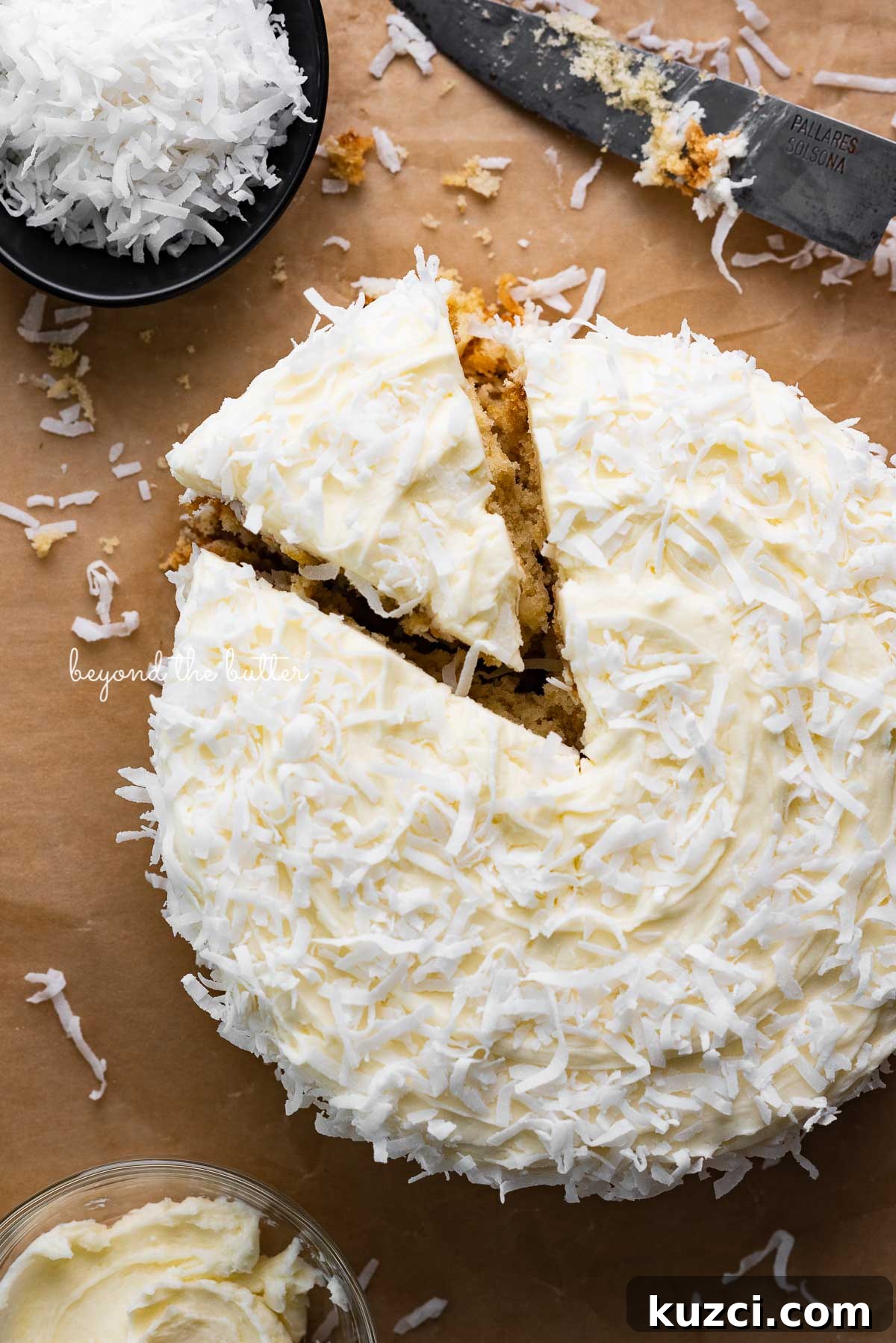
This single layer coconut cake is ideal when you want a homemade cake without making multiple layers. It has the flavor and texture of a special occasion dessert, but it is simple enough for everyday baking.
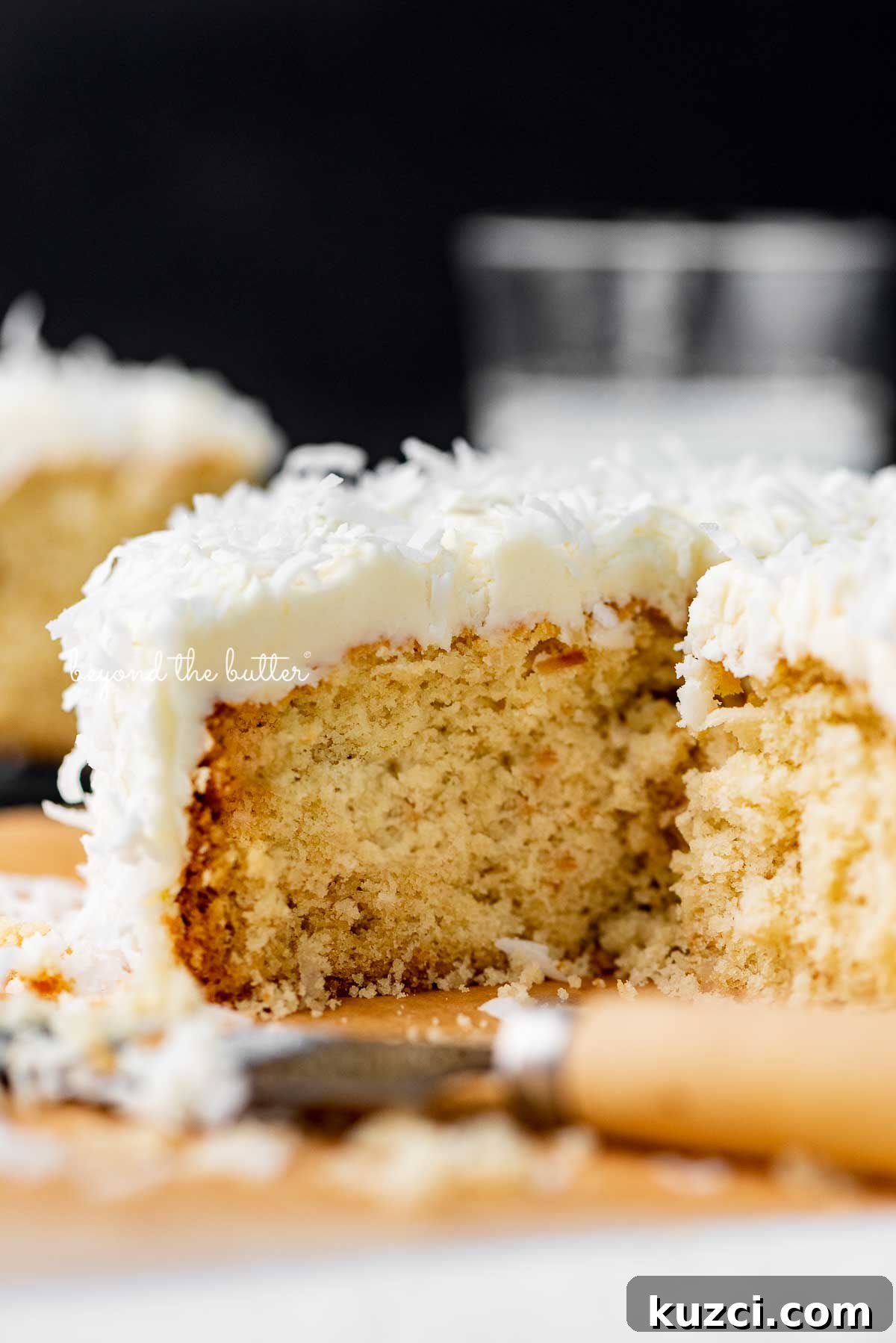
The cake gets its soft crumb from cake flour, coconut oil, unsweetened coconut milk, and a separated egg. The yolk is mixed into the batter, while the egg white is whipped with cream of tartar and folded in at the end. This extra step helps create a lighter, fluffier cake.
Toasted sweetened coconut flakes add texture and deepen the coconut flavor without making the cake heavy. A small amount of coconut extract and vanilla extract rounds everything out, giving each slice a sweet, fragrant finish.
The coconut buttercream frosting is creamy, smooth, and easy to spread. You can mix the shredded coconut directly into the frosting or use it as a garnish on top, depending on the look and texture you prefer.
Table of Contents
- Ingredients
- Homemade Cake Flour
- Essential Single Layer Cake Baking Tools
- How to Make a 6-inch Single Layer Coconut Cake
- Coconut Buttercream Frosting Alternatives
- Recipe FAQs
- More Single Layer Cakes to Enjoy!
- Single Layer Coconut Cake Recipe
Ingredients
This coconut cake recipe uses familiar baking staples along with a few key coconut ingredients. For the best texture, use room temperature butter, egg, and coconut milk before you begin.
- Cake Flour. Cake flour helps create a soft, tender crumb. If you do not have it, use the homemade substitute below.
- Baking Powder and Baking Soda. Both leavening agents are used to help the cake rise properly.
- Salt. A small amount balances the sweetness and enhances the flavor.
- Granulated Sugar. Regular granulated sugar works well, or you may use organic pure cane sugar.
- Unsalted Butter. Use room temperature butter so it blends smoothly into the batter and frosting.
- Coconut Oil. Coconut oil adds moisture and coconut flavor. Vegetable oil can be used as a substitute.
- Egg. One large egg is separated. The yolk goes into the batter, and the white is whipped separately with cream of tartar before being folded in.
- Coconut Extract and Vanilla Extract. These extracts give the cake its sweet, bakery-style coconut flavor.
- Sweetened Coconut Flakes. Toasted coconut flakes go into the cake batter. Additional flakes are used in or on the frosting.
- Canned Unsweetened Coconut Milk. Stir the coconut milk after opening the can, as it may separate. Be sure to use unsweetened coconut milk.
- Cream of Tartar. This is added only to the egg white to help it whip into stiff peaks.
Homemade Cake Flour
If you do not have cake flour, you can make a simple substitute with all-purpose flour and cornstarch. You will also need a sifter for the best result.
- Add 1 tablespoon of cornstarch to a ½ cup measuring cup.
- Fill the rest of the cup with all-purpose flour.
- Sift the mixture once, or twice for an even lighter texture.
If you bake often, you can double this mixture and keep the extra ready for another small cake recipe.
Essential Single Layer Cake Baking Tools
A few basic tools will make this homemade coconut cake easier to prepare and frost.
- 6-inch Cake Pan. A 6-inch by 3-inch pan is recommended. A 6-inch by 2-inch pan can work, but the cake may rise close to the top edge.
- Mixing Bowls. You will need separate bowls for dry ingredients, wet ingredients, and whipped egg white.
- Whisk and Spatula. A whisk helps combine dry ingredients and whip the egg white, while a spatula is useful for gently folding the batter.
- Hand Mixer or Stand Mixer. Either option works for the cake batter and the coconut buttercream frosting.
How to Make a 6-inch Single Layer Coconut Cake
Here is a simple overview of the process. The full recipe with exact measurements is included in the recipe card below.
- Toast the coconut flakes. Toast the coconut used in the cake batter until lightly golden. Watch closely so it does not burn.
- Combine the dry ingredients. Whisk together cake flour, baking powder, baking soda, and salt.
- Separate the egg. Place the yolk and white in separate bowls before mixing.
- Whip the egg white. Beat the egg white with cream of tartar until stiff peaks form.
- Mix the batter. Beat the butter, coconut oil, sugar, egg yolk, extracts, and coconut milk until combined.
- Add the dry ingredients. Mix only until the batter comes together.
- Fold gently. Fold in the whipped egg white, then fold in the toasted coconut.
- Bake and cool. Bake at 350ºF for 30 to 35 minutes, then cool completely before frosting.
Coconut Buttercream Frosting Alternatives
If you prefer a different frosting, a small batch cream cheese frosting, vanilla ermine frosting, or milk chocolate frosting can also be used. For extra coconut flavor, stir shredded coconut into the frosting or sprinkle it over the finished cake.
Recipe FAQs
This cake bakes to about 2 inches tall, so a 6-inch by 3-inch pan is recommended. A 6-inch by 2-inch pan may work, but the batter can rise very close to the top.
Yes, for the fluffiest texture. Adding the whole egg directly to the batter will create a denser cake.
Toasting the coconut for the cake batter is recommended because it brings out more flavor. Toasting the coconut for the frosting is optional.
Yes, this cake can be frozen. Wrap the cake or individual slices well before freezing, and thaw before serving.
More Single Layer Cakes to Enjoy!
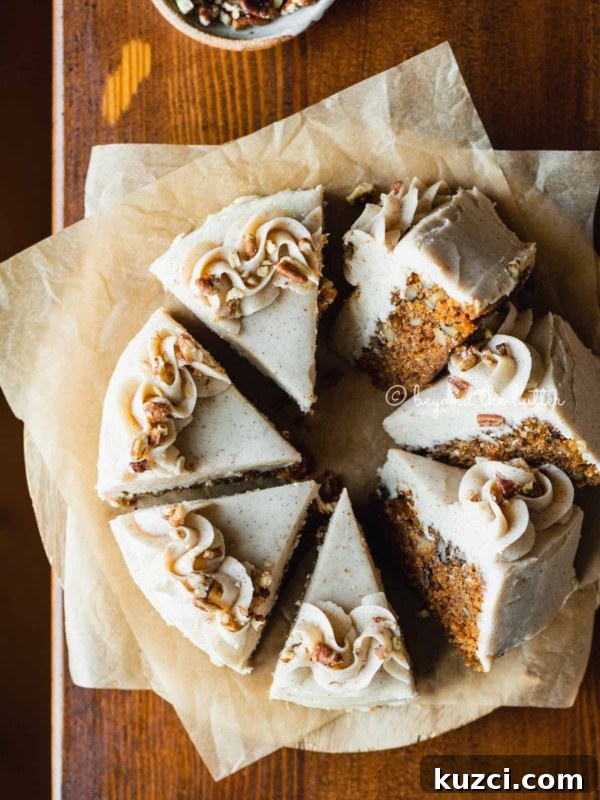
Single Layer Carrot Cake
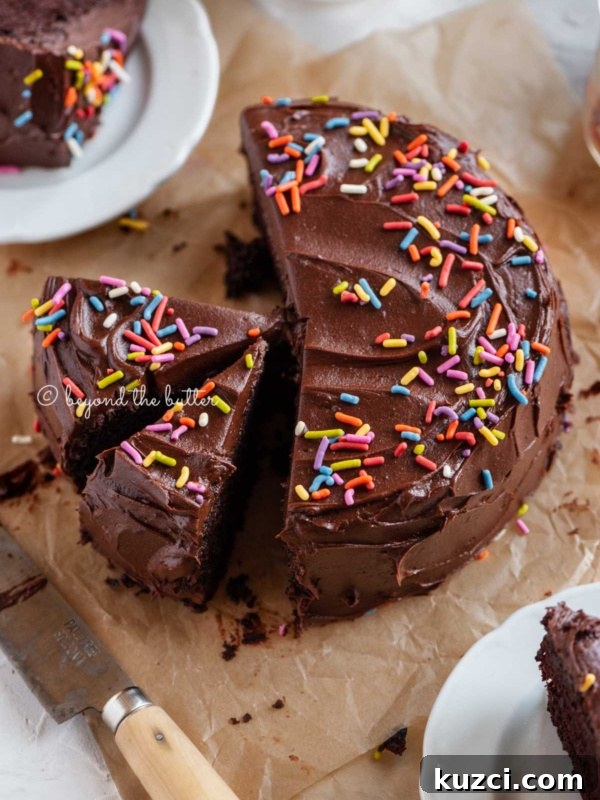
Single Layer Chocolate Cake
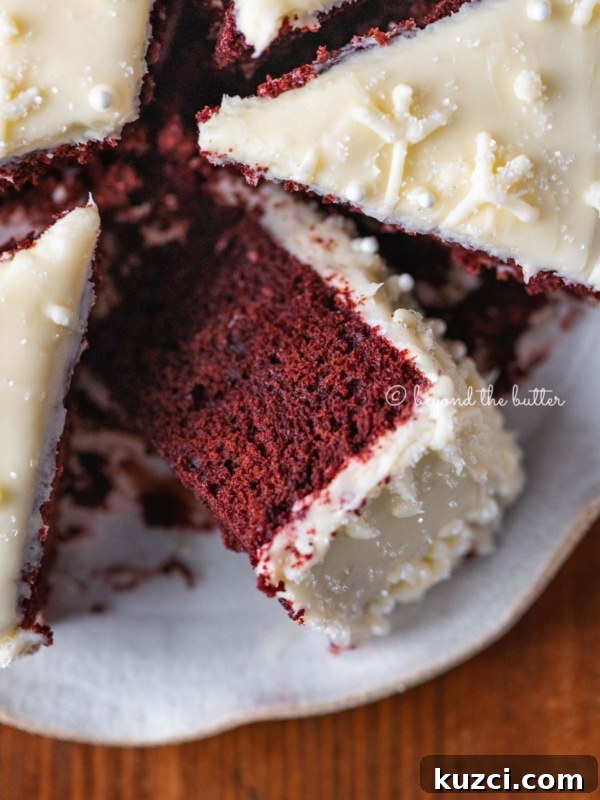
Single Layer Red Velvet Cake
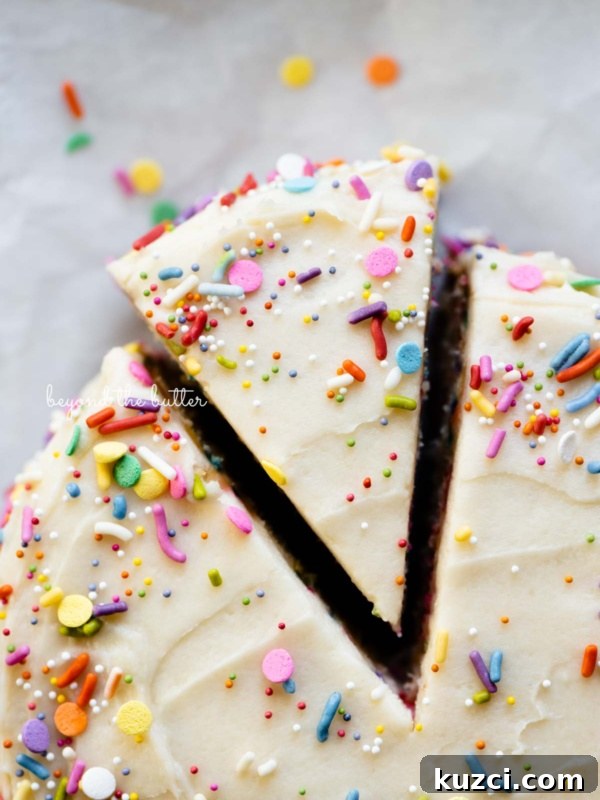
Single Layer Funfetti Cake
If you try this Single Layer Coconut Cake Recipe, leave a star rating and share your thoughts in the comments.
Single Layer Coconut Cake
Ingredients
Coconut Cake
- 1/3 cup shredded sweetened coconut flakes, toasted
- 1 cup cake flour
- 1/2 teaspoon baking powder
- 1/2 teaspoon baking soda
- 1/8 teaspoon salt
- 1/4 cup unsalted butter, room temperature
- 2 tablespoons coconut oil
- 1/3 cup granulated sugar
- 1 large egg yolk, room temperature
- 1 teaspoon coconut extract
- 1/2 teaspoon vanilla extract
- 1/3 cup canned unsweetened coconut milk, room temperature
- 1 large egg white, room temperature
- 1/8 teaspoon cream of tartar
Coconut Buttercream Frosting
- 1/2 cup unsalted butter, room temperature
- 2 1/3 cups sifted powdered sugar
- 1/2 teaspoon coconut extract
- 2 tablespoons canned unsweetened coconut milk
- 1/2 cup shredded sweetened coconut flakes
Instructions
Coconut Cake
- Preheat the oven to 350ºF. Generously coat a 6-inch round cake pan with flour-based baking spray and set it aside.
- Toast the sweetened coconut flakes in a small skillet over medium heat, stirring constantly, until lightly golden. Watch carefully to prevent burning. Set aside to cool.
- In a medium bowl, whisk together the cake flour, baking powder, baking soda, and salt.
- Using a hand mixer or stand mixer fitted with the whisk attachment, beat the egg white and cream of tartar on high speed until stiff peaks form, about 2 to 3 minutes. Set aside.
- In a separate bowl, beat the unsalted butter, coconut oil, and granulated sugar on medium speed until well combined.
- Add the egg yolk, coconut extract, vanilla extract, and unsweetened coconut milk. Mix until blended.
- Add the dry ingredients and mix just until combined. Gently fold in the whipped egg white, then fold in the toasted coconut flakes.
- Pour the batter into the prepared pan. Bake for 30 to 35 minutes, or until a toothpick inserted into the center comes out clean.
- Let the cake cool completely on a wire rack before frosting.
Coconut Buttercream Frosting
- Beat the room temperature butter on medium-high speed until smooth and creamy.
- Reduce the mixer speed to low and gradually add the sifted powdered sugar.
- Add the coconut extract and unsweetened coconut milk. Mix until smooth, scraping down the bowl as needed.
- Stir or beat in the shredded coconut flakes, or reserve them for decorating the frosted cake.
Notes
- 1/4 cup unsalted butter equals 4 tablespoons.
- Separate the egg into two small bowls before starting so the yolk and white are ready when needed.
- If you plan to pipe the frosting, leave the coconut flakes out of the buttercream and use them as a garnish instead.
- If the frosting is too thick, add another tablespoon of unsweetened coconut milk. If it is too thin, add more sifted powdered sugar, 1 tablespoon at a time.
Nutrition
Nutritional information is an estimate and may vary depending on the ingredients used.