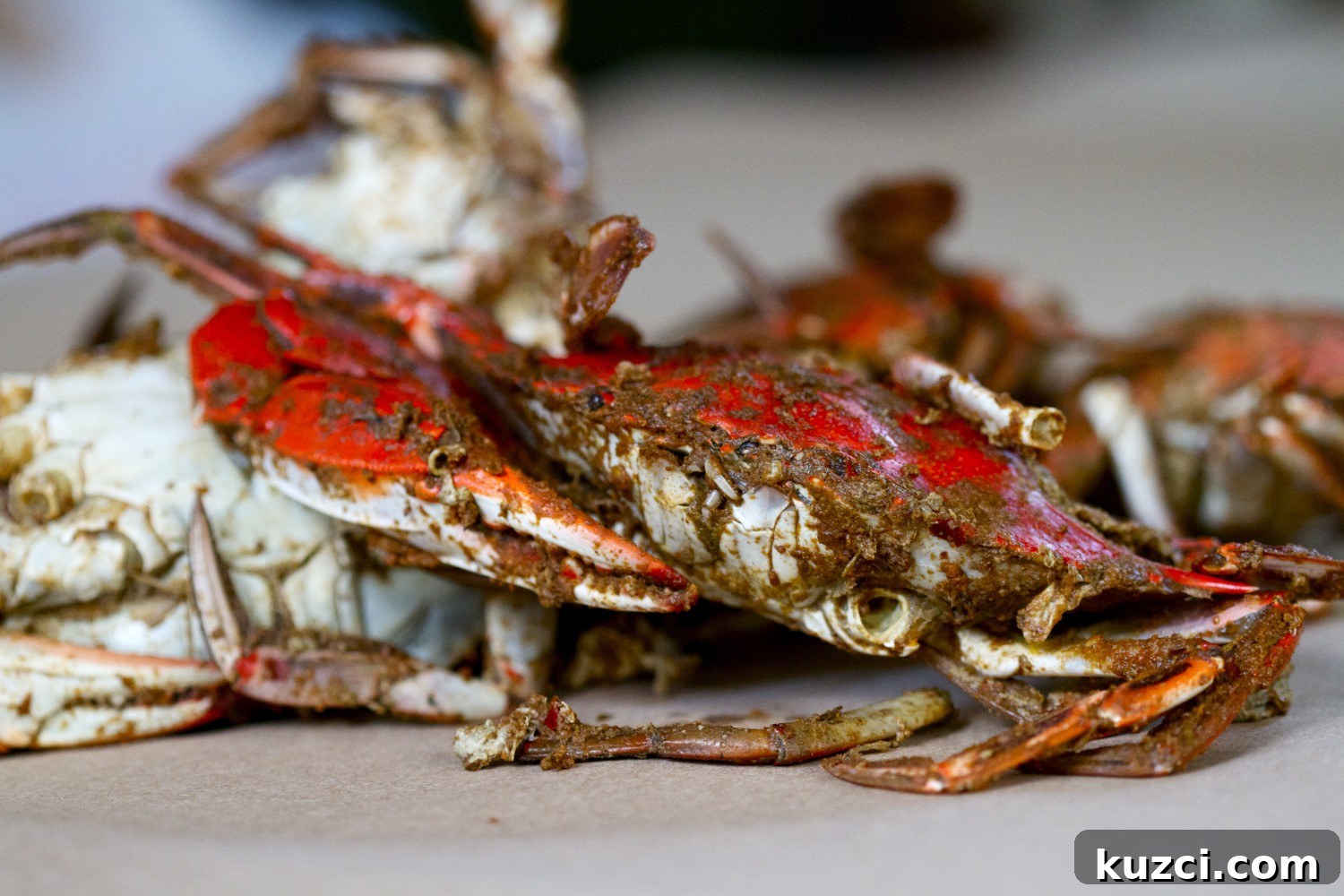
I’m a very crabby guy.
But when I say “crabby,” I’m not talking about being grumpy, grouchy, or difficult to live with, even if I have been accused of those things from time to time.
I mean I love eating crabs, especially Maryland steamed crabs.
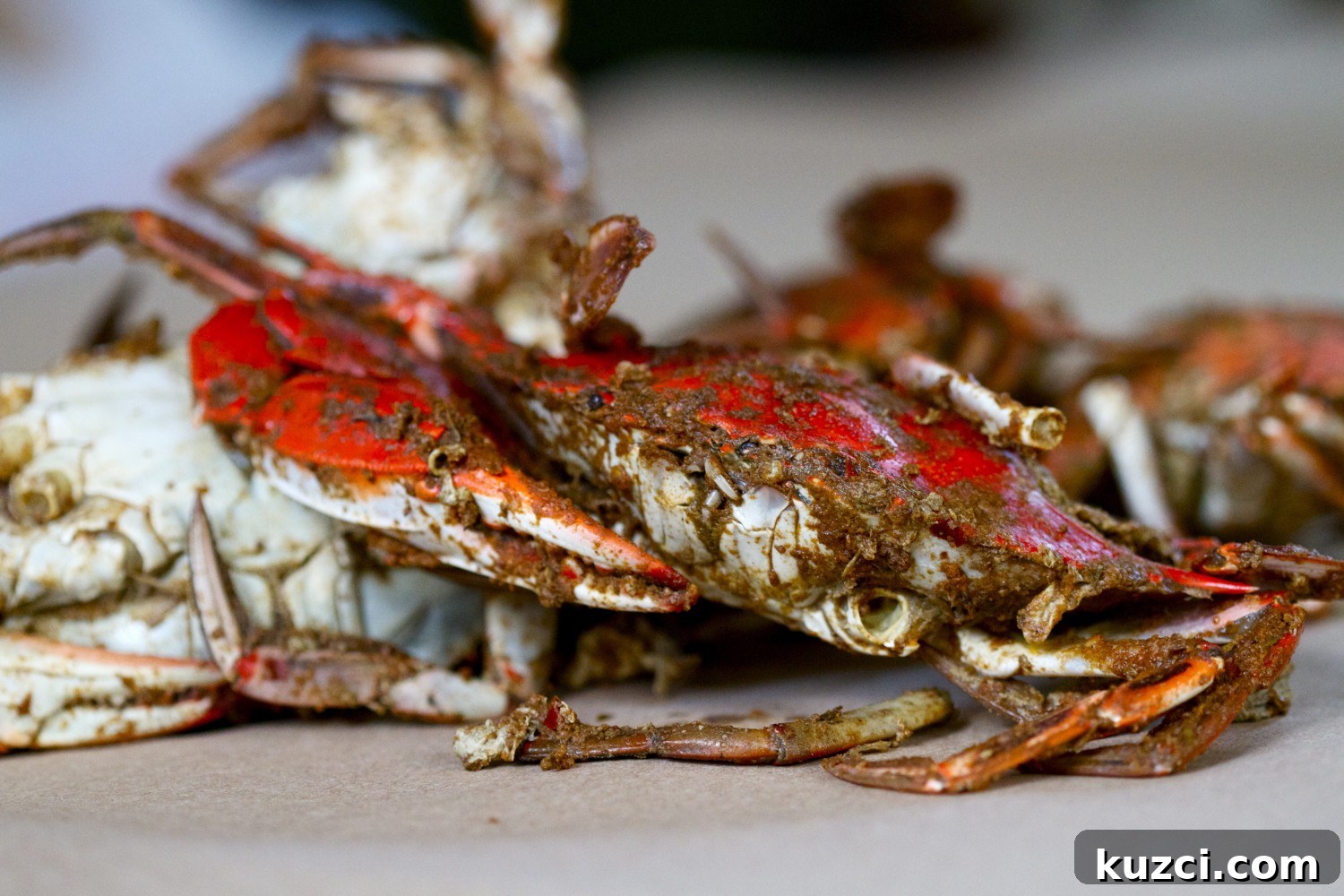 Give me a pile of hot steamed crabs, a cold beer, and a picnic table covered with old newspaper or brown paper, and I’m just about as happy as a person can be.
That probably has a lot to do with where I’m from. In Maryland, steamed crabs are not just a meal. They are a tradition, a summer ritual, and for many families, a way of life. People in the Chesapeake Bay region have been eating blue crabs for generations, going back to the earliest settlers and long before that to Native American tribes such as the Nanticoke and the Powhatan.
For a long time, steamed crabs were mostly a regional obsession. Outside the Delmarva Peninsula, where Delaware, Maryland, and Virginia meet on the eastern side of the Chesapeake Bay, not many people were sitting around tables picking crabs for hours. These days, crab cakes are easy to find in many American cities, but real Maryland-style steamed crabs are still something special.
Whenever Lea and I visit my parents on Maryland’s Eastern Shore, we make sure steamed crabs are part of the trip. Lea is a native Texan and had never eaten steamed crabs before she met me. After 15 years of marriage, though, she can pick crabs with confidence and plenty of enthusiasm. She also appreciates that steamed crabs fit nicely into her lower-carb, paleo diet.
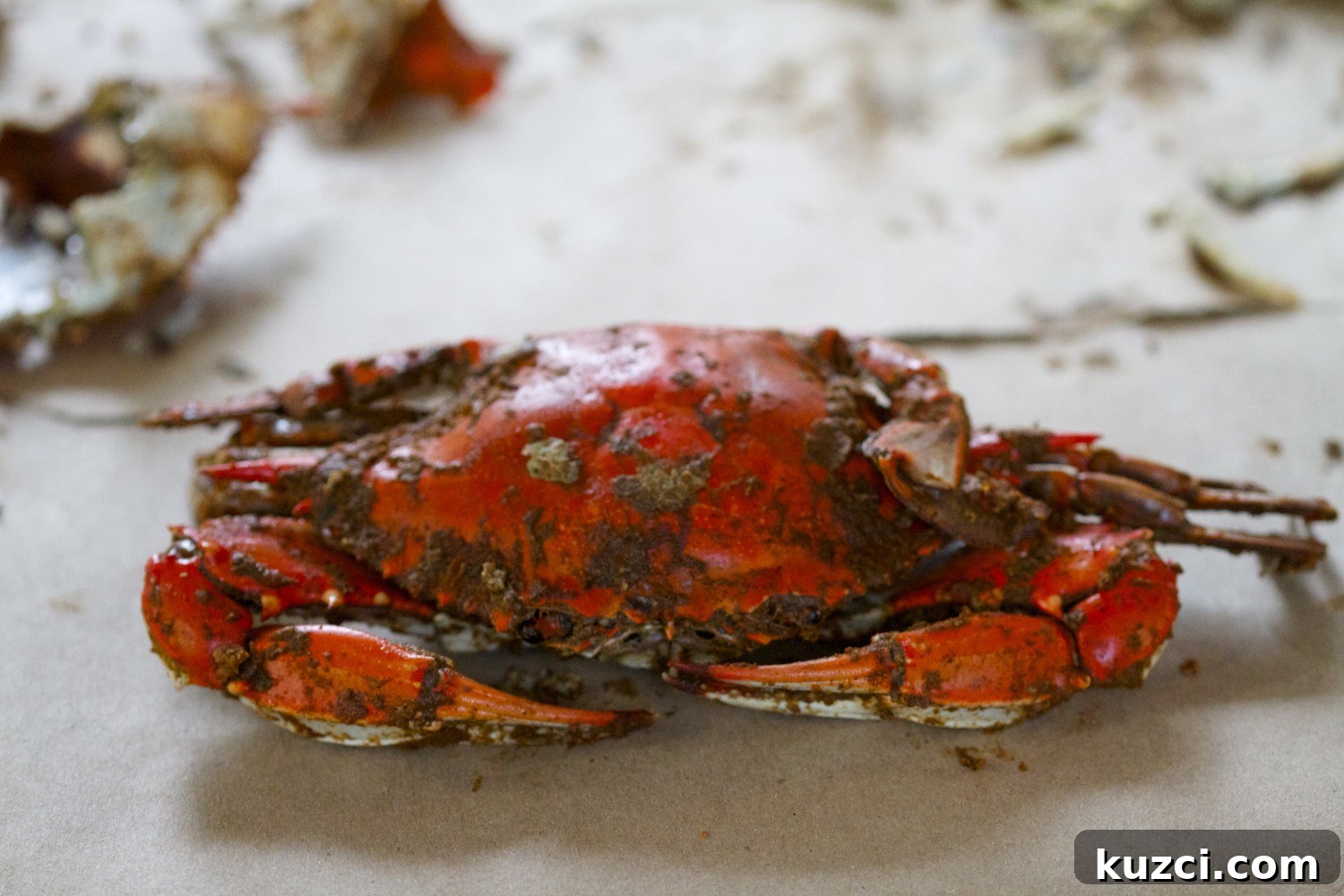
Now, a little about the crabs themselves. The blue crabs eaten in Maryland are known as Callinectes sapidus, which means “tasty beautiful swimmer” in Latin. That name is a little formal for most Marylanders, so we simply call them blue crabs. Before they go into the steamer, they really do have a blue color, especially on their claws and legs.
(Photo of Blue Crab previously posted is Copyright John T. Consoli)
Marylanders like to claim blue crabs as their own, but they are found far beyond the Chesapeake Bay, from Nova Scotia down into the Gulf of Mexico and even farther south. Because of demand and pressure on local crab populations, many of the crabs eaten in Maryland may come from places such as Louisiana. Still, they are blue crabs, and in my opinion, nobody prepares steamed crabs quite like Maryland.
If you want to do Maryland steamed crabs properly, you need Old Bay Seasoning. Old Bay was created in Baltimore by German immigrant Gustav Brunn in the late 1940s and quickly became closely associated with steamed crabs and seafood. In 2006, the McCormick Spice Company, also originally from Baltimore, acquired the recipe. Today, Old Bay is widely available, and according to McCormick, it is gluten-free.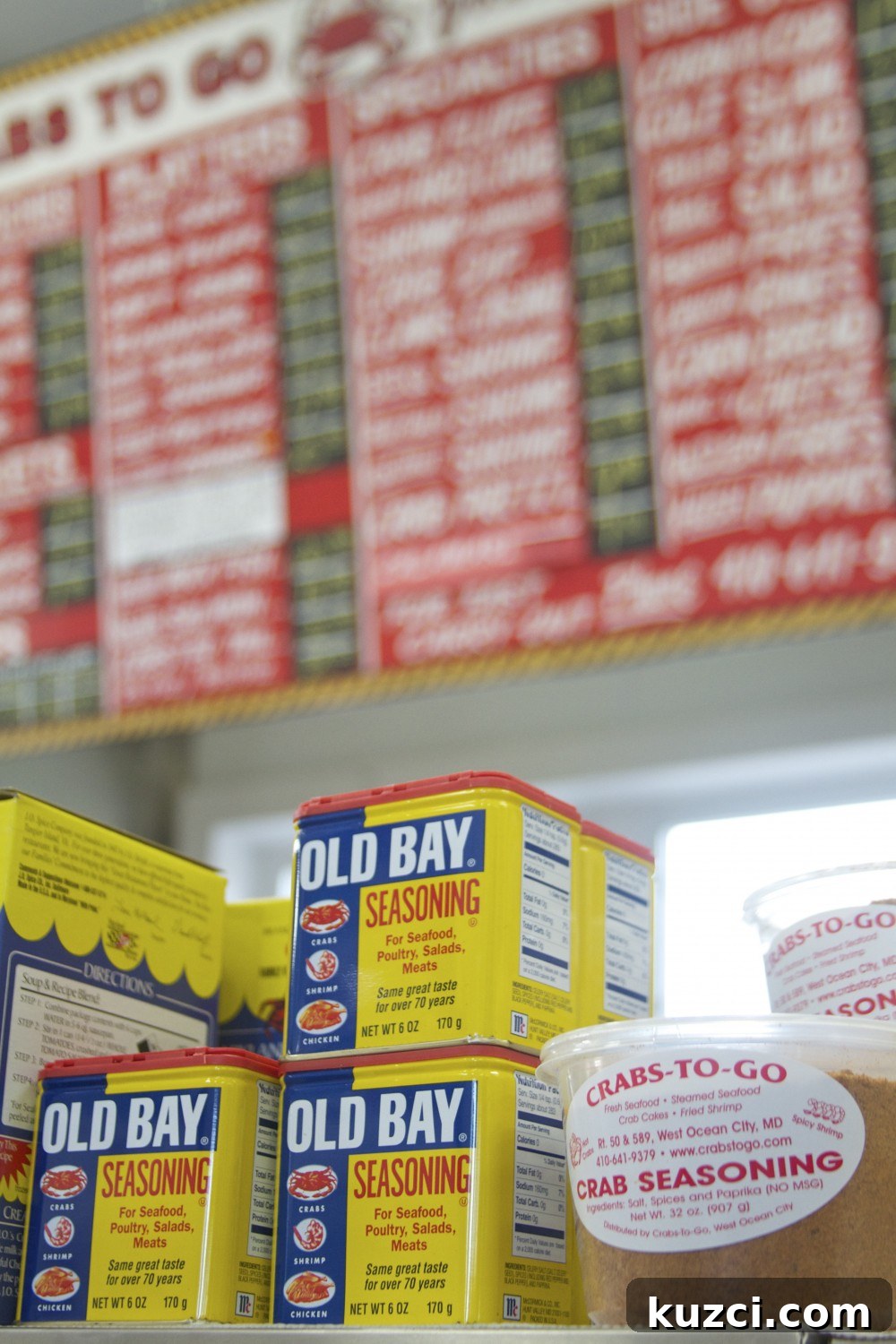
When we visit my family in Ocean City, we usually buy our crabs from a local place like Crabs-to-Go.
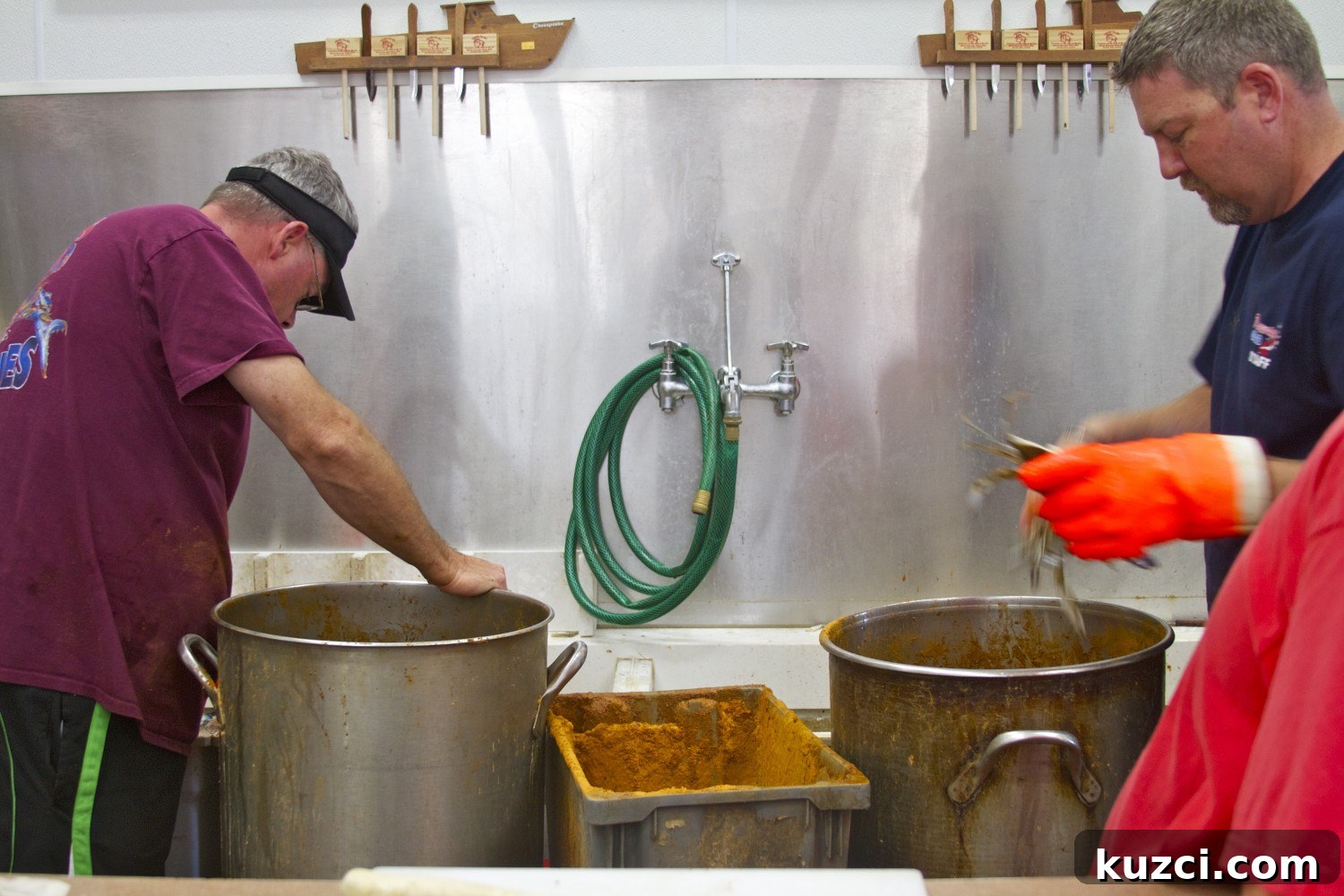
Crabs-to-Go is a busy spot, especially during the summer season. Most customers are there for steamed crabs, so the large steam pots are usually working nonstop.
 It is smart to call ahead and place your order in advance, both to avoid a long wait and to check the current price. Like many types of seafood, crab prices can change depending on market conditions.
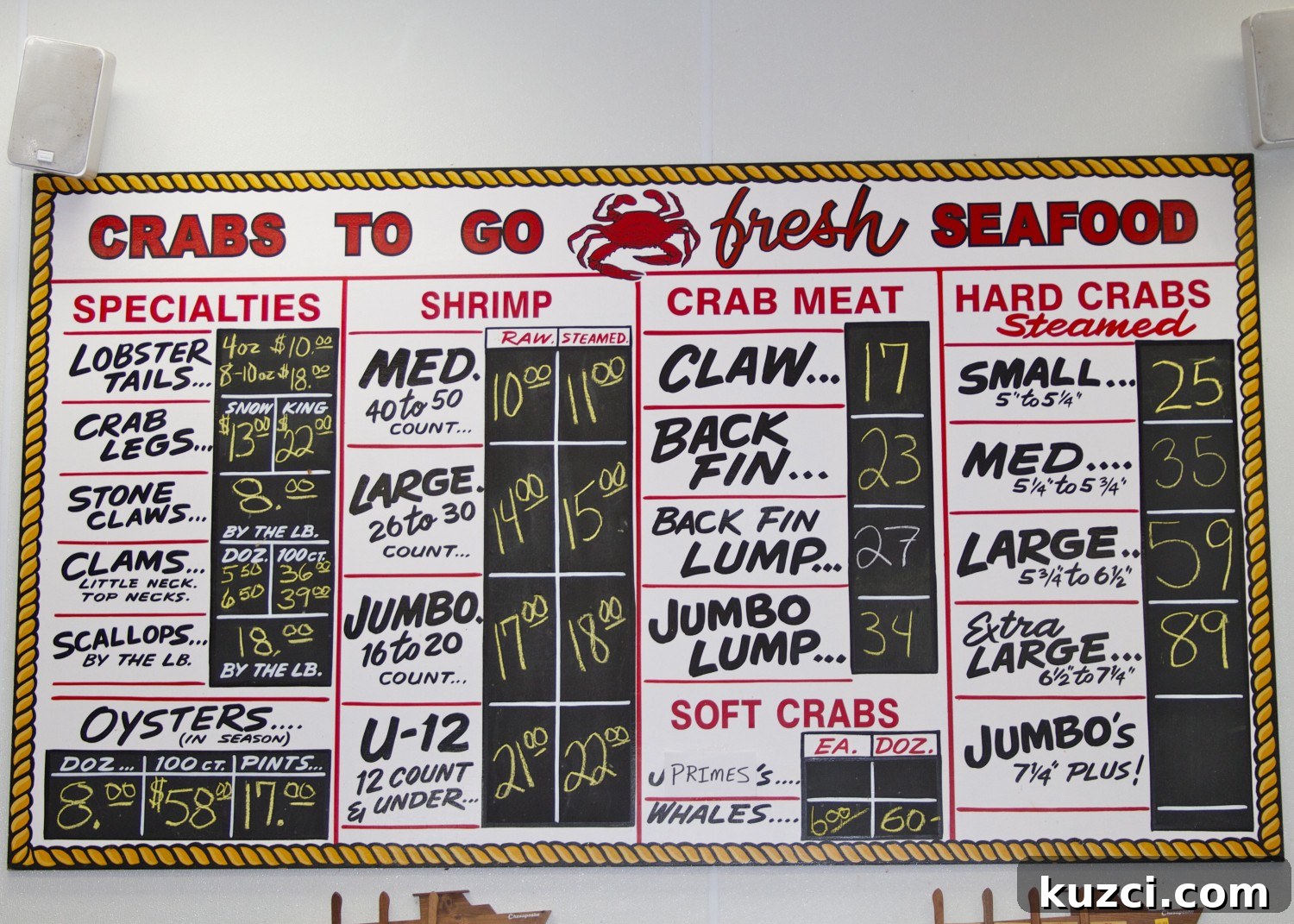 Steamed crabs are usually sold by the dozen or by the bushel. The number of crabs in a bushel depends on their size. For example, a bushel of jumbo crabs, roughly 6 to 6.5 inches across the body, may contain around 60 to 72 crabs. Adult male blue crabs are called “jimmies,” while adult females are called “sooks”. Jimmies are generally larger and meatier, which makes them especially popular for steaming. Sooks are often picked by commercial processors and sold as fresh or pasteurized crabmeat.
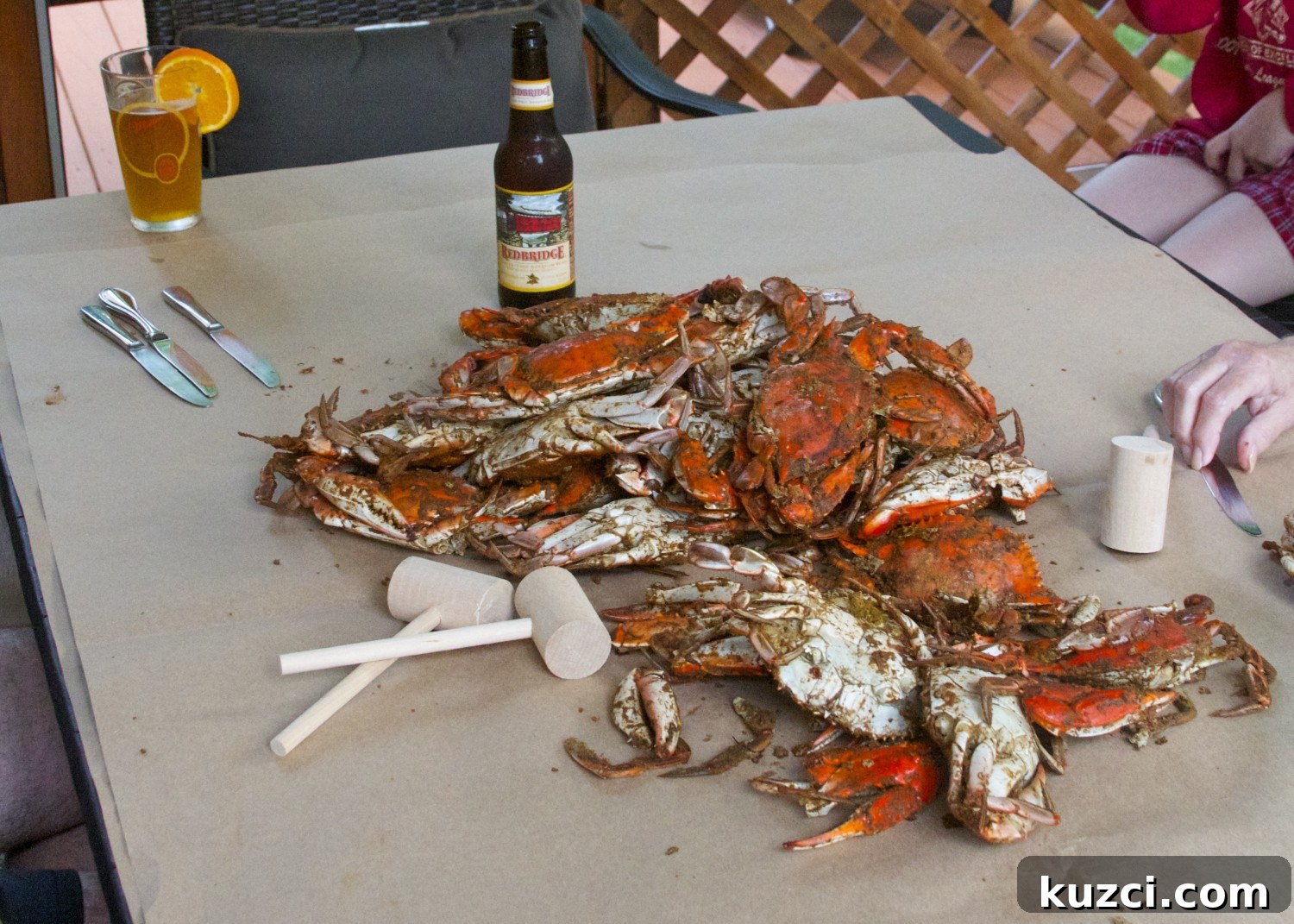
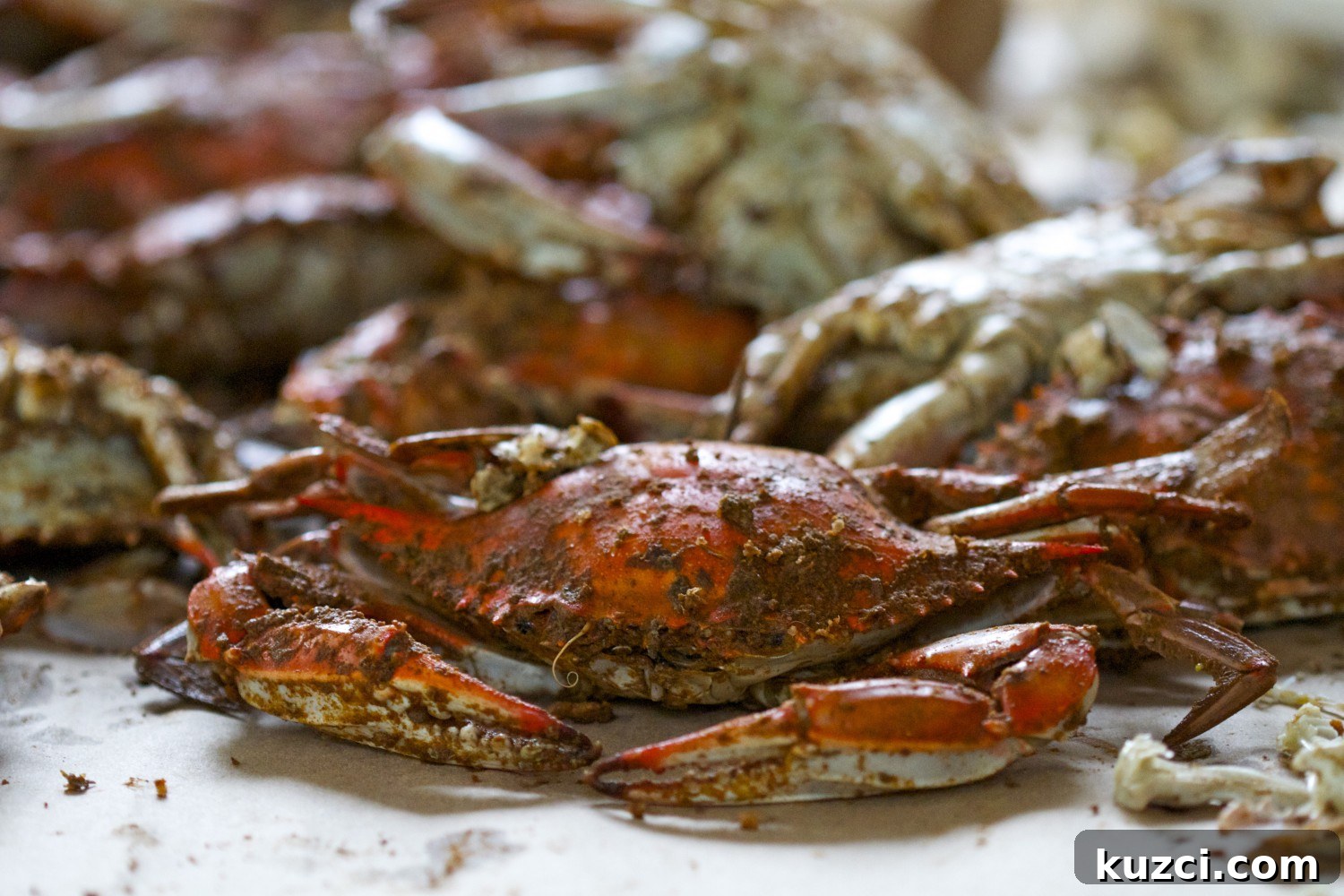
Once we picked up our order from Crabs-to-Go, we grabbed a large sheet of industrial brown paper to use as a table covering. Steamed crabs are delicious, but they are definitely not fancy food.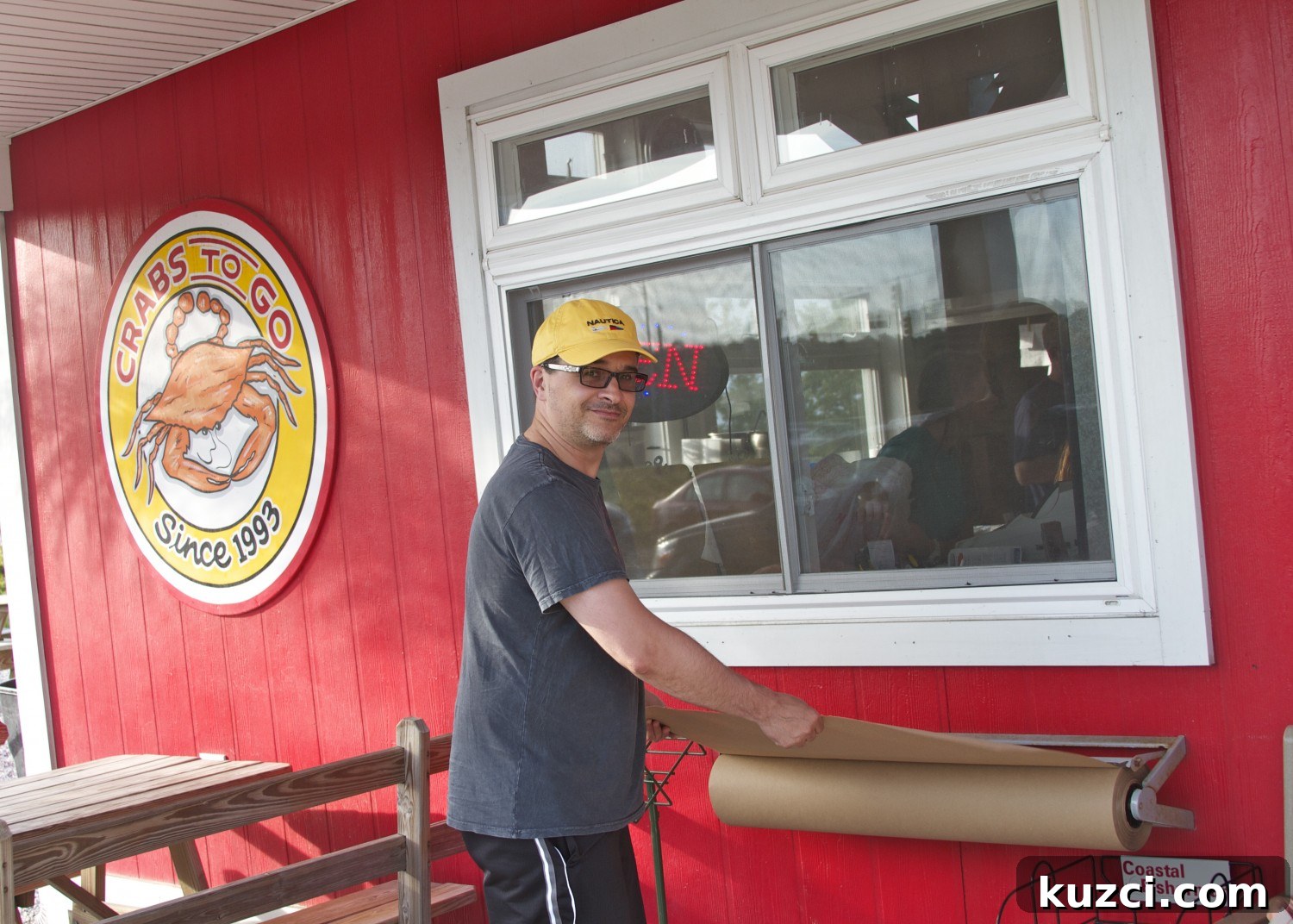 After clearing the table, we spread out the brown paper and poured the crabs right on top. The smell of freshly steamed blue crabs and Old Bay Seasoning was intense in the best possible way. There was also Redbridge Gluten-Free Beer nearby, which made the feast feel complete.
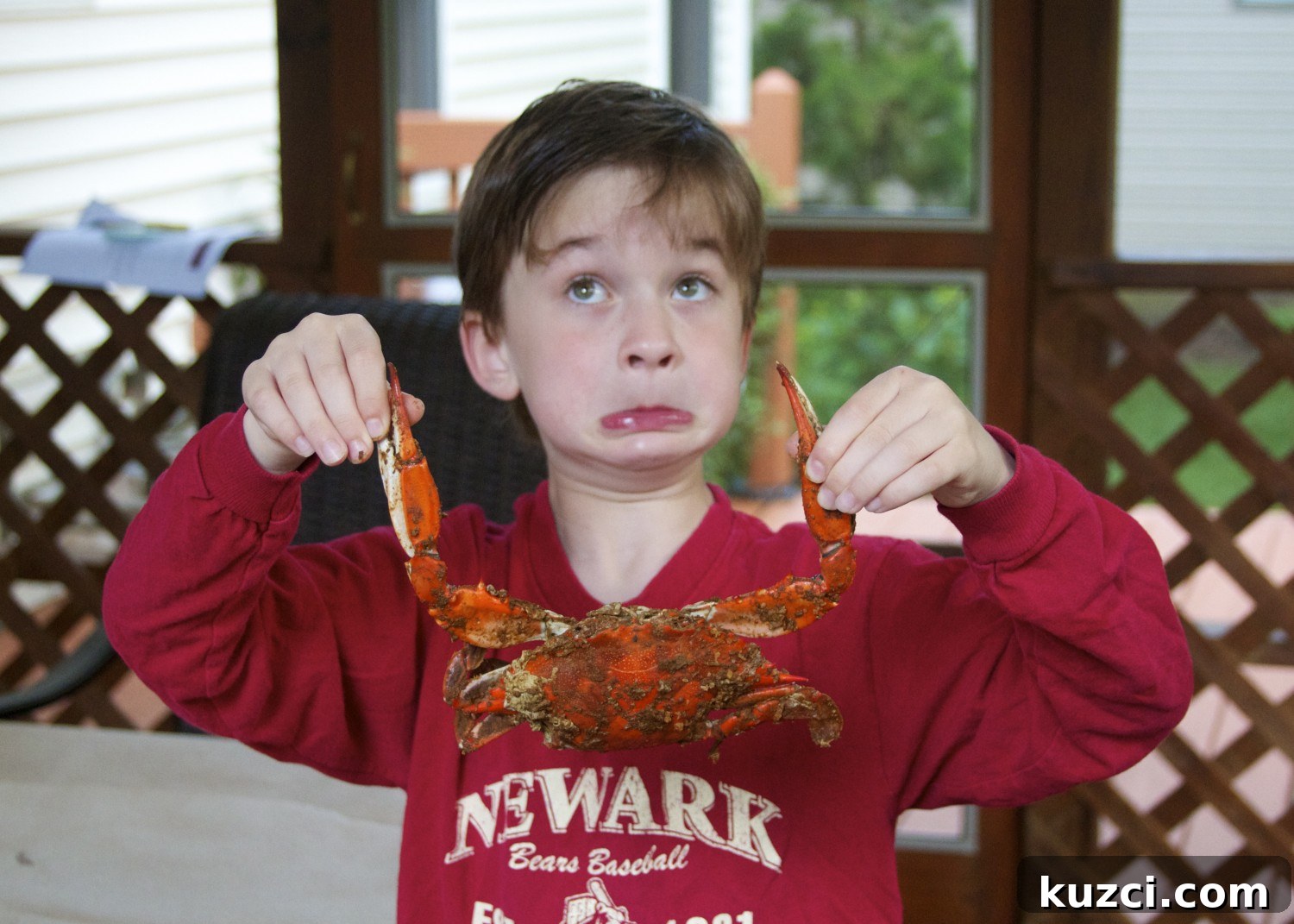
 I’m used to them, but I have to admit he had a point.
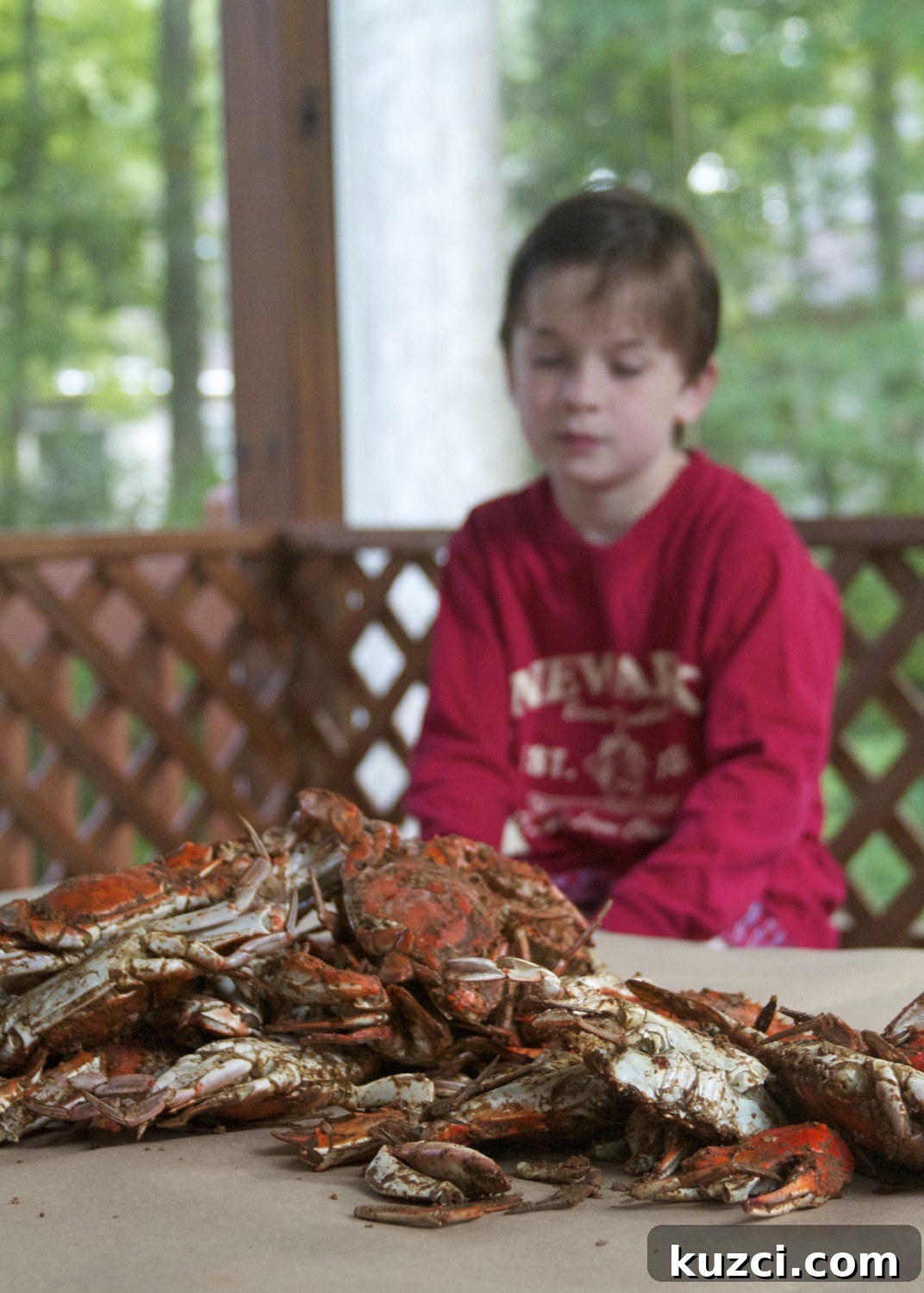
  To keep Ben happy, we bought him fried calamari, which he ate inside the house, safely away from the intimidating pile of crabs.
 Once we explained that eating crabs involves smashing shells with a wooden mallet, his enthusiasm came right back.
  The first step in eating steamed crabs is usually to pull off the large front claws at the shoulder and crack them open.
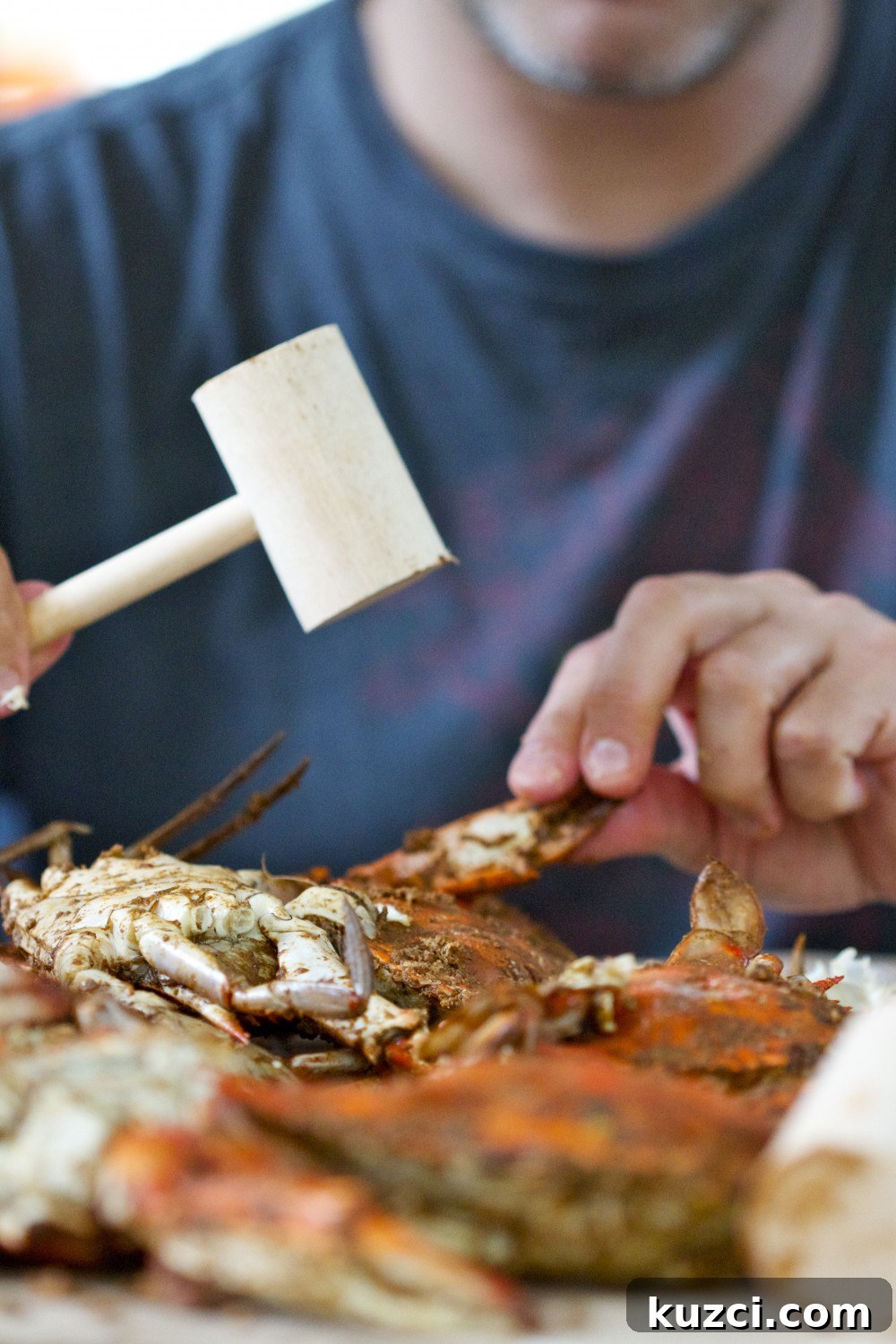 There is plenty of sweet crabmeat hidden inside those claws.
After the claws, it is time to get to the backfin crabmeat, which many people consider the best-tasting part of the crab.
First, turn the crab over and lift up the apron, which looks like a small tab on the underside.
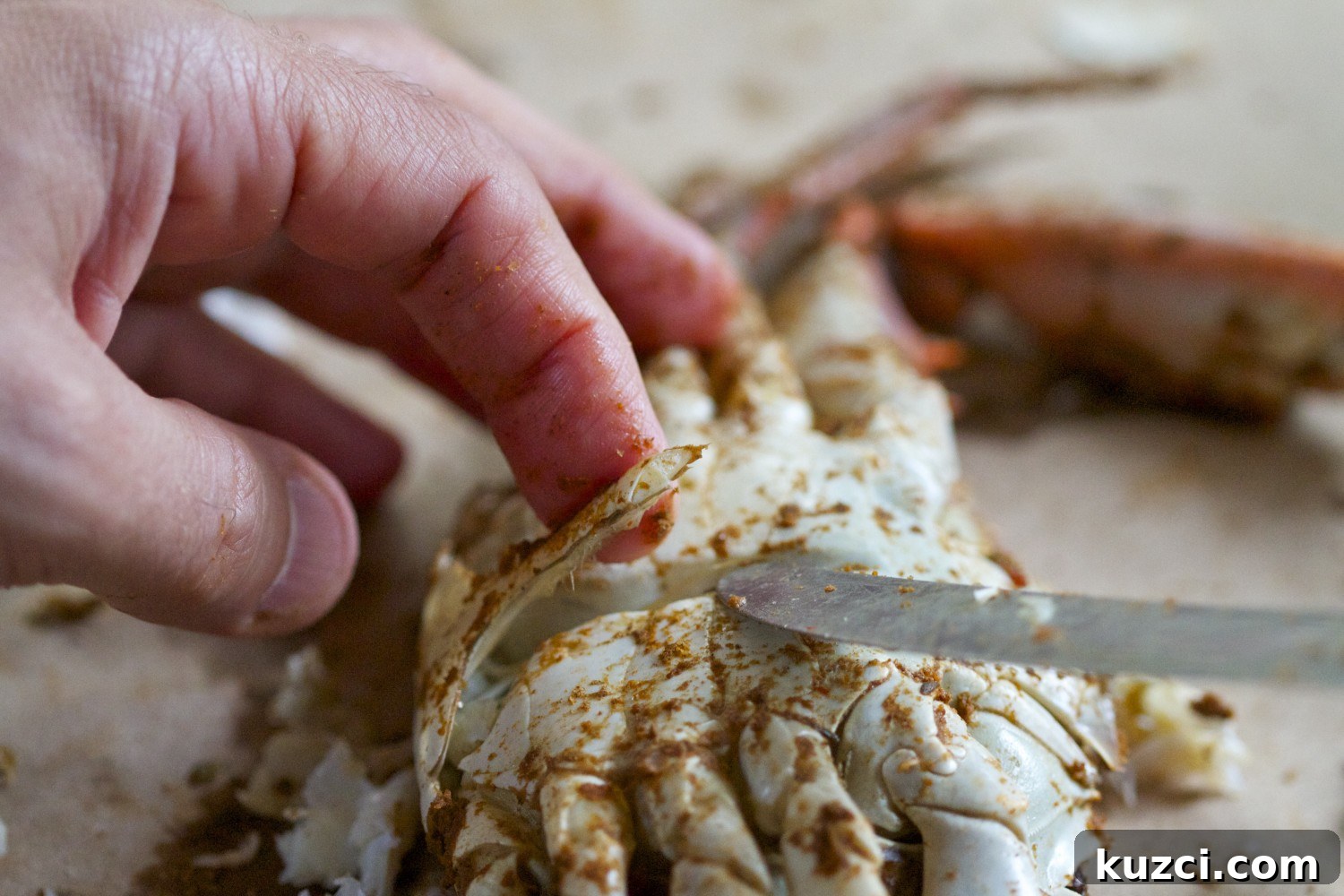 Then slide a knife, or your fingers if you prefer, between the top shell and the bottom half of the crab’s body.
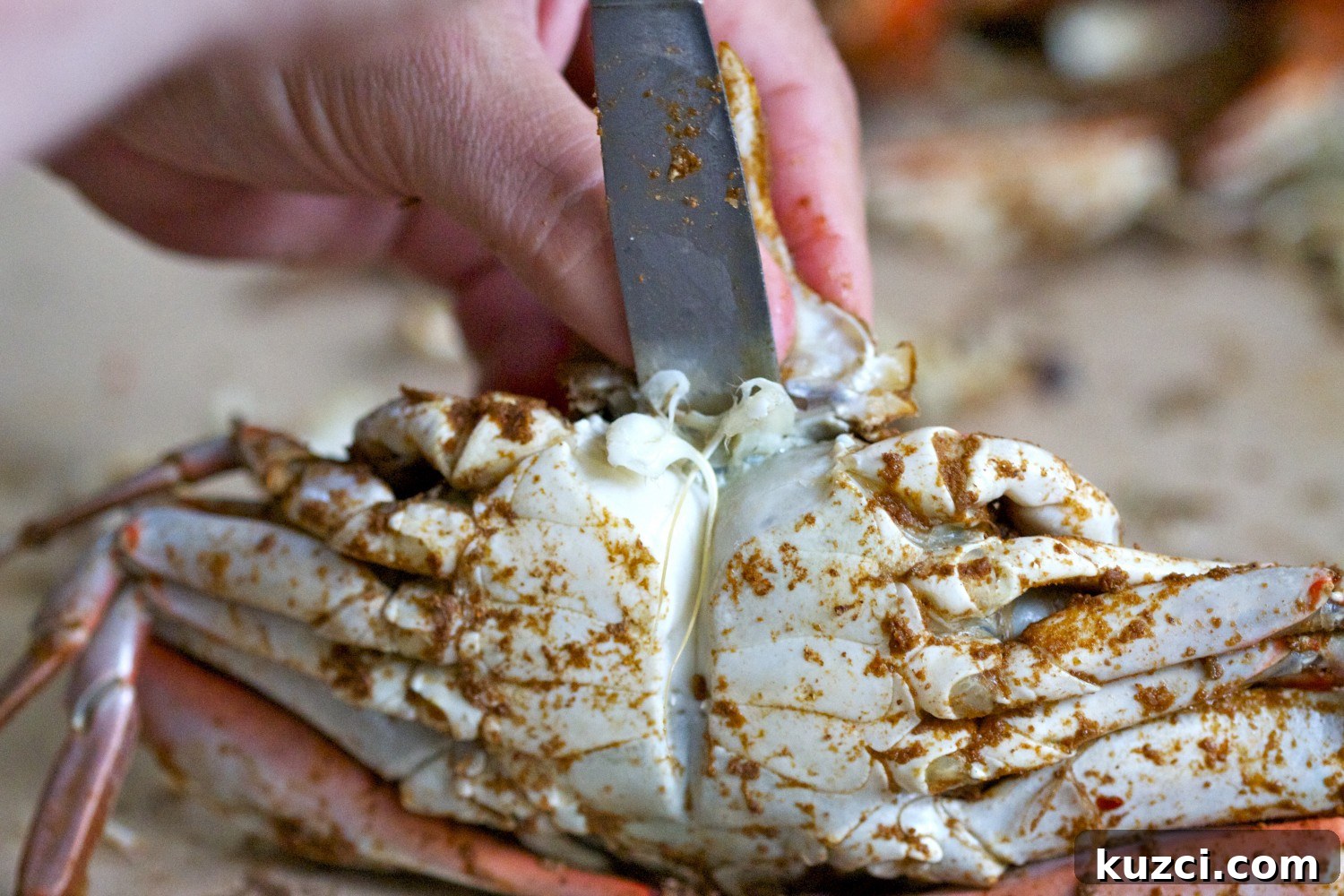 Pull the shell apart firmly.
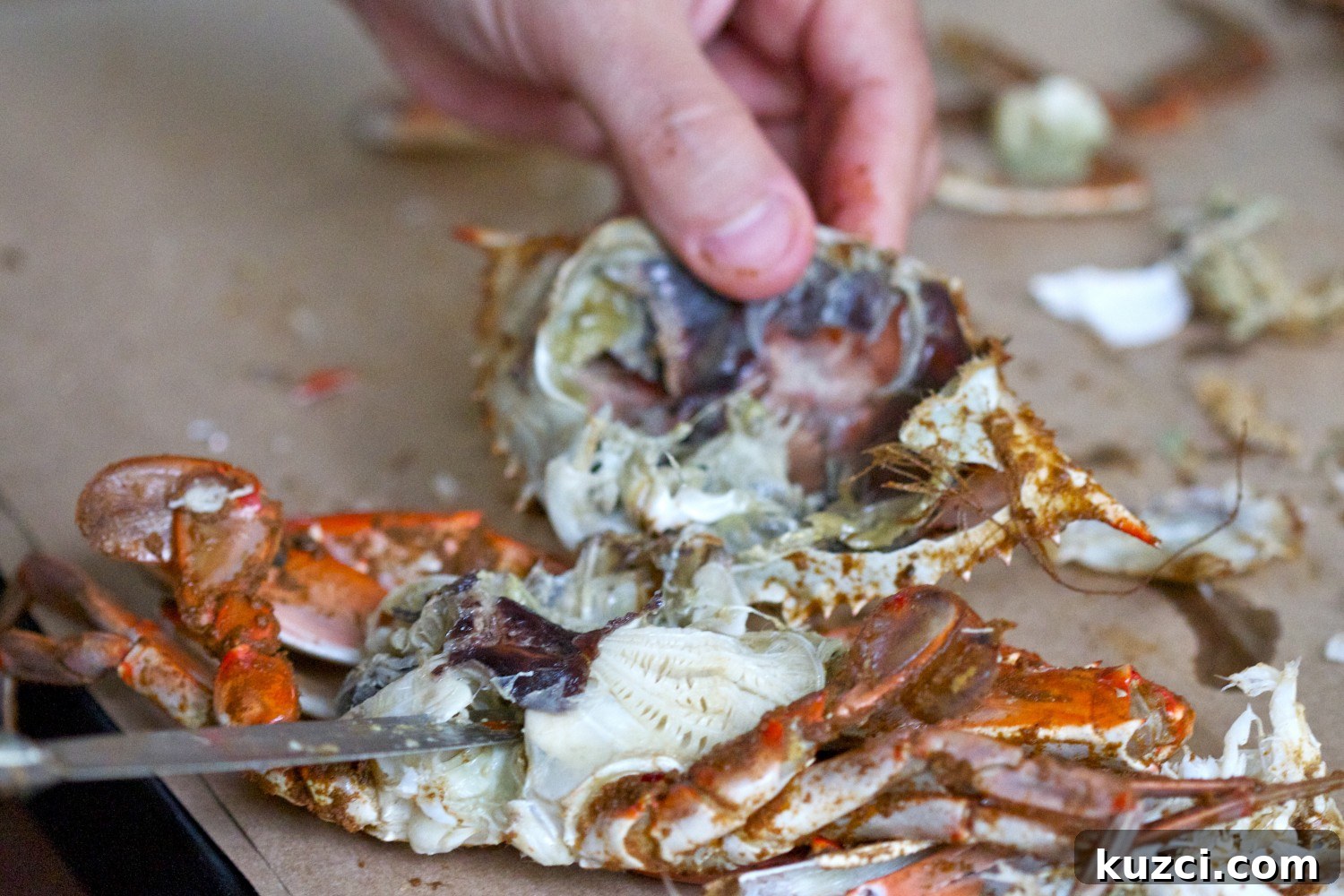 Next, cut or break the crab in half.
At this point, you are getting close to the good stuff.
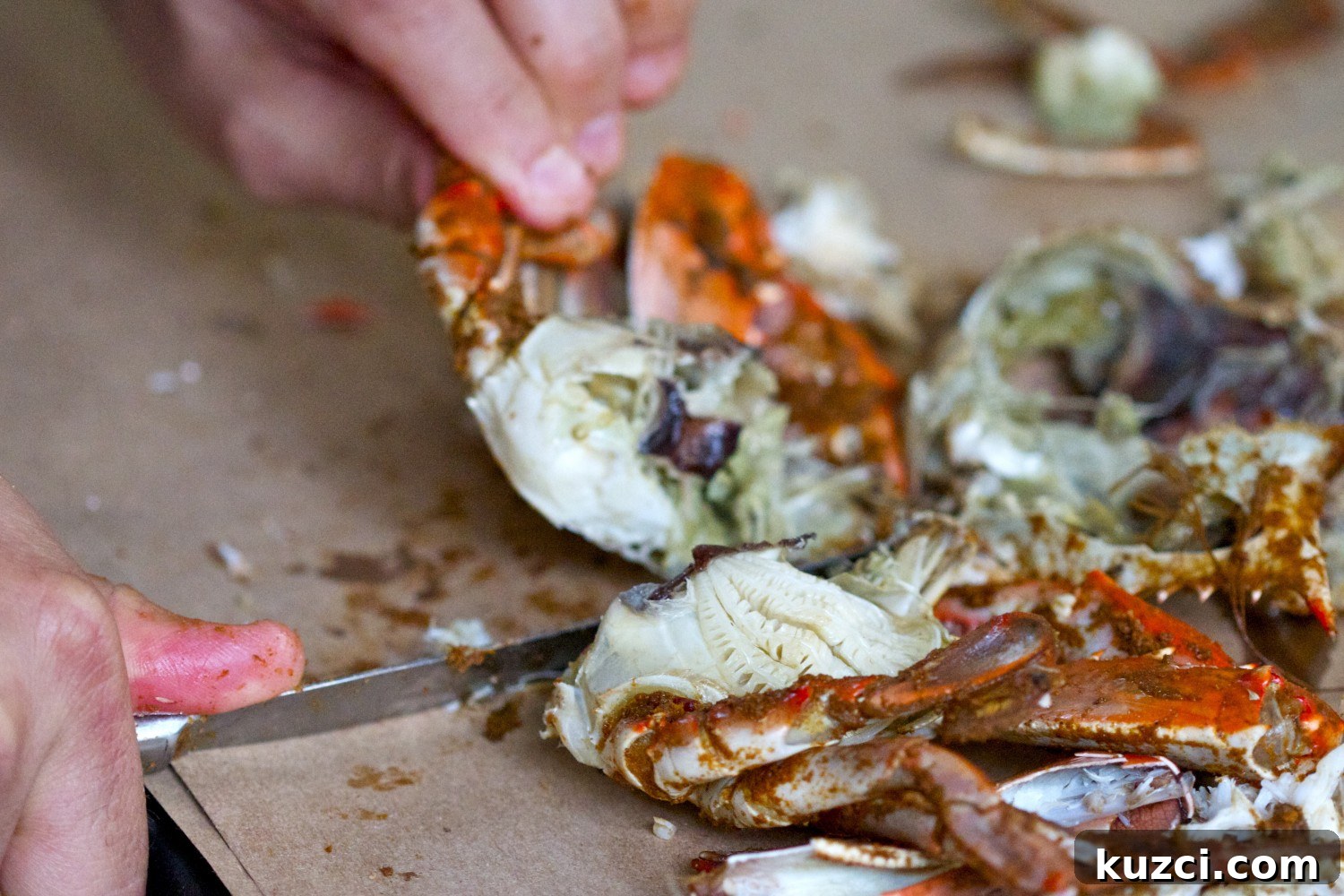 If you are a devoted steamed crab fan, like my mom,
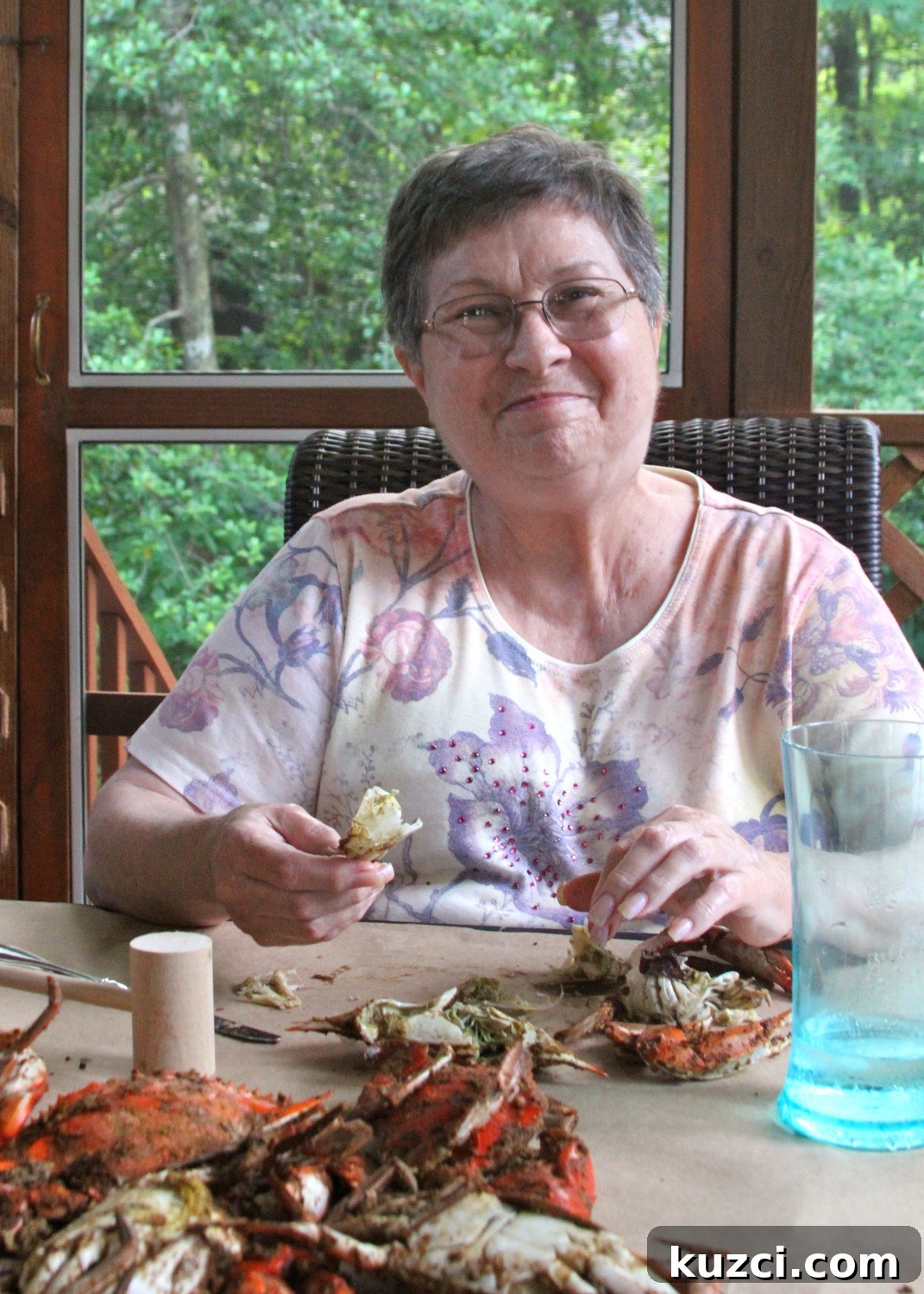 you may want to eat what crab lovers call “the mustard.” This is the yellow, soft material found inside the body of the crab. Some people love it and consider it part of the experience. Personally, I never eat the mustard. I know what it is, and that is enough for me.
If the mustard is not for you, focus on the meat. Once the shell is open, scrape away the soft, cone-shaped lungs, which are not something you want to eat. Beneath that area is a hard, pearly shell, and under it you will find the prized backfin crabmeat. It takes patience, but the flavor makes the effort worthwhile.
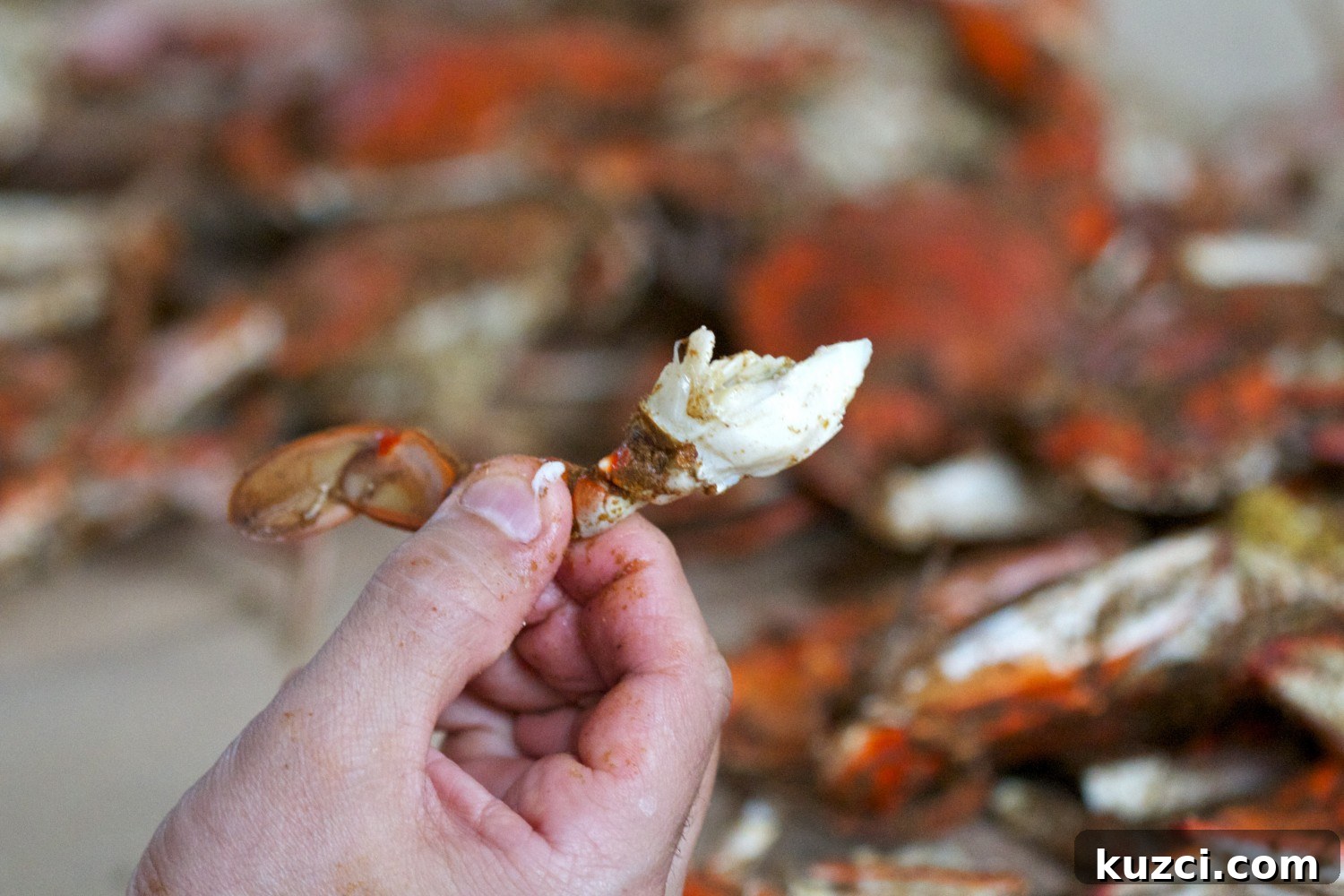 After that, pull the smaller legs from the body and enjoy any meat and juice you can get from the shoulder area. Then toss the empty shell into the scrap pile, take a sip of beer, and start on the next crab.
I usually stop after six or seven crabs, although I have been known to eat more on occasion. By the time everyone is finished, the table is covered with shells, claws, legs, and Old Bay, and everyone is happily full.
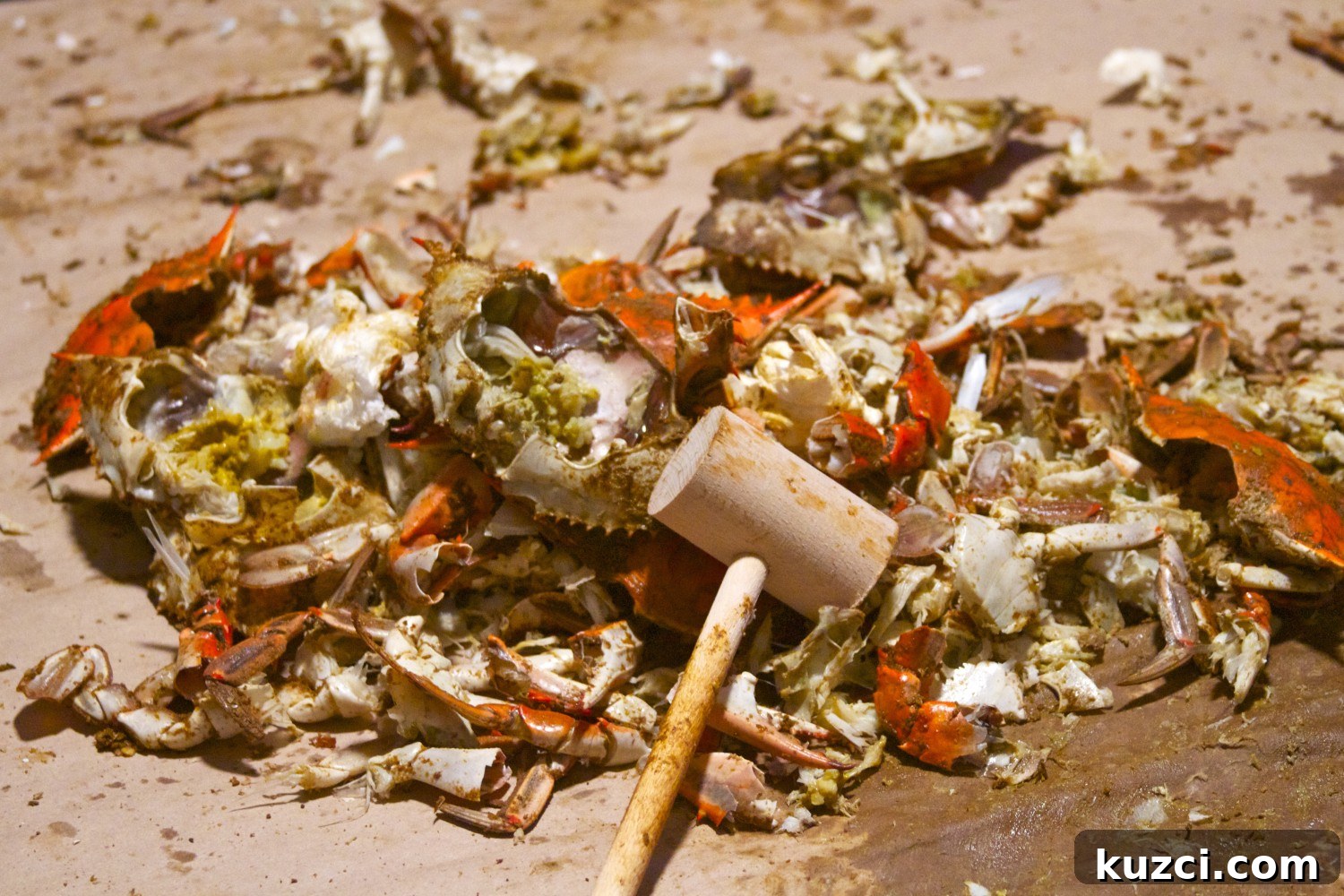
If you enjoy seafood and have never tried Maryland steamed crabs, I hope this gives you a reason to seek them out. They are flavorful, messy, social, and fun to eat. They also happen to be a simple, protein-rich seafood option that fits well with a paleo-style meal.
Bon appétit, hon!
How do you like to eat crabs? Have you ever had steamed crabs Maryland-style?