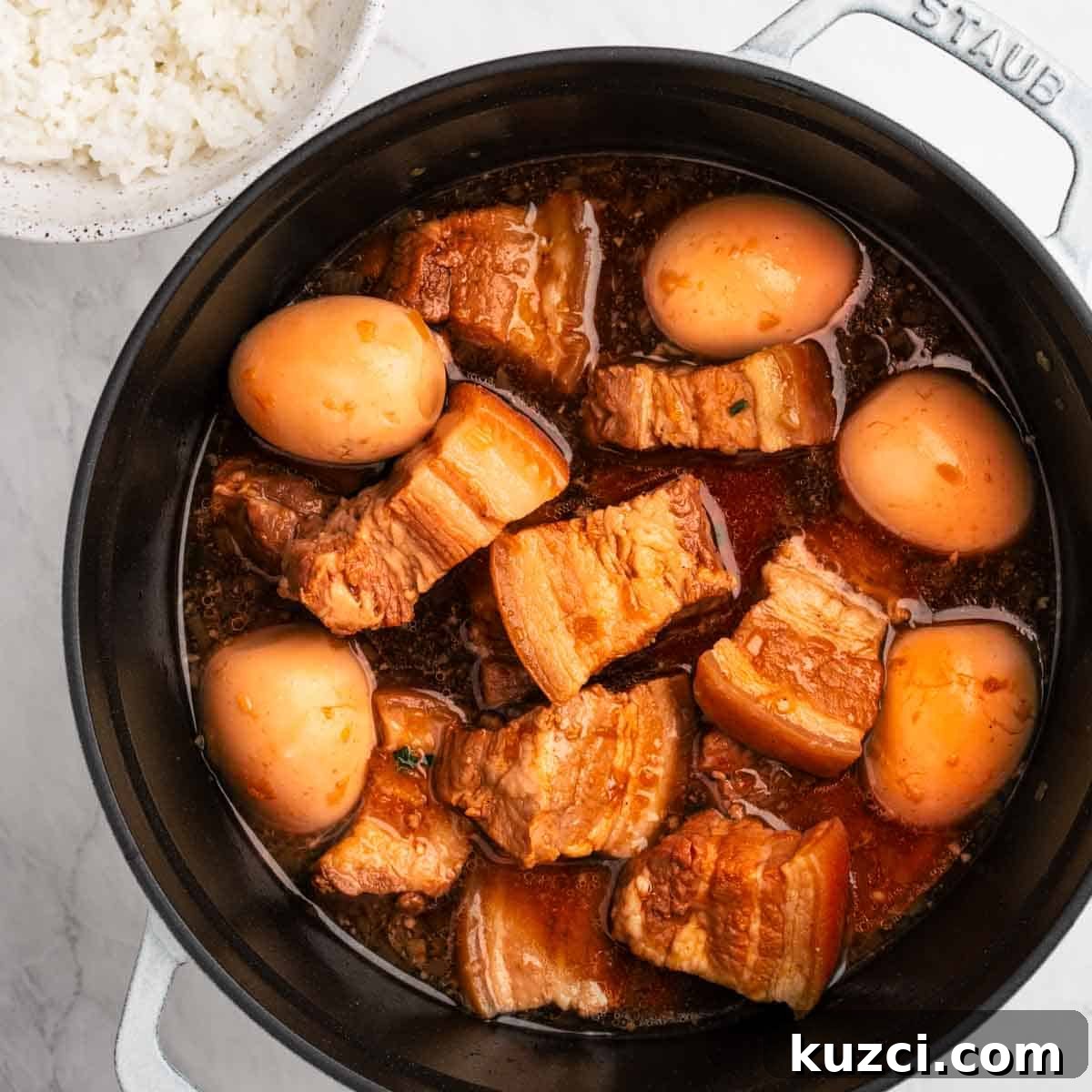
Thit kho is a classic Vietnamese comfort dish: tender braised pork and hard‑boiled eggs simmered in a glossy, savory‑sweet caramel sauce until the flavors are deep and concentrated. It’s the kind of food that feels like a warm hug when spooned over steaming jasmine rice, and it’s a staple at home tables and holiday meals.
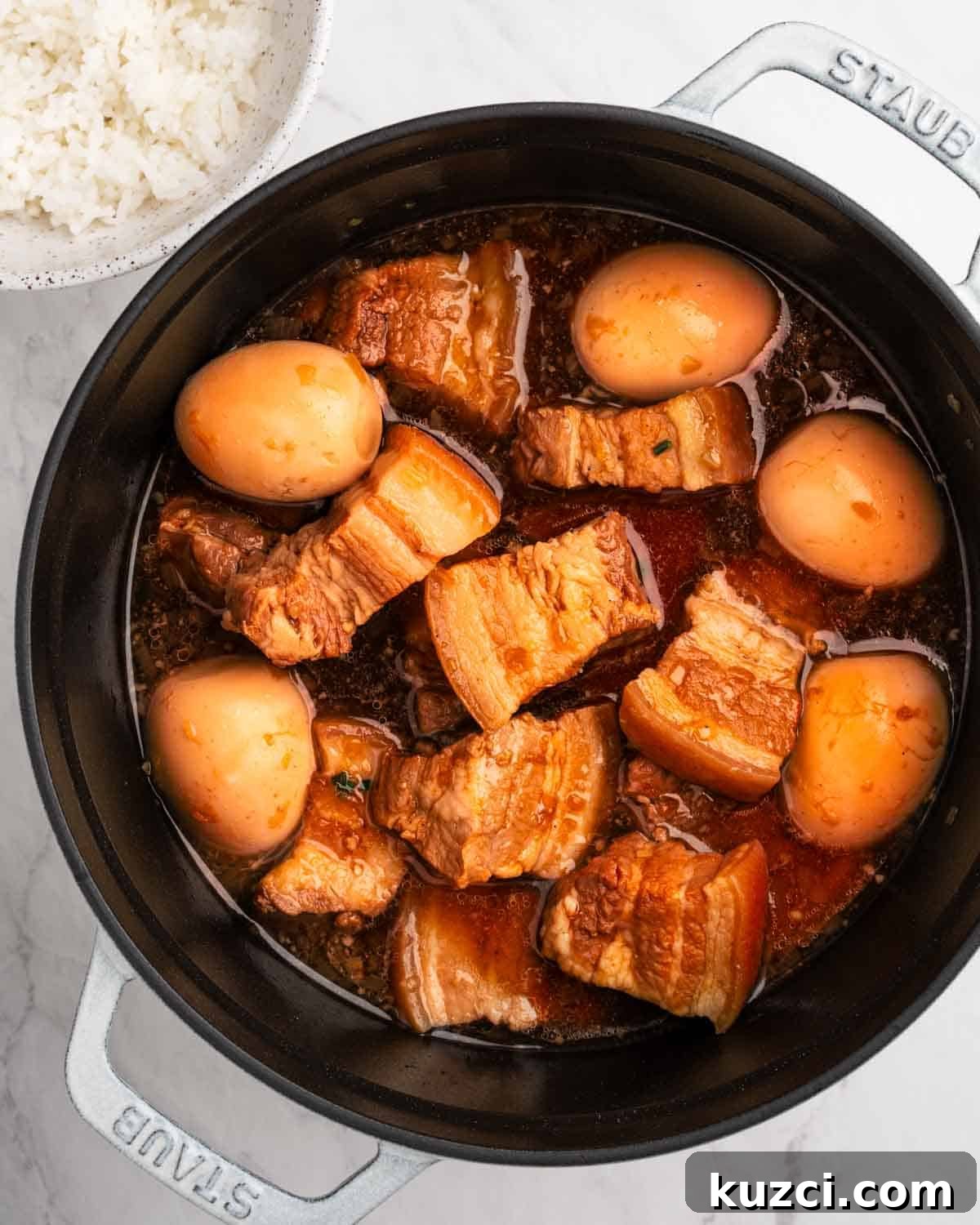
I’ve made thit kho for years, adjusting the balance of sweet, salty, and savory until it fits my family’s taste—never too sweet, never overly salty, and always rich without feeling heavy. Though the technique is simple, a few key steps—making the caramel, searing the pork, and braising gently—transform humble ingredients into something memorable.
This version sticks to the traditional approach but lays out clearer steps and offers flexible options so you can make it at home whether you have time to simmer on the stove or need an easier shortcut.
Short on Time? Try the Instant Pot Version
If you want the same concentrated flavors but with less active time, an Instant Pot or pressure‑cooker method speeds up the braise while keeping the pork tender. The result is similar—just adjust the liquid and cooking time for your appliance, and add the eggs near the end so they can absorb the sauce without overcooking.
What Is Thit Kho?
In Vietnamese, thit means meat (typically pork) and kho refers to braising: a slow simmer that concentrates flavors and tenderizes the protein. Thit kho belongs to a family of kho dishes—like ga kho gung (ginger‑braised chicken) and ca kho to (caramelized fish)—that share similar base flavors but vary by protein and aromatics.
Best Cut of Pork For Thit Kho
Pork choices change the texture and richness of the dish:
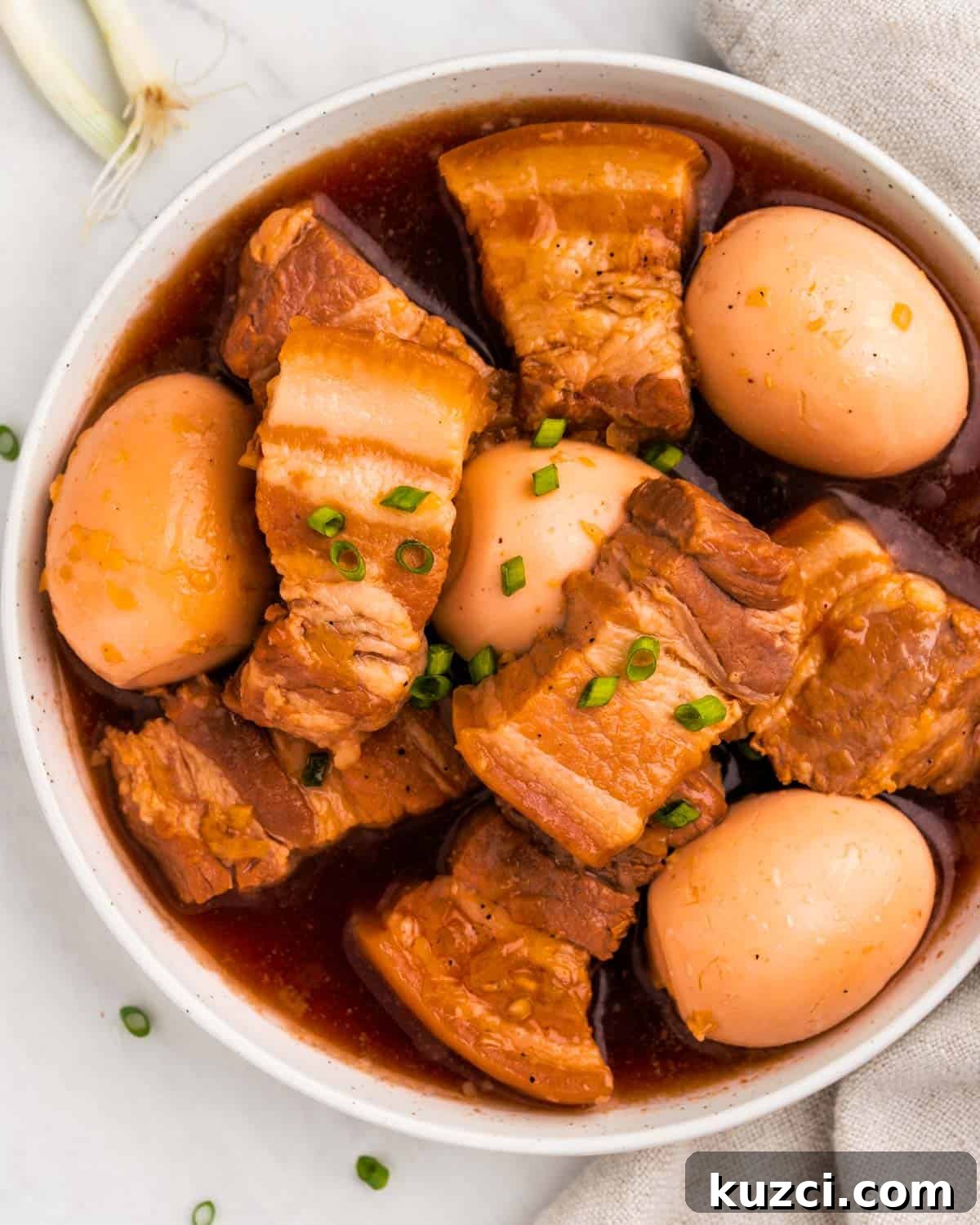
- Pork belly – classic choice, rich and silky
- Pork shoulder – leaner but still tender when braised
- A mix of both – balances fat and meat for great texture
Spare ribs can also work well for a slightly different presentation. Avoid very lean cuts like tenderloin, which can dry out during a long braise.
Eggs: Not Just a Garnish
Eggs absorb the braising sauce and become savory and delicious. Typical options:
- Chicken eggs (standard and economical)
- Duck or quail eggs (richer flavor and texture)
Soft‑ to medium‑boiled eggs that retain a slightly creamy yolk will soak up more sauce and add a pleasant contrast to the pork.
Fish Sauce Matters Here
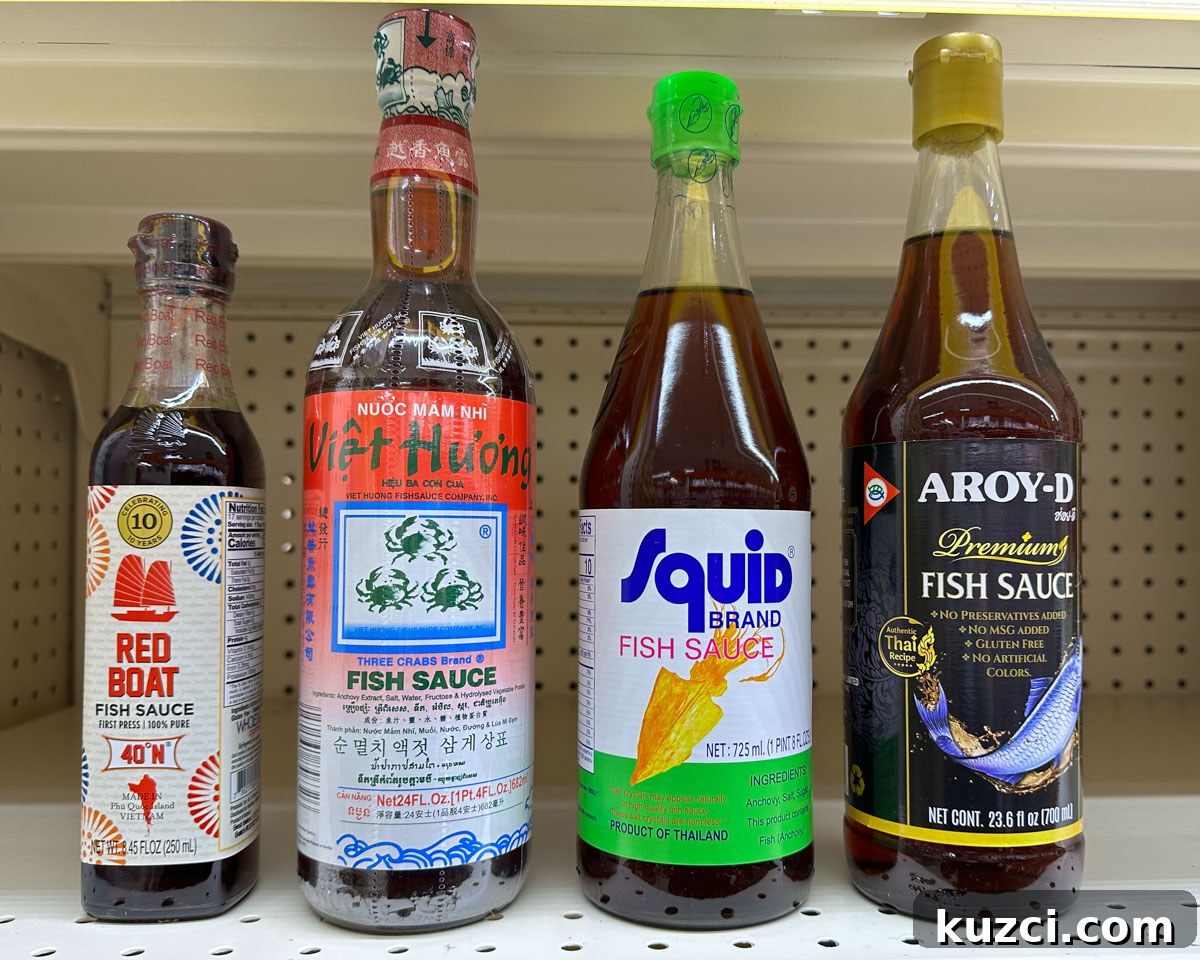
Fish sauce is a backbone ingredient in thit kho; a clean, well‑balanced fish sauce makes a noticeable difference. Look for a product with a short ingredient list and clear amber color. If you prefer, a small splash of another seasoning sauce (for example, Maggi) or a touch of soy can add umami, but fish sauce should still lead the seasoning.
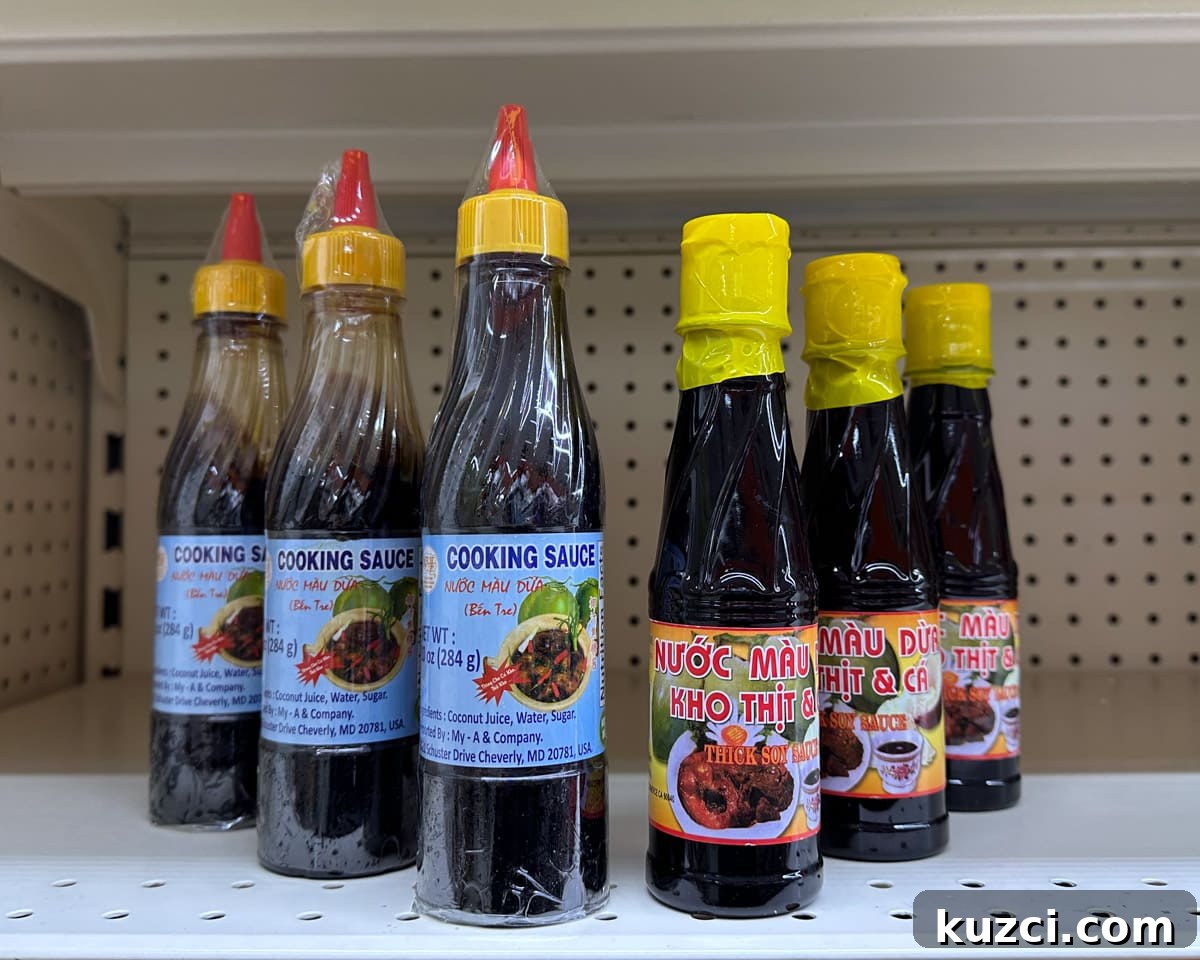
What Is Nuoc Mau (Caramel Sauce)?
Nuoc mau is not dessert caramel but a lightly bitter‑sweet caramel syrup used to deepen color and flavor in braised dishes. It gives thit kho its characteristic dark, glossy sauce. You can buy bottled nuoc mau or make it at home by carefully melting sugar and adding a small amount of water—watch it closely, as caramelization happens quickly.
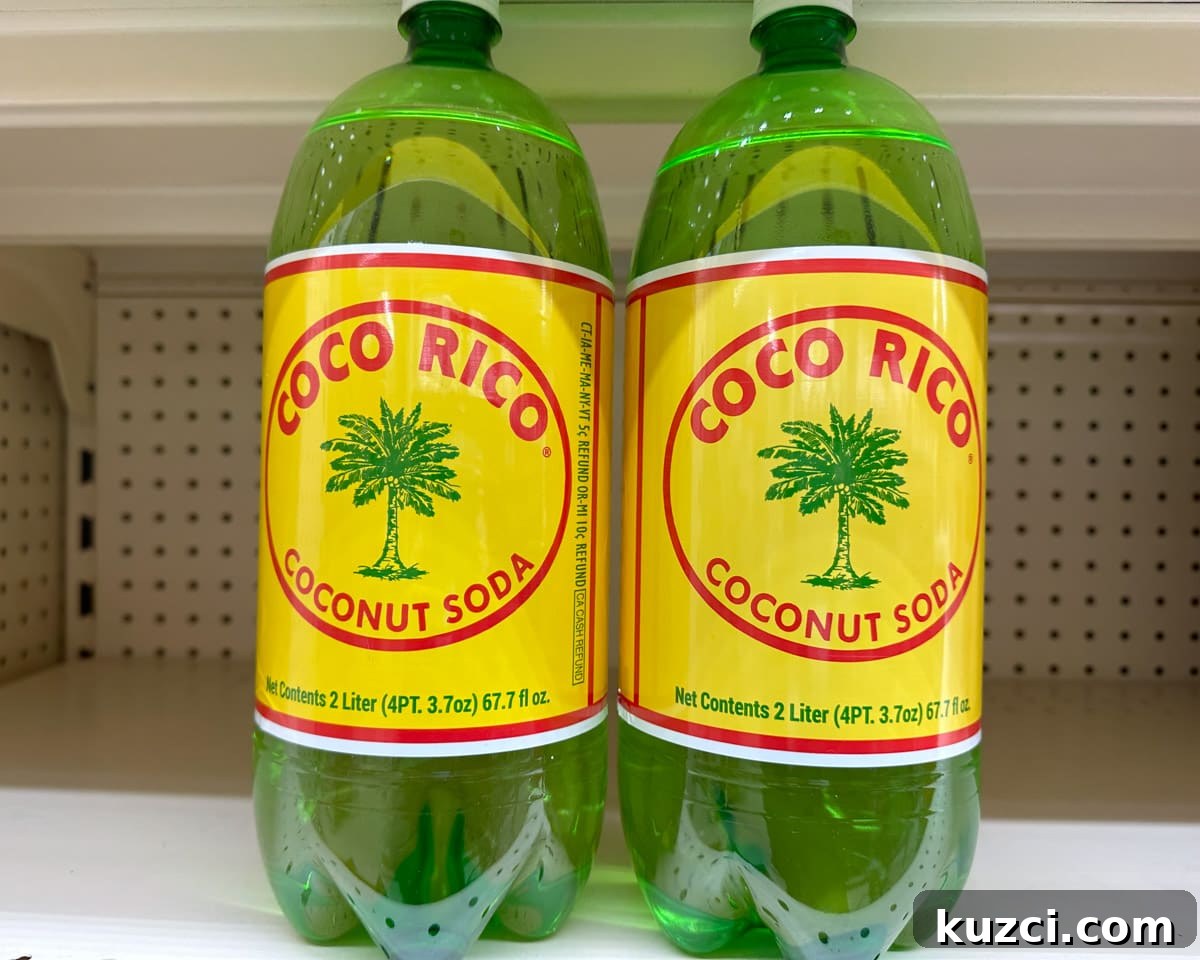
Coconut Water or Coconut Soda?
Both liquids are commonly used to add a hint of sweetness and to help tenderize the meat:
- Coconut water – traditional and lightly sweet
- Coconut soda (e.g., sweetened soda with coconut flavor) – adds more sugar for faster caramelization
If using soda, reduce the added sugar elsewhere in the recipe and taste as it reduces to avoid over‑sweetening.
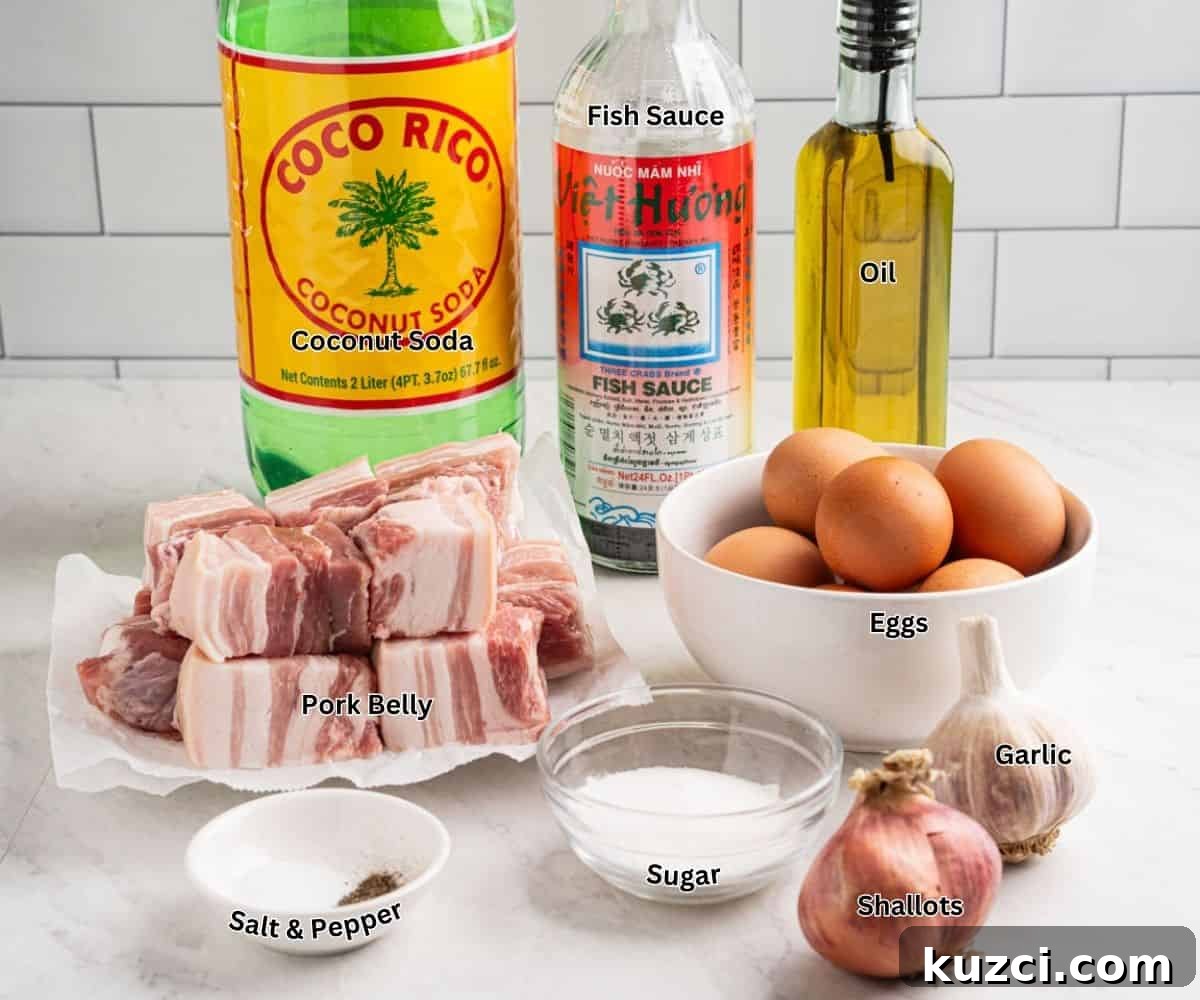
Key Ingredients (What Actually Matters)
Essential: pork (belly or shoulder), fish sauce, nuoc mau (caramel), shallots, garlic, coconut water or soda, and eggs. These elements combine to create the classic balance of savory, sweet, and umami.
Substitutions and Variations
- Skip eggs or use quail eggs if you prefer smaller portions.
- No coconut water? Use coconut soda, cola, or even 7‑Up; the sugar helps with caramelization—just adjust added sugar.
- No fish sauce? Try a mix of soy sauce and a splash of vinegar, or use oyster sauce as a substitute.
- Swap pork for beef chuck if you avoid pork; the braising technique still applies.
- Replace water with low‑sodium chicken broth for more savory depth.
- No shallots? Yellow onion or scallions are acceptable replacements.
Tips for Success
- Choose well‑marbled pork for tenderness and flavor.
- Sear the pork before braising to develop deeper savory notes.
- Braise gently and patiently—low heat yields the best texture.
- Add eggs near the end so they soak up the sauce without overcooking.
- Thit kho often tastes better the next day, after the flavors have rested.
What to Serve It With
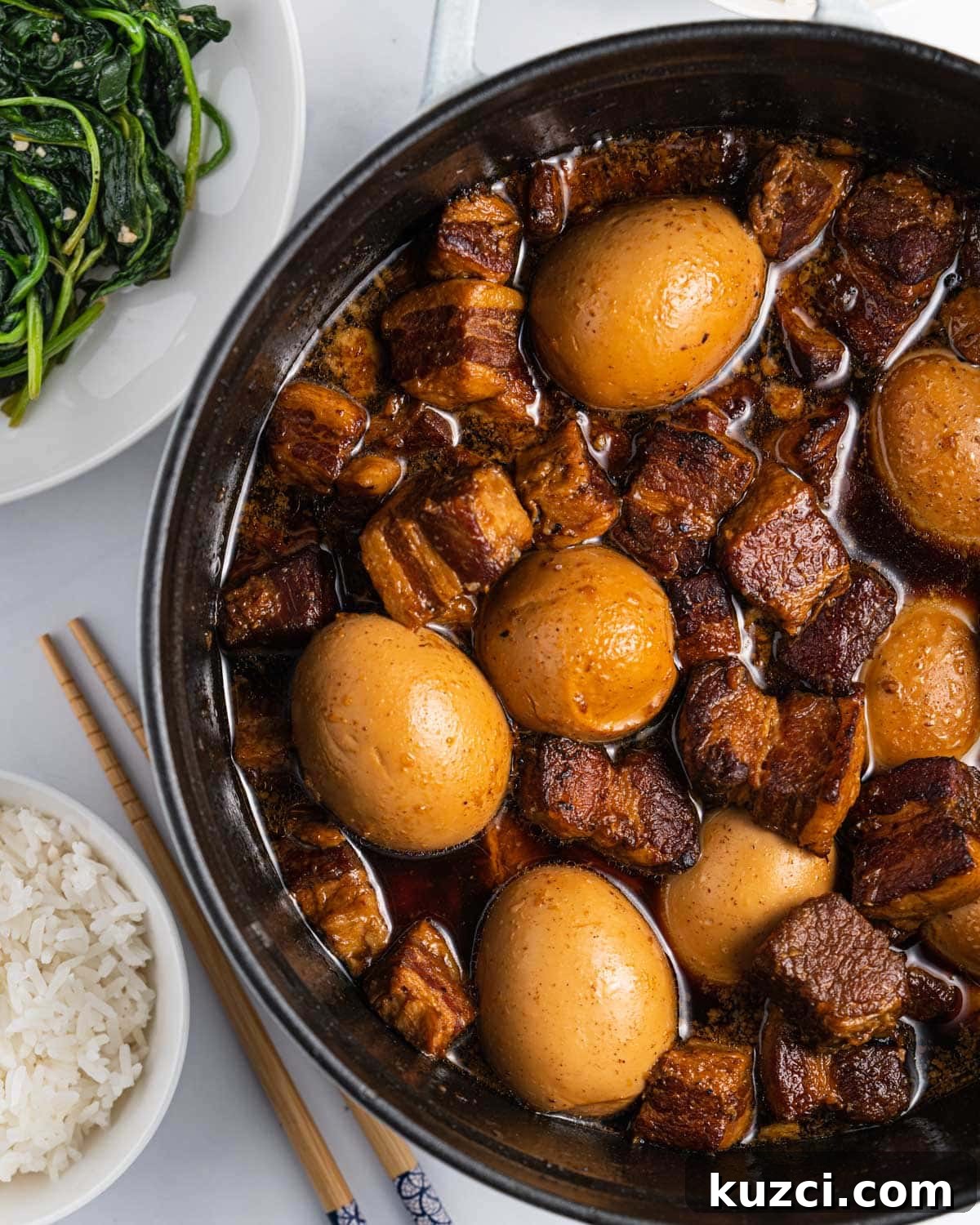
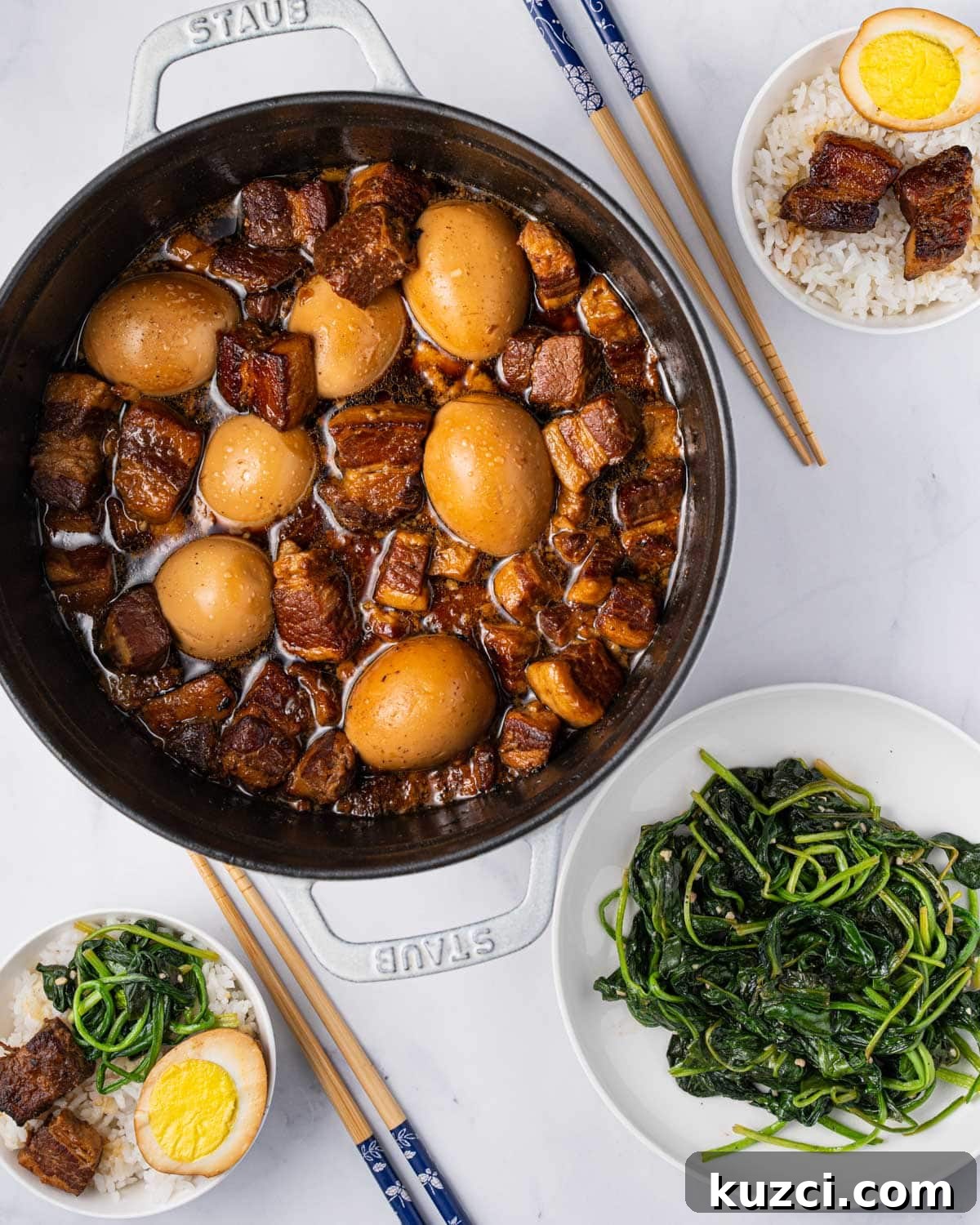
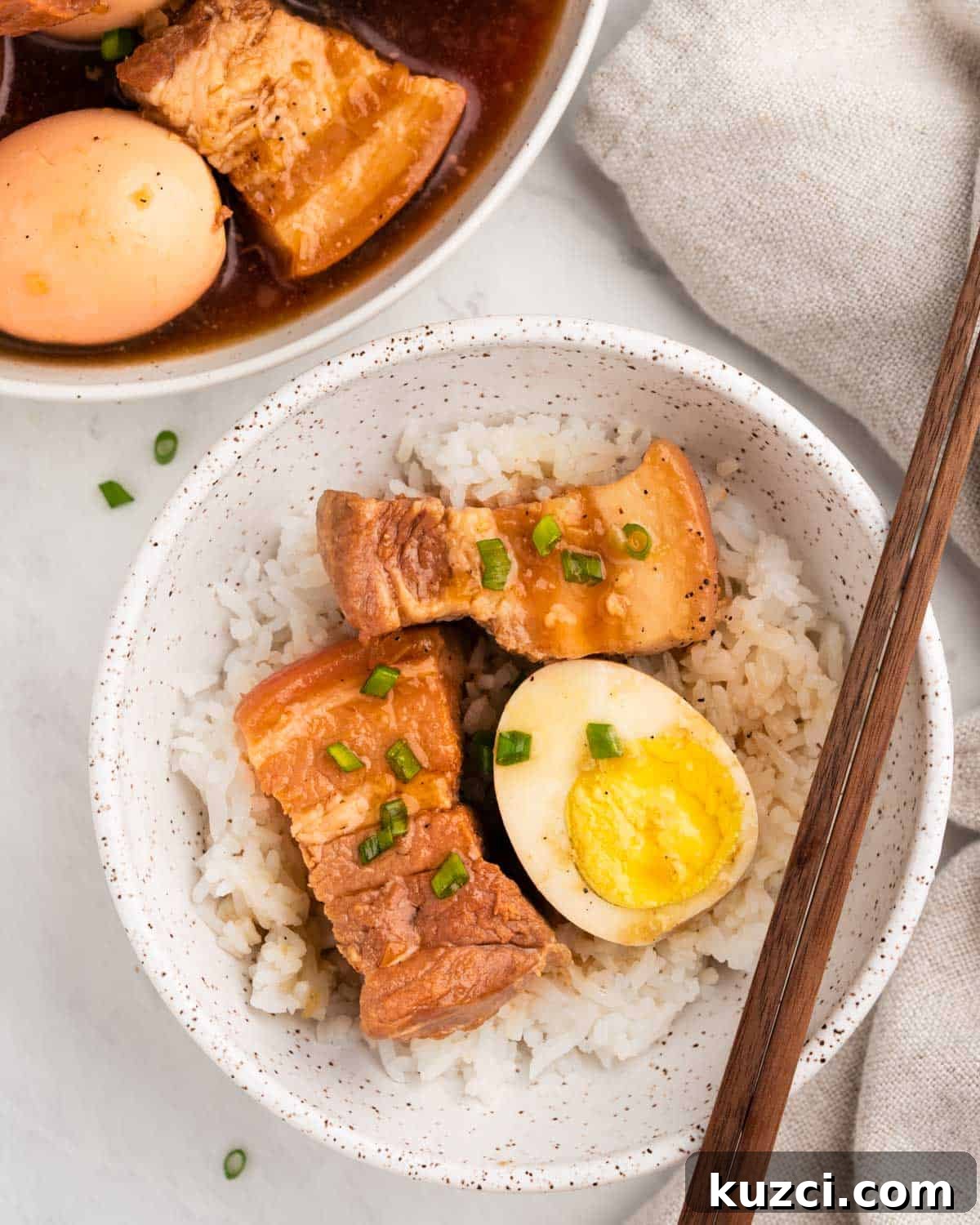
Thit kho is traditionally served with plain steamed jasmine rice so the caramel sauce can shine. Bright, acidic pickles such as Vietnamese pickled carrots and daikon make a perfect counterpoint and help cut through the richness. Stir‑fried greens (rau muong or water spinach) or pickled mustard greens also complement the dish nicely. For larger gatherings, pair with fried rice and crispy egg rolls for a more varied spread.
Storing and Reheating
- Refrigerate in an airtight container for up to 4 days.
- Freeze for up to 3 months.
- Reheat gently on the stove so the fat melts back into the sauce and the pork warms evenly.
After chilling, you may see a layer of solidified fat on top; skim it if desired or stir it back in when reheating.
Why This Dish Never Gets Old
Thit kho is timeless because it’s simple, unfussy, and built on deeply satisfying flavors. The combination of caramelized sugar, savory fish sauce, aromatic shallots and garlic, and melt‑in‑your‑mouth pork is universally appealing. Whether it’s a weekday dinner or part of a holiday table, thit kho rewards patience and makes excellent leftovers.
If you try the recipe, I’d love to hear how it turned out—save it for later or share your adjustments; this is one dish that welcomes personalization.
RECIPE
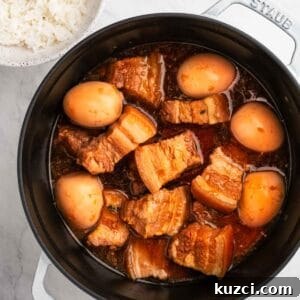
Thịt Kho – Vietnamese Braised Pork and Eggs
Servings: 8 • Cook time: about 1 hour 5 minutes (plus marinating)
Ingredients
For the caramel sauce
- 2 tablespoons sugar
- 3 tablespoons water
For the braised pork (thịt kho)
- 2 pounds pork shoulder, pork belly, or a mix, cut into 1½‑inch cubes
- 1 teaspoon salt (or chicken bouillon or mushroom seasoning)
- ½ teaspoon ground black pepper
- 1–2 tablespoons caramel sauce (from above), adjust to taste
- 3 tablespoons fish sauce, adjust to taste
- 1 tablespoon soy seasoning (optional)
- ½ tablespoon olive oil
- 2 shallots, finely diced
- 3 garlic cloves, minced
- 3 cups coconut soda (or coconut water)
- 1 cup water (or chicken broth)
- 8 hard‑boiled eggs, peeled
- Steamed rice, for serving
Instructions
- Hard‑boil the eggs. Boil for about 10 minutes, cool, peel, and set aside.
- Make the caramel (nuoc mau). In a small saucepan over medium heat, add sugar and let it begin to melt without stirring for 1–2 minutes. Stir gently as it melts to an amber color. Carefully add the measured water (it will bubble) and stir until smooth. Remove from heat and set aside.
- Parboil the pork. Bring a pot of water to a boil, add the pork pieces, and parboil for 4–5 minutes to remove impurities. Drain and discard the parboil water.
- Marinate. Combine the drained pork with salt, pepper, fish sauce, soy seasoning (if using), and 1–2 tablespoons of the caramel sauce. Let sit for at least 15 minutes.
- Sear the pork. Heat oil in a large heavy pot over medium‑high heat. Sear the pork in batches until browned on all sides, about 1–2 minutes per side. Do not overcrowd the pot.
- Add aromatics. Add shallots and garlic to the pot and cook until fragrant, about 2–3 minutes.
- Braise. Pour in the coconut soda (or water/coconut water) and 1 cup water or broth. Bring to a simmer, then reduce the heat to low, cover, and braise gently for about 40 minutes, stirring occasionally. Add water if the liquid reduces too quickly. Taste and adjust seasoning.
- Add the eggs. 5–10 minutes before the pork is done, nestle the peeled hard‑boiled eggs into the sauce so they warm and absorb flavor.
- Serve. Serve thit kho hot over steamed jasmine rice. Leftovers deepen in flavor and are excellent reheated.
Notes
- Use well‑marbled pork for the best mouthfeel.
- One to two tablespoons of caramel sauce are usually enough to give the dish color and depth—add more at the end only if needed.
- Do not skip searing; it adds important depth to the final sauce.
- Add eggs at the end so they absorb sauce without becoming rubbery.
- The braise is forgiving—low and slow yields the best results.