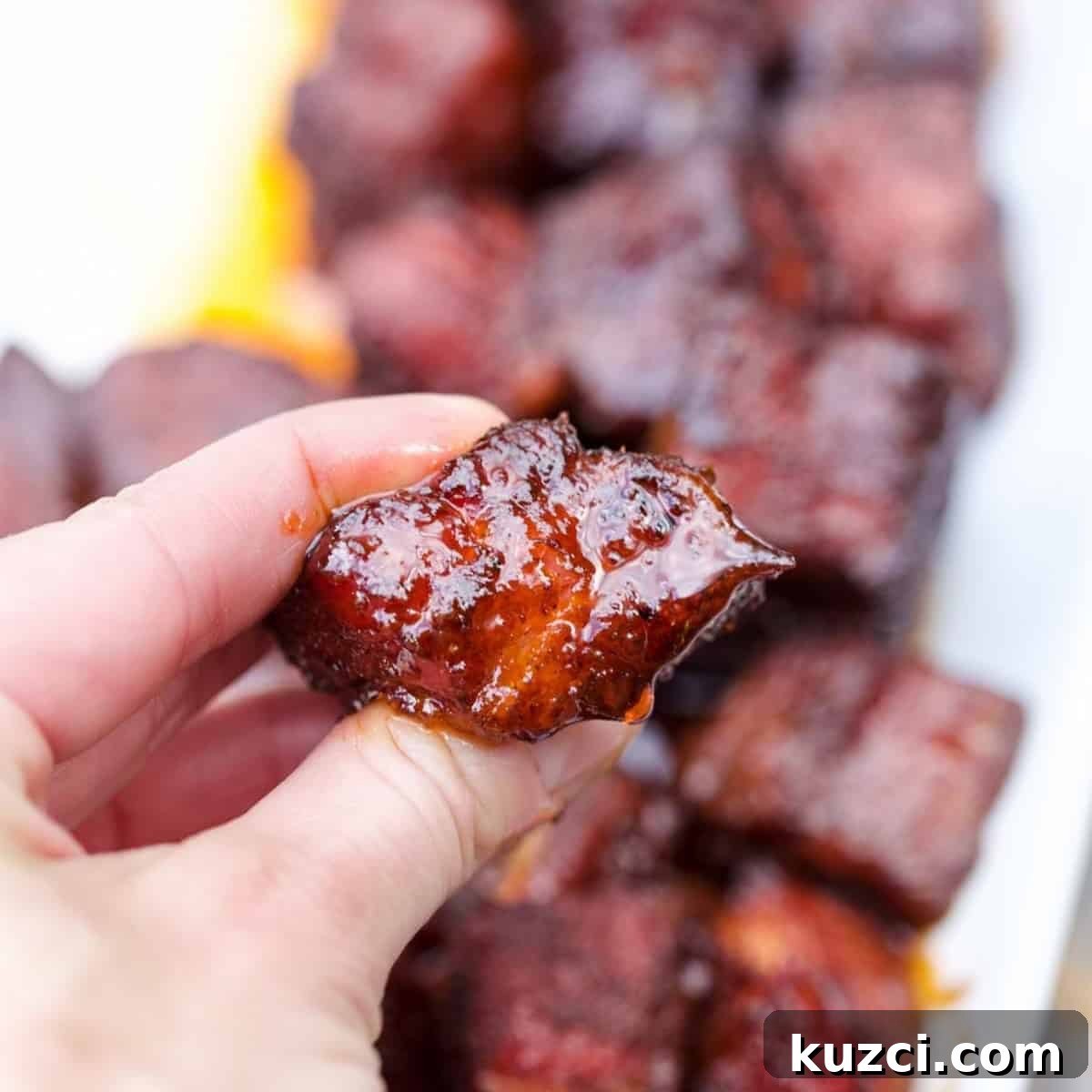
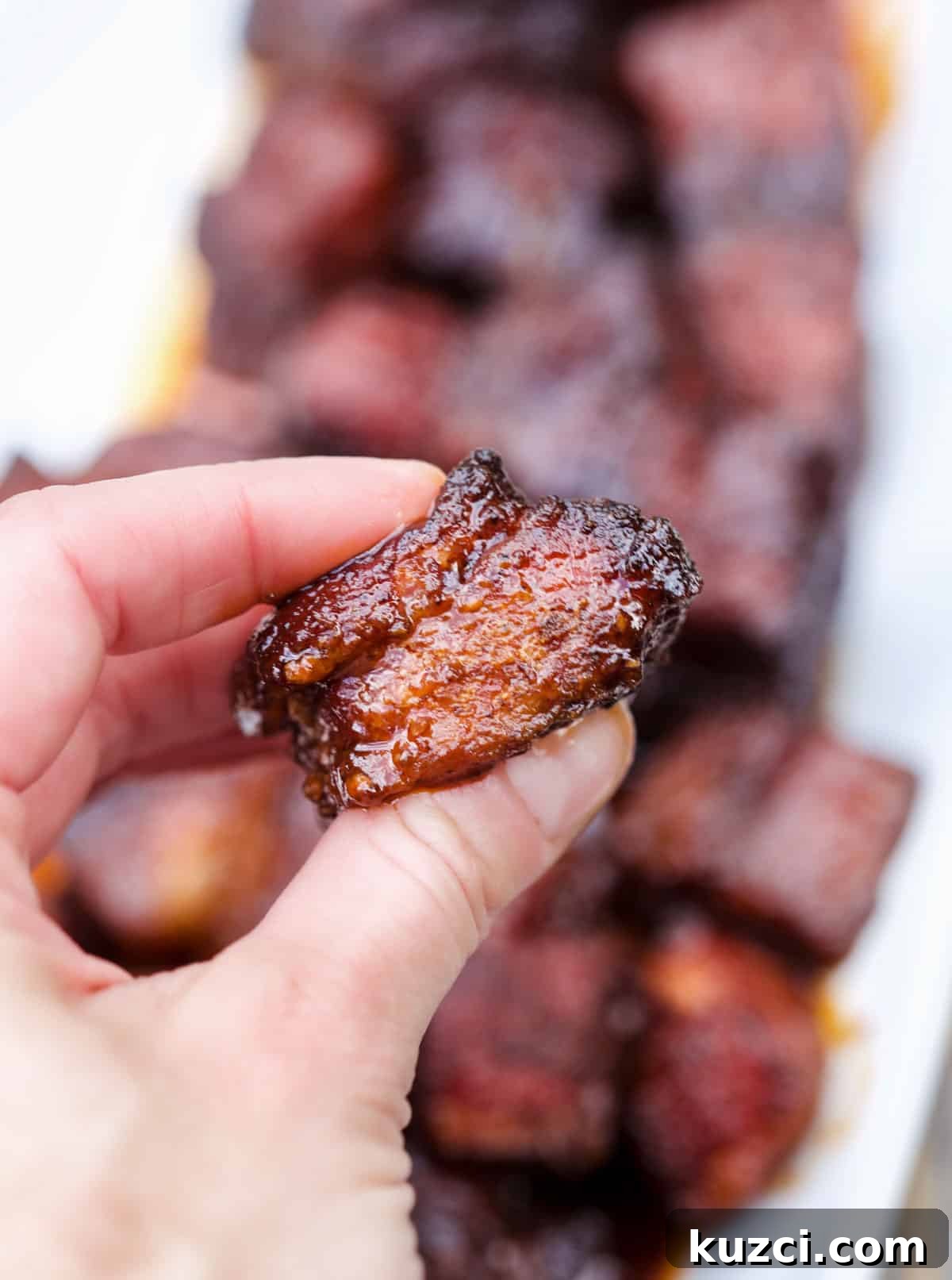
Pork Belly Burnt Ends are incredibly tender, deeply flavorful, and surprisingly simple to make. This smoked pork belly recipe is a delicious twist on classic brisket burnt ends—often called “meat candy”—and consistently proves popular for gatherings and weeknight feasts.
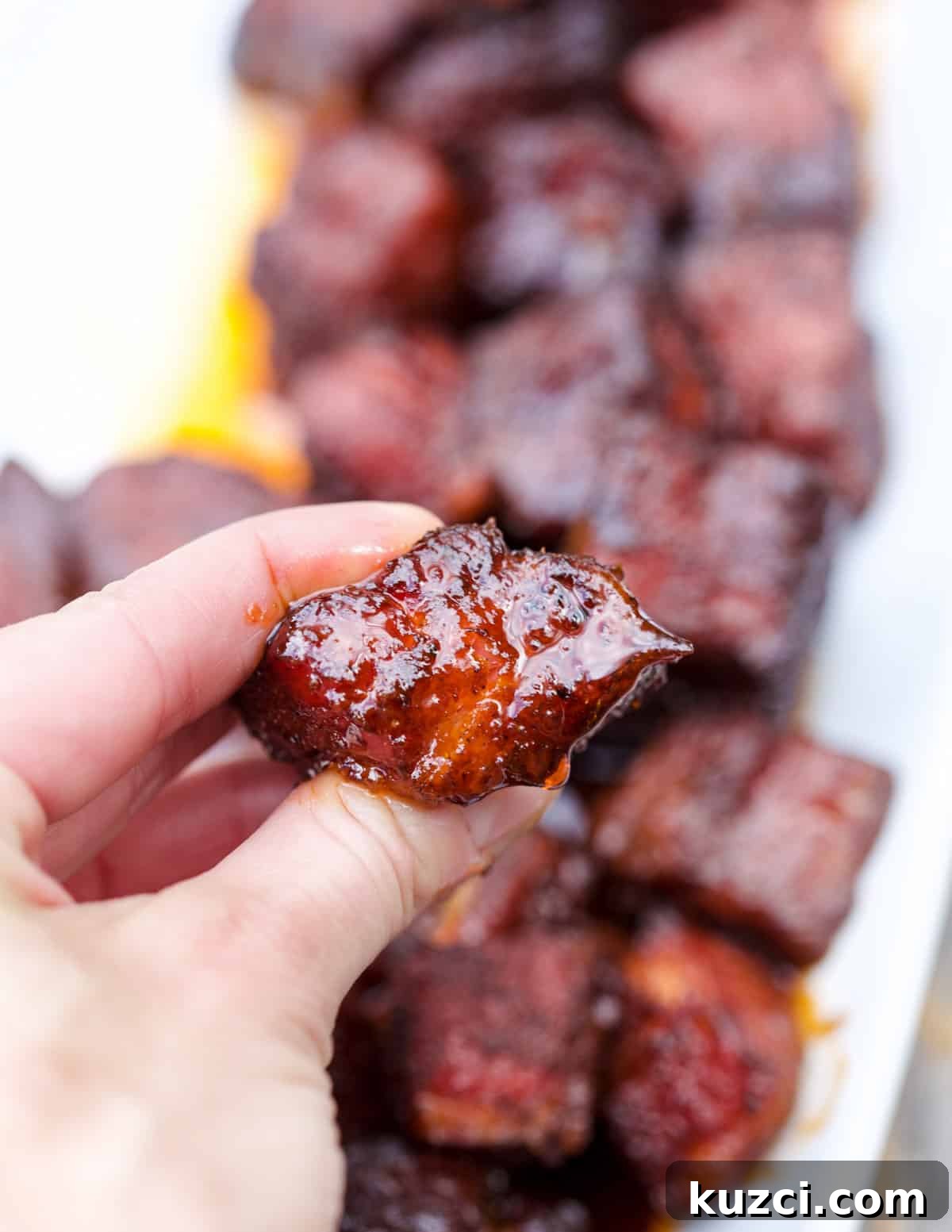
Vindulge Recipe Highlights
- Cubed pork belly is dry-rubbed, slowly smoked, then braised in a mix of barbecue sauce, honey, and butter until sticky and tender.
- The braise renders the fat and concentrates flavor, turning the cubes into bite-sized treasures that melt in your mouth.
- Works on most smokers and can be adapted for the oven if needed.
- Scales easily for parties or small gatherings and is always a crowd favorite.
Table of Contents
- Vindulge Recipe Highlights
- Origins
- Ingredients
- Preparation
- How to Smoke
- FAQ
- Chef Tips
- Storage & Reheating
- What to Serve With
- Wine Pairing
- Recommended Products
Origins
Turning pork belly into burnt ends borrows the spirit of beef brisket burnt ends but highlights pork’s rich, silky fat and meat. The result is caramelized, sticky cubes that deliver intense flavor and a tender texture.
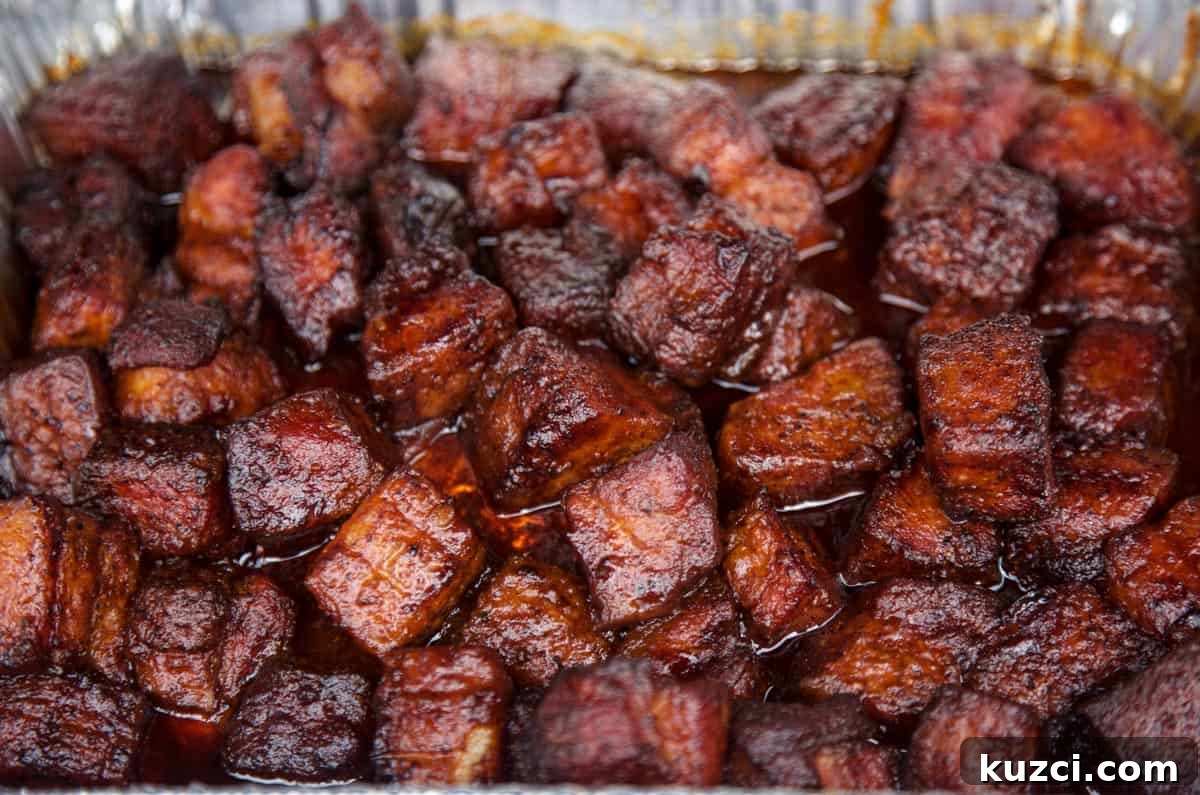
Ingredients
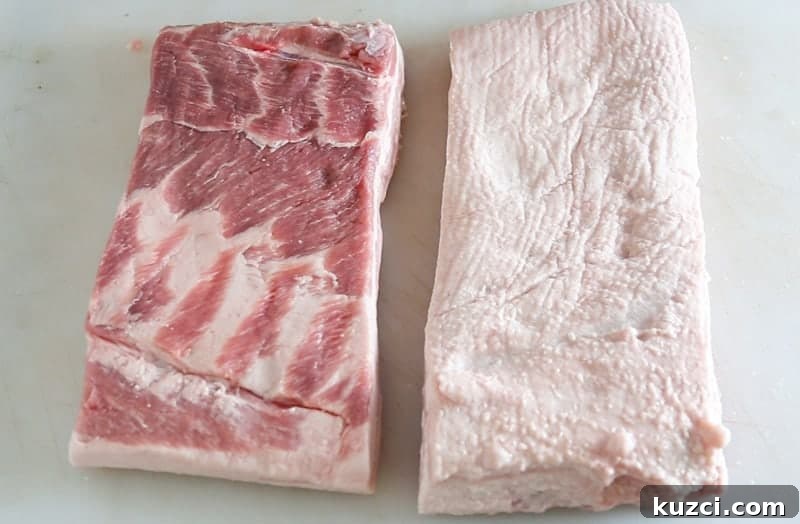
- Pork belly – A full slab is about 5 pounds; smaller portions work too. Buy skinless when possible. Boneless pork shoulder can be substituted if necessary.
- Seasoning – Extra virgin olive oil to bind and a brown-sugar-forward pork rub (kosher salt, brown sugar, and spices) for a sweet-savory crust.
- Braising mix – A cup of a flavorful BBQ sauce, 3–4 tablespoons unsalted butter, and 2 tablespoons honey (or agave) to add richness and stickiness.
Buying Guide
Pork belly is sold in various sizes. Ask your butcher for a skinless, center-cut slab when possible: the center cut offers a balanced 50/50 ratio of meat to fat. If the belly has skin, remove it before cooking — the skin does not render and stays chewy. Avoid pieces that are almost entirely fat as they won’t render evenly into tender bites.
Preparation for Pork Belly Burnt Ends
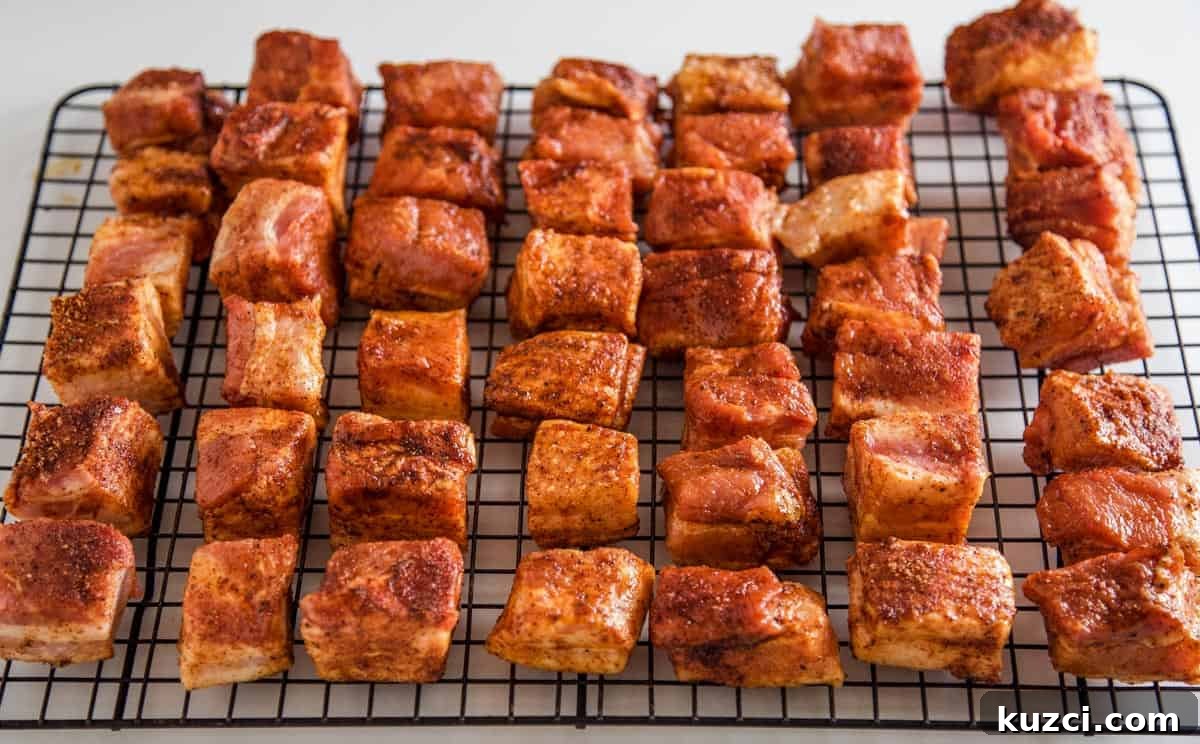
Trim any remaining skin and excess fat, then cut the belly into 1½–2 inch cubes. Larger pieces will shrink during cooking to a perfect bite size.

Seasoning
Place cubes in a large bowl, toss with olive oil, and coat liberally with dry rub—about 1 cup for 5 pounds is a good guideline. Transfer the seasoned cubes to a wire rack for better smoke circulation and easier handling on and off the smoker.
How to Smoke Pork Belly Burnt Ends
The technique has three stages: smoke for flavor, braise to render and glaze, then finish uncovered to firm the sauce.
- Smoke: Preheat smoker to 250°F and use a fruit wood such as cherry for color and a touch of sweetness. Smoke the cubes for about three hours, or until a nice bark and deeper color develop.
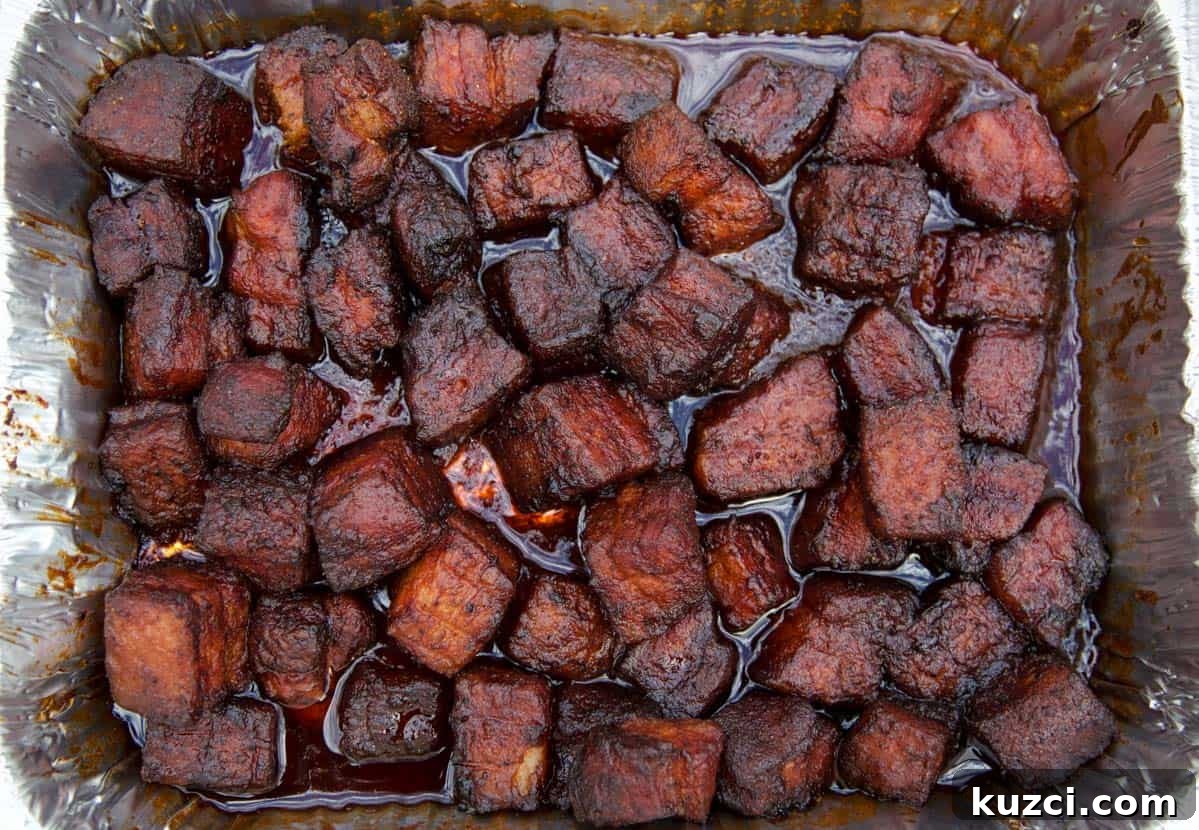
- Braise: Transfer smoked cubes to a foil pan. Add roughly 1 cup BBQ sauce, 3–4 tablespoons unsalted butter, and 2 tablespoons honey. Mix, cover with foil, and return to the smoker.
- Braise time: Cook covered for 60–90 minutes, or until the internal temperature reaches about 200–205°F and the fat has rendered, keeping the pan moist with the braise.
- Finish uncovered: Remove the foil and smoke another 10–15 minutes uncovered so the sauce thickens and becomes tacky. Remove and serve directly from the pan.
Oven Modification
Follow the same steps in a 250°F oven: smoke flavor can be approximated by adding a small amount of smoked paprika to the rub or using liquid smoke sparingly. Cook times remain the same—smoke stage replaced by slow roasting, then braise and finish as directed.
Frequently Asked Questions
Properly cooked, much of the fat renders out during braising, leaving tender, rich bites without an obvious greasy texture.
Pork belly is ideal for this method. If unavailable, boneless pork shoulder is a reasonable substitute.
Yes. The skin does not render in this process and remains chewy; buy skinless when possible.
Plan for roughly five hours total: three hours smoking, 60–90 minutes braising, and 10–15 minutes uncovered to finish.
Estimate about 5 ounces per person (roughly three servings per pound) when serving as an appetizer or part of a larger spread.
Chef Tips
- Keep grease traps and drains clean—the rendered fat can cause flare-ups or grease fires if not controlled.
- Discard cubes that are nearly all fat; they will not render into pleasant bites. Choose center-cut pork belly for the best meat-to-fat balance.
Storage and Reheating
Store leftover burnt ends in an airtight container with the braising liquid and rendered fat. They keep for up to one week refrigerated. When reheating, place the meat and its juices in an oven-safe dish, cover with foil, and bake at 325°F for about 30 minutes until warmed through. Reheating on a smoker at 250°F for about an hour also works well.
What To Serve With Pork Belly Burnt Ends
Balance the richness with brighter, lighter sides: a tangy no-mayo coleslaw, grilled romaine Caesar, or crisp pickles are excellent choices. These burnt ends also work fabulously in sandwiches or as part of a barbecue platter.
Wine Pairing for Pork Belly Burnt Ends
Bold, fruit-forward red wines pair best with these rich, smoky bites. Syrah (Shiraz), Malbec, or Zinfandel complement the smoky, sweet, and savory notes of the dish. For something lighter while cooking, a chilled rosé is also pleasant.
Other Great BBQ Recipe Ideas
- Grilled crispy pork belly
- Pellet-grill ribs
- Brisket burnt ends
- 3-2-1 smoked ribs
- Classic smoked brisket
Recommended Products
- An instant-read thermometer to monitor internal temperatures accurately.
- Food-safe gloves for handling raw meat during preparation.
Food and Cooking Safety Considerations
Pork belly releases a lot of fat as it cooks. Make sure smoker grease traps are clear and fat drains away from the fire to prevent flare-ups. Follow basic food-safety practices: avoid cross-contamination, wash hands and utensils after handling raw meat, and refrigerate promptly. This recipe cooks the meat well above the USDA recommended minimum temperature for pork, producing a safe and delicious result.
- Do not use the same utensils on cooked food that touched raw meat.
- Wash hands after handling raw pork and consider gloves for prep.
- Avoid leaving cooked food at room temperature for extended periods.
This method for Pork Belly Burnt Ends produces richly flavored, tender bites ideal for entertaining or a special meal. With proper preparation and patience, you’ll be rewarded with some of the most addictive smoked meat you can make.
Smoked Pork Belly Burnt Ends — Recipe Card
Ingredients (about 15 servings)
- 5 pounds pork belly, cut into 1½–2 inch cubes
- 3 tablespoons extra virgin olive oil
- 1 cup pork rub (brown sugar, salt, spices)
- 1 cup BBQ sauce
- 3 tablespoons unsalted butter
- 2 tablespoons honey
Instructions
- Preheat smoker to 250°F. Use cherry or another fruit wood for a sweet smoke.
- Trim skin and excess fat, cube the belly, toss with olive oil and rub, and place on a wire rack.
- Smoke uncovered for about three hours until a darkened color and bark form.
- Transfer cubes to a foil pan, add BBQ sauce, butter, and honey, stir, cover with foil, and return to the smoker.
- Braise covered for 60–90 minutes until internal temperature is around 200–205°F and fat has rendered.
- Uncover and smoke another 10–15 minutes so the sauce firms up and becomes tacky. Serve warm.
Notes
Plan roughly five hours total for this recipe. Save the braising juices with leftovers and refrigerate; the fat will solidify but reheats easily to revive texture and flavor.
Nutrition (approximate per serving)
Calories, carbohydrates, protein, and fat values will vary by exact ingredients and portion size.