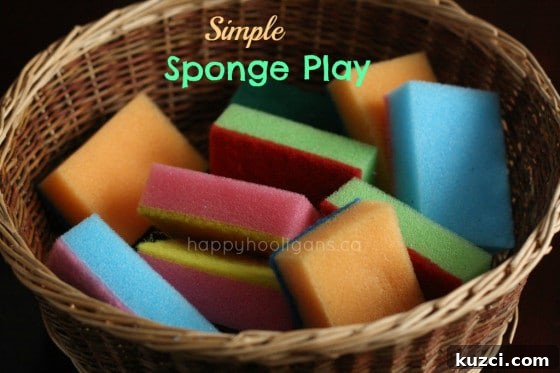
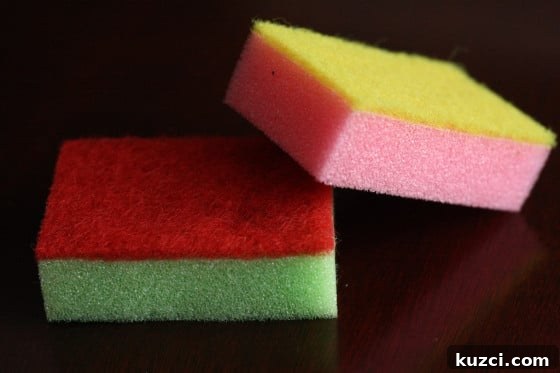
Pick up a pack of colourful dollar-store sponges and add them to your collection of loose parts for the playroom. In this post I’ll show how a simple sleeve of sponges sparked half an hour of open-ended learning and play for toddlers and preschoolers, and how small items like these support creativity, sensory exploration, and problem solving.
“Children learn as they play. Most importantly, in play children learn how to learn.” – Fred Donaldson
This is a short reminder: never underestimate how rich play can be when children are given simple, open-ended materials. A cheap pack of sponges becomes more than a cleaning tool — it becomes a resource for imaginative play, fine motor practice, and language development.
Sponges as Loose Parts
My husband came home from the store with a sleeve of brightly coloured kitchen sponges and handed them over with a grin: “I thought you and the kids might put these to use.” I quickly pictured paint projects and sensory bins, but it was late and we didn’t have time for crafts. So I placed the sponges in a basket and simply offered them to the children as loose parts.
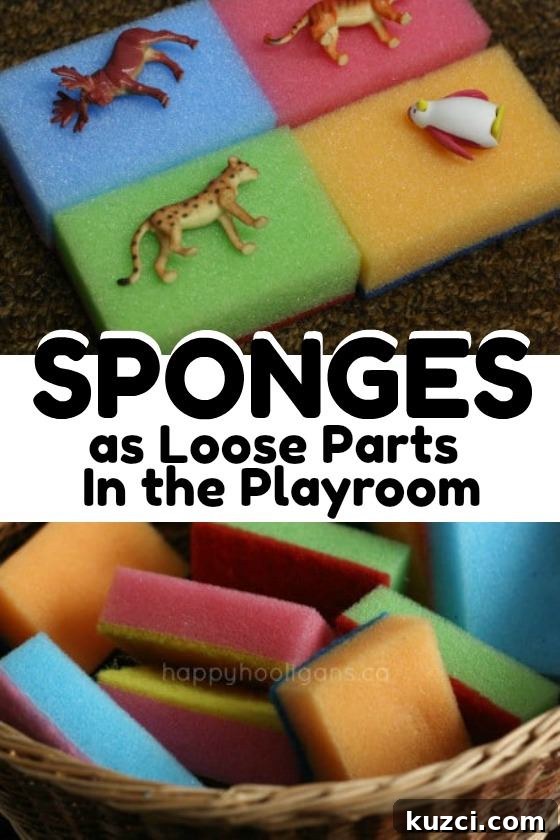
Offering materials without instructions invites children to experiment and invent. Loose parts—objects with no single, prescribed purpose—encourage exploration, imagination, and creativity in ways that purpose-built toys often don’t.
Ooooh, Aaaah…
When I set the basket down, the reaction was immediate: squeals, gasps and excited chatter as they dug in. Simple materials often evoke strong enthusiasm because children can immediately see the possibilities and start making decisions about how to use them.
Loose parts encourage imagination and creativity
Open-ended items let children lead the play. Without a single “right” way to play, they choose roles, invent scenarios, solve problems, and test ideas. Hands scrambled to grab sponges, the basket emptied in moments, and everyone dispersed to pursue their own play ideas.
For the next half hour the sponges were the main attraction. Each child used them in a unique way, demonstrating different aspects of development and learning.
I snapped a few photos to capture how they played.
Creative Exploration
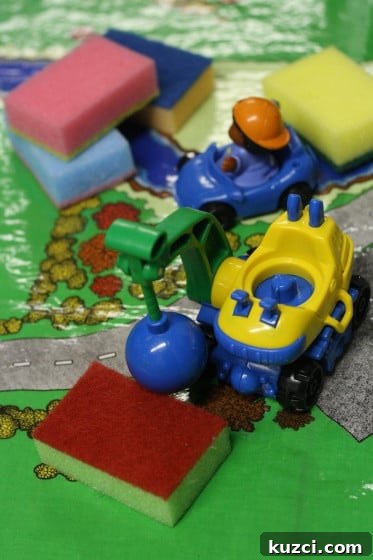
One child used the sponges as key pieces in an imaginative construction site, arranging them to represent building materials and tools.
Engineering
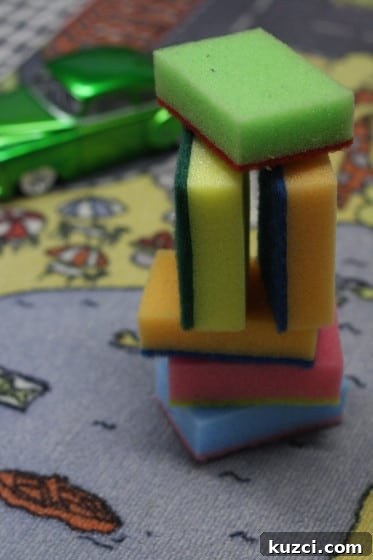
Others experimented with balance and stability, stacking sponges to see how tall a tower they could build. These moments strengthen spatial reasoning and fine motor coordination.
Imagination
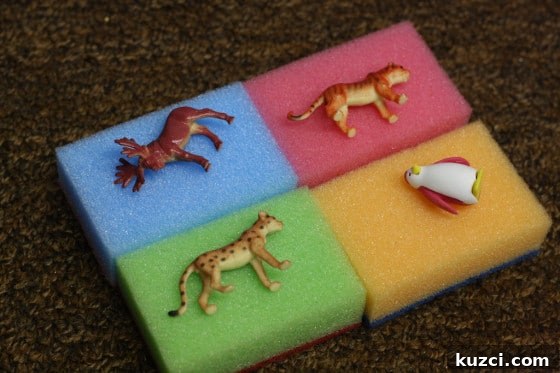
Some sponges became beds for toy animals, tiny islands, or stages for dramatic play. Imaginative uses encourage narrative skills, role play, and social interaction.
Problem Solving
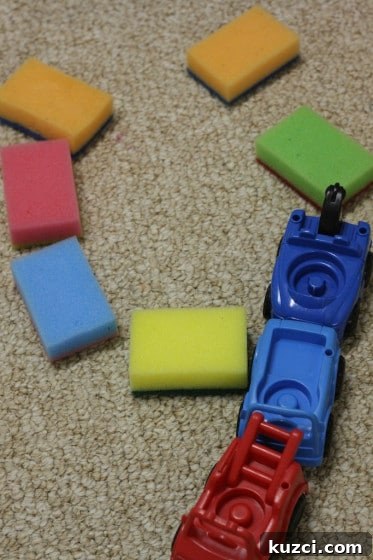
Other children used sponges as obstacles and track features for toy cars, planning routes and negotiating turns. These play choices promote planning, testing, and adapting strategies.
Sensory and Vocabulary
Sensory exploration happened naturally: children pretended to scrub toys, rubbed sponges across their faces and hands, and described the textures. They used words like “scratchy,” “rough,” and “squishy,” building vocabulary tied to tactile experience.
Critical Thinking
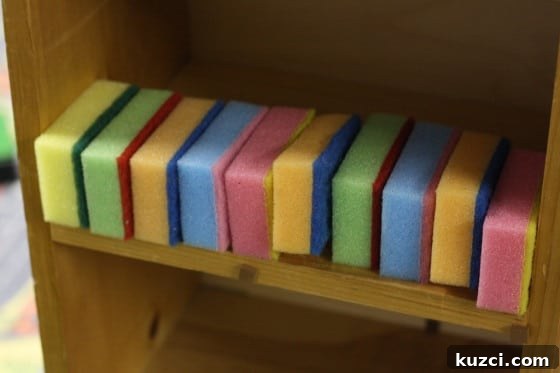
Before the last child left, she tucked the sponges into the dollhouse and oriented each one the same way, with the scouring side facing right. Small acts like this reveal preferences, planning, and emerging logical thinking.
Who would have thought a sleeve of colourful sponges could support so many kinds of play and learning? We will probably use some for future art projects, but for now they stay in the toy room as ready-made loose parts that invite discovery.
More loose parts play
- 10 Activities with Rocks and Stones
- Bottle Babies – plastic juice bottles for creative play
- Story Stones for storytelling and language development
Get the 3–5 Playful Preschool e‑Book
A collection of preschool activities and printables from a range of contributors—useful inspiration for more loose-parts and hands-on play ideas.
Follow Happy Hooligans on Facebook for more play ideas and activity inspiration.