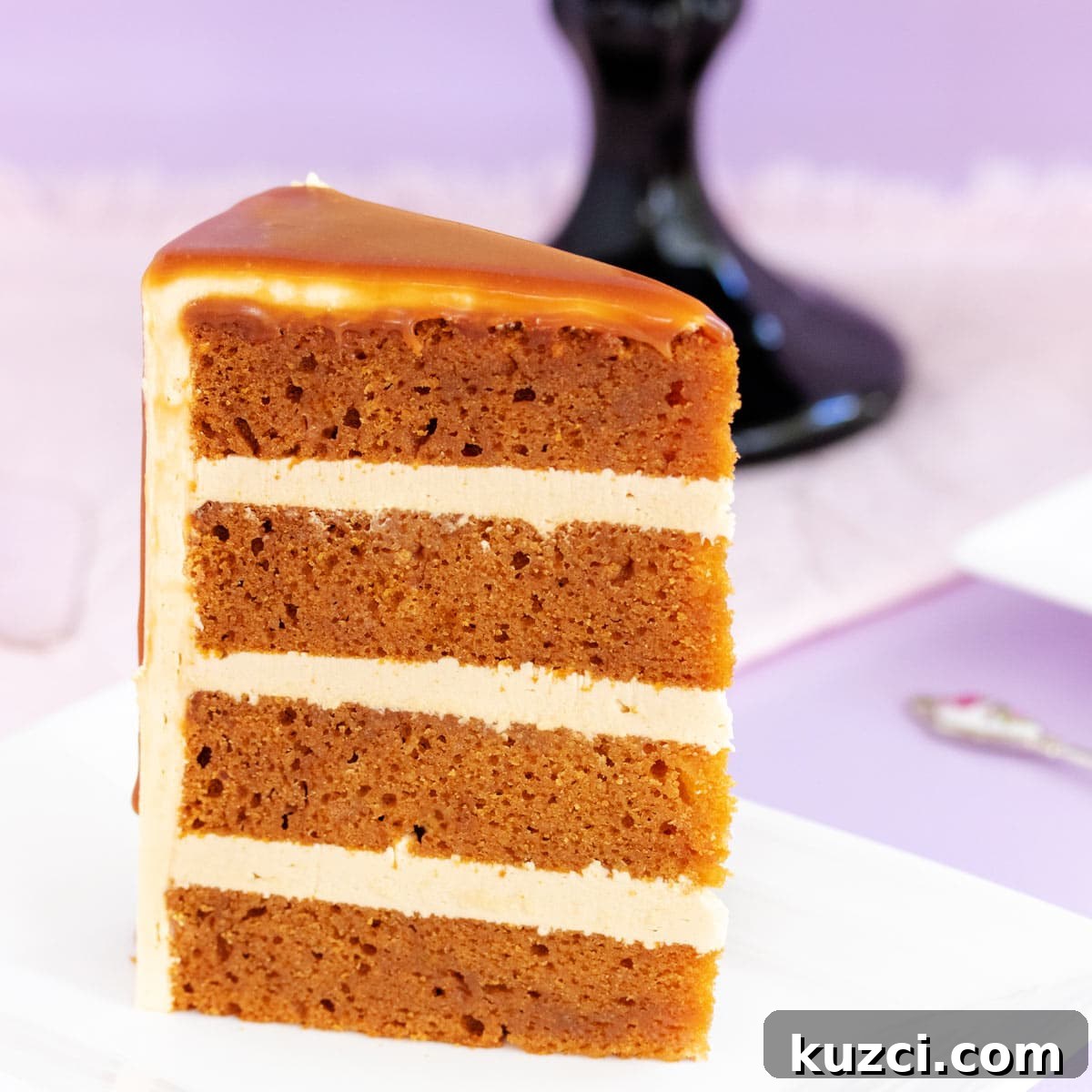
Rich, dark caramel mud cake made using real caramel sauce from scratch. This is every caramel lover’s dream cake — includes an option to make it gluten free.
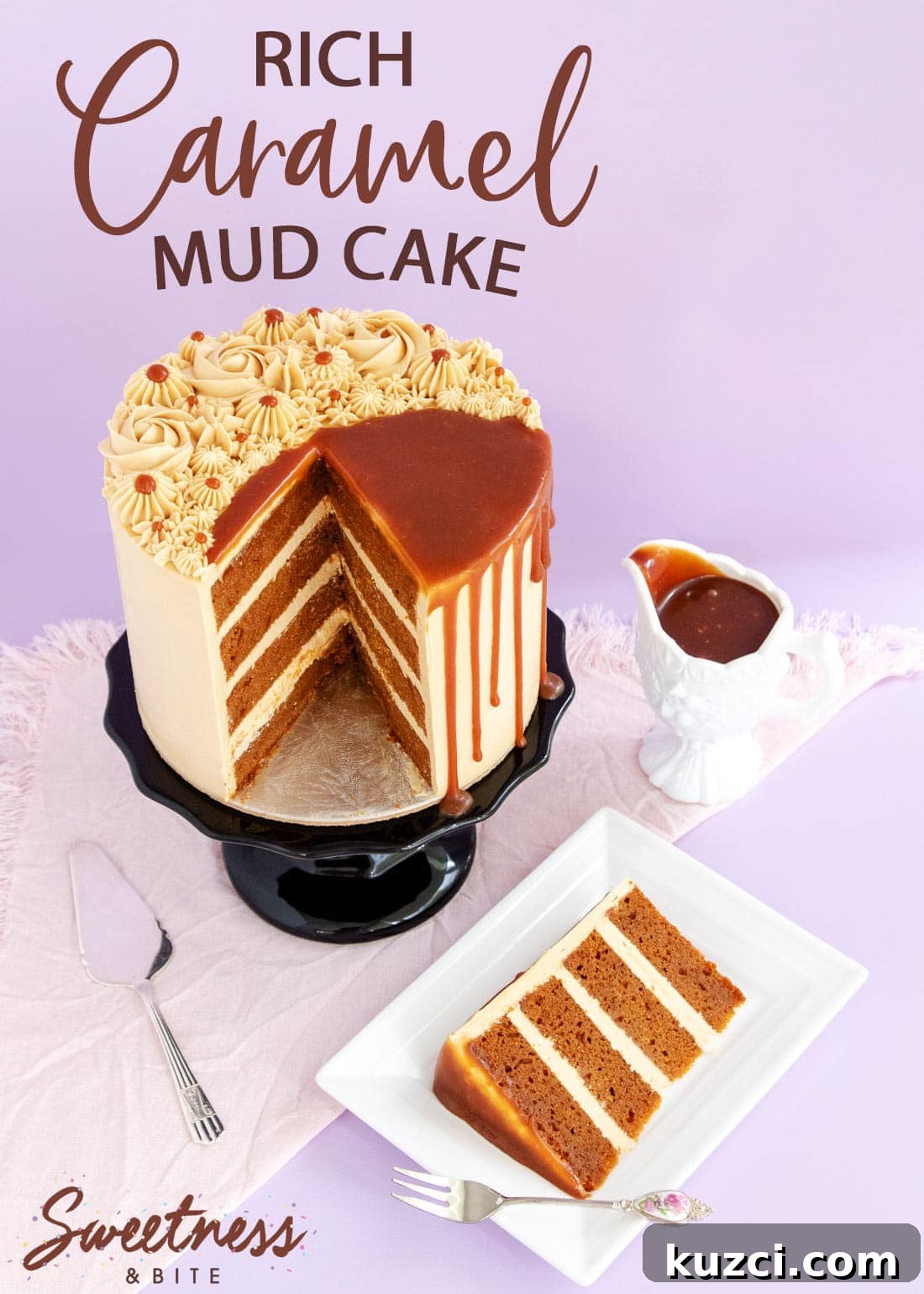
This recipe is the result of a lot of testing and adjustments. A casual idea to make a caramel mud cake using real caramel evolved into many experiments until I landed on this version: a dense, moist cake with a deep, genuine caramel flavour.
Many cakes marketed as “caramel” are actually white chocolate mud cakes with brown sugar or golden syrup added; they often taste more like butterscotch than caramel. This recipe starts with a proper caramel sauce made from sugar, which forms the foundation of the cake and gives it an unmistakable, intense caramel character.
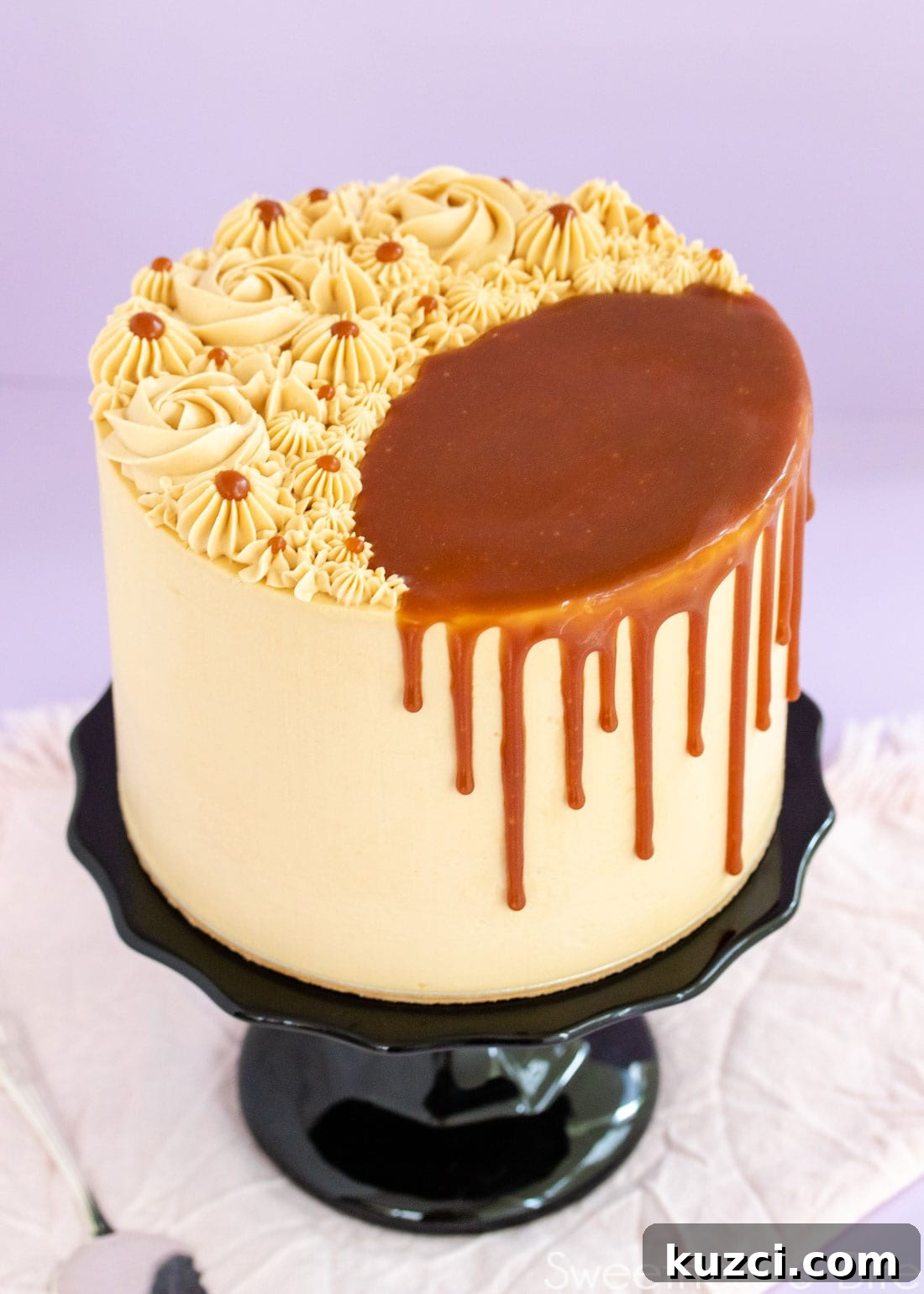
You can finish and decorate this cake any way you prefer. Below I describe the method I used — caramel Swiss meringue buttercream and a caramel drip — which amplifies the caramel flavour and makes the cake a showstopper for caramel lovers.
What Makes This the Best Caramel Mud Cake Recipe
- True caramel flavour: The cake uses real caramel sauce as its base, so the caramel taste is authentic and pronounced.
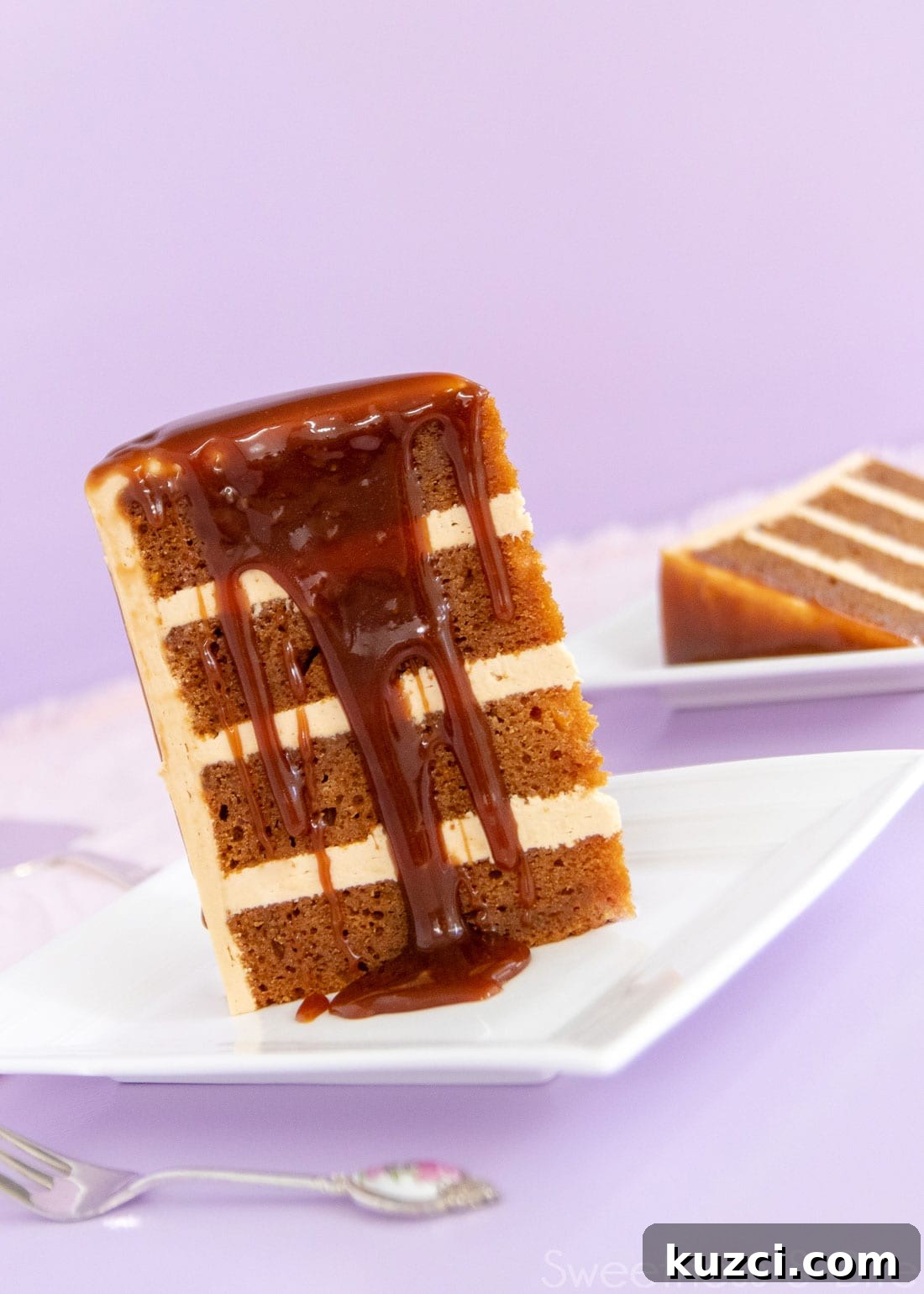
- Super moist: Like all mud cakes, this is very moist and stays that way for days. The texture is dense and slightly fudgy.
- Sturdy: The cake holds up well for tiered or carved cake work.
- Gluten free option: With a small tweak, you can make a gluten free version that is just as moist and delicious.
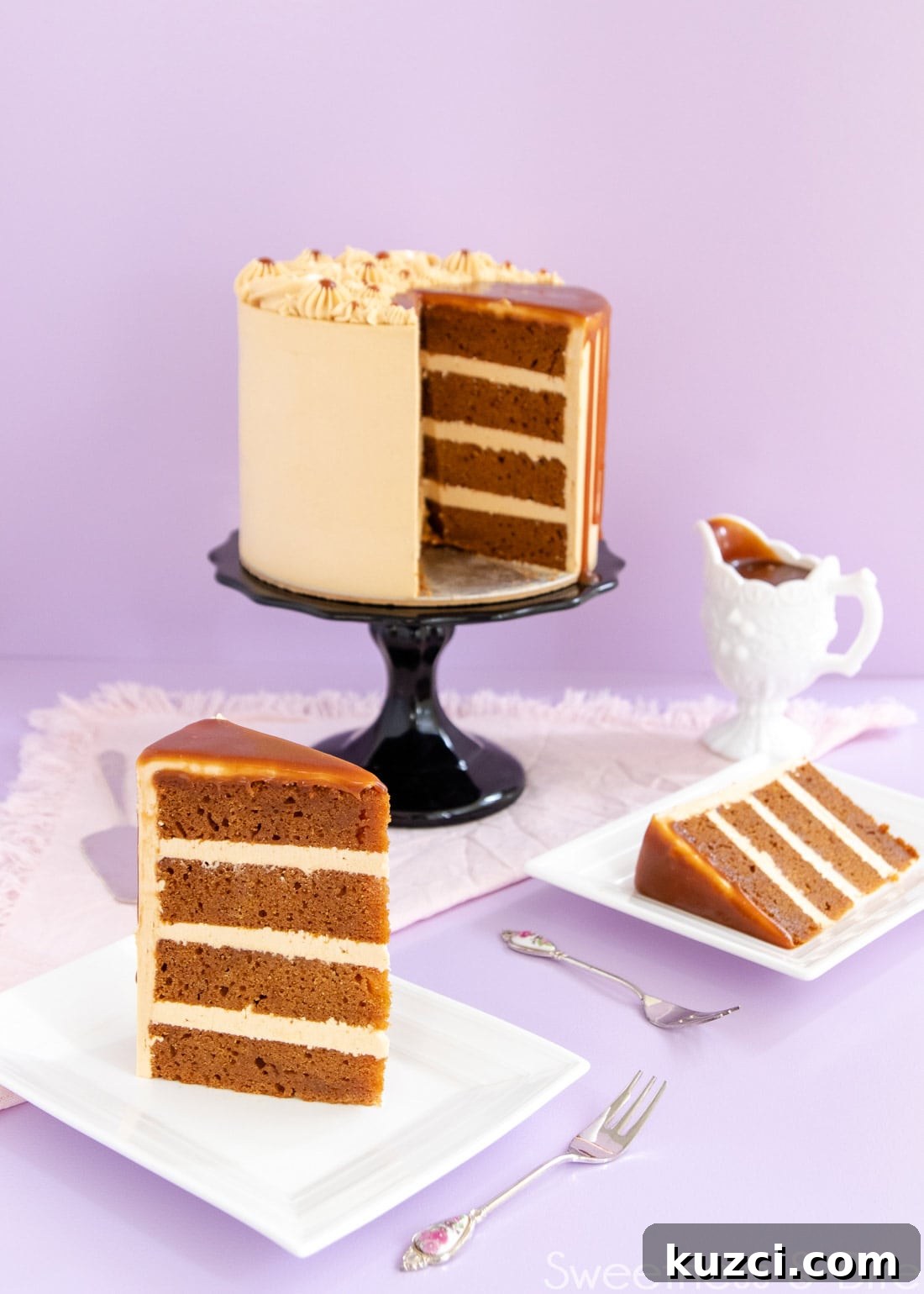
Scroll to the recipe card for the full ingredients list and printable recipe, or read on for tips and process photos.
Ingredients
These are the main ingredients used for the cake. Quantities and full instructions appear in the recipe card below.
- Cream: Use whipping cream, heavy cream, or single cream, depending on what is available.
- Sugar: Caster (superfine) sugar dissolves fastest but regular sugar will work.
- Corn syrup or liquid glucose: Optional, helps prevent sugar in the caramel from re-crystallising.
- Salt: Flaky sea salt is ideal to balance the caramel’s sweetness; reduce if using table salt.
- Vanilla extract: Use good-quality vanilla or vanilla paste.
- Milk: Full-fat (whole) milk works best.
- Unsalted butter: If only salted butter is available, reduce added salt.
- White chocolate: Adds texture; the cake isn’t strongly white-chocolate flavoured but it helps the structure.
- All-purpose flour or gluten-free flour blend: For gluten free, use a reliable all-purpose GF blend and follow the notes about gums.
- Xanthan gum (if making gluten free): Helps prevent crumbling. Omit if your GF blend already contains a gum.
- Baking powder: Ensure it’s gluten free if required.
- Eggs: Use large eggs.
To ice the cake with the caramel Swiss meringue buttercream shown here you will also need egg whites, extra caster sugar, unsalted butter and caramel sauce (lightly salted caramel works beautifully).
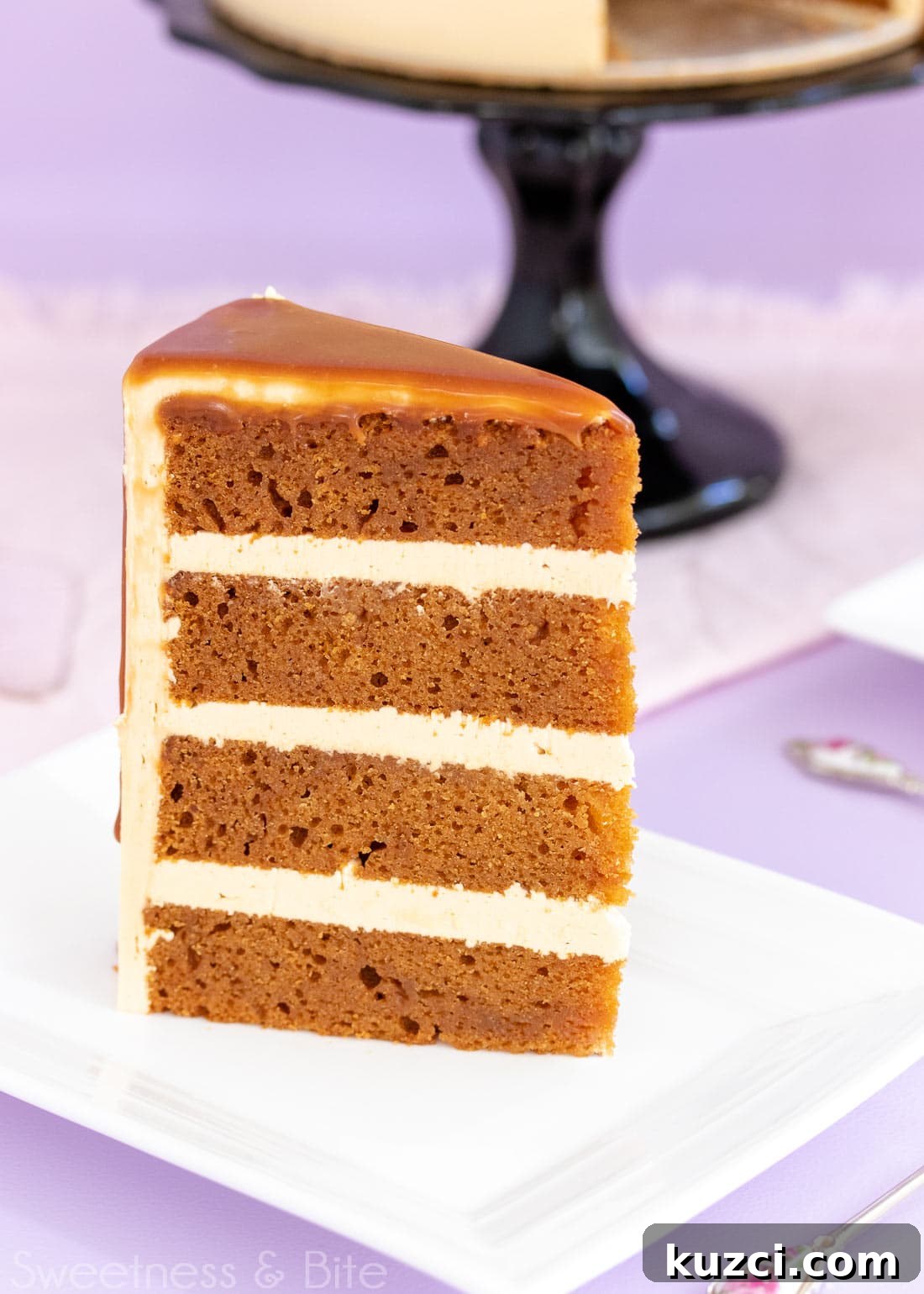
How to Make Caramel Mud Cake
Begin by making a caramel sauce: cook the sugar with a little water and the corn syrup (if using) until it turns a deep amber colour — about 160°C (320°F) on a sugar thermometer. Remove from the heat and carefully stir in warm cream (it will splutter and steam). Return to the heat and cook gently until smooth and the caramel reaches about 115°C (240°F). If you don’t use a thermometer, watch for a deeper colour and a rich caramel aroma — do not let it burn.
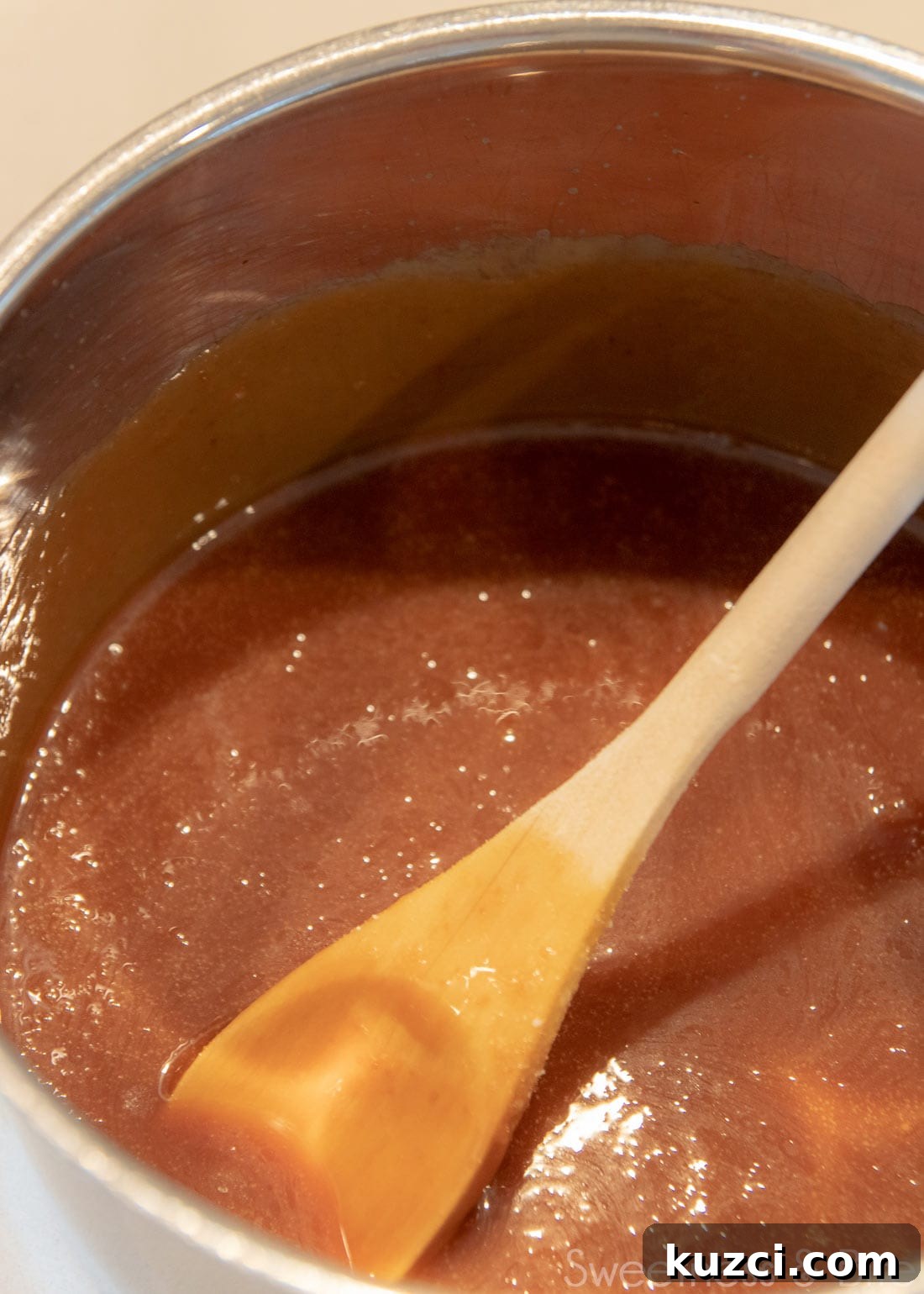
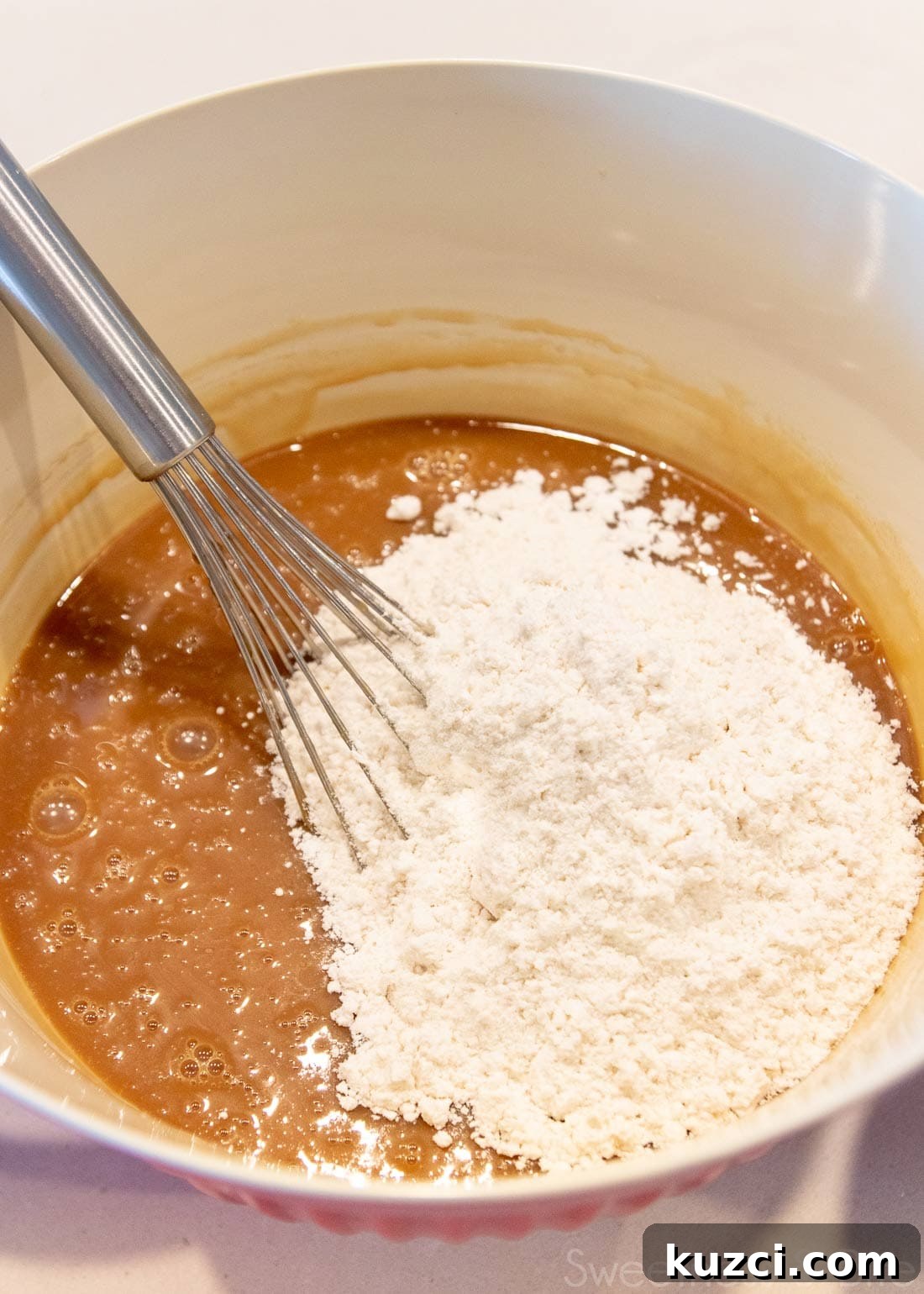
Warm the milk and melt the butter into it, then whisk the caramel into the warmed milk mixture. Avoid adding cold milk or butter straight into hot caramel: sudden temperature changes can cause the caramel to seize or split. Stir in chopped white chocolate until melted. Let the mixture cool until it is comfortably warm, then fold in the dry ingredients and whisked eggs in two or three additions.
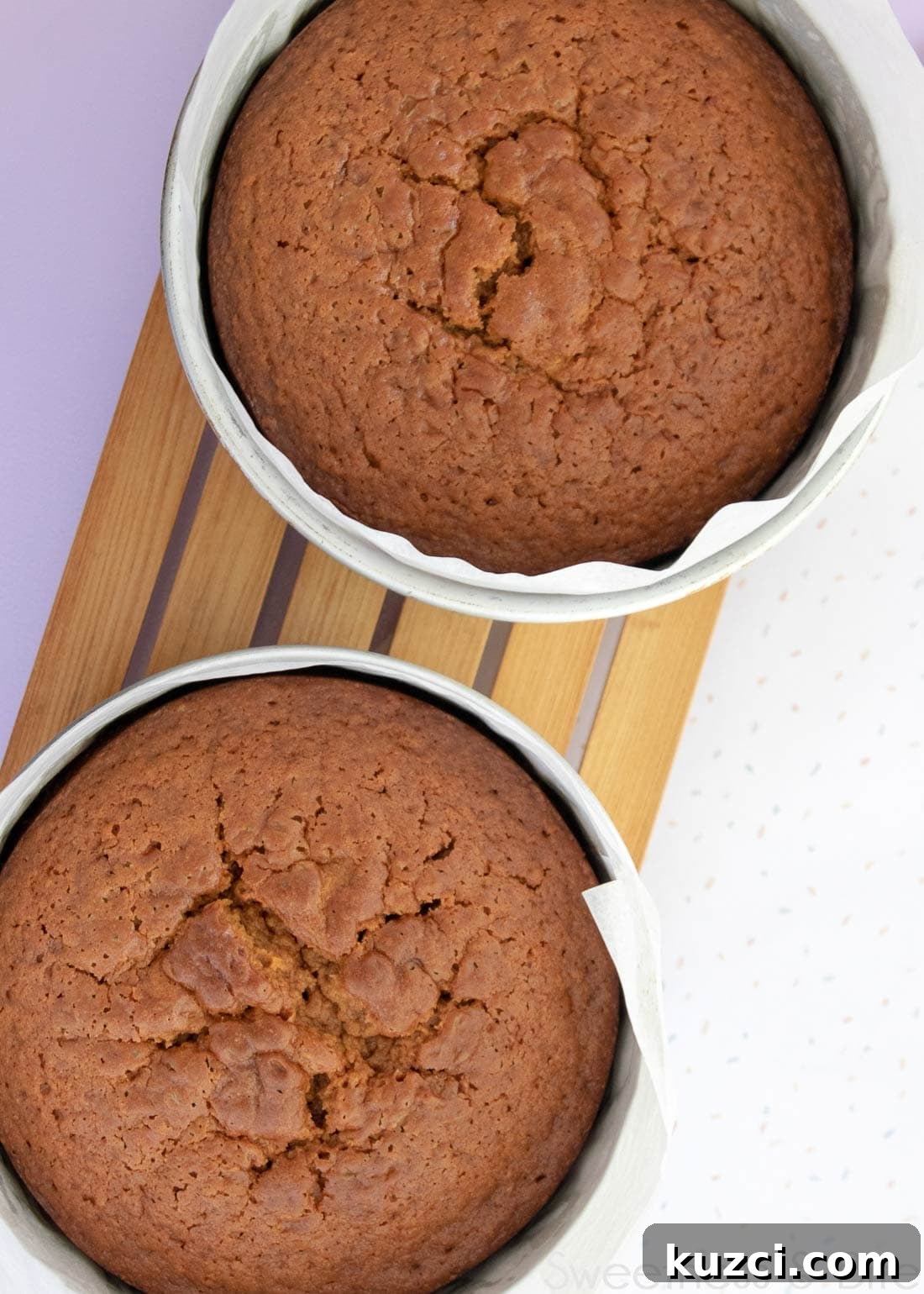
Pour the batter into lined cake pans and bake at a low temperature (see recipe card) until a skewer or thin knife comes out clean. Mud cakes often crack slightly on top; trim any crust when leveling. Allow the cakes to cool in their pans overnight to firm up, then remove and decorate.
Caramel Mud Cake Tips
Making the Caramel
Making caramel can feel intimidating, but the best way to learn is to try it. Read the steps first, have all ingredients measured and ready, and keep an eye on the colour. A candy thermometer helps but isn’t essential. Use a long-handled spoon when adding cream and work carefully — the mixture will steam and splatter.
Baking Strips and Foil Lid
Unlike some other mud cake recipes, this caramel mud cake performs best when baked without a foil lid or baking strips. A foil lid steams the cake and creates a more pudding-like texture; without it, the cake bakes into a dense, fudgy but still cakey texture. If you prefer a softer edge, brush the hot cake with freshly boiled water briefly after baking.
Carving
The cake is sturdy enough for carving and decorating. If your gluten-free version is slightly soft, chill it in the fridge before carving to firm it up. For carved cakes, chocolate ganache makes a firmer filling and crumb coat than buttercream.
Storing the Cake
Stored in an airtight container or sealed with frosting/fondant, this mud cake keeps well for at least a week at cool room temperature. It also freezes well when wrapped carefully.
How to Decorate the Cake
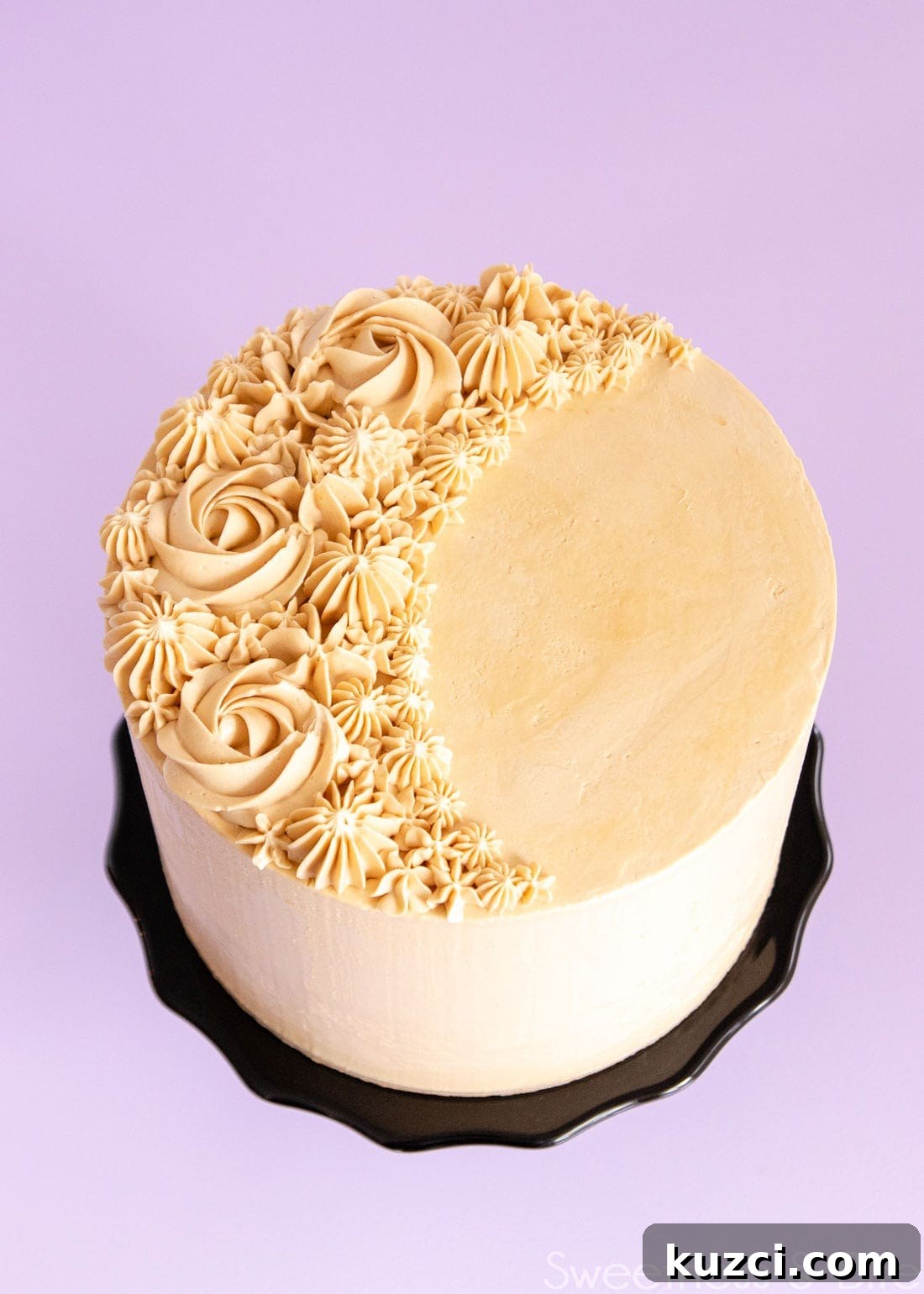
I used a salted caramel Swiss meringue buttercream to fill and smooth the cake, then piped a variety of star and swirl shapes across the top and finished with a caramel drip. To pipe, I used a mix of star tips from large to small and worked around the top edge, filling gaps with smaller tips. This layered piping technique hides minor imperfections and looks impressive without needing advanced piping skills.
Caramel Drip Tips
Caramel drips continue to run longer than ganache, so chill your cake first and warm the caramel only until it’s pourable — not too runny. Test the consistency by dripping a little down the side of a glass. Apply the drip the same day you plan to serve the cake to avoid puddles forming overnight.
Serve slices with an extra drizzle of warm caramel for maximum indulgence.
More Recipes You May Like:
- Gluten Free Chocolate Mud Cake — a rich dark chocolate mud cake suitable for carved designs.
- Gluten Free White Chocolate Mud Cake — fudgy and full of white chocolate character.
- Gluten Free Fruit Cake — a classic gluten free Christmas cake.
Rich Caramel Mud Cake
Rich, dark caramel mud cake made using real caramel sauce. Works with regular flour or a gluten-free blend; see notes for GF substitutions.
Yields
Makes two 7″ round cakes (about 12 slices)
Times
Prep: 30 minutes | Cook: 1 hour 30 minutes | Total: about 2 hours (plus cooling)
Ingredients
- 125 ml whipping cream (or heavy cream)
- 400 g sugar (caster/superfine preferred)
- 3 tbsp corn syrup or liquid glucose (optional)
- 125 ml water
- 1½ tsp salt
- 1 tsp vanilla extract
- 375 ml full-fat milk
- 350 g unsalted butter
- 180 g white chocolate, chopped
- 375 g all-purpose flour or gluten-free flour blend
- 2 tsp baking powder
- ½ tsp xanthan gum (if making gluten free and your blend needs it)
- 3 large eggs
Instructions
- Line the base and sides of two 7” round cake pans (at least 3” high).
- Warm the cream slightly and set aside so it splutters less when added to hot caramel.
- In a medium saucepan, combine the sugar, water and corn syrup and stir to moisten. Heat over medium-high and wash down any sugar crystals from the pan sides with a wet pastry brush.
- Increase heat and boil until the syrup turns a light amber colour (about 160°C/320°F if using a thermometer). Remove from heat.
- Carefully pour in the warm cream while stirring — be cautious of splattering steam.
- Return the pan to medium heat, stir until smooth and bring to 115°C (240°F) or until the caramel darkens slightly and smells richly caramelised. Stir in salt and vanilla; set aside.
- In a separate saucepan, heat the milk and butter over medium heat until the butter melts.
- Slowly whisk the caramel into the milk/butter mixture, then add the white chocolate and whisk until melted and combined. Let the mixture cool until warm but not hot.
- Preheat the oven to 150°C (300°F). Sift together the flour and baking powder (and xanthan gum if using).
- Add the dry ingredients to the cooled liquid in 2–3 additions, folding gently to avoid incorporating air. Whisk the eggs lightly and add to the batter, mixing gently.
- Divide the batter between the prepared pans, tap gently to remove large air bubbles, and bake for 75–90 minutes or until a skewer or thin knife inserted into the centre comes out clean. An internal temperature of around 99°C indicates done-ness.
- Cool the cakes in the pans for 30 minutes, then cover the tops with foil and leave the cakes in the pans overnight to firm up. Remove from pans once fully cooled and decorated as desired.
Notes
Gluten Free: Use an all-purpose gluten-free flour blend. If your purchased blend already contains a gum (xanthan or similar), omit the xanthan gum in the ingredient list.
If the cakes brown too quickly on top, tent them with foil for the remaining baking time. Store the finished cake in an airtight container at cool room temperature for up to a week, or freeze well wrapped for longer storage.
Nutrition (estimated)
Per serving (1 piece): approx. 620 kcal; carbohydrates 72 g; protein 7 g; fat 35 g. Nutritional information is an estimate only.
Caramel Swiss Meringue Buttercream
A silky caramel buttercream perfect for icing a caramel mud cake.
Yields
Makes about 1 kg
Times
Prep: 5 minutes | Cook: 10 minutes | Inactive/mixing time: 20 minutes | Total: 35 minutes
Ingredients
- 210 g egg whites (about 7 egg whites, or pasteurised egg whites)
- 325 g sugar (caster or granulated)
- Pinch of salt
- 450 g unsalted butter, softened
- 1 Tablespoon vanilla extract
- ¾ cup (about 180 ml) lightly salted caramel sauce, plus extra to decorate
Instructions
- Clean and dry the whisk and bowl thoroughly; wipe with a paper towel dampened with lemon juice or vinegar to remove any grease.
- Combine egg whites and sugar in a heatproof bowl placed over simmering water (bain-marie). Stir constantly until the sugar dissolves and the mixture reaches 71°C (160°F).
- Transfer to a mixer and beat on medium speed for one minute, then increase to medium-high until the meringue is stiff and glossy and the bowl feels cool.
- Switch to a paddle and, on low speed, add softened butter a little at a time until the buttercream becomes smooth. If it appears separated, keep mixing on low — it will usually come together.
- Warm the caramel gently until slightly pourable (not hot) and add it with vanilla. Beat to combine and taste, adding more caramel if desired.
- Split your cakes into layers, fill and cover with buttercream, then decorate. Chill briefly if the buttercream feels too soft to pipe.
Notes
If the buttercream splits, chill the bowl for 5–10 minutes and beat again, or warm a small portion and re-incorporate it. If too soft, cool slightly in the fridge or freezer and then re-whip on low speed until smooth and pipeable.
Happy baking!
Natalie
xx