I’d never encountered a quince until I started spending time with Greek friends and learning their cooking. Quince are almost always cooked: raw they’re too tart and firm to enjoy, but when simmered or baked they soften and develop a fragrant, floral sweetness that complements savory dishes beautifully. For someone who isn’t obsessed with desserts, a savory quince stew changed my mind—this comforting, slightly tangy beef and quince combination is now a favorite.
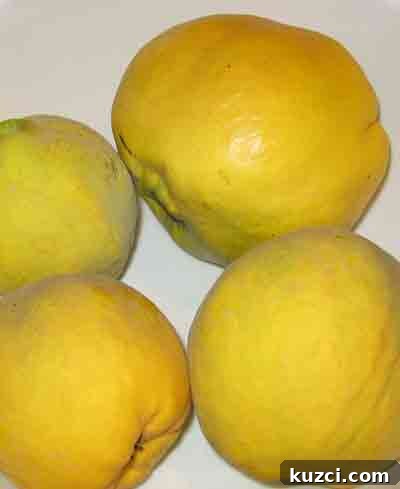
Ingredients
- 2 lb chuck roast, trimmed and cut into 2-inch pieces (see advice about choosing stew meat)
- 2 onions, roughly chopped or halved and sliced
- 4–5 tomatoes (about 1–1.5 lb), grated or pureed
- 1 tsp salt
- 1/2 tsp black pepper
- 1–2 bay leaves
- 1 stick cinnamon
- 1 cup dry white wine
- 1–2 lb quince, depending on how many pieces you prefer in the stew (about 1 lb gives a subtle quince presence)
- 1 tbsp sugar
- Olive oil
- Butter (optional, for richer quince)
Cook It!
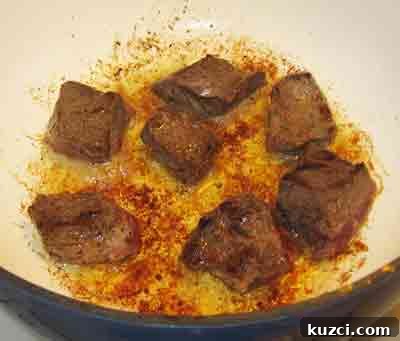
Pat the beef dry and toss the pieces with 1 tsp salt and 1/2 tsp pepper. Heat 2 tbsp olive oil in a heavy pot over medium-high heat and sear the meat in batches until well browned on at least two sides. Work in batches so the pieces brown instead of steam; they should not touch while searing. Transfer the browned beef to a bowl and set aside.
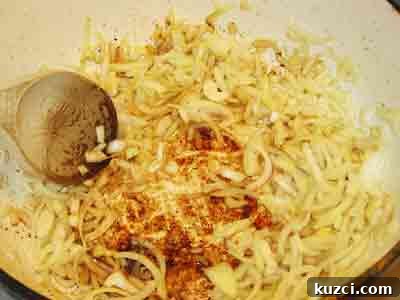
In the same pot, add the onions and sauté. As the onions release moisture, the browned bits on the pan bottom will loosen—scrape them up and let them melt into the onions for extra flavor. Cook the onions until softened, about 5–10 minutes.
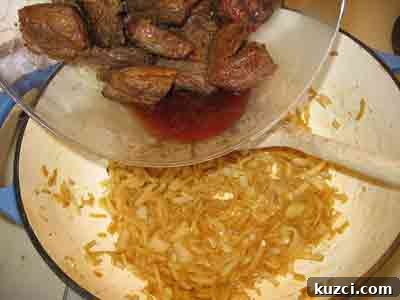
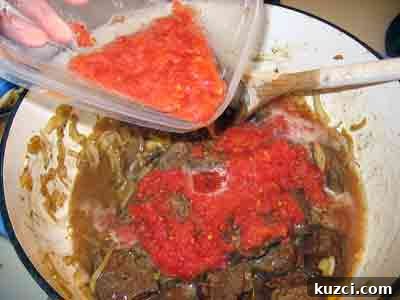
Return the seared beef and any accumulated juices to the pot. Pour in the grated or pureed tomatoes and add the cup of dry white wine. The wine lifts the braise and adds brightness; if you prefer, use a low-sodium beef or chicken stock instead.
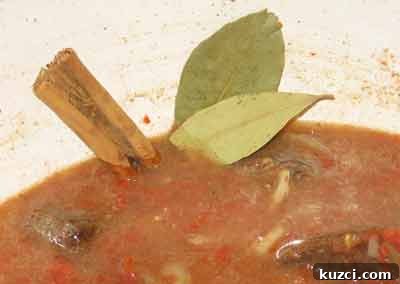
Stir in the bay leaves and the cinnamon stick, then bring the pot to a gentle boil. Reduce heat, cover partially, and simmer for 1 hour so the beef begins to tenderize and the flavors meld.
While the meat simmers, prepare the quince: wash, peel, core, and cut into wedges or thick slices. Quince are firmer than apples, so they take a bit of effort to prep. Toss the pieces with 1 tbsp sugar to bring out their natural aroma.
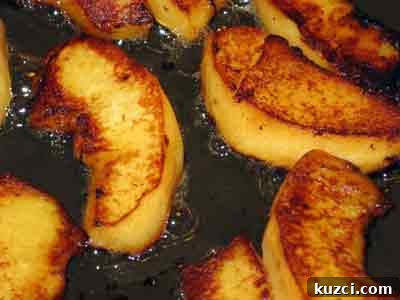
Saute the quince in a bit of olive oil or butter until they are lightly golden on both sides. Butter adds a lovely richness, but oil works well too. Remove the quince to a plate lined with a paper towel and reserve.

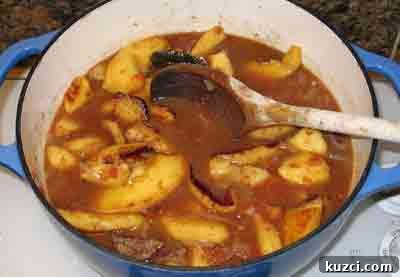
After the beef has simmered for an hour and is beginning to become tender, add the sautéed quince to the pot. Continue to simmer, partially covered, for another hour until the beef is fork-tender and the quince are soft but still hold their shape.
Adjust seasoning to taste, removing the bay leaves and cinnamon stick before serving. The quince contributes a bright, tangy note that lifts the whole stew—it’s more lively than a standard beef stew and pleasantly aromatic.
Serve the beef and quince with crusty bread to soak up the sauce, or alongside mashed potatoes or polenta for a heartier meal. Leftovers store and freeze exceptionally well; the flavors often improve after a day or two as they meld.
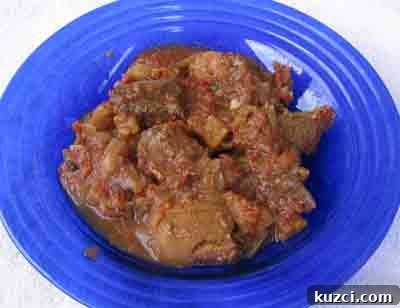
This dish isn’t showy, but the tartness and perfume of the quince give it an unexpected lift. If you enjoy traditional Greek flavors or want a comforting winter stew with a fruity twist, this beef with quince (moschari me kydonia) is a simple, rewarding choice.