
updated 10/3/2020
This warming soup is built around butternut squash and carrots and enhanced with anti-inflammatory ingredients that complement the squash’s beta-carotene. Creamed coconut (or coconut cream) gives a luxuriously smooth finish but can be omitted for a lighter, lower-fat version. Serve with a simple garden salad and flatbread for a complete meal — you may find everyone asking for seconds.
Autumn is prime butternut season, so fresh squash should be easy to find at farmers’ markets and grocery stores.

Method Overview
- Prepare and chop the vegetables.
- Add most ingredients to the soup pot with enough water to cover.
- Simmer for about 20 minutes until the squash is fork-tender.
- Puree the soup, finish with lemon, and garnish to serve.
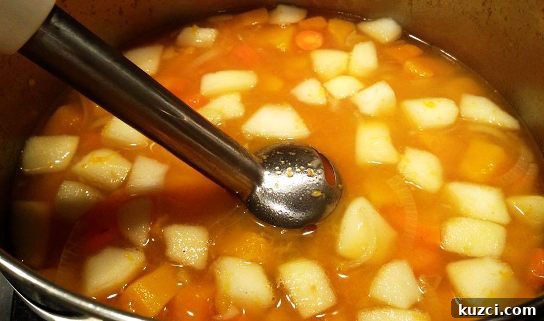
No Immersion Blender? No Problem.
If you don’t have an immersion blender, a full-size countertop blender works well. To avoid splatters and pressure build-up from hot liquid, follow these steps:
- Let the soup cool slightly.
- Fill the blender jar no more than halfway.
- Remove the blender lid’s center insert and hold a kitchen towel over the opening while blending to allow steam to escape safely.
Do not use a small bullet-style blender for hot soups; it can be unsafe and is unlikely to achieve a smooth, even puree.
Warming Anti-Inflammatory Soup
This healthy butternut squash soup includes warming, anti-inflammatory spices and fresh roots for flavor and nourishment. It’s easy to prepare and makes a comforting main-course soup that’s suitable for many dietary preferences.
Course: Main course
Cuisine: American
Keywords: corn-free, gluten-free, grain-free, nut-free, oil-free, plant-based, soy-free, vegan, wheat-free, yeast-free
Servings: 8 servings
Calories: 93 kcal per serving
Author: Judy DeLorenzo
Equipment
- Large soup pot
- Immersion blender or full-sized regular blender
Ingredients
- 1 large butternut squash (about 4 pounds), peeled, seeded, and cut into 1-inch cubes
- 3 medium carrots, sliced into 1/4-inch-thick rounds
- 1 medium sweet red apple, peeled, cored, and diced
- 1 medium onion, diced
- 2 tablespoons peeled and diced fresh ginger root
- 2 tablespoons peeled and diced fresh turmeric root, or 2 teaspoons turmeric powder
- 4 garlic cloves, quartered
- 1/8 teaspoon freshly ground black pepper
- 1/4 teaspoon ground nutmeg
- 1/4 teaspoon sweet or hot paprika
- 1/2 teaspoon Himalayan sea salt (or to taste)
- 1/2 teaspoon ground cinnamon
- 2 ounces (about 2 tablespoons) creamed coconut, optional (can be omitted or substituted with unsweetened canned coconut cream)
- 1 to 2 tablespoons freshly squeezed lemon juice
- Paprika and pumpkin seeds, for garnish
Instructions
- Place all ingredients except the creamed coconut, lemon juice, and paprika garnish into a large soup pot. Add just enough water to cover the vegetables.
- Bring to a boil, then reduce heat and simmer mostly covered for about 20 minutes, or until the squash is fork-tender. Stir occasionally and adjust heat to maintain a gentle simmer.
- Add the creamed coconut, if using. It will soften after a few minutes in the hot soup.
- Remove the pot from heat and puree the mixture until smooth using an immersion blender. If using a countertop blender, follow the safety steps listed above and blend in batches.
- Stir in the lemon juice and taste. Adjust seasoning with more cinnamon, nutmeg, or salt if desired.
- Ladle into bowls and finish with a light sprinkle of paprika and a handful of toasted pumpkin seeds for texture.
Notes
The creamed coconut sold in blocks can be replaced with 1/4 to 1/2 cup of unsweetened canned coconut cream if you prefer. If you omit the coconut entirely, the soup will still be flavorful and slightly lighter.
For garnish, pan-toast pumpkin seeds in a dry skillet for a few minutes until they are fragrant and starting to brown. They add a pleasant crunch and visual contrast to the velvety soup.
Nutrition
Calories: 93 kcal | Carbohydrates: 20 g | Protein: 2 g | Fat: 2 g | Saturated Fat: 1 g | Sodium: 128 mg | Potassium: 515 mg | Fiber: 4 g | Sugar: 6 g | Vitamin A: 13,830 IU | Vitamin C: 25 mg | Calcium: 63 mg | Iron: 2 mg
Ripe butternut squash should feel hard with no soft spots and display an even orange color. If the skin still shows green patches, it likely did not ripen fully on the vine.
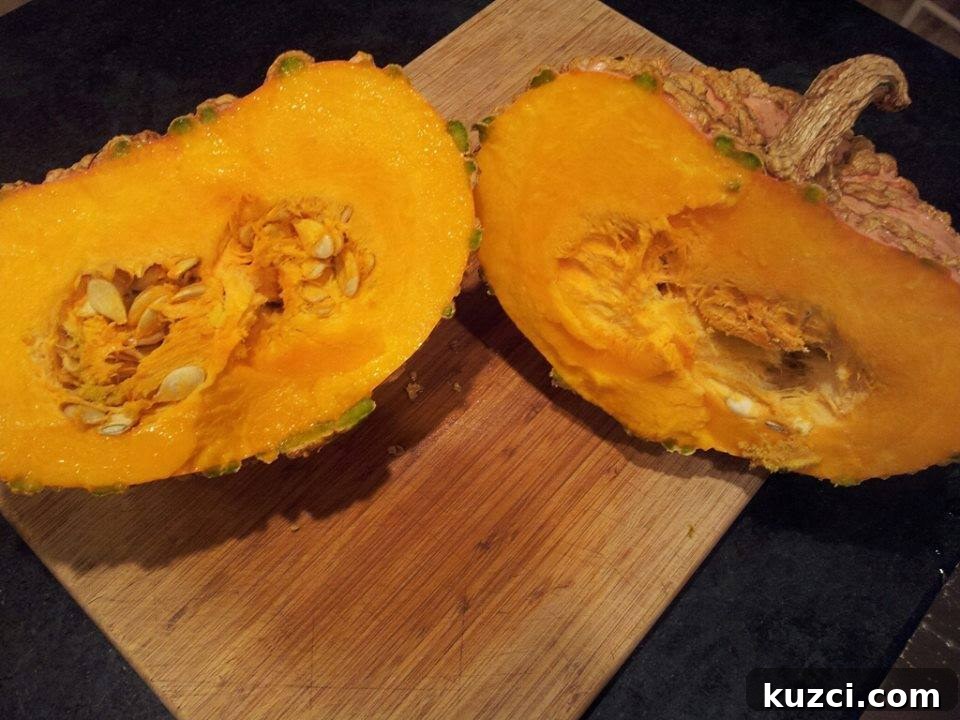
My husband grows several winter-squash varieties, including the heirloom Galeux d’Eysines (often called French warty squash). It’s milder than butternut but works beautifully in this soup. Heirloom varieties can be unusual and may not appear in local markets, so if you want to try one you may need to grow it from seed.

If you enjoy this recipe, try a vegan butternut squash chili next for another comforting fall dish.