Phew! Week 3 of Phase II is officially over, and I survived my second Market Basket today. These three weeks have been intense, tiring, and packed with new techniques and information, but I can already tell I’ll learn a great deal over the next two months. I’m very glad the weekend has arrived.
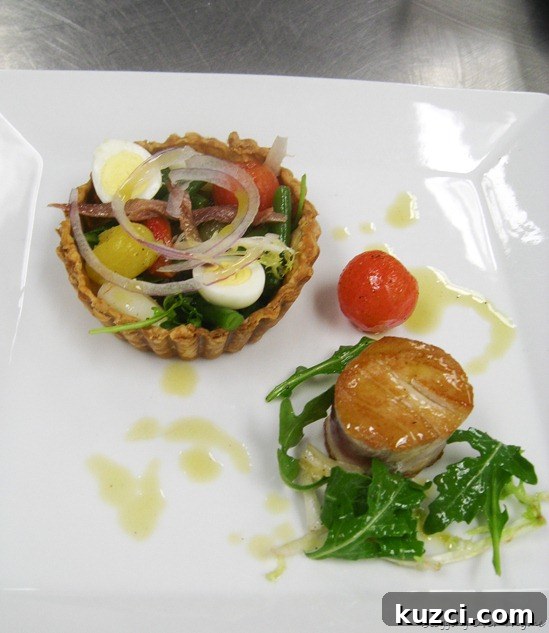
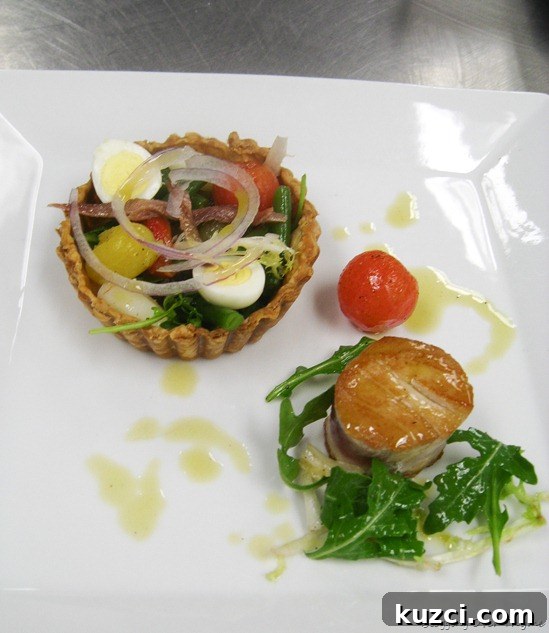
Thursday’s menu required careful timing and attention to detail. Our first course was a modern take on the classic Nicoise Salad, composed of many small elements that had to be prepared separately, seasoned individually, and assembled right before service. Traditionally a Nicoise includes tuna, green beans, olives, hard‑boiled eggs, red onion, tomatoes, anchovies, peppers, and potatoes. For this service we kept those familiar flavors but presented them in a refined, contemporary way.
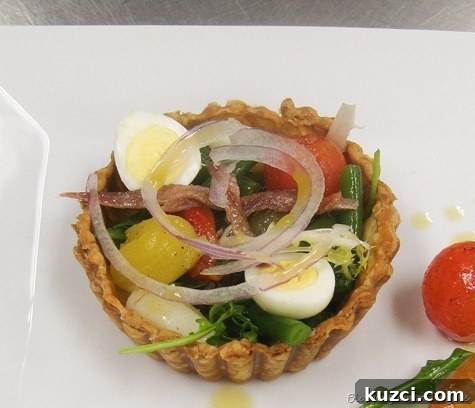
We created a playful presentation without sacrificing the salad’s essential components. The main ingredients were arranged inside a shell of puff pastry made from leftover trimmings, and the base included lightly dressed mixed greens. To keep everything proportionate and precise, we used quail eggs instead of chicken eggs, turned small potatoes, blanched and cut green beans into fine strips, peeled and halved yellow and red cherry tomatoes, and roasted then julienned peppers. Each item was prepared to showcase its texture and color.
Instead of canned tuna, we used high-quality, sushi-grade tuna tenderloin. The tuna was tightly rolled into a log using plastic wrap, chilled, and then sliced into medallions so we could sear both sides quickly while keeping the center rare. That short sear adds a wonderful contrast of texture while preserving the clean flavor of the fish.
This version of Nicoise may not claim to be the world’s richest dish, but the careful execution and bright presentation made it far more exciting and enjoyable than the standard plate.
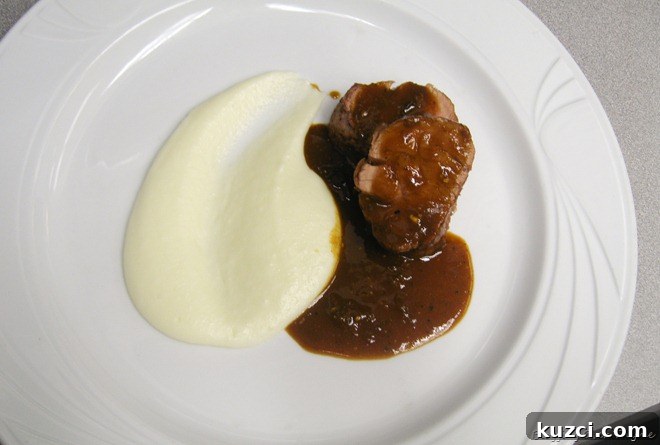
For the main course we prepared a roasted pork tenderloin accompanied by a pan sauce built from shallots, white wine, pork trimmings, and a concentrated Espagnol (brown) sauce. After straining, we finished the sauce with a touch of Dijon mustard and sliced dried prunes for sweetness and depth. The result was a balanced, savory glaze that complemented the pork without overpowering it.
On the side we served Pommes Mousseline, an ultra‑silky style of mashed potato. These were exceptionally rich and smooth, largely thanks to a generous amount of butter and cream. To achieve an extra-fine texture, I passed my portion through a tamis (a large sieve). We also reduced some of the cream on the stovetop to intensify the dairy flavor and remove excess water, which helped create a thicker, more luxurious finish. Classical French preparations rarely skimp on richness, and these potatoes were a vivid example of that tradition.
For dessert we made classic French crepes Suzette. Although crepes are simple in concept, they require attention when you’re producing many at once. We incorporated browned butter into the crepe batter to add a deeper, nutty flavor. The sauce that accompanies the folded crepes combined caramelized sugar, freshly squeezed orange juice and zest, and a splash of Grand Marnier, which we flambéed and finished with a knob of butter for sheen and richness.
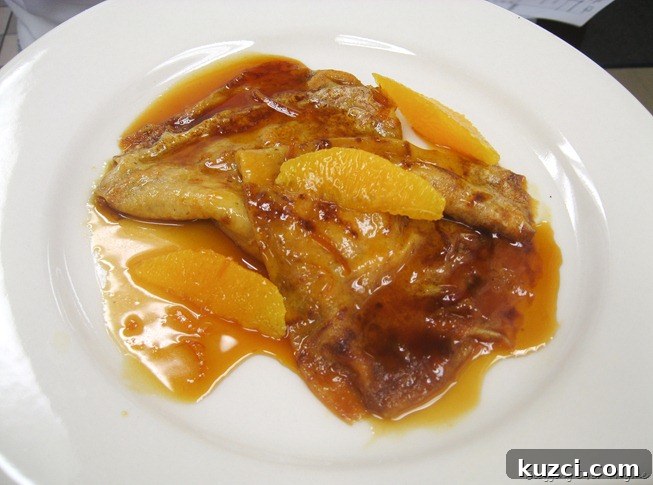
The dessert is practical for service because you can prepare the crepes ahead of time and rewarm them in the sauce at the last minute. It’s elegant, crowd-pleasing, and a great exercise in timing and showmanship when flambéing.
On Thursday afternoon we returned to the classroom for an externship panel featuring recent graduates. They summarized their experiences working in restaurants, offered practical advice, and answered our questions about the transition from school to the professional kitchen. We were also given the ingredients for our second (and first official) Market Basket challenge for Friday: eggs, chicken, and tempered chocolate. I don’t have finished plate photos to show yet, but I’ll describe what we made in my next post.
Tomorrow I’ll do my first stage—a working interview at a nearby restaurant. I’ll keep the restaurant names to myself until I make a decision, but I’ll be arriving at 1:00 pm and staying through service. I’m excited, nervous, and a little intimidated, but mostly eager to put what I’ve learned into practice. Details to come.
Now it’s time to get some rest and recover for another week of learning and service.