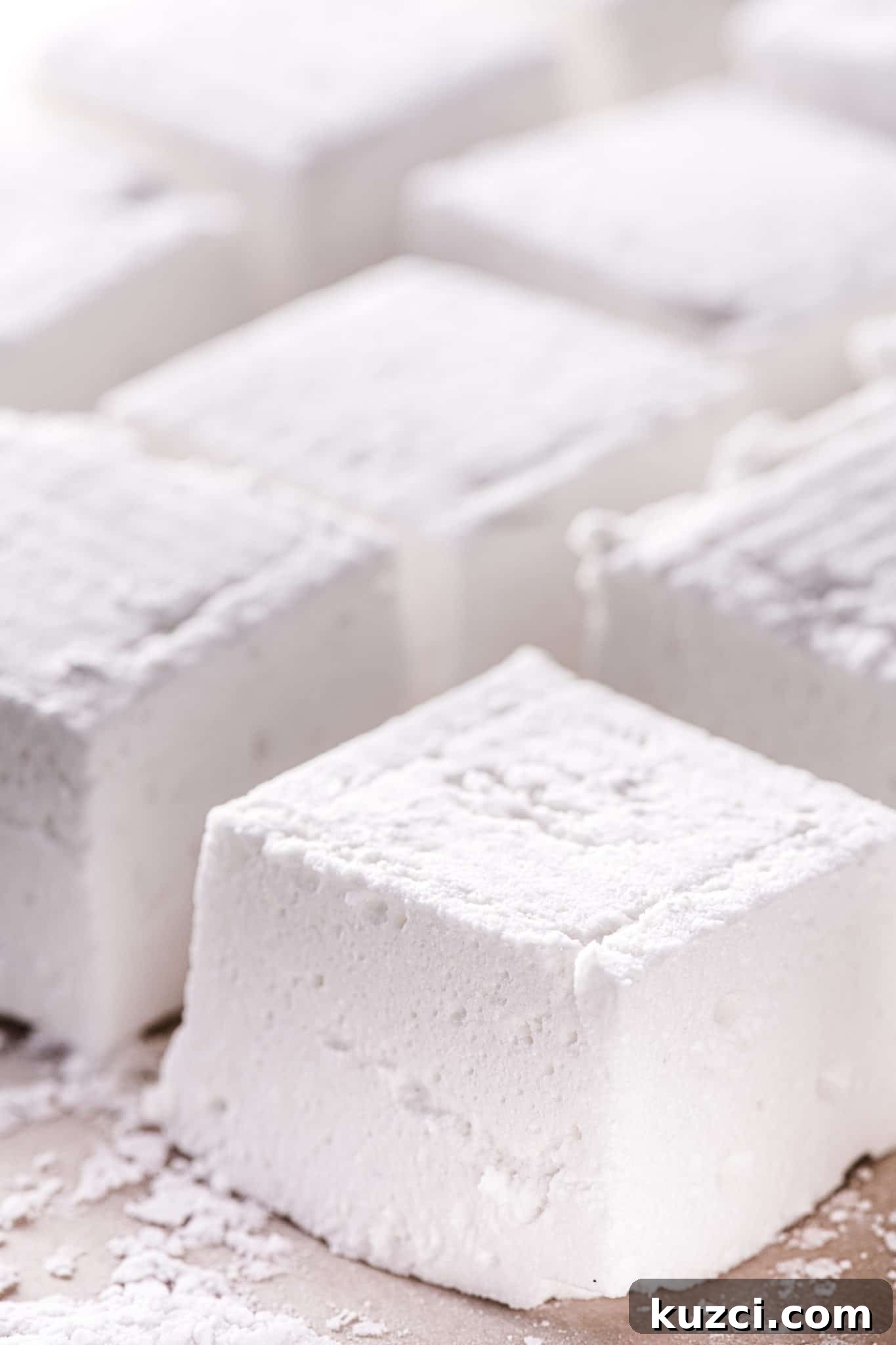
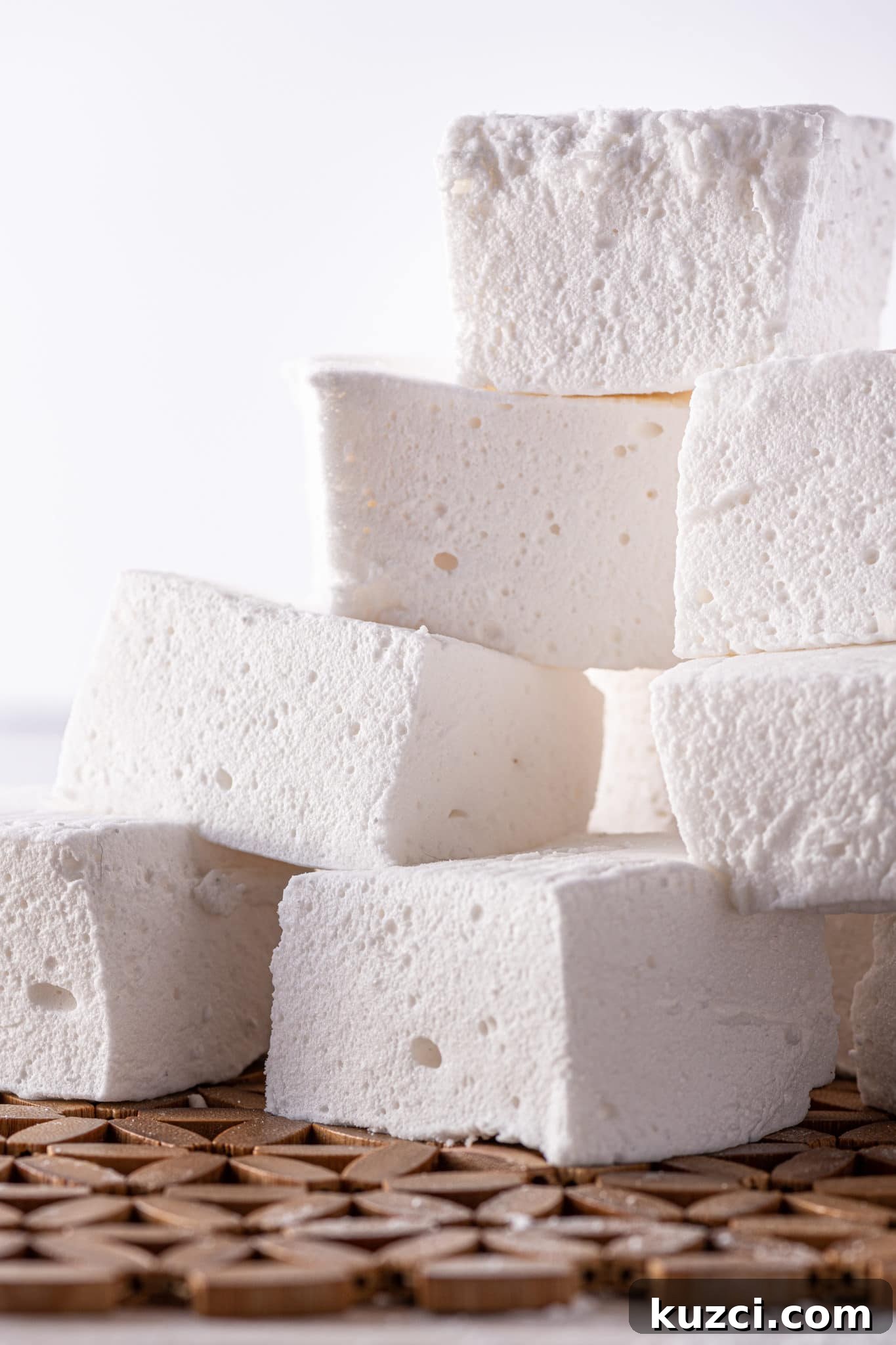
These homemade sugar-free marshmallows were inspired by a favourite bakery treat I missed while living in Vancouver. The bakery called Butter made incredible marshmallows and their recipe (from a cookbook I love) became the starting point for this sugar-free version. I adapted their method and replaced the sugar and corn syrup with allulose—and the result is a batch of keto marshmallows that are remarkably close to the real thing in texture and taste.
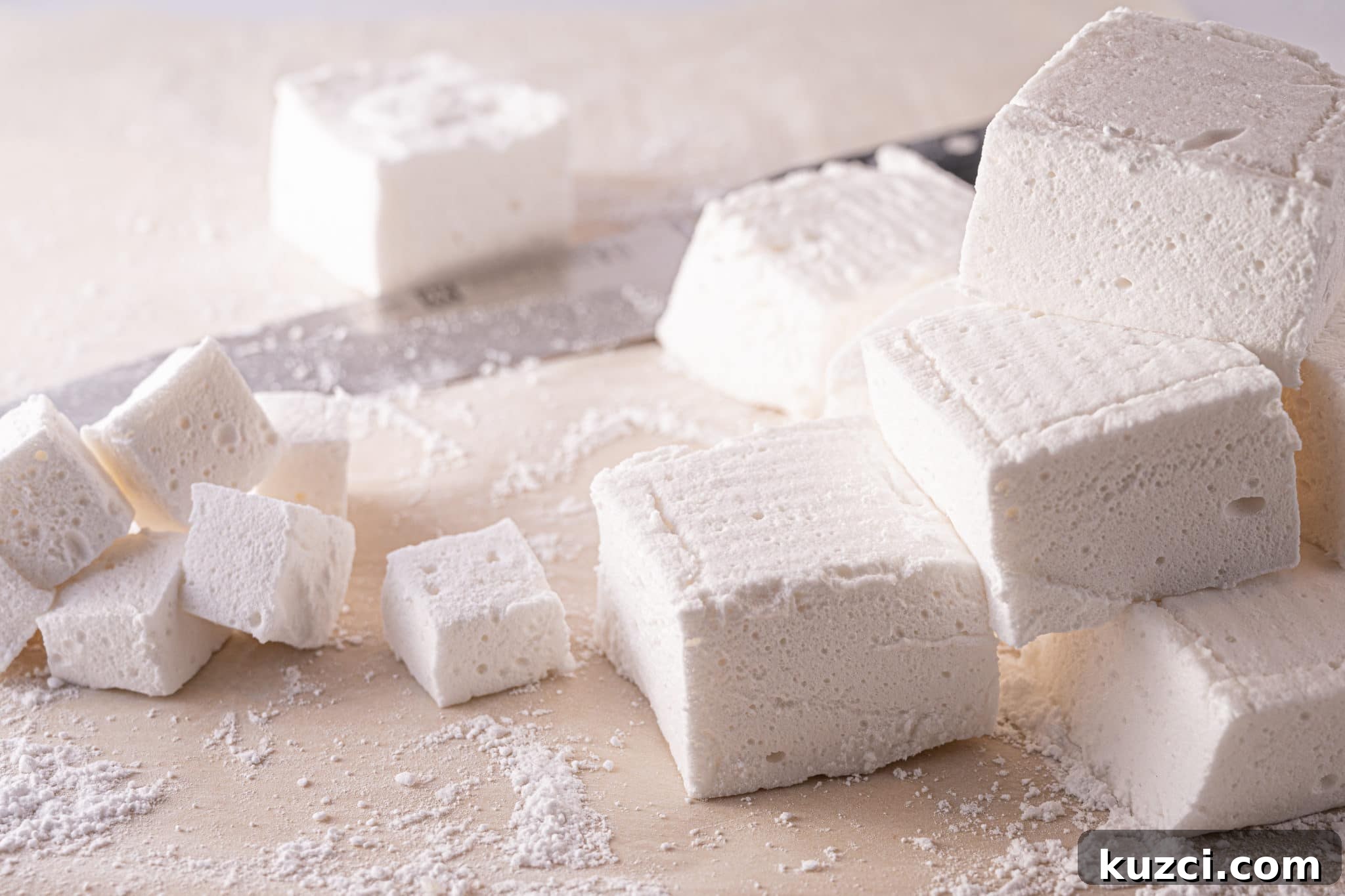
Low Carb Marshmallows – You won’t believe how easy they are to make!
These keto marshmallows are made with gelatin and allulose, so the carbohydrate count for a serving is effectively zero. Unflavoured gelatin contains no carbs, and allulose is considered a zero-net-carb sweetener because it is not metabolized like regular sugar.
Allulose behaves a lot like sugar: it melts, thickens, forms a syrup, and browns in a similar way, which makes it the only sweetener I recommend for this marshmallow method. Many low-carb recipes use egg whites to add volume, but traditional marshmallows rely on gelatin for their classic tight air bubbles and springy texture—exactly what you get here.
Note: I’m not providing medical advice. If you try a new sweetener, choose one that fits your dietary needs and tolerance. For me, allulose doesn’t spike blood sugar and doesn’t cause the digestive discomfort some sugar alcohols can create, so it works well for both texture and flavor in this recipe.
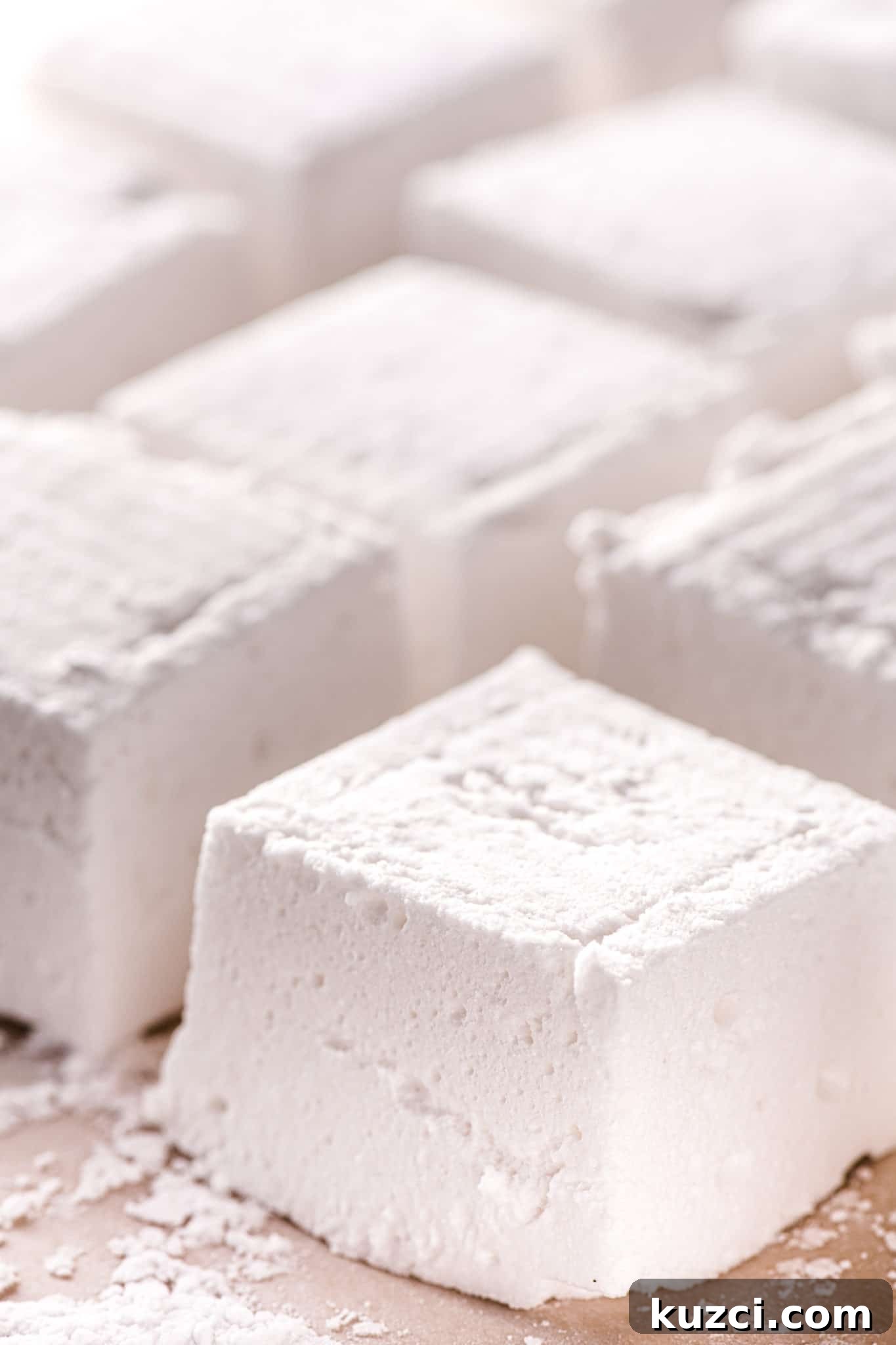
Sweeteners for this recipe
Allulose is the primary sweetener for this recipe. Its syrup-like properties are essential to creating the whipped, fluffy marshmallow structure. For rolling and coating the cut marshmallows, use a powdered erythritol blend or a powdered monk fruit/erythritol product, or toasted unsweetened coconut mixed with a bit of powdered sweetener for a different texture and flavor.
Method & tips
Making homemade keto marshmallows may sound technical, but the process is straightforward. A stand mixer makes the job much easier since you need to whip the marshmallow mixture for about 10–12 minutes to develop full volume and stiffness. A hand mixer can work, but expect a more tiring workout.
Key steps and tips:
- Bloom the gelatin: sprinkle the gelatin over part of the water and allow it to soften before adding hot syrup.
- Cook the syrup: heat the remaining water with allulose and salt over medium heat until it reaches 230–240°F on a candy thermometer. If you don’t have a thermometer, bring the syrup to a full rolling boil and cook for one solid minute.
- Whipping: pour the hot allulose syrup slowly into the softened gelatin while mixing on low. Then increase the speed to high and whip for 10–12 minutes. Add vanilla at about 9 minutes so the flavor blends into the nearly finished foam.
- Be careful handling hot syrup—it can cause serious burns.
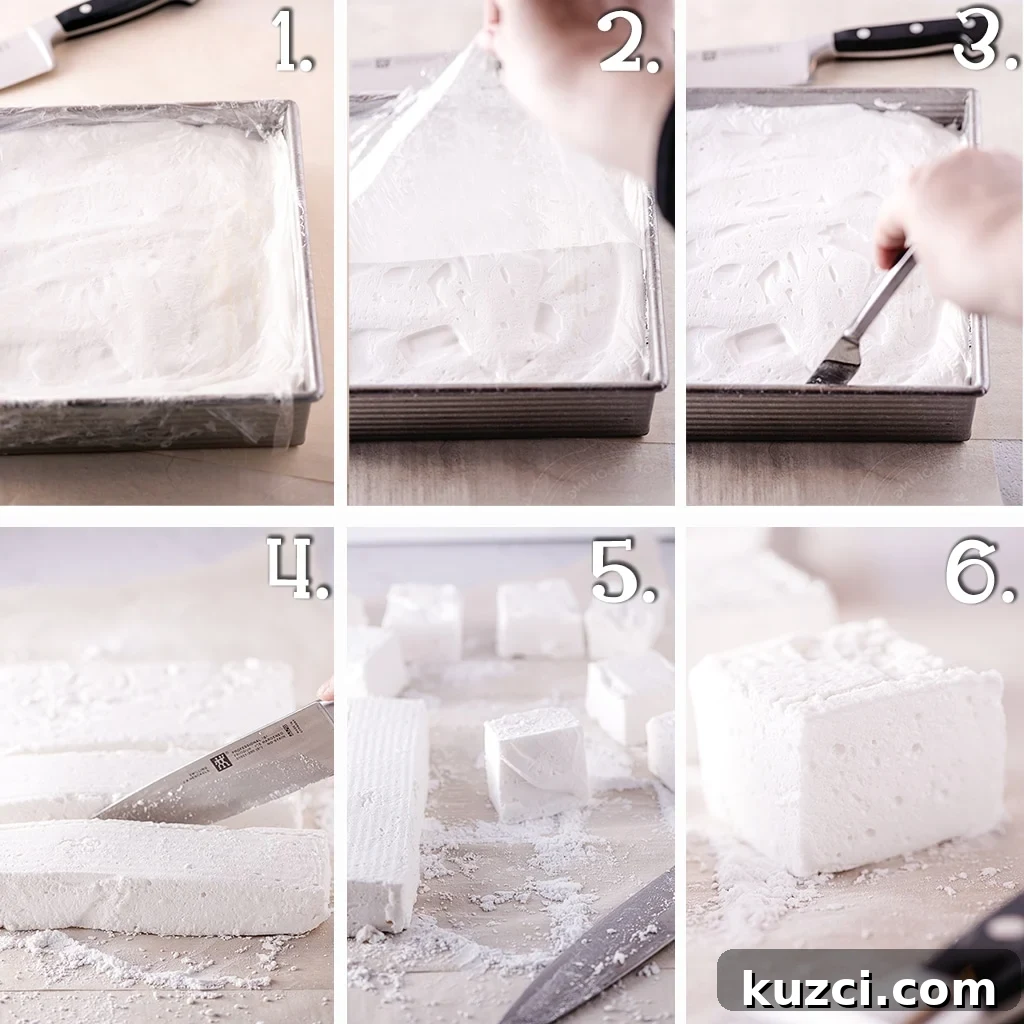
When whipping is complete, the mixture should be glossy, thick, and able to form stiff peaks. Transfer it to a prepared pan, top with buttered plastic wrap, and allow it to set fully—6–8 hours or overnight in the refrigerator works best.
Cutting & prep work
Once the marshmallows have set, remove the plastic wrap and run a knife along the edges to loosen the slab. If the slab sticks, gently pull it free and place it onto a surface dusted with powdered sweetener. Use a sharp knife to cut into squares and roll each marshmallow in the powdered coating as you cut them to prevent sticking.
Low Carb Marshmallow Variations
These marshmallows are a great base for flavor play. A few favorite variations:
- Toasted Coconut: Toast unsweetened shredded coconut at 350°F until golden, then blend with a little powdered sweetener and use it as a coating instead of powdered sweetener.
- Strawberry: Add a teaspoon of concentrated strawberry (or raspberry) emulsion during the last minute of whipping for intense fruit flavor without added carbs.
- Coffee: Replace the water in the syrup with strong brewed coffee for a coffee-flavored marshmallow—this yields a bold, aromatic result.
- Chocolate: Stir in a tablespoon of unsweetened cocoa powder to the whipped marshmallow mixture for chocolate marshmallows.
- Double chocolate: Make chocolate marshmallows and, after they set, dip them into melted sugar-free dark chocolate for an indulgent finish.
Storage & serving ideas
Store these sugar-free marshmallows in an airtight container at room temperature for several days. Refrigeration is optional but unnecessary; freezing is not recommended because the texture can degrade. They melt beautifully in hot chocolate and can be toasted over a low flame—just watch carefully, as allulose browns and can burn faster than sugar.
Ingredients
- 1 cup water (divided)
- 3 envelopes unflavoured gelatin (about 3 Tbsp)
- 2 1/2 cups allulose
- 1/2 tsp salt
- 2 Tbsp vanilla extract
- 2 cups powdered sweetener (for coating) or toasted coconut mixture
Instructions
- Sprinkle the gelatin over 1/2 cup of water in the bowl of a stand mixer fitted with a whisk. Let the gelatin soften (bloom).
- In a medium saucepan, combine the remaining 1/2 cup water, allulose and salt. Heat over medium until the mixture reaches 230–240°F or comes to a rolling boil—then boil for one minute.
- Turn the mixer to low, then slowly pour the hot syrup down the side of the bowl into the gelatin while mixing on low.
- Increase the mixer speed to high and whip for 10–12 minutes. At about 9 minutes, add the vanilla. Continue whipping until the mixture is thick, glossy and forms stiff peaks.
- Butter a square baking pan, transfer the marshmallow mixture to the pan, and smooth the top. Cover with buttered plastic wrap to prevent sticking.
- Allow the marshmallow slab to set for 6–8 hours or overnight in the refrigerator.
- When set, loosen the edges with a butter knife and tip the slab onto a cutting surface dusted with powdered sweetener. Cut into pieces and coat each piece in the powdered sweetener or coconut coating.
- Store in an airtight container at room temperature or in the fridge.
Recipe note: Cook the allulose over medium heat: it can burn at higher temperatures and develop an unpleasant flavor. Do not cut the marshmallows until they are fully set. Be cautious when handling hot syrup.
Interested in More Keto Baking Ideas?
If you enjoy sugar-free desserts and keto treats, try homemade marshmallow bars, keto s’mores cupcakes, whoopie pies with marshmallow filling, low-carb s’mores brownies, or soft and chewy peanut butter keto cookies—there are many ways to use these marshmallows in creative recipes.
Editorial note: This recipe was originally published in March 2020 and updated in March 2022.