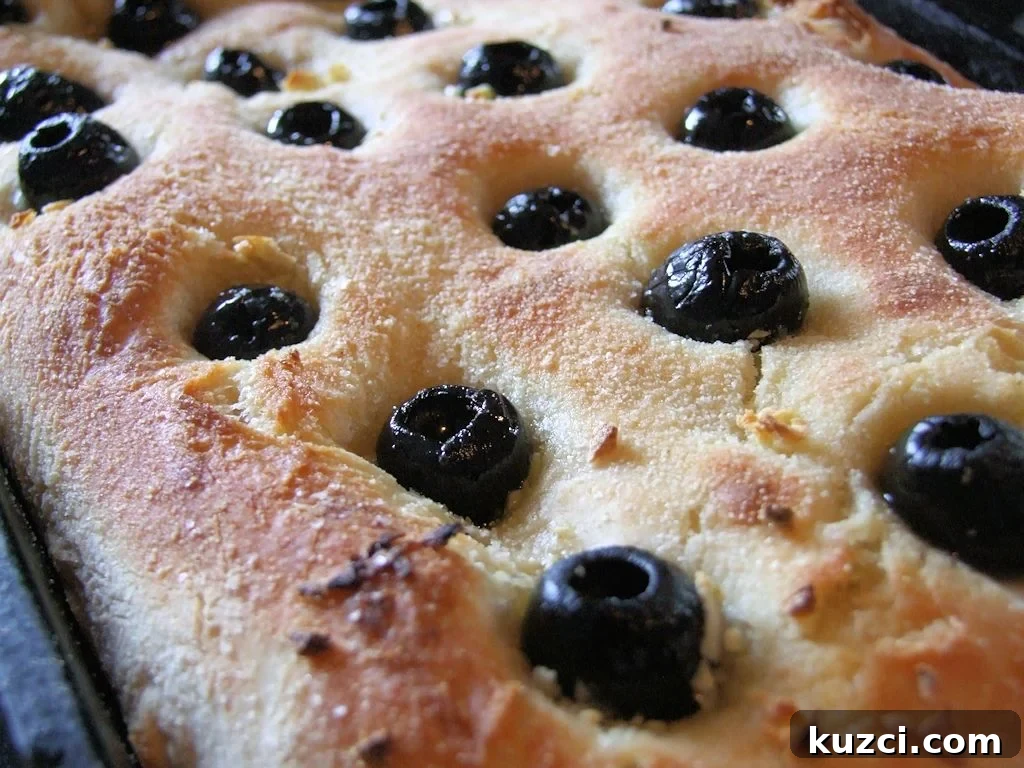
Some people assume focaccia is merely a poorer cousin of pizza, but the two are distinct breads with different roles at the table. Pizza evolved as a standalone dish—most famously in Naples—while focaccia has traditionally served as an accompaniment to other dishes, an excellent partner to antipasti, soups and salads. The name focaccia comes from ancient Rome: the flat bread known as panis focacius was baked on the hearth, called the focus.
Black Olive and Garlic Focaccia
Although most people recognise the characteristic dimpled flatbread as Italian focaccia, similar breads exist throughout Europe and beyond—likely spread by the Romans. Variants appear under names such as fogassa, fouaisse, fougasse, hogaza and fugazza in different regions of France, Spain and South America. Each tradition adapts the basic idea of a leavened, oil-brushed flatbread to local tastes.
Focaccia often carries toppings, which can create confusion with pizza, but the distinction is in intent and typical simplicity. Where pizza frequently features rich, layered toppings, focaccia usually showcases comparatively plain ingredients: generous olive oil, garlic, rosemary, olives, onions, sage and a variety of vegetables. Cheese or sweet toppings are possible, but less common in classic preparations. One of the most satisfying combinations is olive oil, garlic, black olives and a sprinkle of coarse salt, served warm alongside antipasto or as part of a meal.
Olive and garlic Focaccia
Ingredients
The Bread Dough
- 3 cups (380g) strong white bread flour
- 1 cup (250ml) warm water
- 1 tsp salt
- 1 tbsp sugar
- 1 tbsp olive oil
- 1 tsp rapid-rise active yeast
The Topping
- About 24 medium black olives
- 1/4 cup (60ml) olive oil
- 2 cloves garlic, crushed or finely chopped
- Fine semolina for dusting (optional)
- Sea salt, kosher salt or another coarse-grained salt
Method
- Combine the warm water with olive oil, sugar and salt. Add the flour and yeast, mixing until the ingredients come together into a rough dough. Knead for at least five minutes by hand, or use a stand mixer or bread machine if you prefer. Cover the dough and let it rise in a warm place until roughly doubled in size—usually a couple of hours depending on temperature.
- When the dough has risen, turn it out onto a work surface lightly dusted with flour or a little semolina. Gently stretch or roll the dough into your desired shape—round or oblong—and place it in a well-oiled baking pan. Dust the top lightly with semolina if using, and allow a short second rise for about 30 minutes to develop a light, airy texture.
- With floured fingers, press evenly spaced dimples across the surface of the dough. Drop a pinch of garlic into each dimple so the garlic bakes into the bread and releases its aroma.
- Carefully pour a little olive oil into each indentation so the oil pools in the hollows and keeps the crumb moist during baking.
- Gently press a black olive into each dimple, taking care not to wash out the oil. The olives roast in place and infuse the focaccia with a rich, briny note.
- Sprinkle the top with coarse salt and bake in a preheated oven at 400°F (200°C) for about 25 minutes, or until the crust is golden and the bread sounds hollow when tapped. Focaccia is best served warm, though it also keeps well for casual eating later in the day.
Focaccia Dough Rising
Focaccia dough second rise
Holes poked into the Focaccia
Olive oil poured into the holes in the Focaccia
Olives placed into the Focaccia
Baked Focaccia
Troubleshooting and tips: if your dough is sticky, add a touch more flour while kneading; if it’s slow to rise, give it a warmer spot. For a more herb-forward focaccia, scatter fresh rosemary or thyme over the top before baking. After cooling slightly, slice the focaccia and serve warm with cured meats, cheeses, or as a base for open-faced sandwiches.
Leftovers keep well: wrap cooled focaccia in paper or place in an airtight container and store at room temperature for a day or two. To refresh, warm briefly in the oven to restore some of the original crispness and aroma. This simple, olive-and-garlic focaccia highlights the essential qualities of the bread—an open crumb, olive oil richness and a satisfying contrast between salty topping and tender interior.