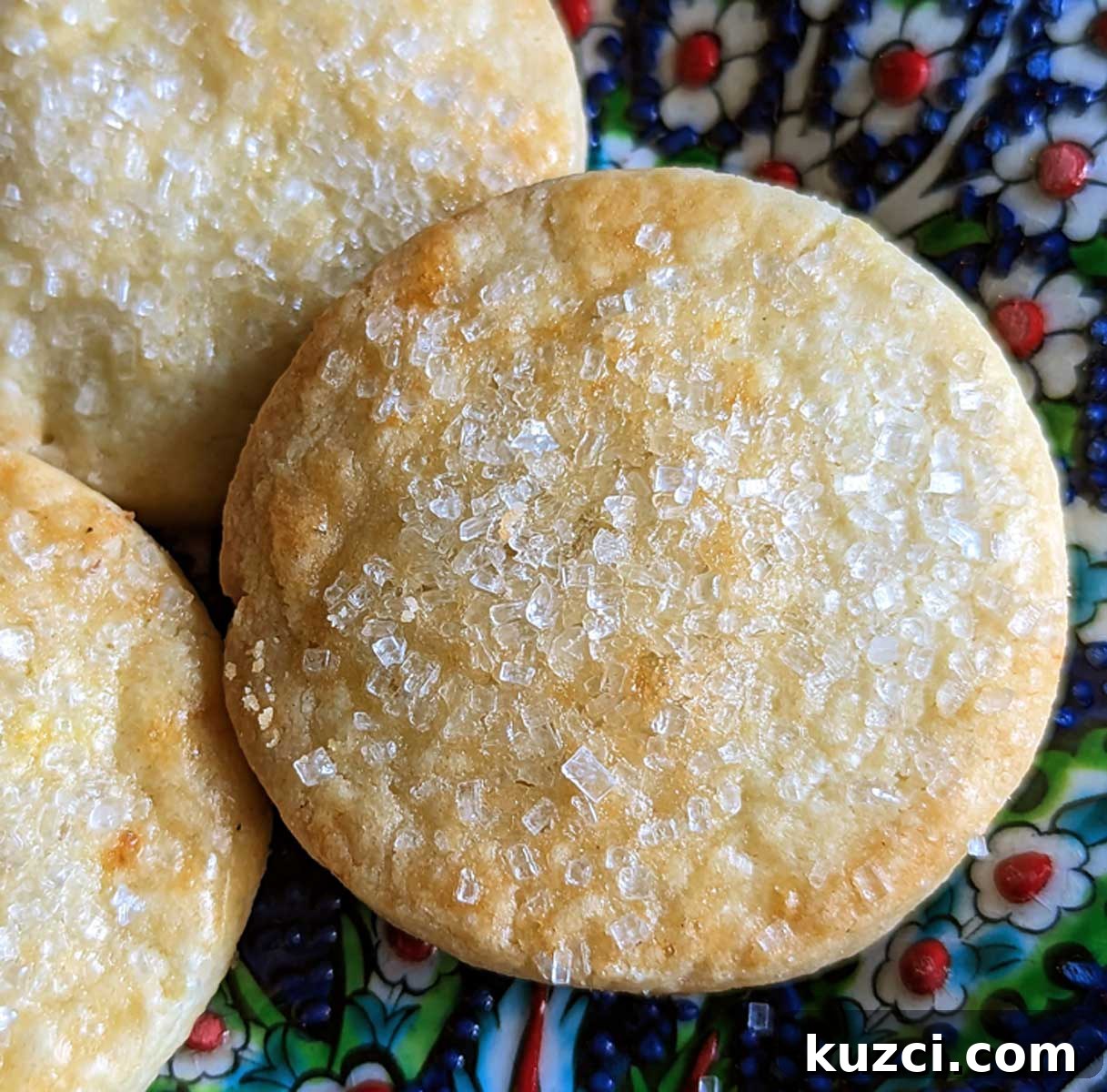
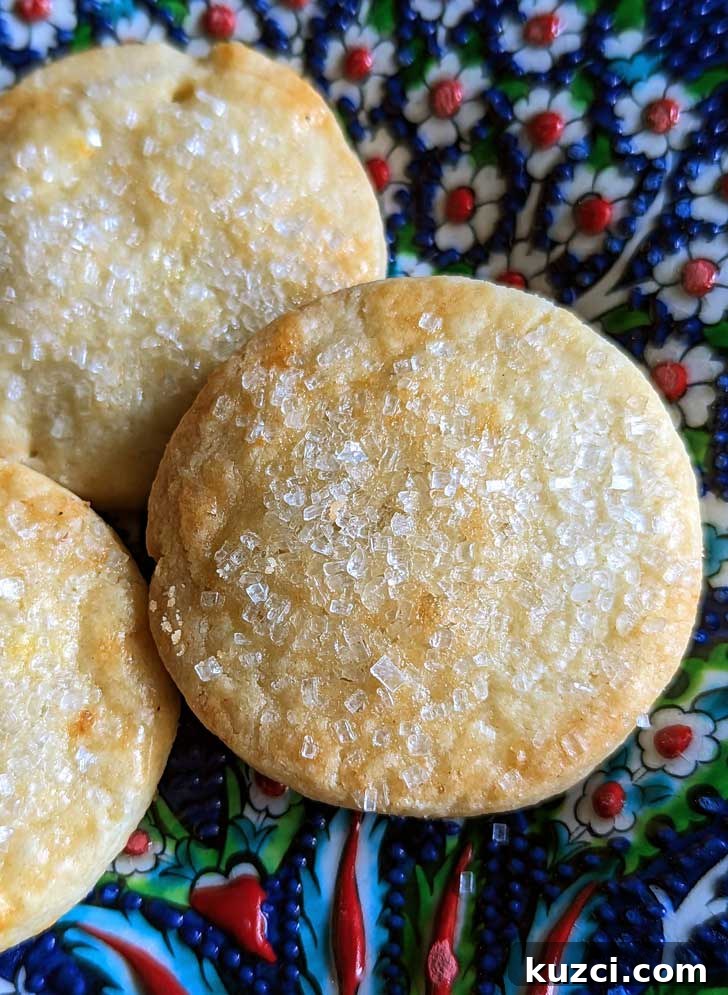
I’ve been eyeing the French butter cookies sold at Wegmans called “Butter Boy” for a while. They inspired this version of round, buttery cookies known as sables — a French name that translates to “sandy,” which perfectly describes their delicate, crumbly texture. These cookies are light, tender, and practically melt on the tongue. A key detail that sets this recipe apart is the use of a cooked egg yolk, which helps create that classic sandy crumb.
Hard Boiled Egg Yolk
One distinctive element of this recipe is the cooked egg yolk. European-style sable recipes often use a cooked yolk because it adds body without contributing extra moisture. A cooked yolk breaks down differently in the dough and leaves a drier, more granular texture. With less moisture, more sugar remains undissolved in the dough, contributing to that pleasant sandy mouthfeel. If you’ve seen recipes for cookies that call for a hard-cooked yolk, it’s the same idea: the yolk provides richness and structure without making the dough soft and cake-like.
European-Style Butter
For the best flavor and texture, use a European-style butter. These butters have a higher butterfat content and a slightly tangy, richer taste than typical supermarket sticks. Brands like Plugrá or Président are examples of European-style butters; a good premium salted butter will also work well. If you only have unsalted butter, taste the dough and add a little extra salt to balance the sweetness. The butter choice makes a noticeable difference in the cookie’s flavor and mouthfeel.
Small Batch French Butter Cookies
This is a small-batch recipe, yielding roughly 20–24 cookies depending on the cutter size. The original approach is to form the dough into a chilled log and slice it into rounds, which works nicely if you prefer that method. I usually roll the dough between sheets of parchment or wax paper and cut out rounds with a cookie cutter for a uniform look. If you like gift-sized batches or want to bake just a few at a time, this amount is ideal.
For the cooked egg, you can hard-boil, steam, or use a pressure cooker method—whichever you prefer. The important part is that the yolk is fully cooked and mashed before being incorporated into the dough. Save the egg white for another use.

Recipe
French Butter Cookies (Sables)
Author: Anna
Summary: Also known as sables, these butter cookies are made with European-style butter and a cooked egg yolk to achieve a tender, sandy texture.
- Prep time: 10 mins
- Cook time: 15 mins
- Total time: 25 mins
- Course: Dessert
- Cuisine: American
- Yield: about 24 cookies
Ingredients
- 1 large hard-boiled egg yolk
- 10 tablespoons salted European-style butter, softened (or use your favorite premium salted butter)
- 1/3 cup plus 1 tablespoon granulated sugar
- 1 pinch salt (use 1/4 teaspoon if your butter is unsalted)
- 1 teaspoon vanilla extract
- 1 1/2 cups all-purpose flour (about 220 grams)
- 1 large egg white, lightly beaten and mixed with 1 teaspoon water (for brushing)
- Crystal sugar or coarse sugar for garnish (optional)
Instructions
- Separate the cooked egg yolk from the white and mash the yolk finely with a fork. Reserve the white for another use.
- In a mixing bowl, beat the softened butter with the granulated sugar and vanilla until well combined and creamy. Mix in the mashed egg yolk and the pinch of salt.
- Add the flour and stir until the dough comes together into a soft, cohesive mass. Do not overwork—the dough should be just combined.
- Divide the dough in half. Working with one half at a time, roll it between two sheets of parchment or wax paper to about 1/4 to 1/3 inch (6–8 mm) thickness. Repeat with the other half. Chill the rolled dough slabs for at least one hour to firm up; chilling makes cutting much easier and helps the cookies hold their shape.
- Preheat the oven to 350°F (175°C) and line a baking sheet with parchment paper.
- Use a 2-inch round cutter to cut as many cookies as you can from the chilled dough. Re-roll scraps and cut the remaining cookies, taking care not to overwork the dough.
- Beat the reserved egg white until slightly frothy. Lightly brush the tops of the rounds with the egg white and, if desired, sprinkle with crystal or coarse sugar for a sparkling finish.
- Bake in the middle of the oven until the tops are a pale golden color, about 15–20 minutes. Allow the cookies to cool on the baking sheet for 2 minutes, then transfer to a wire rack to cool completely.
Tips and Variations
- Storage: Store cooled cookies in an airtight container at room temperature for up to a week. For longer storage, freeze baked cookies in a sealed container for up to three months.
- Flavor variations: Add a teaspoon of lemon or orange zest for a bright citrus note, or press a small amount of jam into the center of each round before baking for a thumbprint-style variation.
- Presentation: For a simple finish, dip half of each cooled cookie in melted chocolate and let set on parchment for an elegant touch.
- Make-ahead: The dough can be rolled, wrapped, and chilled or frozen. Thaw in the refrigerator before cutting and baking.
If you try this recipe, I’d love to hear how your cookies turned out and any tweaks you made. These sables are a wonderful small-batch treat with a delicate texture that showcases great butter and a subtle richness from the cooked yolk.