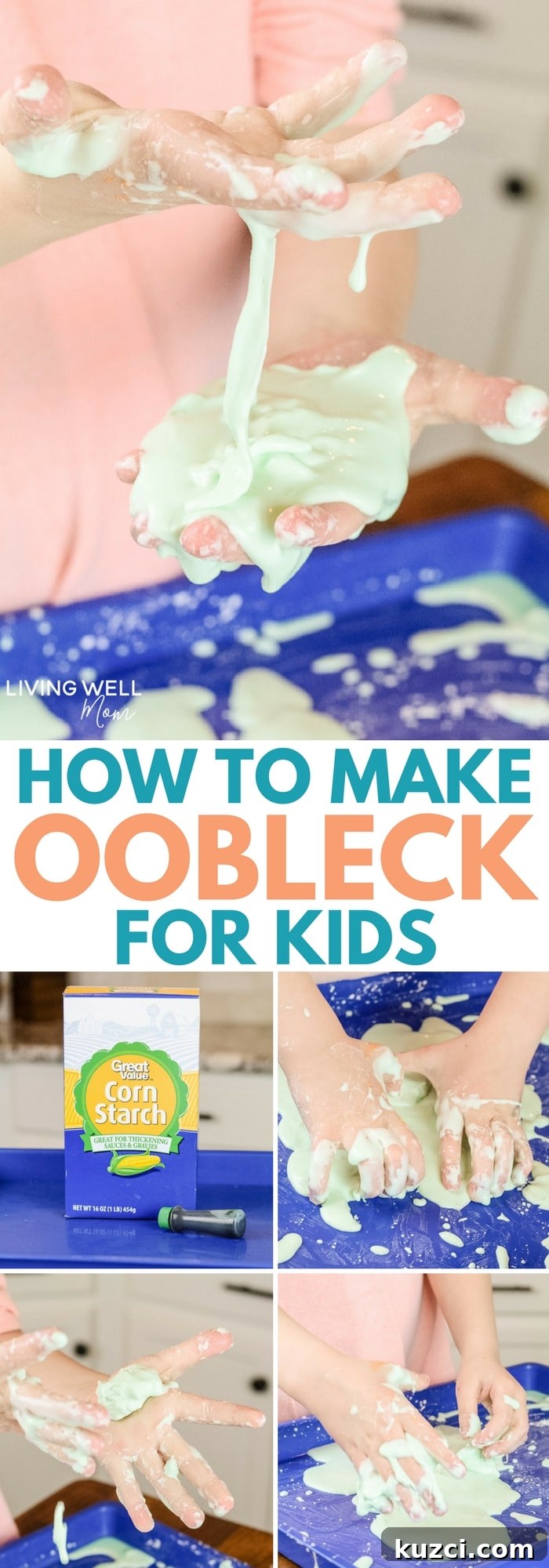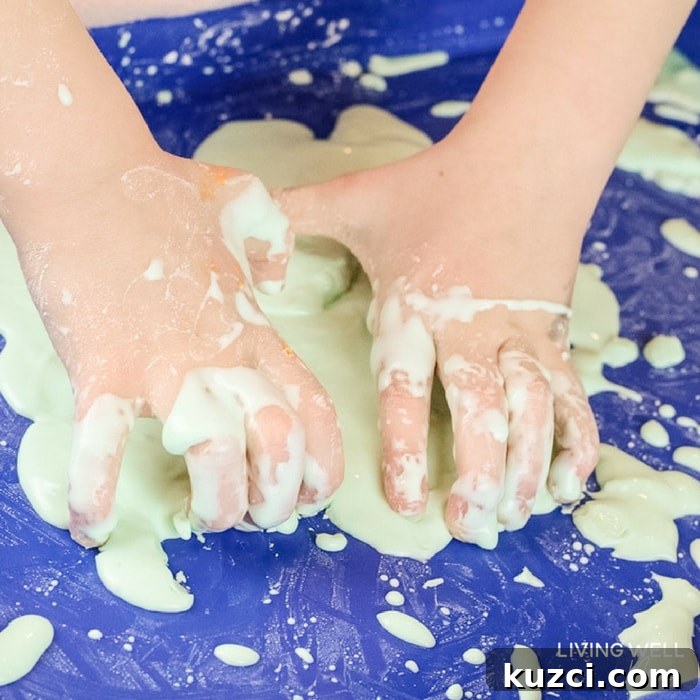
Have you heard of oobleck? Oobleck is a fascinating non-Newtonian fluid that behaves like both a solid and a liquid. Its unusual texture and instant changes under pressure make it an excellent sensory activity for children who seek strong tactile input—and even many kids who usually avoid messy play find it irresistible.
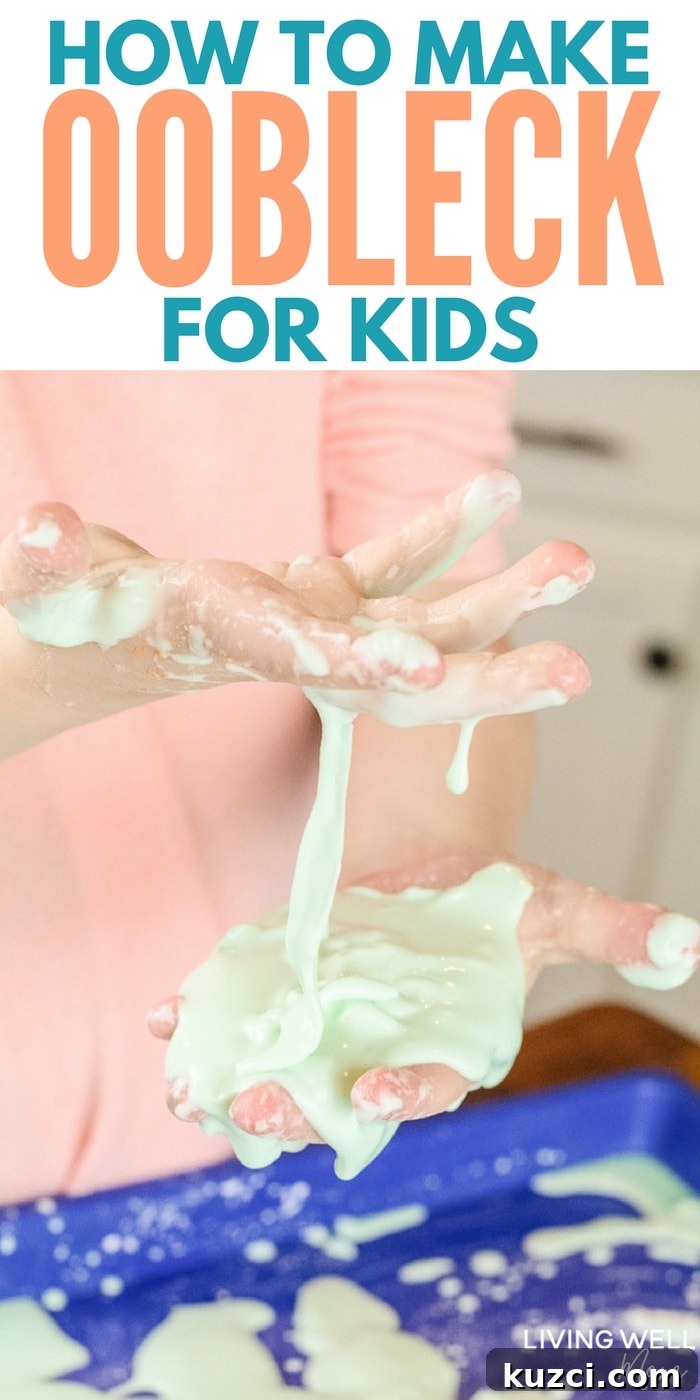
The name “oobleck” comes from the Dr. Seuss story Bartholomew and the Oobleck, where a sticky, globby substance falls from the sky. The cornstarch-and-water mixture earned that nickname because its look and feel are so similar to the playful description in the book.
This activity is wonderfully engaging, but it is also very messy. Plan to do it outdoors or cover your work surface with a large tray, tarp, or washable mat. You will likely want a change of clothes for children after play, but the joy and learning that come from this simple experiment are well worth the cleanup.
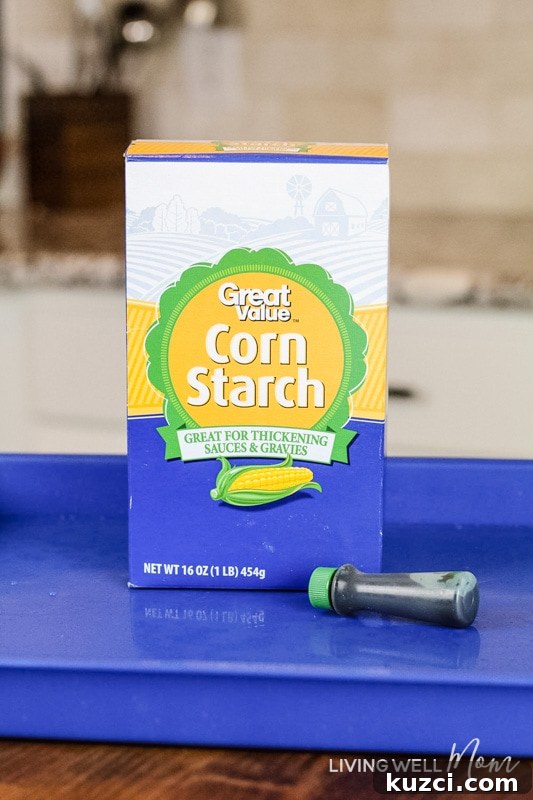
What you need to make Oobleck:
You only need a few basic items to create oobleck:
- Large tray or shallow container
- Green food coloring (optional for a fun look)
- Cornstarch
- Water
When water and cornstarch are combined in the right balance, they form a non-Newtonian fluid. That term means the mixture can act like a solid under sudden force and flow like a liquid when the pressure is removed. When you squeeze the mixture, the cornstarch particles lock together and resist movement, making it feel firm. When you let go, the structure relaxes and the mixture drips and flows.
How to make Oobleck:
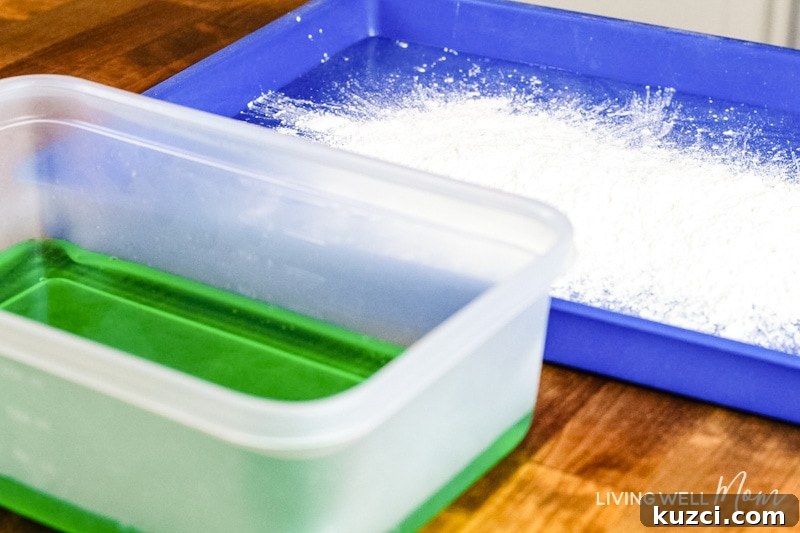
Making oobleck is quick and simple, though getting the consistency right can take a little adjustment. It’s easy to make the mixture too wet, which reduces the solid-like behavior, so add liquid gradually.
Start by spreading a layer of cornstarch across the bottom of your tray or container. Add a small cup of water and tint it with food coloring if you like. Pour the colored water slowly into the starch and stir as you add it. Mix until the surface behaves like a solid when pressed but flows slowly when left alone. You should be able to form a ball in your hand that feels hard while you squeeze it and then dissolves back into liquid when you stop applying pressure.
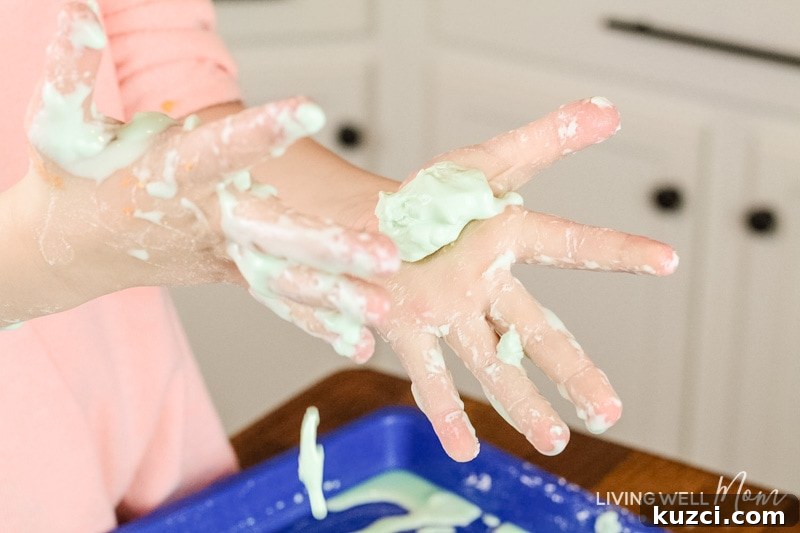
If the mixture becomes too stiff, add a little more water and stir. If it’s too runny, sprinkle in more cornstarch until it regains that satisfying resistance. Using a whole box of cornstarch will give you a larger batch to explore and share.
Encourage children to experiment: punch the surface, roll the mixture into a ball, let it drip through their fingers, or try trapping small toys inside. Demonstrate how quick taps make it feel solid while gentle movement lets it flow. This hands-on exploration supports curiosity about sensation, cause-and-effect, and basic science.
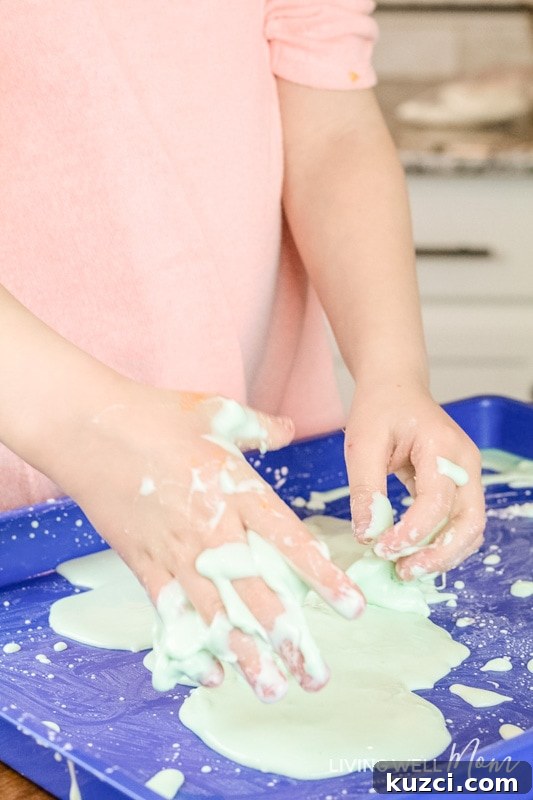
Quick tips for a smoother experience: supervise young children closely to prevent ingestion, keep a garbage bin or dustpan nearby for scooping up drying cornstarch, and use a wet cloth to wipe surfaces clean. Allow small amounts of dried cornstarch to remain on surfaces until they dry fully, then sweep or vacuum; avoid pouring large amounts down drains, as cornstarch can clog plumbing when it rehydrates.
This easy experiment is fun for kids and adults alike, offering both playful sensory input and a memorable science lesson. Whether used in a classroom, at home, or as part of a therapy activity, oobleck invites exploration—so mix a batch, enjoy the feel, and watch how simple materials can create surprising behavior.