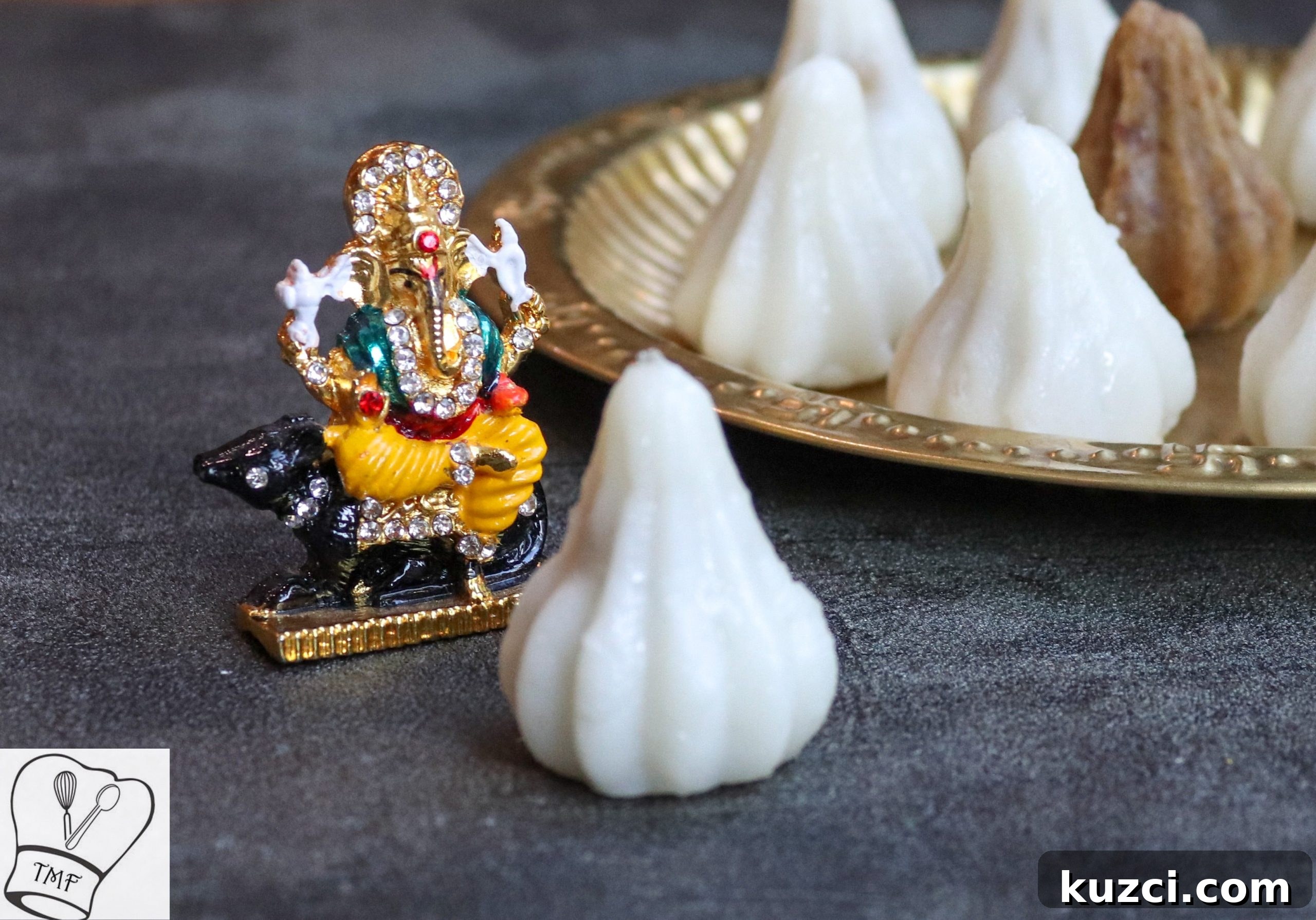
Dry Fruits Kozhukattai | Dry Fruit Modak | Kozhukattai Recipe is a rich, soft, and delicious Indian sweet prepared especially for Ganesh Chaturthi. This festive kozhukattai is made with a tender rice flour outer layer and a naturally sweet dry fruit filling made with dates, almond powder, cardamom, and a little ghee. The best part of this recipe is that the stuffing does not need added sugar or jaggery, as dates provide enough natural sweetness.
This dry fruits kozhukattai is a wonderful choice for festive offerings, Indian dessert platters, and healthy homemade sweet treats. It is soft, flavorful, mildly sweet, and easy to prepare with simple ingredients. If you enjoy traditional Indian sweets with a wholesome twist, this dry fruit modak is a great recipe to try.
What is special about Dry Fruits Kozhukattai?
Dry fruits kozhukattai is special because it combines the traditional South Indian kozhukattai preparation with a naturally sweet and nutty filling. Instead of the usual coconut and jaggery pooranam, this version uses dates and almond powder. The stuffing comes together quickly and does not require long cooking. It is soft enough for kids, satisfying for adults, and works well as a festive sweet or an everyday snack.
Dry fruits are often used in Indian sweets such as dry fruit laddu, almond laddu, atta laddu, and dates burfi. In the same way, this kozhukattai brings the goodness of dates and nuts into a steamed modak. Since there is no added sweetener in the main filling, it is a pleasant option for those who prefer mildly sweet desserts. The flavor of cardamom and ghee gives the stuffing a traditional festive aroma.
Can I use mixed nuts instead of almond flour?
Yes, mixed nuts can be used instead of almond flour. Dry roast cashews, walnuts, peanuts, or almonds until aromatic, let them cool, and then grind them into a slightly coarse powder without adding water. Do not grind for too long, as nuts can release oil and turn into a paste. Pecans are best avoided because they can become oily very quickly. Store-bought almond flour makes the recipe easier and more convenient, but homemade nut powder also works well.
Other almond flour recipes
Should I always microwave the dates?
Microwaving the dates is optional. Soft dates are easier to grind, so heating them briefly helps create a smooth filling. Microwave the chopped dates for about 30 seconds, check the texture, and repeat only if needed. The time can vary depending on the quality and softness of the dates. If you do not want to microwave them, you can dry roast the dates in a pan until they soften.
Should I grind the dates into a paste?
The dates can be ground either coarsely or smoothly. A coarse mixture gives a texture similar to dry fruit laddu and usually needs less almond flour. A smoother paste is easier for small children to eat, but it may require a little more almond flour to bring the stuffing to a non-sticky consistency. Add almond powder gradually until the filling can be shaped easily.
Can I serve the stuffing without making kozhukattai?
Yes, the dry fruit stuffing can be served as it is. You can shape it into small laddus or press it into a modak mould to make khajoor modak. If you plan to store the stuffing for a few days, avoid adding water while grinding the dates. A thicker, non-sticky mixture keeps its shape better and tastes like a simple dry fruit laddu.
Can I use store-bought rice flour for Dry Fruits Modak?
Yes, store-bought rice flour can be used instead of soaking and grinding raw rice. The amount of water needed may vary depending on the flour. Always keep hot water handy while preparing the dough. If the dough feels dry, sprinkle hot water little by little and knead until smooth. If it is too sticky, cook it a little longer until it comes together.
Kozhukattai Recipe Collection
This dry fruit kozhukattai is a festive variation of the classic steamed modak. It is ideal for Ganesh Chaturthi, Diwali, Deepavali, and other Indian celebrations where traditional sweets are prepared at home.
Dry Fruits Kozhukattai Recipe
Ingredients
- Raw rice – 100 grams or 1/2 cup
- Salt – a pinch
- Cardamom powder – 1/4 teaspoon
- Dates – 140 grams about 20 dates
- Almond powder – 70 grams or 3/4 cup quantity may vary depending on the dates
- Ghee – 1 teaspoon
- Sesame oil or coconut oil – as needed for greasing
- Water – 1 cup
Instructions
-
Wash the raw rice well and soak it for at least 2 hours.
-
Drain the rice. Use only a small amount of the measured water and grind the rice into a fine paste. Avoid adding too much water while grinding.
-
Add salt and the remaining water to make a thin batter, similar to dosa batter consistency.
-
Roughly chop the dates and microwave them for about 30 seconds until soft. Let them cool slightly.
-
Grind the dates with very little water and transfer the mixture to a plate.
-
Add almond powder, cardamom powder, and ghee to the date paste. Mix well until the stuffing becomes non-sticky.
-
Heat a pan with a little sesame oil. Add the ground rice batter and cook, stirring continuously.
-
Keep mixing until the batter thickens and comes together as a smooth, non-sticky dough.
-
Transfer the dough to a plate and cover it with a damp cloth.
-
While the dough is still warm, grease your hands with oil and knead it well. Sprinkle hot water only if needed.
-
Divide the dough into small balls. Flatten each ball into a small circle and place a portion of the date filling in the center.
-
Bring the edges together and shape it like a modak. A modak mould can also be used.
-
Grease an idli plate and arrange the prepared kozhukattai. Steam for 8 to 10 minutes, or until the outer layer looks shiny and does not stick.
-
Turn off the stove and let the modak rest for 5 minutes before removing. Serve warm.
Video
Notes
- Instead of almond flour, use 70 grams or 3/4 cup of mixed nuts. Avoid pecans, as they can turn oily.
- Dry roast the nuts until golden, cool them completely, and grind into a slightly coarse powder.
- The amount of almond powder may vary depending on how soft and moist the dates are. Start with 1/2 cup and add more as needed.
- The dry fruit filling should be soft but not sticky.
- If you want to serve the filling as laddu or store it for a few days, avoid adding water while grinding the dates.
- Keep the rice dough covered with a damp cloth or paper towel to prevent it from drying.
- Store-bought or homemade rice flour can be used instead of soaked raw rice. Use 100 grams of flour.
- Coconut can be added to the filling for extra flavor.
- Extra dry fruit mixture can be shaped into modak or rolled into laddu.
- If the dates are not sweet enough, a small amount of sugar can be added to the filling.
Step-by-Step Method with Photos
- Wash and soak the raw rice for at least 2 hours.
- Grind the soaked rice with a little water until smooth. Add salt and the remaining water to make a thin batter.
- Chop the dates and soften them briefly in the microwave. Let them cool before grinding.
- Grind the dates with very little water and transfer the paste to a plate.
- Add almond powder, cardamom powder, and ghee. Mix until the stuffing holds shape without sticking.
- Heat a pan with a little sesame oil. Add the rice batter and stir continuously.
- Cook until the batter thickens into a smooth, non-sticky dough.
- Transfer the dough to a plate and cover it with a damp cloth.
- Grease your hands and knead the warm dough until smooth.
- Make small balls, flatten each one, place the filling in the center, and shape into modak.
- Steam the prepared kozhukattai for 8 to 10 minutes, until the outer layer looks shiny.
- Let the steamed modak rest for 5 minutes before removing. Serve the dry fruits kozhukattai warm.