
Homemade tzatziki brings fresh, vibrant flavour to any meal or snack board. This vegan version is tangy, cooling, and garlicky with bright lemon notes. Use it as a dip for vegetables and pita, or drizzle it over falafel, gyros, bowls, and roasted vegetables.

Traditional tzatziki is a creamy Mediterranean condiment made with yogurt, cucumber, garlic, olive oil, and lemon. This plant-based version keeps that classic balance of cool cucumber and tangy yogurt, while remaining dairy-free. It’s quick to prepare, requires just a handful of ingredients, and elevates simple meals with its refreshing contrast.
Why This Easy Tzatziki Recipe Is a Must-Make
- Versatile. Tzatziki works as a dip, sauce, or spread—perfect for snacks, sandwiches, grain bowls, and grilled foods.
- Creamy contrast. Its cool, creamy texture brightens bold, savory dishes and fresh vegetables alike.
- Fast to prepare. Once the cucumber is grated and drained, the rest is simply mixing and chilling.
- Few ingredients. This recipe uses five main ingredients plus salt and pepper, so you always know what’s in it. Use a thick Greek-style vegan yogurt for the best texture.
Notes on Ingredients
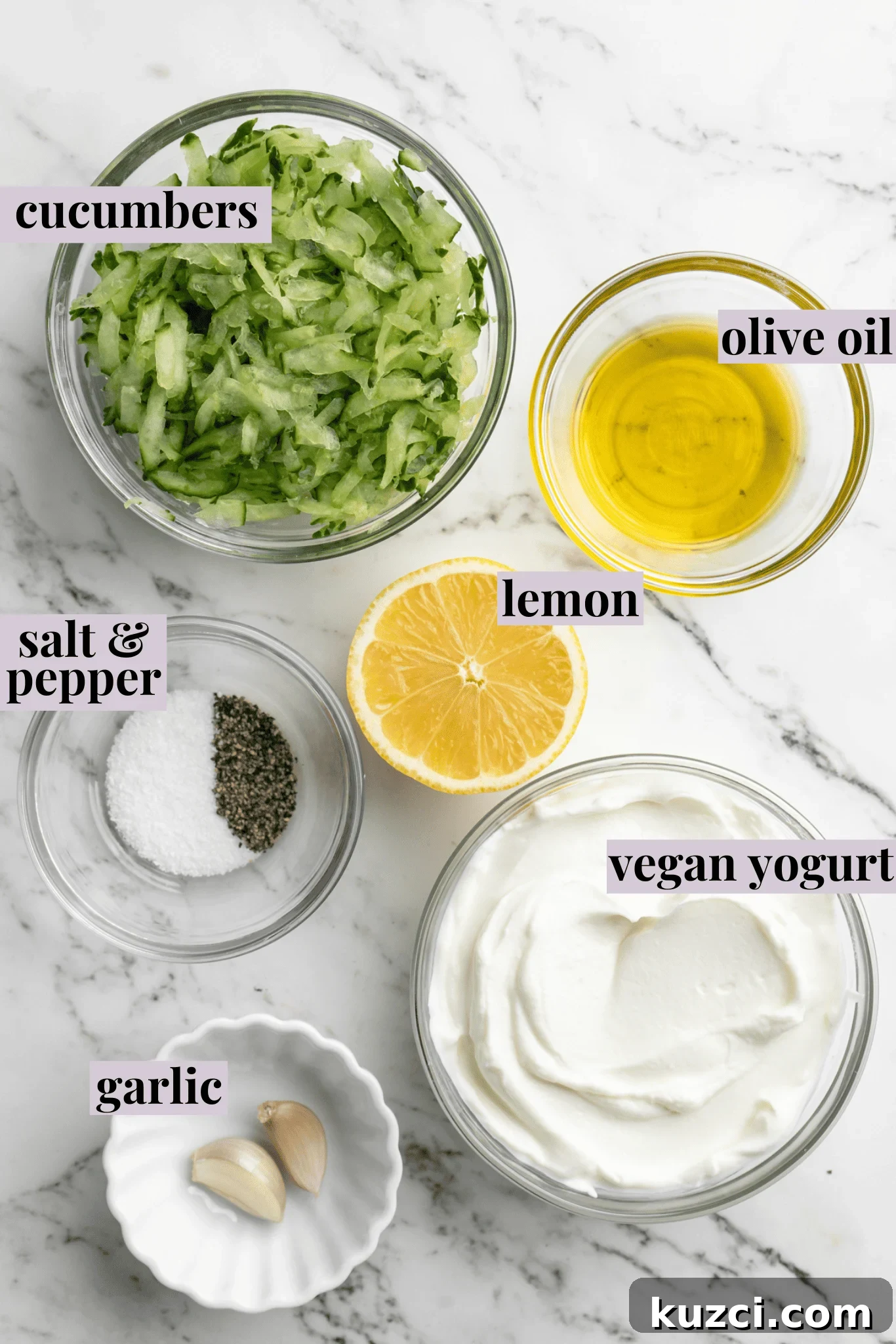
You only need a few simple ingredients to make creamy, dairy-free tzatziki. Use the recipe card below for exact quantities and step-by-step instructions.
- Cucumbers – Grate the cucumber finely using a box grater or a food processor. Finely grated cucumber blends smoothly into the yogurt and avoids large chunks in the finished sauce.
- Vegan Greek-style yogurt – Choose a thick, strained-style plant-based yogurt so the tzatziki stays rich and spreadable.
- Olive oil – Adds silkiness and a subtle fruity note; you can substitute a neutral oil if preferred.
- Lemon juice – Freshly squeezed lemon brightens the sauce more than bottled juice.
- Garlic – Fresh garlic provides a pungent, aromatic backbone. Mince it very finely or use a garlic press so it disperses evenly.

How to Make Tzatziki at Home
Making tzatziki is straightforward and quick. The key is removing excess moisture from the cucumber so the sauce stays thick and velvety. This recipe is also ideal for making ahead—chilling the sauce for at least 30 minutes helps the flavours meld.
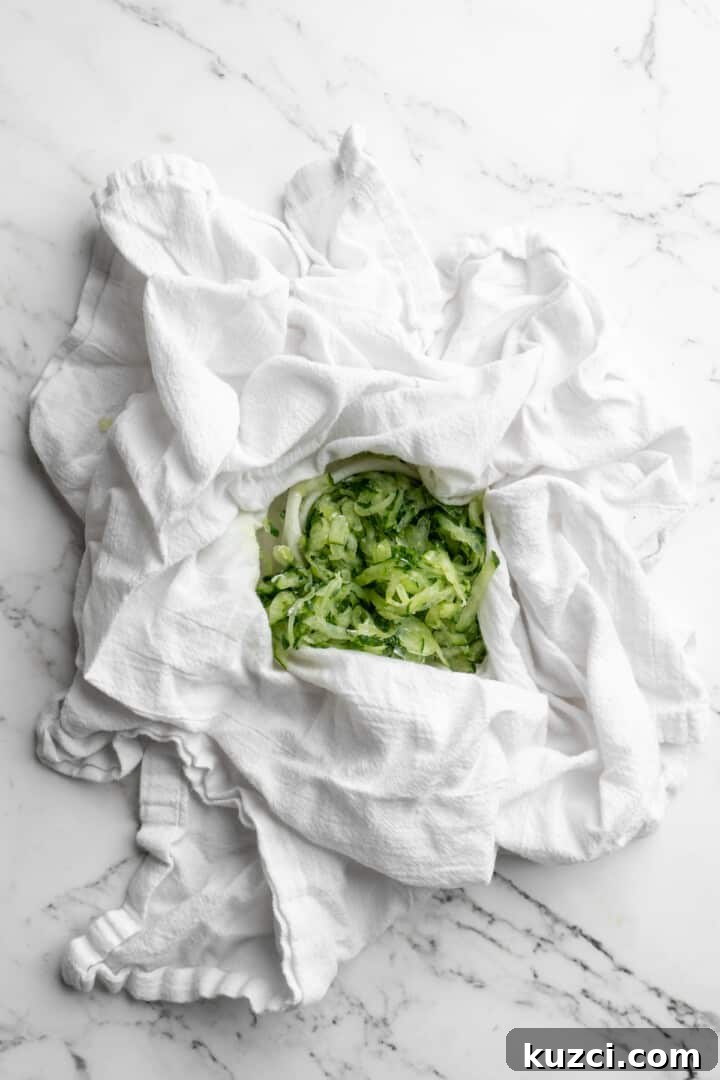
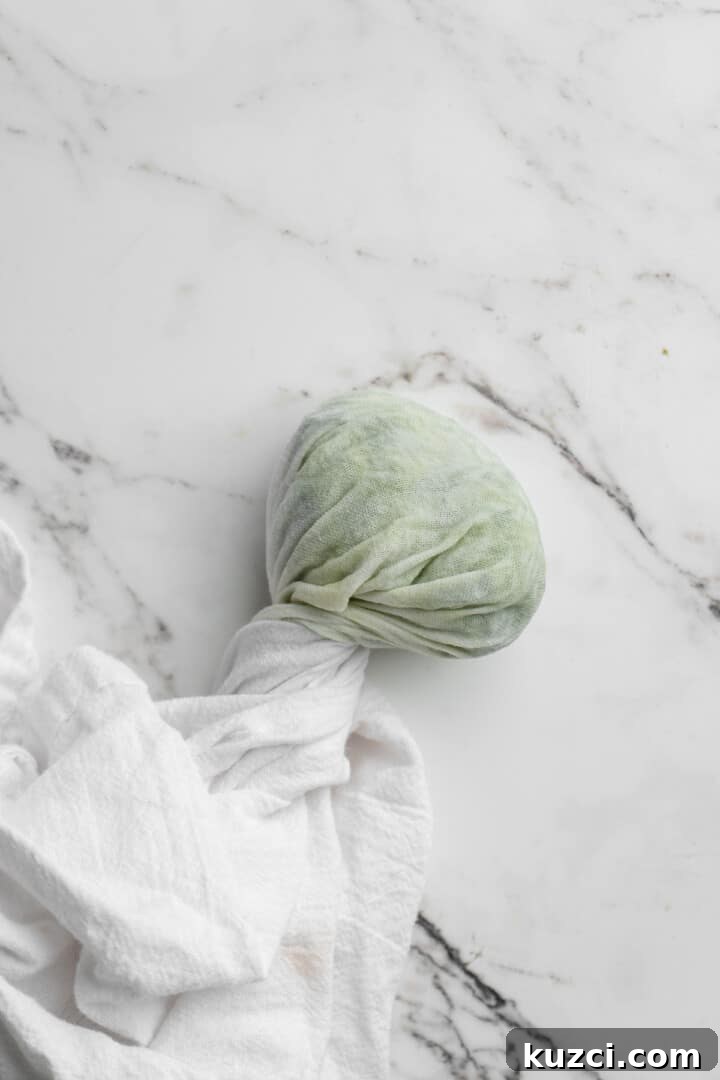

- Strain the cucumbers. Squeeze grated cucumber in a clean kitchen towel or cheesecloth until no more liquid drips out.
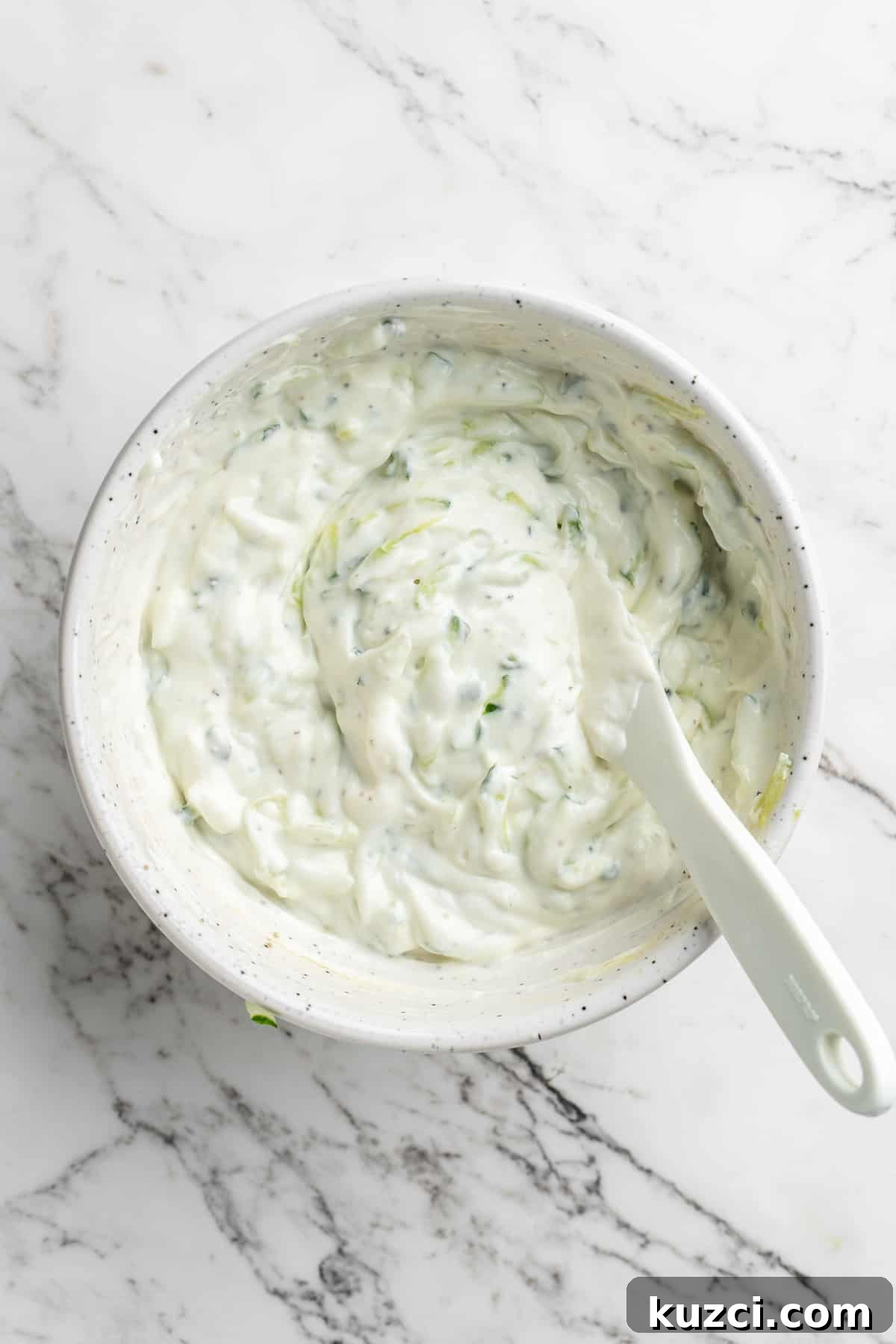
- Combine. Stir the drained cucumber together with vegan Greek-style yogurt, garlic, lemon juice, olive oil, salt, and pepper until smooth and well mixed.
- Chill. Refrigerate for at least 30 minutes to let the flavours settle before serving.
Why Strain the Cucumber?
Straining the cucumber prevents the tzatziki from becoming watery. Excess moisture will thin the sauce and dilute the flavours, so squeeze the grated cucumber until it’s nearly dry before mixing it with the other ingredients.
What to Eat With Tzatziki
Tzatziki pairs beautifully with many dishes. Try it with crispy falafel, vegan moussaka, tempeh or seitan gyros, grain bowls, roasted vegetables, or as a creamy dressing for salads. It’s an excellent addition to mezze and crudité platters alongside hummus, pita chips, and fritters.
Variations
Customize this tzatziki to suit your taste:
- Herbs. Add fresh chopped dill, mint, or parsley for extra brightness.
- Milder garlic. Roast a whole head of garlic to mellow its intensity before mixing it in.
- Lemon zest. Stir in lemon zest for an extra layer of citrus aroma.
- Mix-ins. Fold in finely chopped roasted red peppers, crumbled vegan feta, or a touch of minced jalapeño for heat.

How to Store Tzatziki
- Refrigerate. Keep tzatziki in an airtight container in the refrigerator for up to 3 days. Stir well before serving, as separation can occur.
- Freeze. Freeze in a suitable container for up to 2 months, though the texture is best when fresh. Thaw in the refrigerator overnight and stir before serving.
More Vegan Sauce and Dip Ideas
- Homemade marinara sauce
- Vegan whipped feta dip
- Tartar sauce
- Thai peanut sauce
- Vegan spinach artichoke dip
If you try this vegan tzatziki, we’d love to see a photo or hear your feedback. Leave a comment or rating where you found the recipe.
Tzatziki
Servings: 4 | Prep time: 10 mins | Total time: 10 mins
Homemade vegan tzatziki is tangy, refreshing, and garlicky with bright lemon flavour. Serve as a dip or drizzle for falafel, gyros, bowls, and more.
Ingredients
- 1/2 cup grated cucumber (drained)
- 1 cup Greek-style vegan yogurt
- 1/2 teaspoon sea salt
- 1/4 teaspoon ground black pepper
- 1 tablespoon olive oil
- 1 tablespoon fresh lemon juice
- 2 cloves garlic, minced
Instructions
- Place the grated cucumber on a clean towel and wrap it. Squeeze firmly to remove as much liquid as possible.
- In a bowl, combine the drained cucumber with the vegan yogurt, sea salt, black pepper, olive oil, lemon juice, and minced garlic. Stir until fully incorporated.
- Refrigerate for at least 30 minutes to allow the flavours to meld. Give the tzatziki a final stir before serving. Serve with pita chips, fresh vegetables, or alongside your favourite Mediterranean dishes.
Notes
Storage: Store in an airtight container in the refrigerator for up to 3 days. Stir before serving.
Freezing: Freeze for up to 2 months in a freezer-safe container. Thaw overnight in the fridge and stir before serving; texture may change slightly.
Nutrition (approx. per serving)
Calories: 74 kcal; Carbohydrates: 7 g; Protein: 2 g; Fat: 5 g; Sodium: 299 mg. These values are estimates and may vary by product and brand.
Cuisine: Greek-style | Course: Condiment | Author: Jessica Hylton