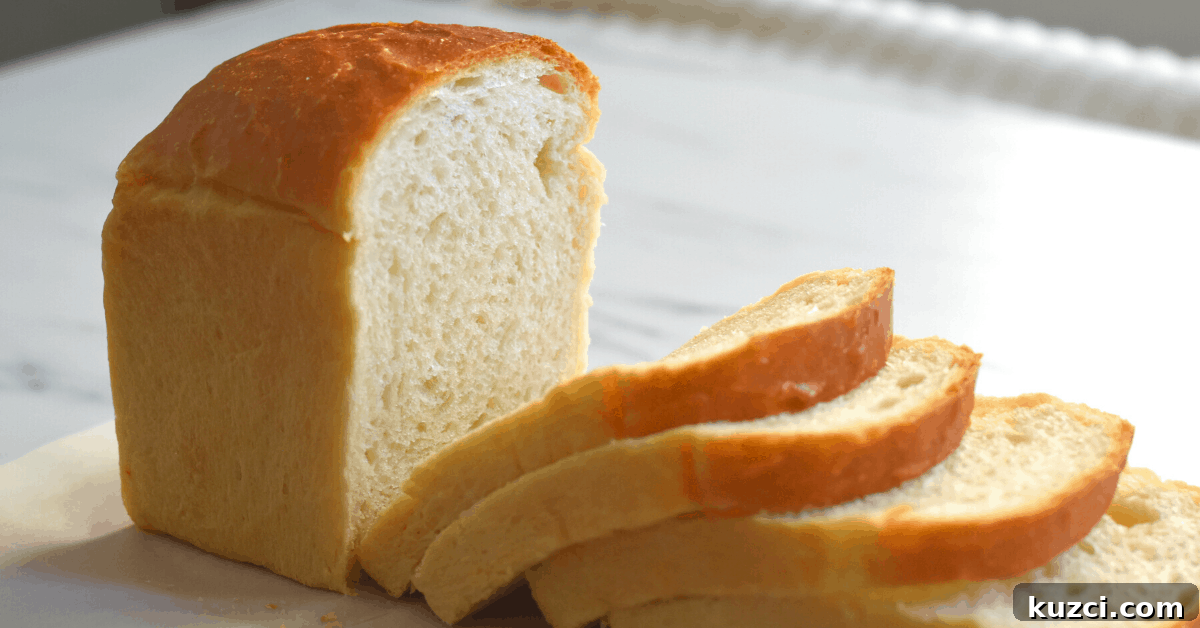
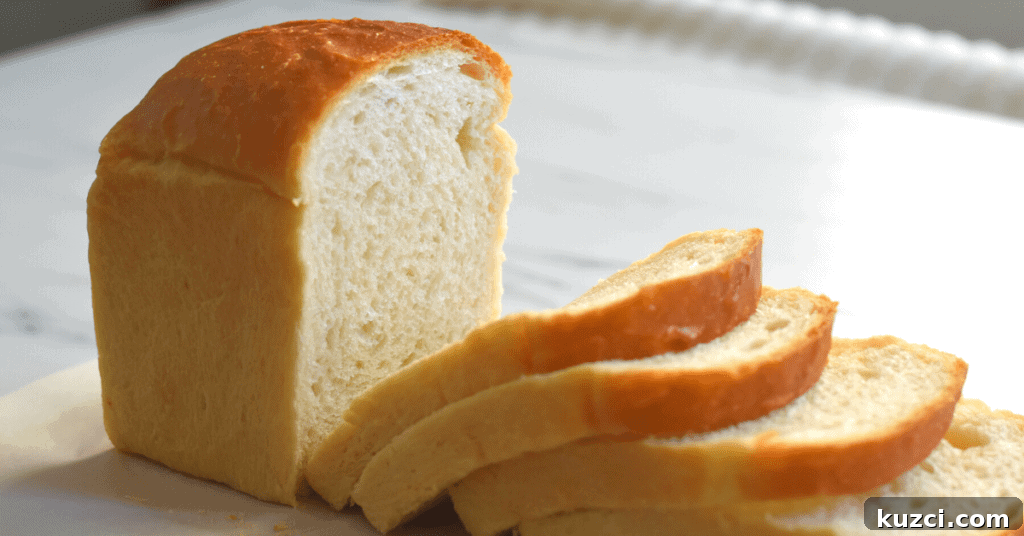
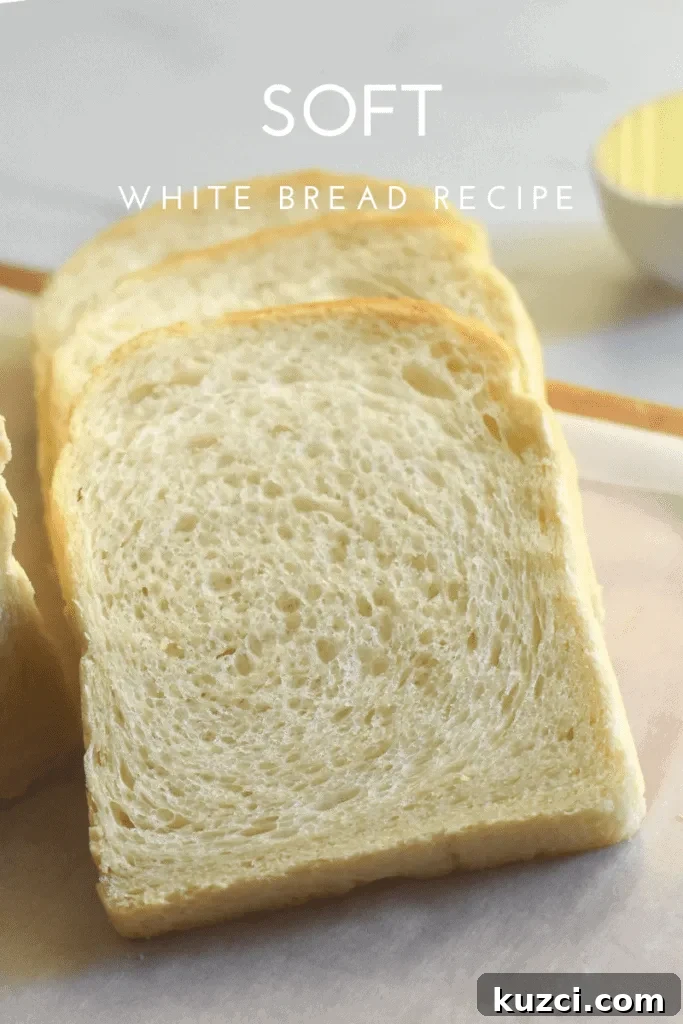
This classic white bread recipe produces a soft, fluffy sandwich loaf using just six simple ingredients and five easy steps. It’s ideal for sandwiches, toast, and everyday baking. Below you’ll find ingredient amounts, step-by-step instructions, tips for checking doneness, storage and freezing advice, and troubleshooting for common problems.
Ingredients
- Flour: 357 g (about 2 3/4 cups)
- Warm water: 210 ml (about 1 cup + 2 tbsp)
- Instant yeast: 1 tsp (or 1 1/4 tsp active dry yeast)
- Salt: 1 tsp
- Butter: 42.6 g (about 3 tbsp), softened
- Sugar or honey: 1 tbsp (adjust to taste)
Method
This white sandwich bread is made in five straightforward steps: prepare the dough, first proof, shape, final rise, and bake.
1. Prepare the dough
In a mixing bowl, combine the lukewarm water, sugar or honey, salt, and yeast. Stir until the sugar and salt are dissolved. Add the softened butter, then add the flour.
Mix until a shaggy mass forms, then turn the dough out onto a lightly floured surface and begin kneading. You can also use a stand mixer with a dough hook to make this easier. Knead until the dough becomes smooth and elastic and passes the windowpane test.
What is the windowpane test?
The windowpane test shows whether gluten is sufficiently developed. Stretch a small piece of dough between your fingers: if it stretches thin without tearing and you can see light through it, the dough is ready to proof.
To shorten kneading time, knead for 6–8 minutes, cover and rest for 10 minutes, then knead 2–3 more minutes. The brief rest helps the flour absorb moisture and the gluten to form longer strands. The finished dough should be soft, smooth, slightly springy, and tacky to the touch.
2. First proofing
Lightly oil a clean bowl, place the dough inside, and cover with plastic wrap or a damp cloth. Let it rise in a warm place until doubled in size, about 2 hours depending on room temperature.
3. Shape the dough
Turn the risen dough onto a lightly floured surface and gently degas it. Press or roll it into a rectangle. Fold the bottom third up, then fold the top down to overlap. Flatten the dough into a long rectangle, making sure to remove any large air pockets to avoid uneven holes in the crumb.
Roll the dough tightly like a jelly roll, pinch the seams and ends to seal, and drag the log slightly toward you on the work surface to create surface tension. This tight top surface helps achieve a good oven rise.
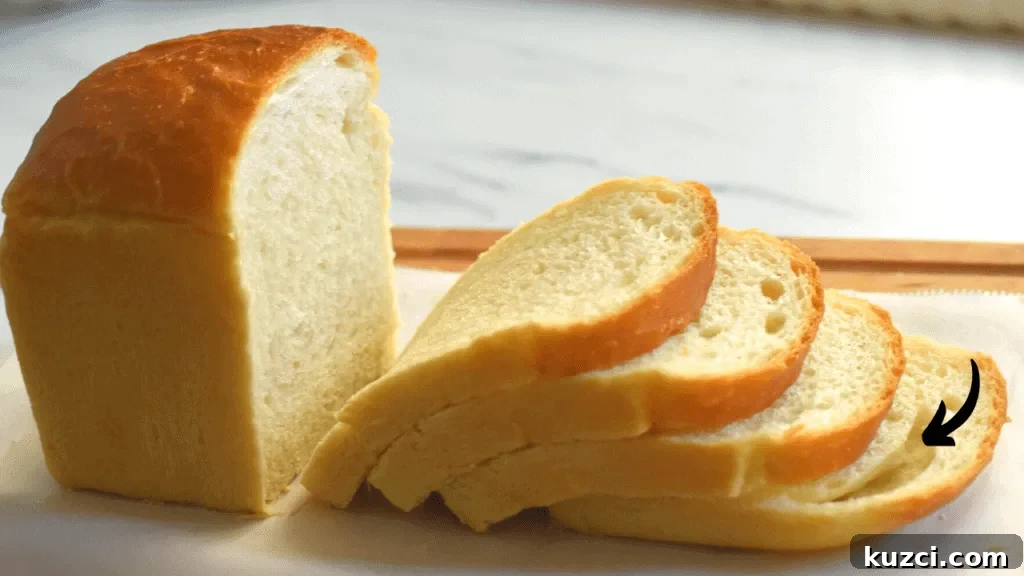
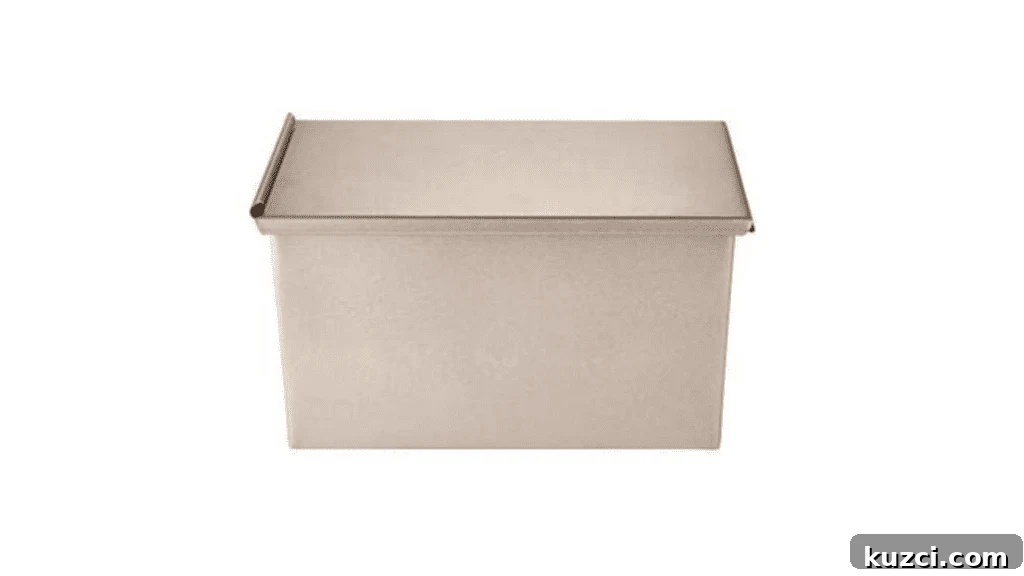
Place the shaped loaf into a greased baking pan. For this recipe a medium Pullman-style loaf pan works well for tall, even slices.
4. Final rising
Cover the pan and let the dough rise in a warm place for 70–75 minutes, until slightly domed and nearly doubled.
5. Bake the bread
Preheat the oven to 350°F (175°C). Bake the loaf for 32–35 minutes. The top may begin to brown around 25 minutes, but the loaf likely needs the full baking time to cook through. Remove the loaf from the pan and transfer it to a wire rack to cool completely before slicing. If you prefer a softer crust, brush the warm top with butter.
How to check doneness
Ovens vary, so use these methods to confirm your loaf is fully baked:
- Visual: The crust should be golden brown on all sides. If the sides are pale, the loaf may be underbaked and needs a few more minutes.
- Tap the bottom: Remove the loaf from the pan, turn it over, and tap the base. A done loaf sounds hollow.
- Thermometer: An instant-read thermometer inserted into the center should read near 200°F (about 93°C) for a fully baked sandwich loaf.
Storage and freezing
At room temperature in a cool, dry place, wrapped in plastic or a paper bag, the bread will stay fresh for 2–3 days. To keep it longer, wrap tightly and refrigerate for up to seven days (note: refrigeration can dry bread). To freeze, wrap the cooled loaf in plastic or foil and freeze up to one month. Reheat in a toaster or in a preheated 350°F oven for about 10 minutes.
Troubleshooting common issues
Dense or heavy bread
- Under- or over-proofing can make the loaf dense. Make sure the dough doubles during proofing but does not over-expand.
- Incorrect proofing temperature: yeast works best in warm—not hot—liquid. Room temperature proofs are fine but may take longer.
- Inactive yeast: check yeast freshness before using.
- Low-gluten flour: for whole-grain blends consider adding some bread flour or vital wheat gluten to improve structure.
Undercooked center
Too-high oven temperature can brown the crust before the interior cooks. Reduce oven temperature slightly and bake a few minutes longer. Also ensure you’ve allowed the full recommended baking time.
Collapsed loaf
Overproofing weakens the dough’s structure. Follow the recommended final rise time and avoid letting the shaped dough grow excessively before baking.
Strong yeast smell
This can result from overproofing, underbaking, insufficient kneading, or using too much yeast. Follow recommended timings and test the dough for windowpane strength.
Five tips for consistent sandwich bread
- Use a kitchen scale for accurate measurements, especially for flour.
- Check yeast freshness by proofing it in warm water with a little sugar—if it foams, it’s active.
- Keep liquid temperature warm (around 100–110°F / 37–43°C) so yeast activates but is not killed.
- A tacky, well-hydrated dough gives a softer crumb; resist adding extra flour unless necessary.
- Balance oven temperature and time so the interior cooks without forming an overly thick crust.
Simple White Bread – Recipe Summary
Yield: 1 loaf
Prep time: ~25 minutes active (plus knead/rest) | Proofing: ~3 hours total | Bake: 32–35 minutes
Keywords: basic white bread recipe, homemade sandwich bread, white sandwich loaf