
Learn how to make homemade crepes that are tender, thin, and delicate, with lightly buttery golden edges. This easy French crepe recipe works beautifully with sweet or savory fillings, making it perfect for breakfast, brunch, lunch, dinner, or dessert.
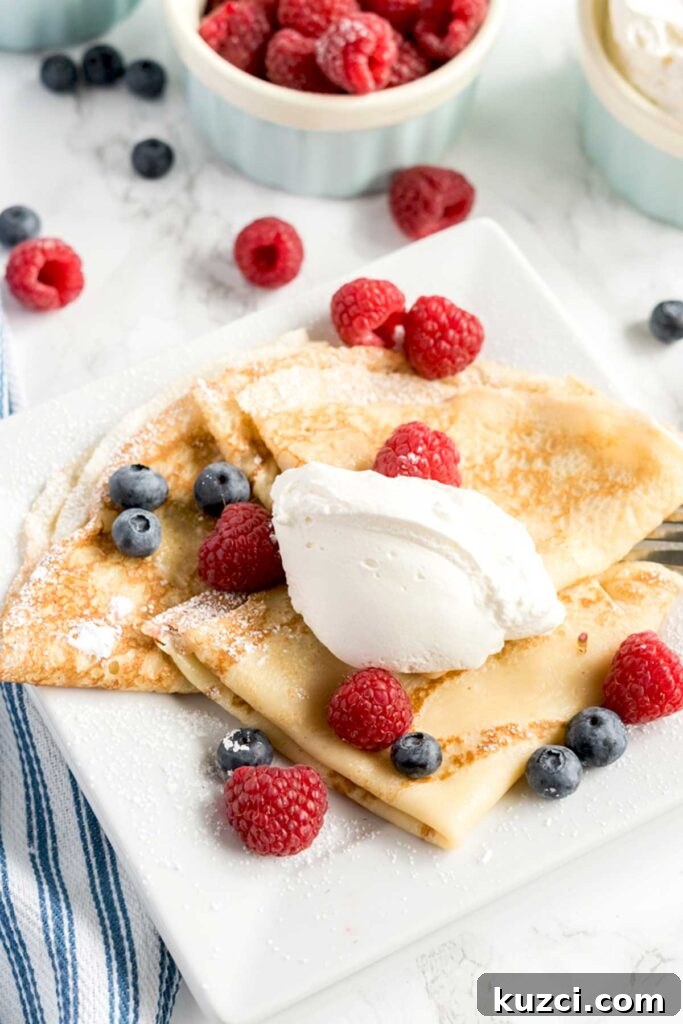
Homemade Crepes
Homemade crepes may look elegant, but they are surprisingly simple to prepare. With a short list of basic ingredients and a blender, you can make a smooth crepe batter in seconds. The only part that takes a little practice is swirling the batter thinly and evenly in the pan, but once you make one or two, the process becomes easy and enjoyable.
This basic crepe recipe is a wonderful one to keep on hand because it is versatile, dependable, and made with everyday pantry staples. You do not need a special crepe pan or professional equipment. A regular non-stick skillet works well, and the finished crepes can be filled with almost anything you like.
-
You can make restaurant-style crepes at home without special tools.
-
The batter can be prepared ahead and refrigerated for up to 2 days.
-
Leftover crepes keep well in an airtight container or resealable bag in the refrigerator for up to 5 days.
-
Crepes freeze well when wrapped tightly and stored properly.
-
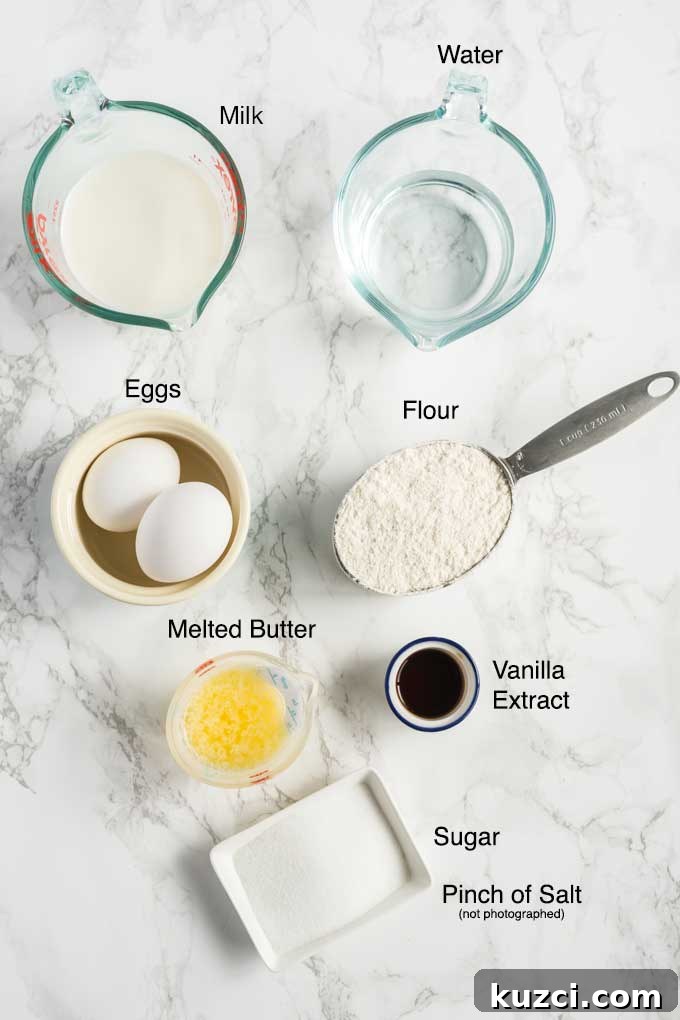
The ingredients are simple: eggs, milk, water, flour, butter, sugar, vanilla, and salt.
-
A blender makes the batter smooth in about 15 seconds.
-
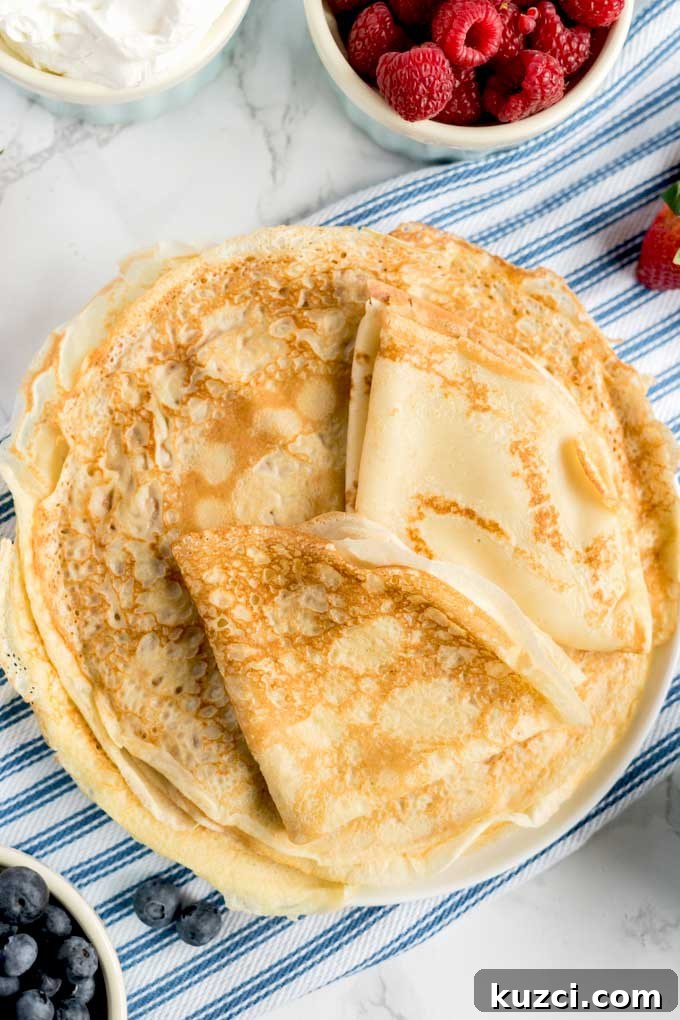
Basic crepes can be served with endless sweet or savory fillings.
What Are Crepes?
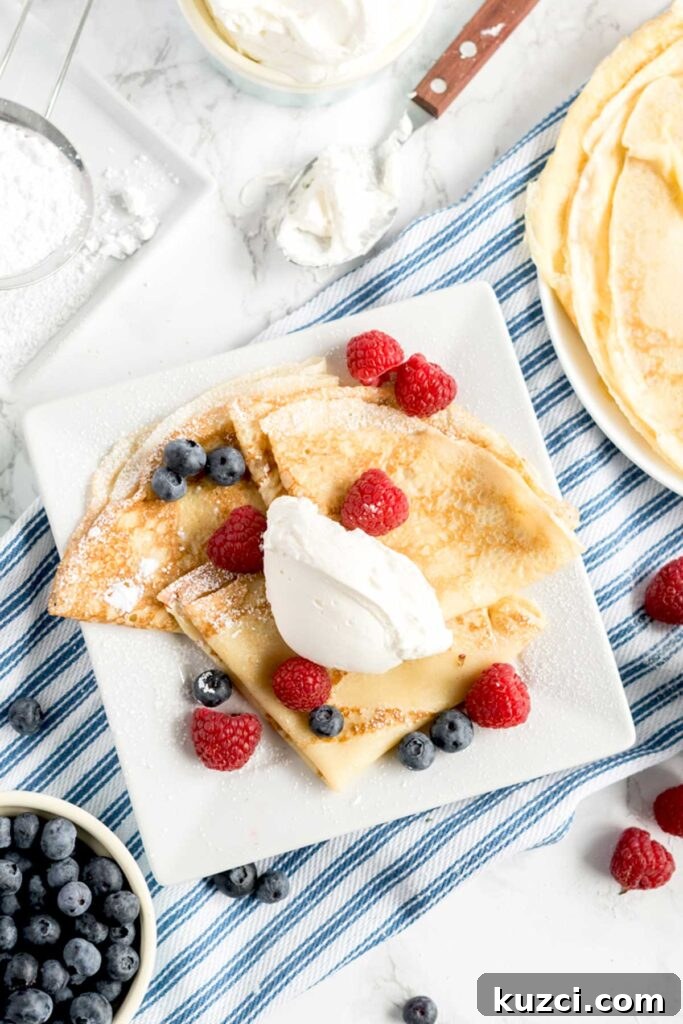
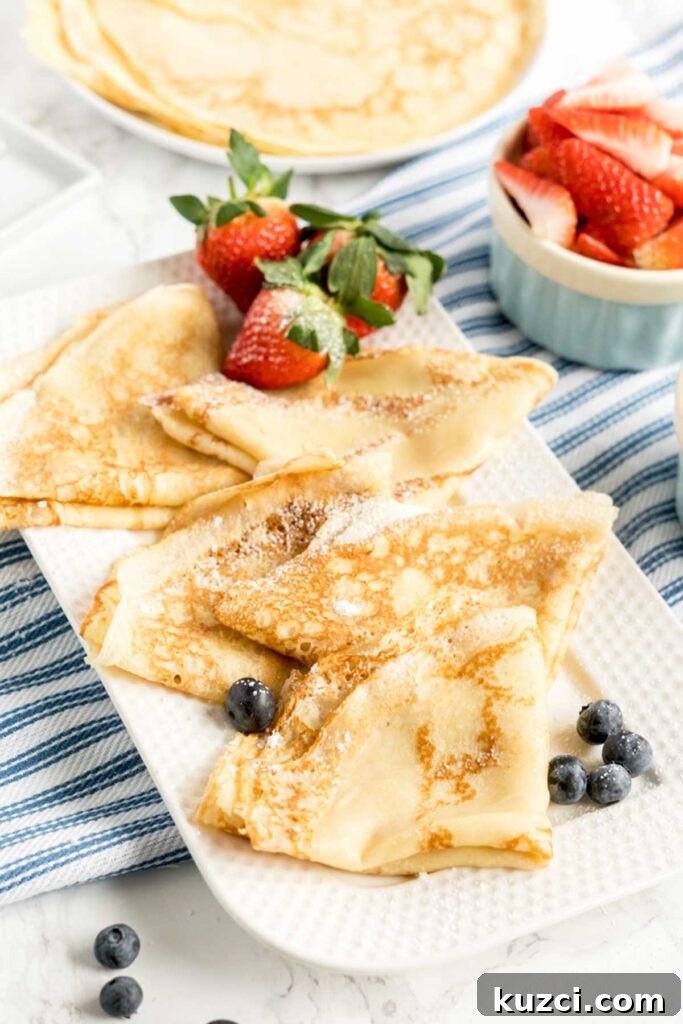
Crepes are thin French-style pancakes made without a leavening agent such as baking powder or baking soda. Because they do not rise like traditional American pancakes, crepes are much thinner, softer, and more delicate. They are usually cooked quickly in a skillet and can be folded, rolled, or layered with fillings.
The first crepe you cook may not look perfect, and that is completely normal. Many cooks treat the first crepe as a test crepe because it helps you check the heat of the pan and the amount of batter needed. Once the pan is properly heated and lightly greased, the remaining crepes usually cook much more evenly.
What Are Crepes Made Of? Basic Ingredient List
This simple crepe batter is made with a few common ingredients:
-
Eggs: Large eggs help give the crepes structure and tenderness.
-
Milk and Water: Whole milk adds richness, while water helps keep the batter light and thin.
-
Flour: All-purpose flour is ideal for basic homemade crepes.
-
Sugar: Sugar adds a touch of sweetness. You can reduce or omit it when making savory crepes.
-
Vanilla Extract: Vanilla is best for sweet crepes and can be left out for savory versions.
-
Butter: Melted unsalted butter adds flavor and helps create tender crepes. Extra butter may be used to grease the pan.
-
Salt: A small pinch balances the flavor and makes the crepes taste better.
How To Make Crepes At Home
Making crepes at home is easier than it looks. The key is to use a smooth batter, let it rest briefly, and cook each crepe in a lightly greased skillet over medium heat.
-
Melt the Butter: Melt the butter in the microwave or on the stovetop. Let it cool slightly while you gather the rest of the ingredients.
-
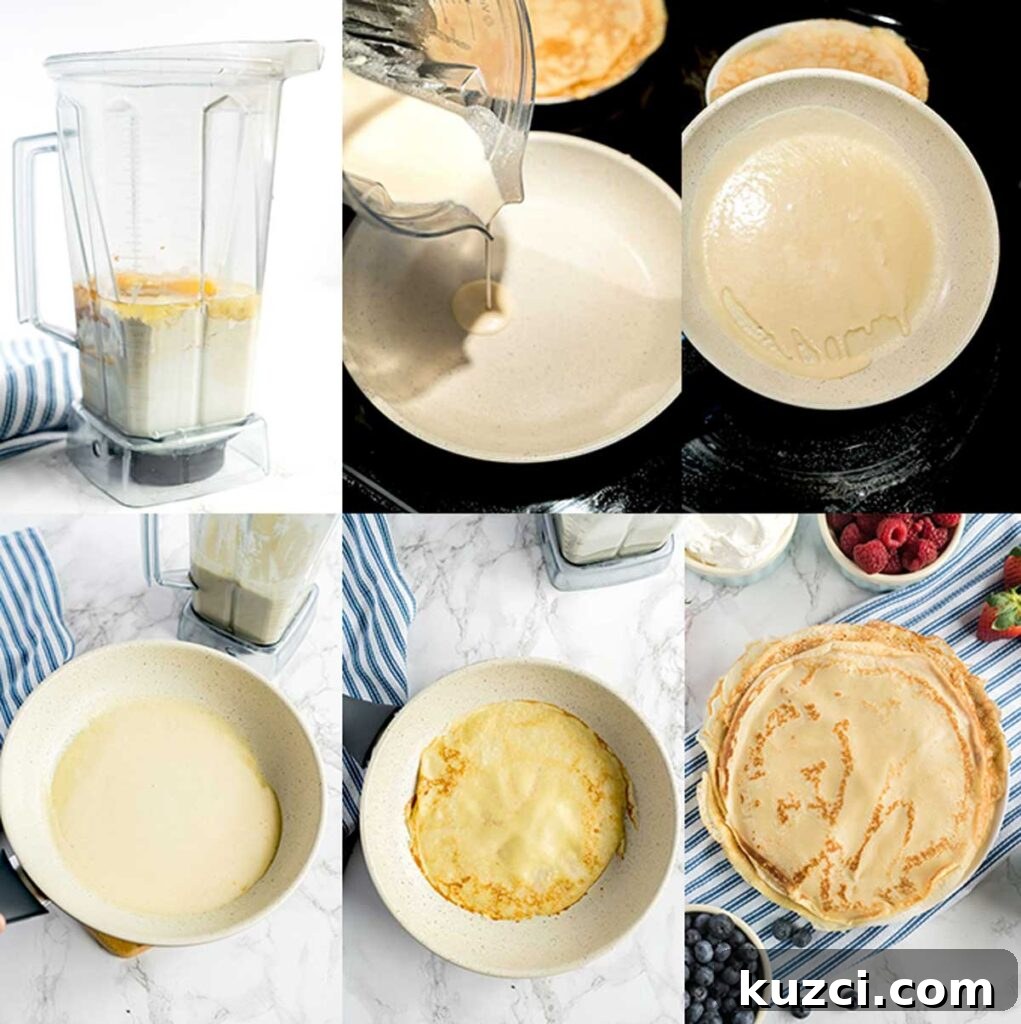
Blend the Batter: Add the eggs, milk, water, flour, sugar, salt, vanilla, and melted butter to a blender. Blend for 10 to 15 seconds, just until smooth.
-
Chill the Batter: Refrigerate the crepe batter for at least 20 minutes. You can also make it ahead and chill it for up to 48 hours.
-
Prepare the Pan: Heat an 8- to 10-inch non-stick skillet over medium heat. Lightly coat the bottom with butter.
-
Cook the Crepes: Pour about 1/4 cup of batter into the skillet, tilting and swirling the pan as you pour so the batter spreads into a thin, even layer. Cook for 25 to 35 seconds, or until the top looks dry and the edges are lightly golden. Flip carefully and cook for about 10 seconds more.
-
Serve: Stack the crepes on a plate and fill or top them with your favorite sweet or savory ingredients.
What Are Crepes Often Filled With?
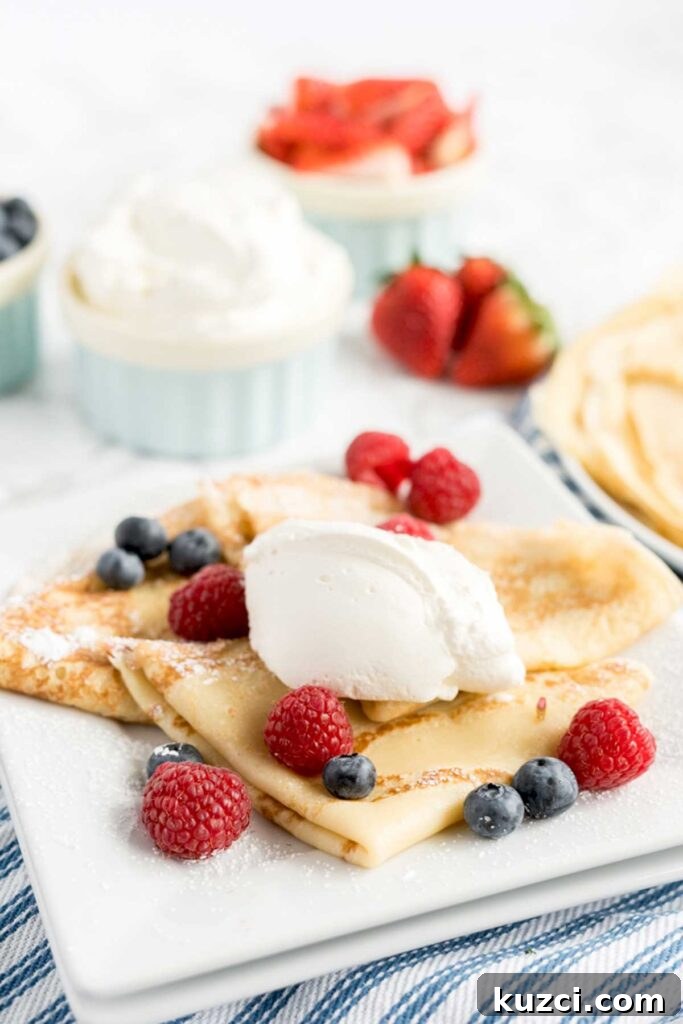
Crepes are a blank canvas for toppings and fillings. They can be simple and classic with lemon and sugar, rich and dessert-like with chocolate or cream, or hearty enough for a savory meal.
Sweet Crepe Fillings
These sweet crepe filling ideas are perfect for breakfast, brunch, or dessert:
-
Whipped cream and fresh berries
-
Lemon and sugar
-
Nutella
-
Peanut butter and bananas
-
Dulce de leche or salted caramel
-
Ice cream
-
Chocolate sauce
-
Cooked fruit or fresh fruit
-
Sweetened cream cheese
-
Lemon curd or pastry cream
Savory Crepe Fillings
Savory crepes are excellent for breakfast, lunch, or dinner. Try one of these filling ideas:
-
Ham and cheese
-
Spinach and feta
-
Bacon and eggs
-
Brie and cranberry sauce
-
Hollandaise sauce and smoked salmon
-
Basil pesto with roasted vegetables, tomato slices, or fresh mozzarella
Does Crepe Batter Need To Rest?
Crepe batter benefits from a short rest because it allows the flour to hydrate and helps the batter cook evenly. Many recipes suggest resting the batter for an hour or longer, but 20 minutes is usually enough for this thin batter. If you are planning ahead, you can refrigerate the batter for up to 48 hours before cooking.
What Tools Are Needed To Make Crepes?
You do not need a dedicated crepe pan to make good crepes. A non-stick skillet is the easiest option, but a well-seasoned cast iron skillet or regular skillet can also work. You will also need a blender, a measuring cup or ladle, a spatula, and a plate for stacking the cooked crepes.
What Is The Difference Between A Pancake and A Crepe?
Pancakes are thicker and fluffier because they usually contain baking powder or baking soda. Crepes do not use a leavening agent, so they remain thin and flexible. Crepes are also cooked in a very thin layer, while pancake batter is thicker and poured into smaller rounds.
Why Are My Crepes Sticking To The Pan?
Crepes may stick if the pan is not properly greased, if the skillet is not hot enough, or if the pan surface is not suitable. Butter in the batter helps, but it is still important to lightly grease the pan between crepes when needed. If using oil, add just a few drops and wipe it across the surface with a paper towel.
A non-stick pan or well-seasoned skillet makes a big difference. Cooking at too low a temperature can also cause sticking because the crepe may not set quickly enough to flip cleanly.
Why Are My Crepes Rubbery Or Chewy?
Crepes can turn rubbery if the batter is overmixed or if they are cooked over heat that is too low. Blend the batter only until smooth, then let it rest briefly before cooking. Medium heat is usually best because it allows the crepes to cook quickly while staying tender.
How Much Batter Should I Pour Into The Pan To Make A Crepe?
-
For an 8-inch pan, use about 3 tablespoons of batter per crepe, a little less than 1/4 cup.
-
For a 10-inch pan, use about 1/4 cup of batter per crepe.
-
For a 12-inch pan, use about 1/3 cup of batter per crepe.
Recipe inspired by Alton Brown.

Homemade Crepes
Ingredients
- 2 large eggs
- 3/4 cup milk
- 1/2 cup water
- 1 cup all-purpose flour
- 2 1/2 tablespoons granulated sugar
- Pinch of salt (optional but recommended)
- 1 teaspoon vanilla
- 3 tablespoons butter, melted (unsalted preferred)
- Additional butter, as needed, to coat the pan
Topping and Filling Ideas:
- Sweet: whipped cream, Nutella, sweetened cream cheese, lemon and sugar, syrups, fresh berries, fresh fruit, lemon curd, caramel sauce, powdered sugar, peanut butter, fruit preserves, or jam.
- Savory: scrambled eggs, crispy bacon, brie cheese, spinach, feta cheese, chicken salad, ham and cheese, tomato, or mozzarella.
Instructions
-
Combine the eggs, milk, water, flour, sugar, salt, vanilla, and melted butter in a blender. Blend for 10 to 15 seconds, just until smooth. Refrigerate the batter for 20 minutes, or up to 48 hours.
-
Heat a small non-stick pan or crepe pan over medium heat. Add a little butter and swirl to coat the bottom of the pan.
-
Pour about 1/4 cup of batter into the pan, tilting and swirling as you pour so the batter covers the bottom in a thin, even layer.
-
Cook for 25 to 35 seconds, or until the top looks dry and the edges are lightly golden. Flip carefully with a spatula and cook for about 10 seconds more.
-
Transfer the crepe to a plate and repeat with the remaining batter. Serve warm with your favorite fillings or toppings.
Notes
- Yields about 17 to 22 crepes, depending on the size of the pan and how much batter is used for each crepe.
- Crepe batter can be made ahead and refrigerated for up to 2 days.
- Leftover crepes keep in an airtight container or resealable bag in the refrigerator for up to 5 days.
- To freeze crepes, wrap them tightly and place them in a freezer-safe resealable bag for about 2 months. Thaw in the refrigerator.
- Keep cooked crepes warm by stacking them on a plate near the stove. You can tent them loosely with aluminum foil.
- To reheat, cover the crepes with a damp paper towel and microwave for a few seconds, or warm them gently in a resealable bag.
Nutrition
Carbohydrates: 17 g,
Protein: 4 g,
Fat: 6 g,
Sugar: 5 g