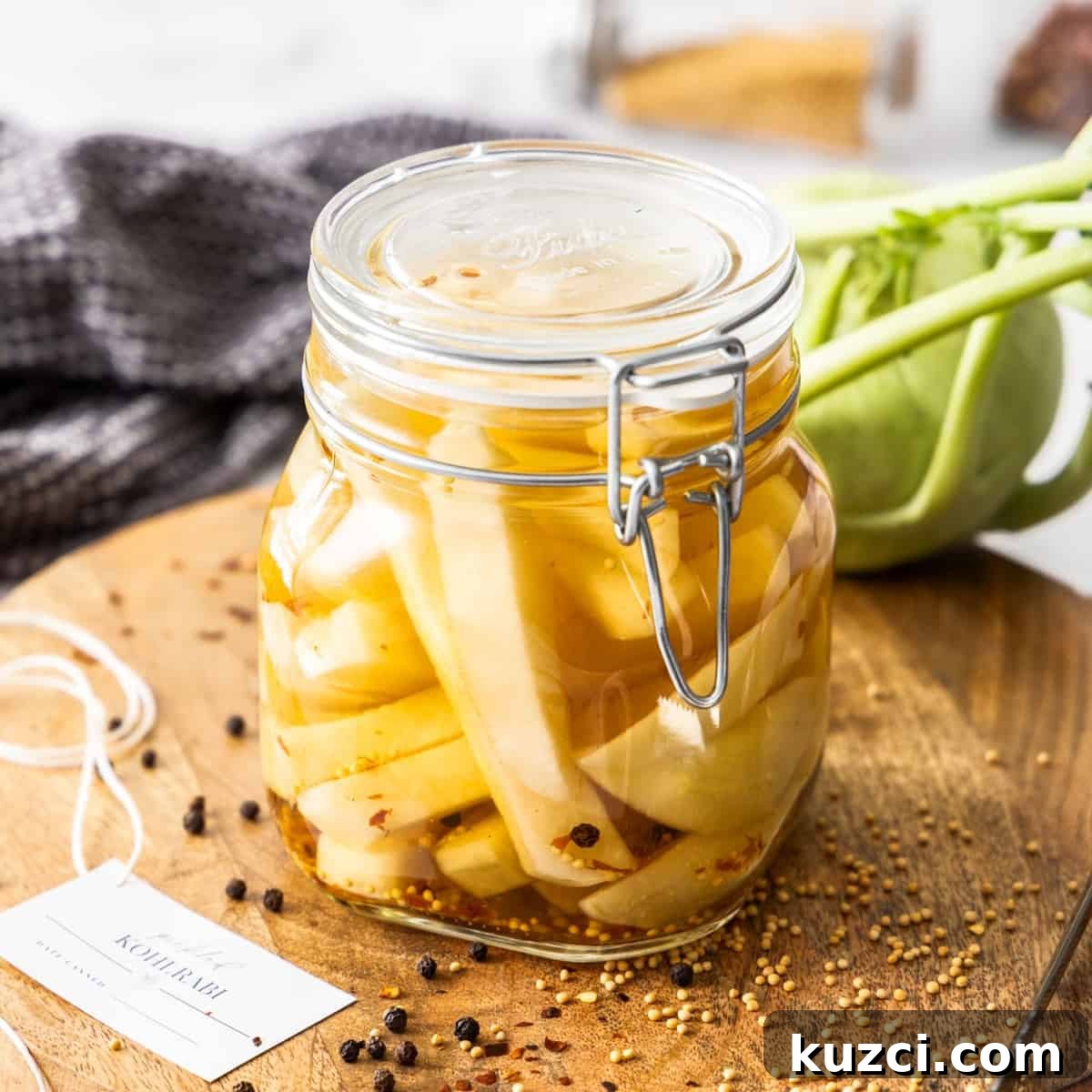
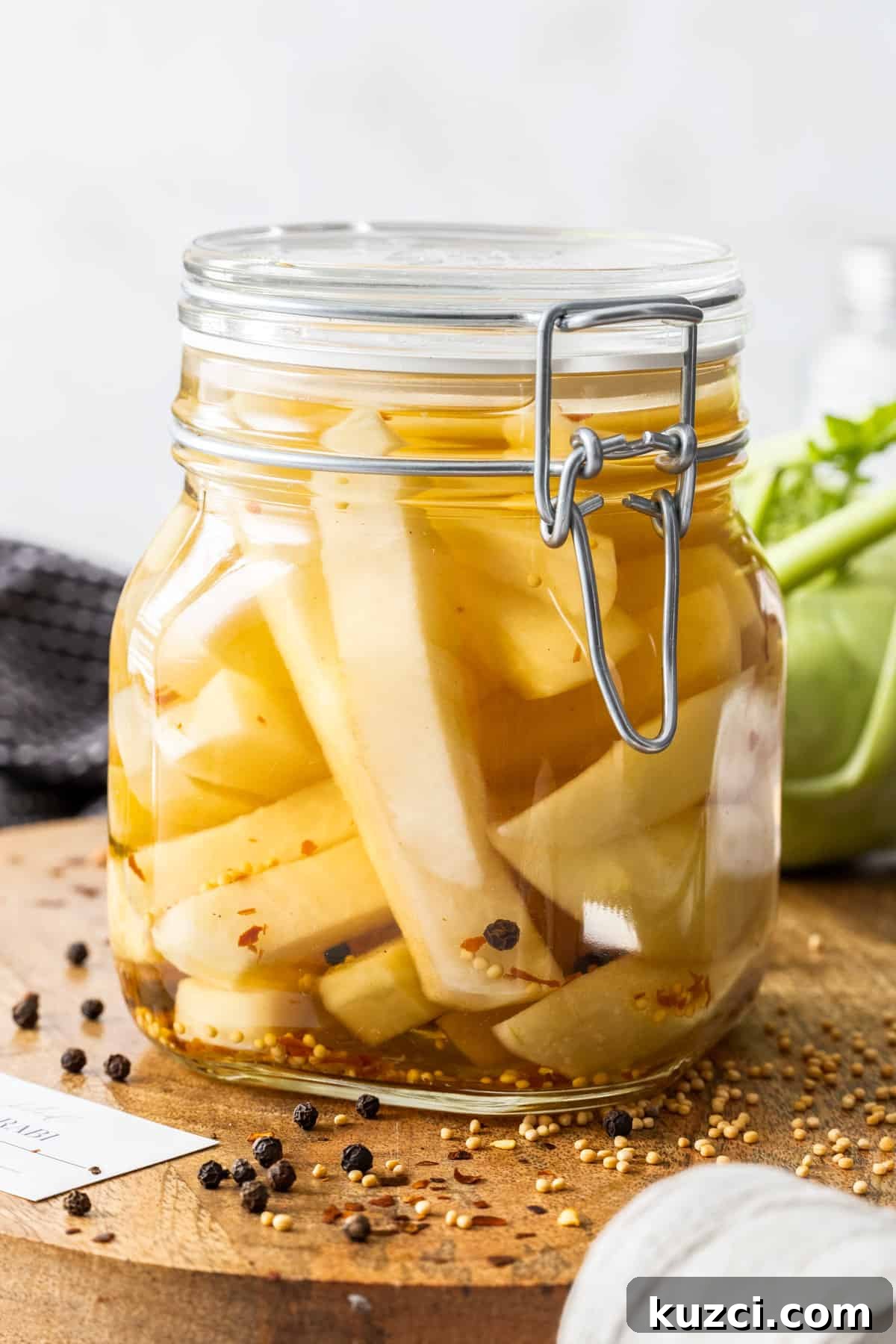
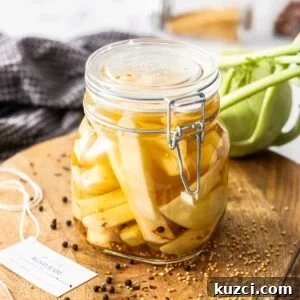
If you love the crisp texture and bright, tangy flavour of quick pickled vegetables, this Pickled Kohlrabi recipe is a wonderful one to try. Fresh kohlrabi is cut into small batons, packed into a sterilised jar, and covered with a simple spiced vinegar brine. After a short resting time, the pickles are crunchy, refreshing, lightly spicy, and ready to serve. This easy refrigerator pickle is simple to prepare and makes a delicious addition to salads, grazing boards, sandwiches, burgers, roast meats, and cheese platters.
Why you’ll love this recipe:
A quick pickle is one of the easiest ways to enhance the flavour and texture of fresh vegetables. Kohlrabi is ideal for pickling because it has a mild taste and keeps a satisfying crunch. These Pickled Kohlrabi batons are a versatile flavour booster and take very little hands-on time to make.
You will love this Pickled Kohlrabi because:
- It is quick to prepare and full of lively, tangy flavour.
- Homemade pickles let you control the ingredients and adjust the seasoning to suit your taste.
- This is a simple refrigerator pickle, making it suitable for beginners as well as confident home cooks.
- The recipe is flexible and can be made in a smaller or larger batch if required.
- It is a delicious way to use fresh kohlrabi while preserving its crisp texture.
What is kohlrabi?
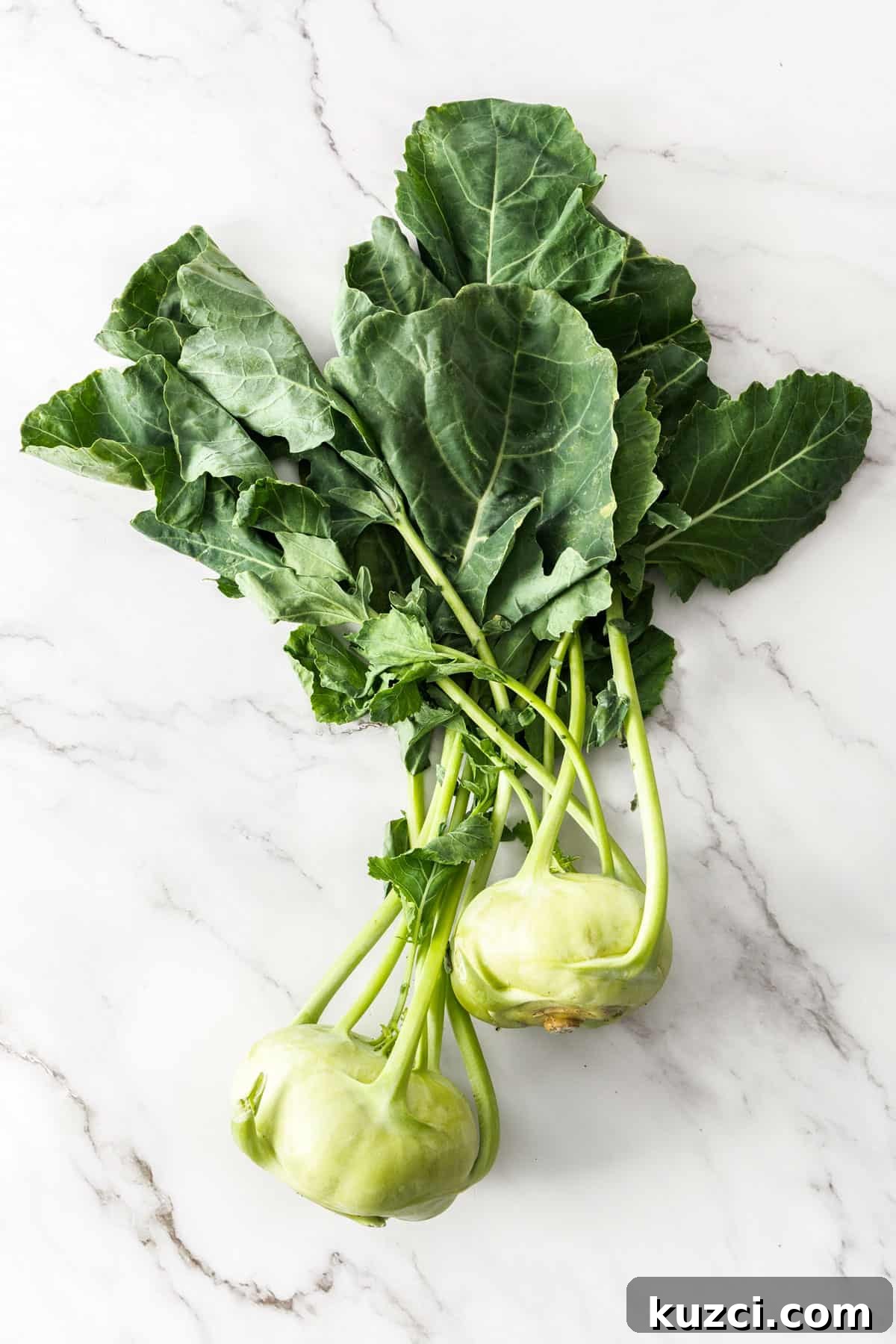
Kohlrabi is sometimes called German turnip or cabbage turnip. It belongs to the brassica family, along with vegetables such as broccoli and kale. You may find green or purple kohlrabi in stores, but both varieties have creamy white flesh inside.
For the best pickled kohlrabi, choose small to medium bulbs, as very large bulbs can be woody. The bulb should feel firm and should be free from cracks, soft spots, or blemishes. If the leaves are still attached, they should look fresh and bright rather than wilted. The leaves are edible and can be cooked or used in a similar way to other greens. Once you bring kohlrabi home, remove the leaves and store them separately from the bulbs, as the leaves are best used within a few days.
Ingredients in this recipe:
Please see the recipe card below for exact quantities and the full method.
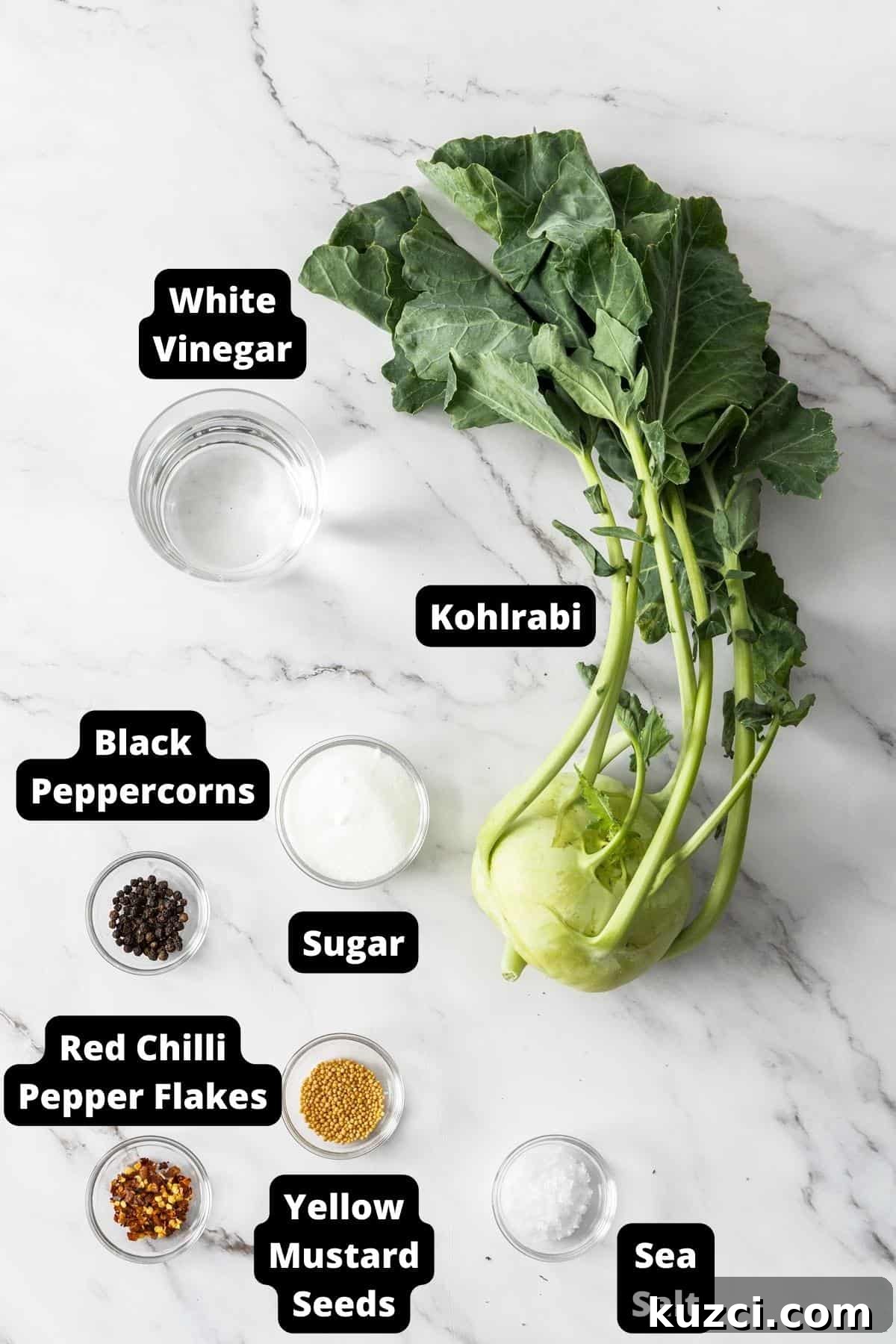
Kohlrabi – use fresh, crisp kohlrabi. Small to medium bulbs give the best texture, while larger bulbs may be fibrous.
White vinegar – use vinegar with 5% acidity. White wine vinegar or apple cider vinegar may also be used if the acidity is 5%.
Water – filtered water is recommended, as chlorine in tap water can affect the flavour of the pickles.
Sea salt – use cooking salt or coarse sea salt rather than regular table salt, which may contain anti-caking agents and can taste stronger.
Sugar – granulated sugar balances the sharpness of the vinegar and helps round out the brine. Caster or superfine sugar is also suitable.
Black peppercorns – add gentle spice and depth to the pickling liquid.
Mustard seeds – yellow mustard seeds add flavour and a little extra texture.
Red chilli pepper flakes – a small amount of heat works beautifully with the mild flavour of kohlrabi. Add a little more if you prefer a spicier pickle.
How To Make Pickled Kohlrabi:
Please see the recipe card below for exact quantities and the full method.
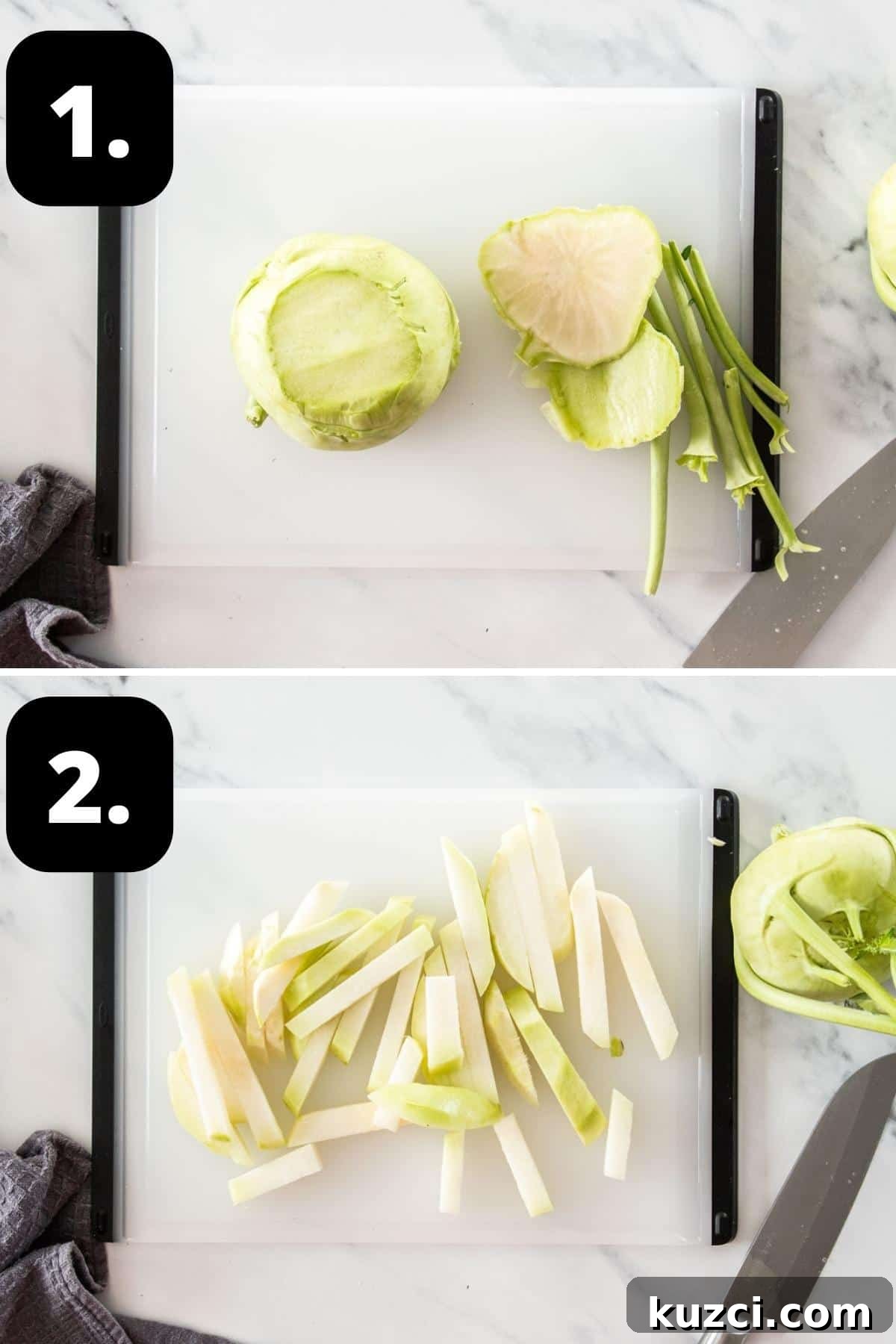
1 – Prepare the kohlrabi:
Trim the top and base of the kohlrabi and discard them. Set the leaves aside for another use, then peel the bulb.
2 – Cut the kohlrabi:
Cut the bulb in half, slice each half into 1 cm pieces, then cut each piece into 1 cm strips. Place the strips into a bowl of acidulated water to help prevent browning.
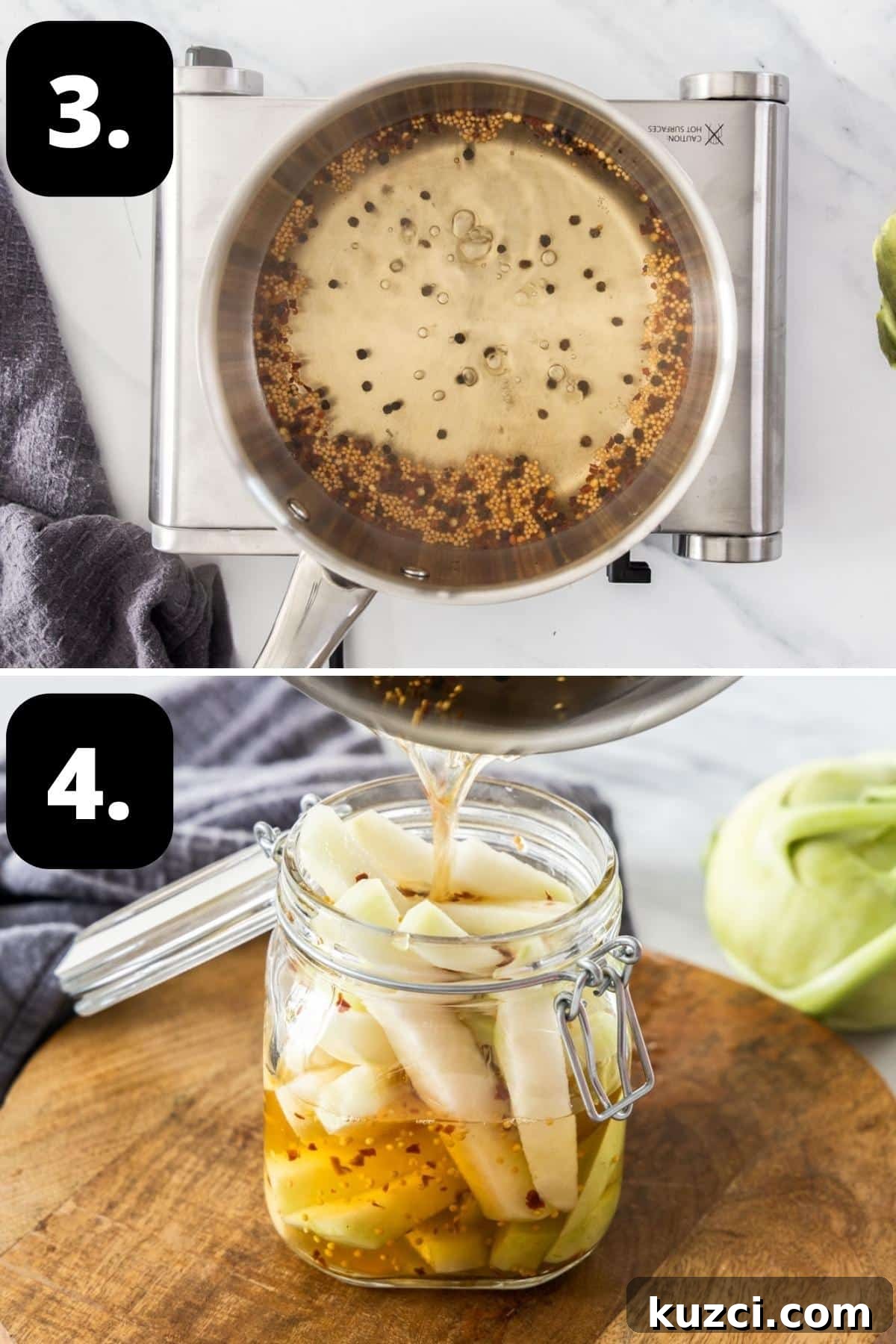
3 – Make the pickling brine:
Add the vinegar, water, sugar, salt, mustard seeds, peppercorns, and chilli flakes to a small non-reactive saucepan. Stir over medium heat until the sugar dissolves, bring the mixture to a boil, then remove it from the heat.
4 – Fill the jar:
Drain the kohlrabi and add it to a sterilised jar. Pour over the hot pickling liquid and seal the jar immediately.
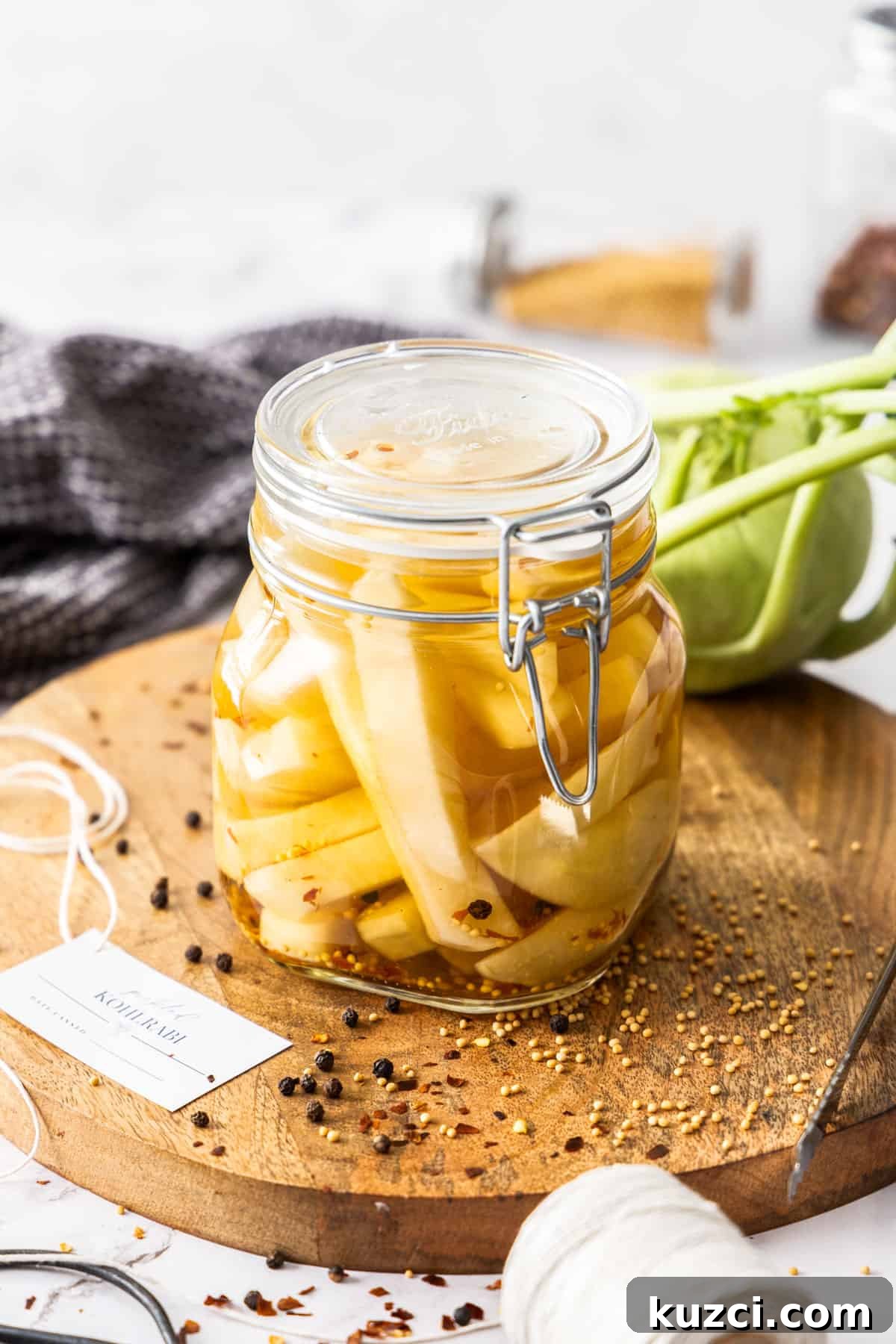
Allow the jar to cool at room temperature before refrigerating. The Pickled Kohlrabi can be eaten once cool, but the flavour is best after resting for at least 12 hours.
Tips for success and FAQs:
For the best flavour and texture, start with fresh, firm kohlrabi. Avoid bulbs that feel soft, look cracked, or have wilted leaves. Fresh kohlrabi will give you the cleanest taste and the crunchiest finished pickle.
When making pickles or preserves, always use properly sterilised jars. This is a simple but important step. A wide-mouthed jar is helpful because it makes packing the kohlrabi strips easier.
When prepared and stored correctly, these refrigerator pickles will keep in the fridge for up to 3 weeks. They will become softer the longer they sit.
Yes, but the flavour improves if you wait at least 12 hours. This gives the vinegar time to mellow and the spices time to infuse the kohlrabi.
Kohlrabi has a mild flavour, somewhat like a gentle radish, with a texture similar to a crunchy broccoli stem.
Yes. The recipe can be scaled up or down depending on how much Pickled Kohlrabi you would like to make.
Variations and substitutions:
White vinegar – white wine vinegar or apple cider vinegar may be used instead, provided the acidity level is 5%.
Mustard seeds – yellow mustard seeds are mild, while brown mustard seeds are spicier. Use whichever you prefer.
Serving suggestions:
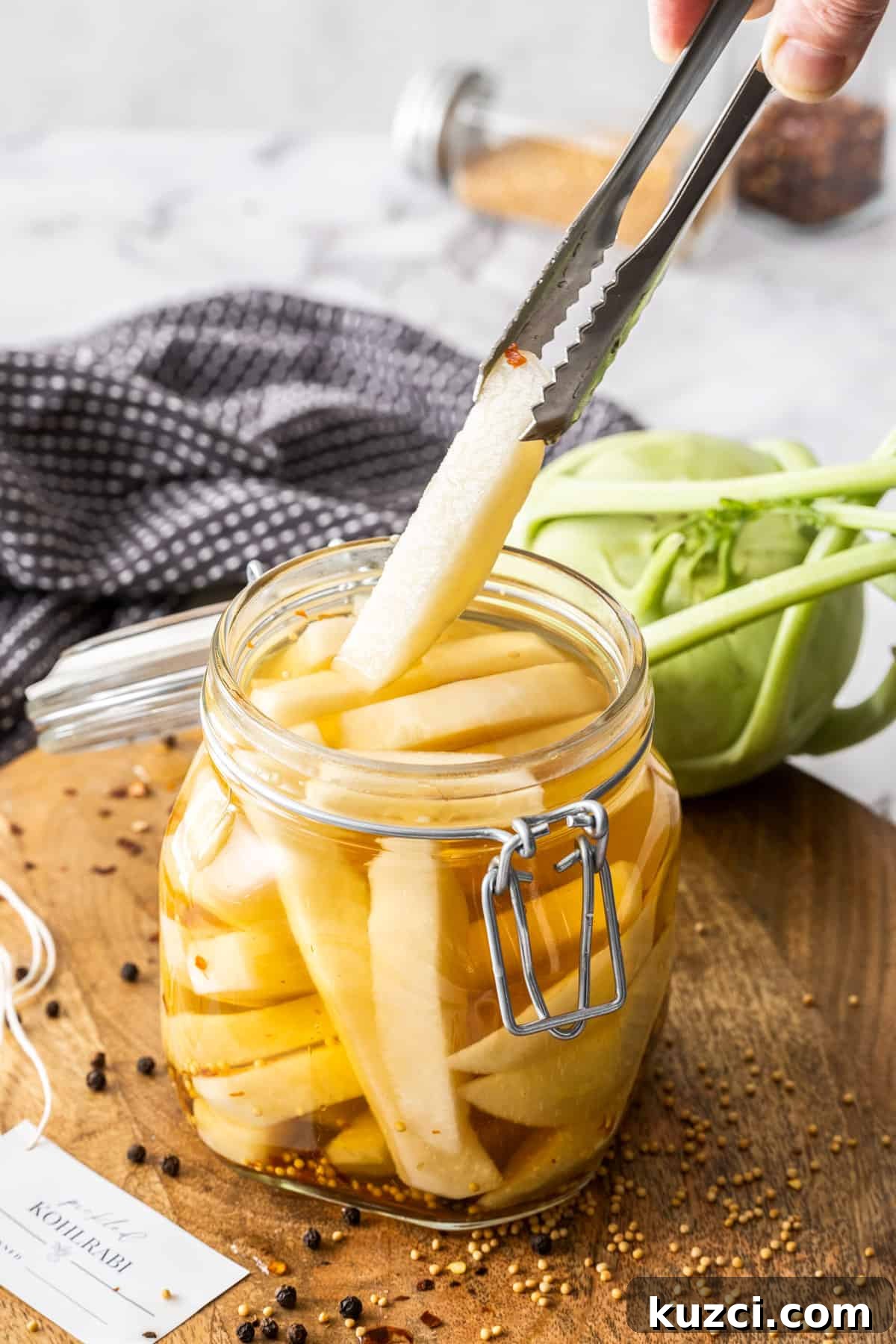
This easy Pickled Kohlrabi is a useful condiment to keep in the fridge. Its crisp texture and tangy flavour make it suitable for many dishes. Try it in the following ways:
- Add it to a grazing platter.
- Serve it with burgers or hot dogs.
- Enjoy it with a cheese selection.
- Add it to green salads for crunch and acidity.
- Serve it with roast meats or poultry.
- Pack it in a jar as a homemade food gift.
I hope you enjoy this simple and delicious Pickled Kohlrabi recipe. It is easy, crisp, tangy, and a great way to add freshness to everyday meals.
More delicious recipes for you to try:
-
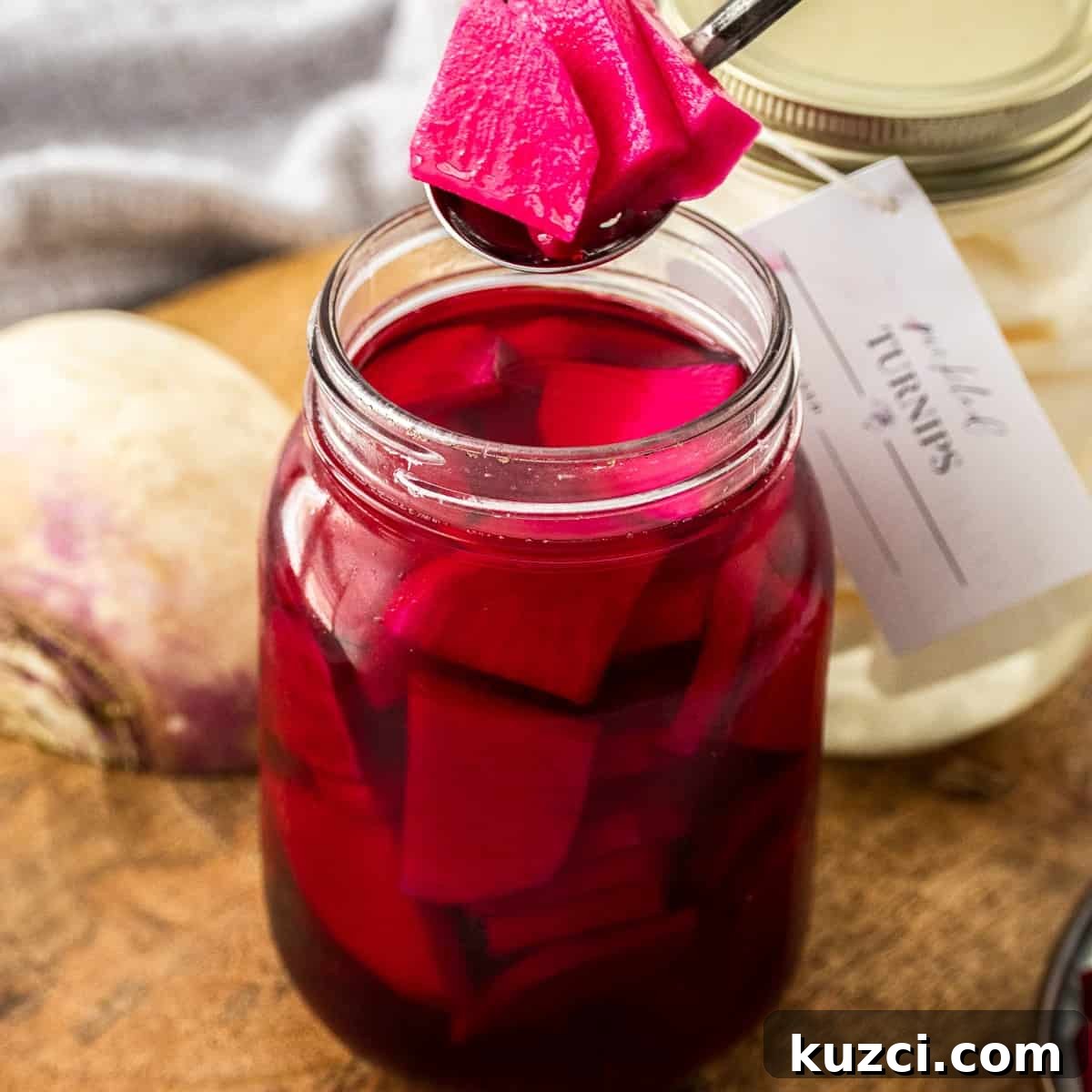
Pickled Turnips
-
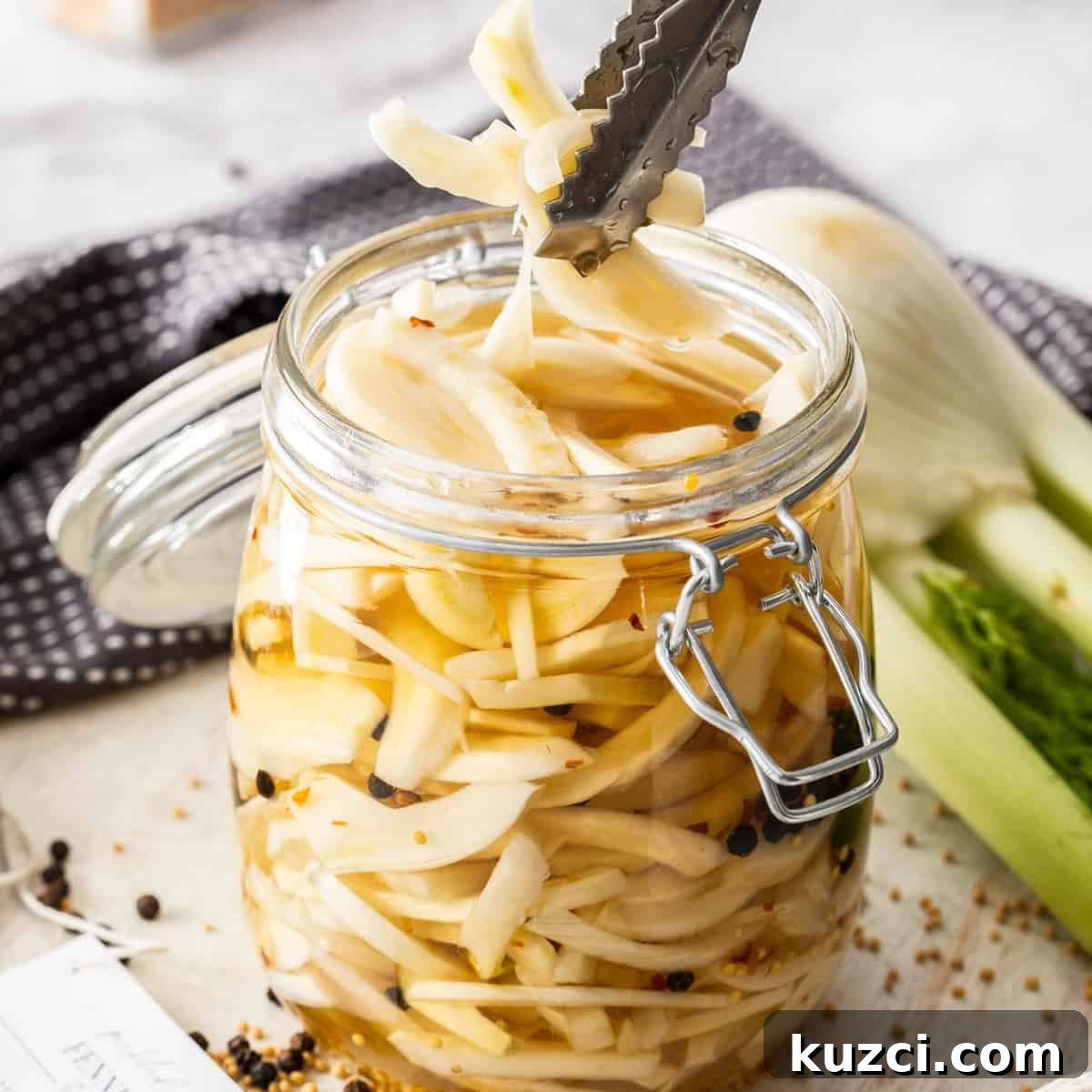
Pickled Fennel
-
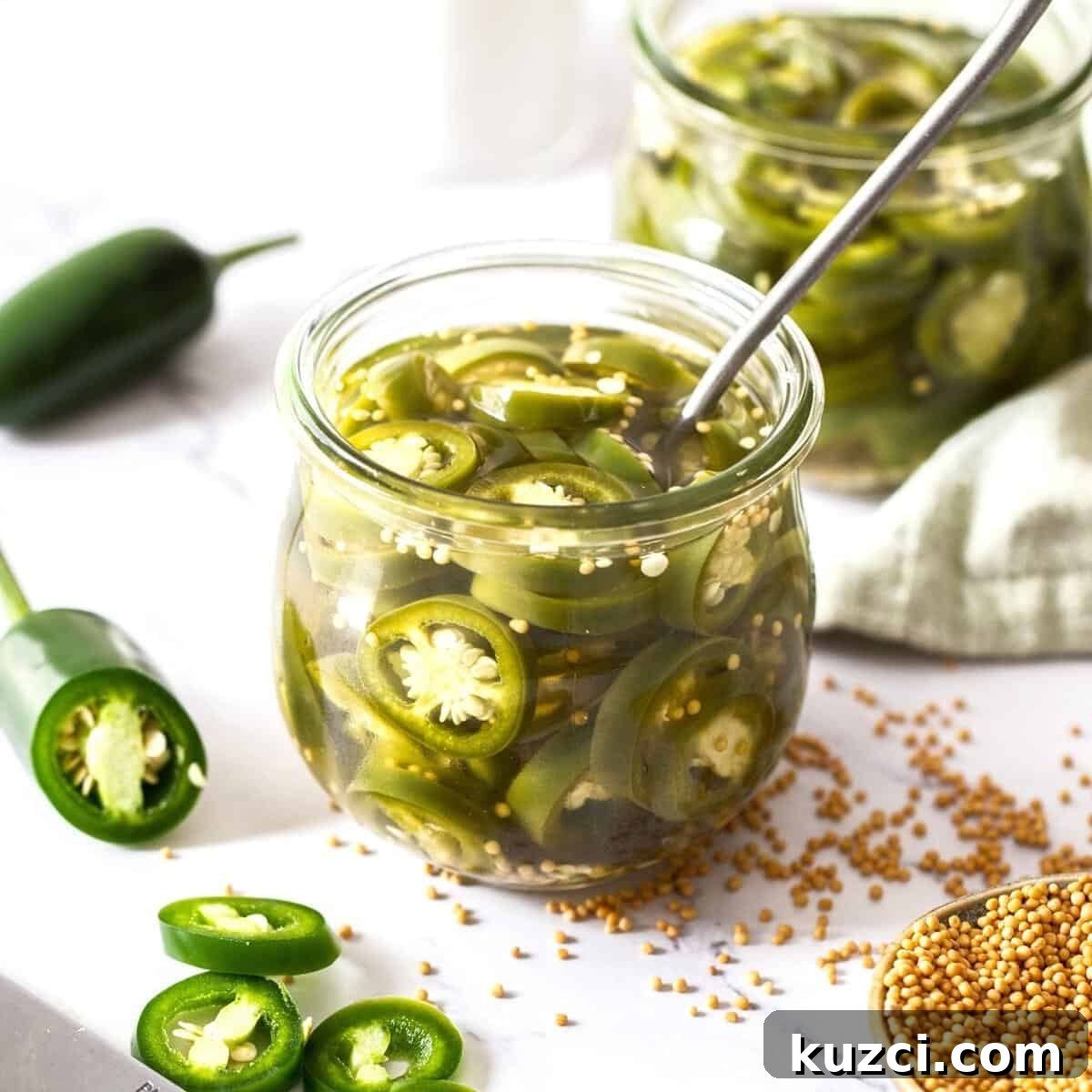
Homemade Pickled Jalapeños
-
Pickled Celery
Pickled Kohlrabi
Equipment
-
1 x 800 ml jar with an airtight metal lid
Please note:
For accuracy, when weights are provided, weighing ingredients is recommended. This will produce the best results.
Ingredients
- 400 g (14 oz) kohlrabi, prepared weight, about 1 large kohlrabi or 2 small
- 2 teaspoon sea salt
- 1 cup (250 ml) white vinegar
- ¾ cup (180 ml) water
- 2 ½ tablespoon sugar
- 1 teaspoon whole yellow mustard seeds
- 1 teaspoon whole black peppercorns
- ¼ teaspoon red chilli pepper flakes
- A bowl of water with lemon, optional
Instructions
To Sterilise the Jar:
-
Wash the jar and metal lid in hot soapy water, then rinse well. Preheat the oven to 130 degrees C (270 F). Place the jar in the oven for 15-20 minutes and keep it warm until ready to use. If the lid has a rubber insert, allow it to air dry rather than placing it in the oven.
For the Pickled Kohlrabi:
-
Trim the top and base of the kohlrabi and discard them. Set the leaves aside for another use, then peel the kohlrabi.
-
Cut the kohlrabi in half, slice it into 1 cm pieces, then cut each piece into 1 cm strips. Add the strips to acidulated water to help prevent browning.
-
In a small non-reactive saucepan, combine the vinegar, water, sugar, salt, mustard seeds, peppercorns, and chilli flakes. Stir over medium heat until the sugar dissolves, bring to the boil, then remove from the heat.
-
Drain the kohlrabi and pack it into the sterilised jar. Pour the hot pickling liquid over the kohlrabi and seal immediately.
-
Allow the jar to cool on the bench before placing it in the refrigerator.
-
The Pickled Kohlrabi may be eaten once cool, but the flavour is best after 12-24 hours.
Notes
- Kohlrabi: use fresh, crisp kohlrabi for the best texture.
- Salt: cooking salt or coarse sea salt is recommended. Regular table salt may contain anti-caking agents and can taste stronger.
- Vinegar: use vinegar with 5% acidity. Apple cider vinegar or white wine vinegar may also be used if the acidity is 5%.
- Water: filtered water is best, as chlorine can affect the taste of the pickles.
- Tablespoon: this recipe uses a standard Australian tablespoon, which is 20 ml or 4 teaspoons.
- Acidulated water: add a lemon cut in half to a bowl of water, then place the kohlrabi pieces in the bowl as you cut them.
- Non-reactive saucepan: use ceramic, stainless steel, glass, or enamelled cookware. Avoid copper, iron, and aluminium when cooking acidic ingredients.
- Storage: once cooled, store the Pickled Kohlrabi in the fridge for up to 3 weeks. This is a quick pickle recipe and is not designed for long-term canning.
- Nutritional information: the estimate is based on the entire jar, including the pickling liquid.
Nutrition Estimate:
Nutritional Disclaimer:
The nutritional information is an estimate only and is derived from online calculators. For accurate results, calculate the nutritional information based on the ingredients and brands you use.