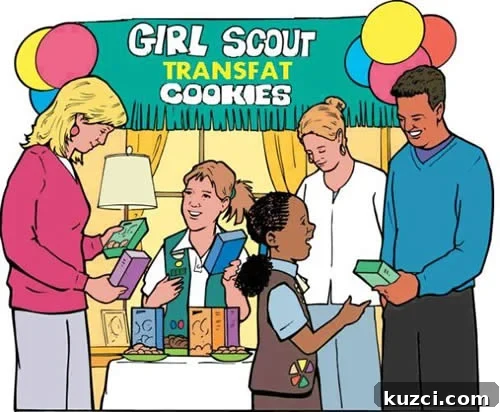
Apparently, today is National Girl Scout Cookie Day. I am not entirely sure who gets to decide that kind of thing, but it is certainly effective marketing. Social media fills up with cookie chatter, parents bring order forms and boxes to offices, and smiling Scouts appear everywhere selling one of the most recognizable seasonal treats in the country.
Let me be clear: I respect the Girl Scouts. I believe youth organizations can have a powerful and positive influence on children, families, and communities. The Girl Scouts teach leadership, confidence, teamwork, responsibility, and entrepreneurship. Those are all values worth supporting. My issue is not with the organization or the girls who are working hard to raise money. My issue is with the cookies themselves.
I am an Eagle Scout, so I understand firsthand how meaningful a structured youth program can be. I also understand the importance of fundraising. When I was in the Boy Scouts, we sold popcorn, and I will admit that many of us were a little jealous of the Girl Scouts. Cookies were easier to get excited about. Popcorn never seemed to inspire the same level of devotion as Thin Mints, Samoas, or Tagalongs.
A couple of weeks ago, two very sweet Girl Scouts came to our door and asked if we wanted to buy cookies. Instead of purchasing a box, Matty and I gave them a donation. That felt like the best choice for us: support the girls, but skip the product. My concern is not that cookies are cookies. Most of us enjoy dessert now and then, and I have definitely eaten my share of Thin Mints straight from the freezer. The problem is that these particular cookies do not line up with the way I try to think about real food and everyday eating.
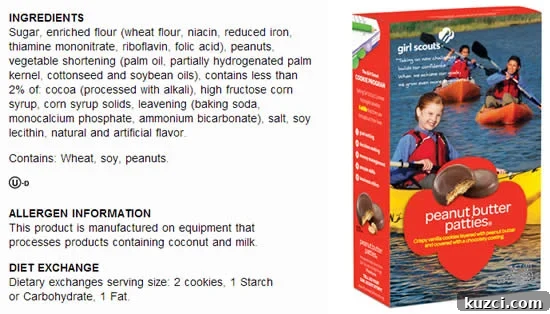
So why do I no longer buy Girl Scout Cookies? The short answer is simple: their ingredient lists raise too many concerns for me.
They are made with refined flour, which is common in many packaged cookies but still not something I want to support as a fundraising staple for children.
Many varieties have contained high fructose corn syrup, another highly processed ingredient that I try to avoid when choosing packaged foods.
Even more concerning, many flavors have included partially hydrogenated oils. That matters because partially hydrogenated oils are a source of artificial trans fats. Packages may advertise “zero grams trans fat per serving,” but labeling rules have historically allowed products to make that claim when the amount per serving falls below a certain threshold. For me, that is not good enough. Artificial trans fats have no meaningful place in the food supply, and cookies can absolutely be made without them.
Another issue is the use of “natural” and artificial flavors. These ingredients appear in countless processed foods, and while each one may seem insignificant on its own, together they shape our expectations of what food should taste like. When flavors are engineered to be stronger, sweeter, or more addictive than real ingredients, it becomes harder to appreciate simple, honest food.
Some cookie varieties have also been marketed as being enhanced with added nutrients. For example, the Mango Cremes with NutriFusion were promoted as containing a “natural whole food concentrate” from ingredients such as cranberry, pomegranate, orange, grape, strawberry, and shiitake mushrooms. But when tiny amounts of added nutrients are used to make a highly processed cookie seem healthier, that feels more like healthwashing than meaningful nutrition. A cookie is still a cookie, even if vitamins or fruit extracts are added to the label.
There has also been public concern about palm oil in Girl Scout Cookies. In response to criticism, the organization and its bakers began moving toward more sustainable palm oil practices. That is a positive step, and it shows that pressure from consumers can make a difference. If changes can be made around palm oil, then changes can also be made around trans fats, artificial flavors, and misleading health claims.
That is why I would rather donate directly than buy a box. I want to support the girls, but I also want the products attached to such a respected organization to reflect better food standards. The Girl Scouts have enormous influence, and their annual cookie sale reaches millions of people. With that kind of reach, they have an opportunity to lead by offering cookies made with cleaner, simpler ingredients.
The Girl Scouts can do better for kids, families, and everyone who buys their cookies. What do you think?
If you agree but still crave that cold, minty chocolate flavor, there are plenty of homemade alternatives that capture the spirit of Thin Mints with simpler ingredients.
—
“Girl Scout Cookies. Now, With Trans Fats!” © 2011 Mike Licht. Used under Creative Commons License.