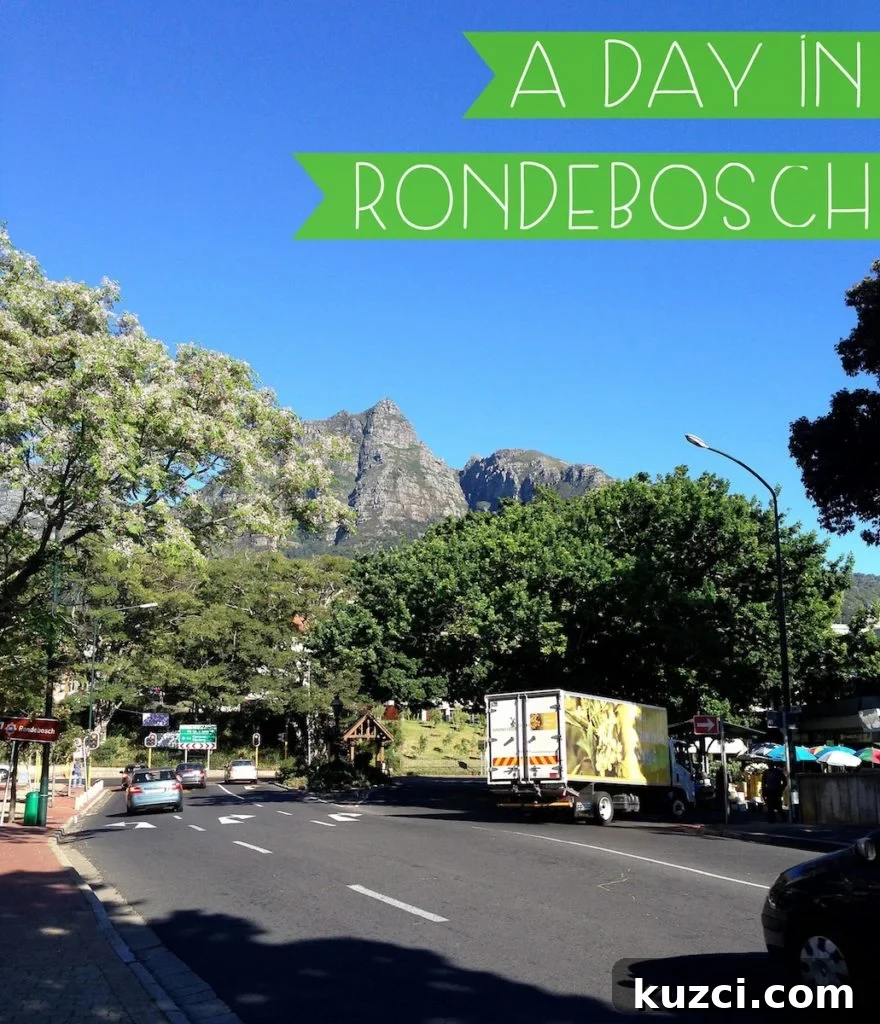
This post is long overdue, especially since we have been living in our wonderful South African neighborhood of Rondebosch for almost eight months. Rondebosch has become our everyday home in Cape Town, and while it may not be as dramatic as a safari or another picture-perfect beach, it offers a fascinating look at daily life in the Southern Suburbs. If you have ever wondered what it is like to live in Cape Town beyond the usual tourist highlights, this is a glimpse into our routine, our streets, our apartment complex, and the small details that shape life here.
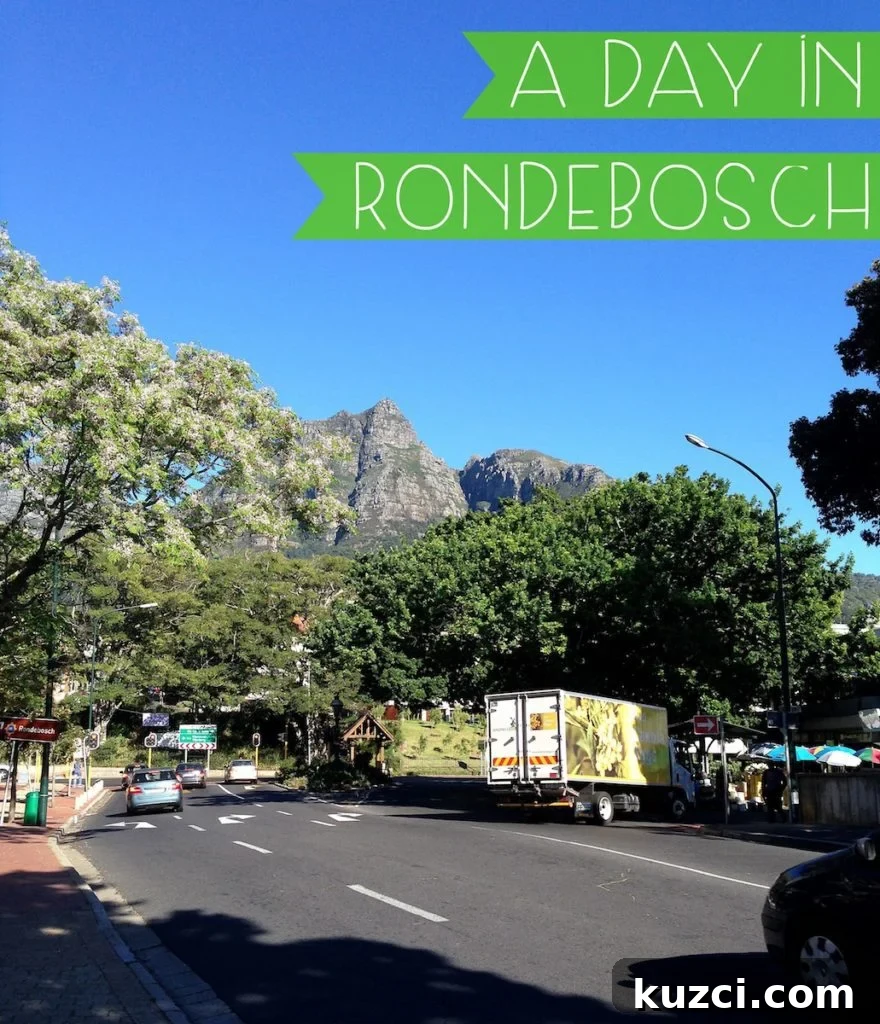
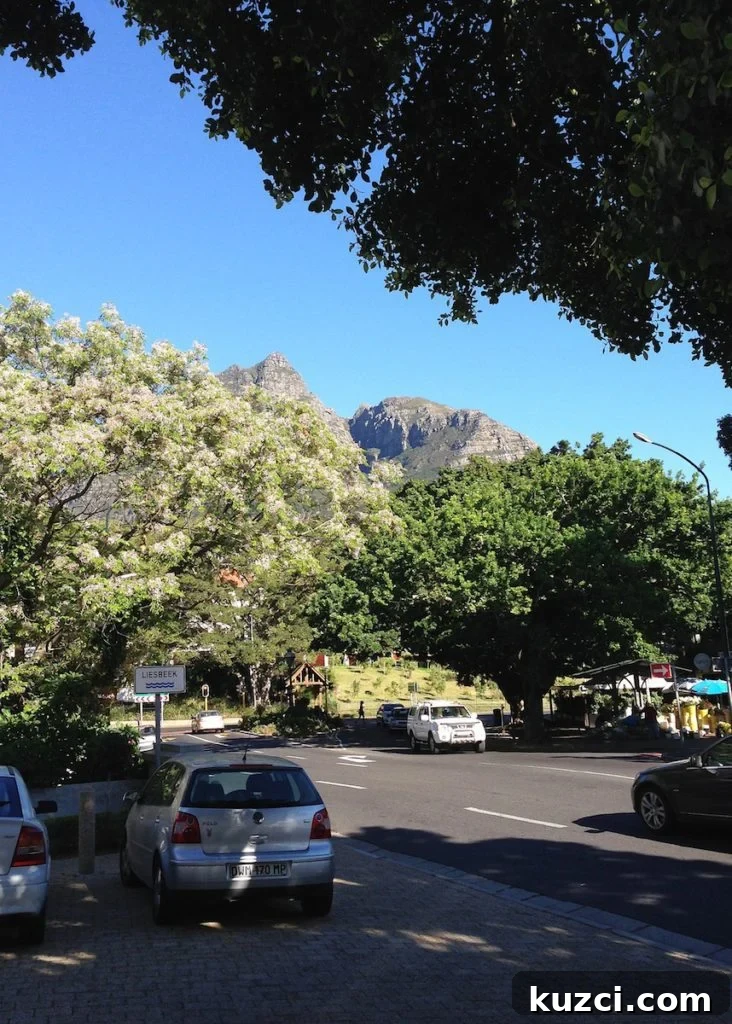
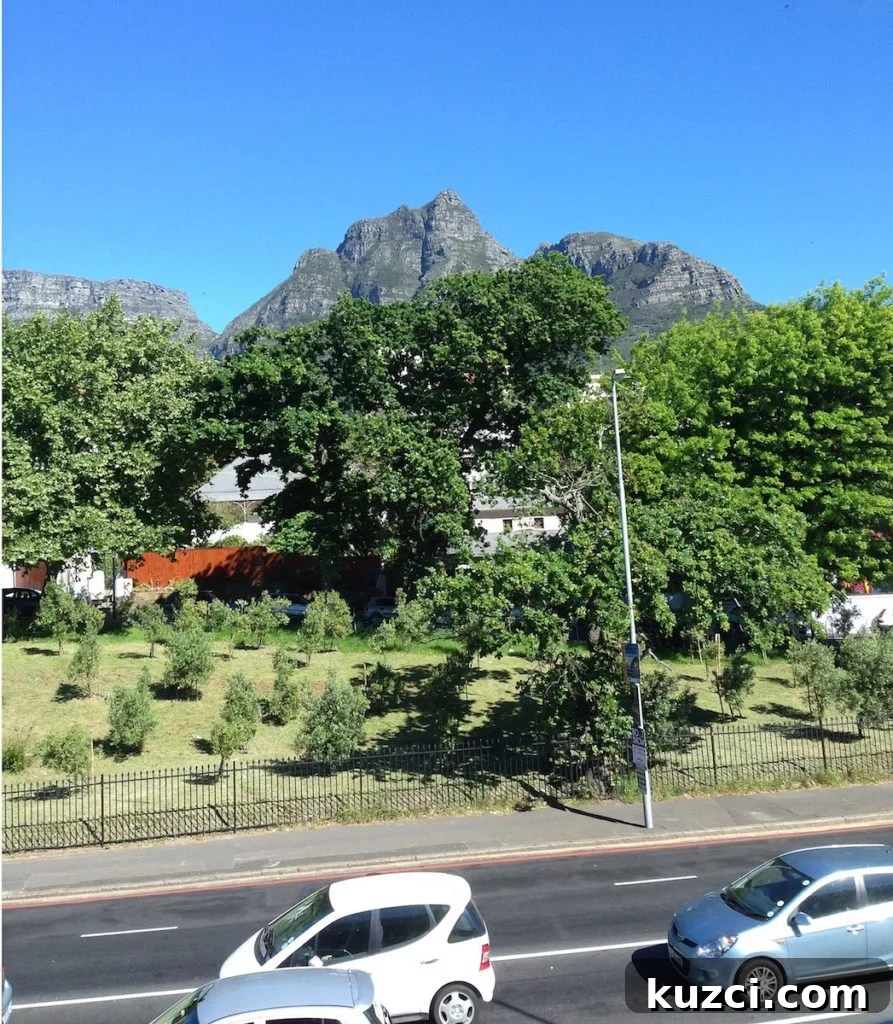
To set the scene, Rondebosch is part of Cape Town’s “Southern Suburbs,” about a 15-minute drive south of the city center. We chose this neighborhood largely because my fiancé can walk to the University of Cape Town (UCT), but we also liked that Rondebosch is known as a safe, friendly, and convenient area. The history of the neighborhood is deeply connected to apartheid. Under the Group Areas Act, Rondebosch was declared a whites-only area, and that history still shapes the city today. The mountain in the photo above is Devil’s Peak, part of Table Mountain National Park. We live in the main commercial area, which is extremely convenient because the grocery store and my little gym are only a short walk from our front door.
Our apartment is in a very large complex that is only a few years old. We found it through UCT’s housing resources, and many of the people who live here are also students. This is just one corner of our enormous building:
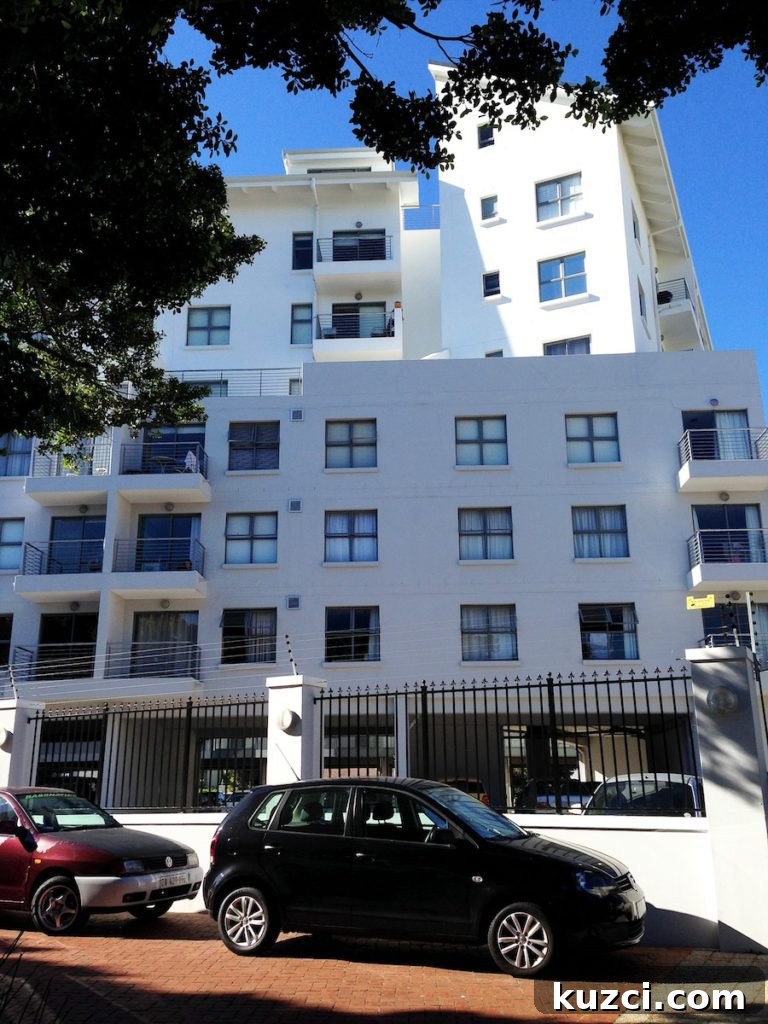
One of the biggest culture shocks when we arrived in South Africa was the level of security around homes and apartment buildings. The fence around our complex is a good example. It is topped with spikes and lined with electric wire. To enter the building, residents use a fingerprint scanner:
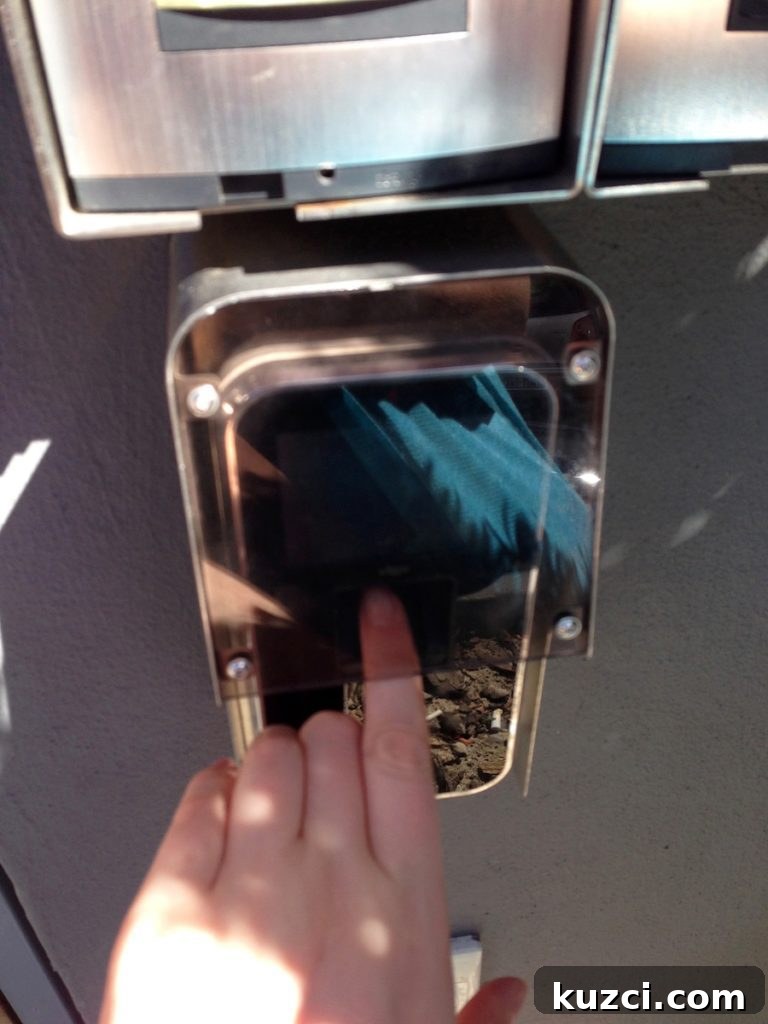
Please excuse the blurry photo; I was carrying a heavy bag of groceries at the time. After the fingerprint scanner, you enter a lobby with a security desk staffed by two guards 24 hours a day. From there, I go through another door to the stairwell, which has yet another fingerprint scanner, and then continue up to our flat. Our apartment has bars on the windows and doors, along with a phone used only to contact the security desk.
This level of security is not unusual in Rondebosch or in many other parts of Cape Town. Student apartment buildings and residential complexes often have high fencing, electric wires, and round-the-clock security. Stand-alone homes typically have fences with spikes, electric wires, and signs warning that the property is protected by a security company.
South Africa’s private security industry is the largest in the world. There are more registered private security guards than members of the South African police and army combined. Security comes in many forms, including large companies such as ADT, neighborhood-watch-style groups, and informal car guards who watch parked cars in public areas in exchange for a small tip. This intense focus on security reflects a widespread concern about violent crime in South Africa.
There is crime in South Africa, but in our experience, the Southern Suburbs feel very different from the parts of the country most affected by it. In central Cape Town, the crimes visitors are more likely to hear about are similar to those in many major tourist cities: cars being broken into, bags being stolen, and tourists being targeted for theft.
Although apartheid formally ended more than twenty years ago, its effects remain visible. During apartheid, the Group Areas Act made many parts of Cape Town whites-only areas and forced non-white residents to relocate, often to the Cape Flats and surrounding townships. While the government has worked to provide more formal housing in these areas, many homes are still made from tin and other temporary materials. These low-income peri-urban communities are among the areas most affected by crime. The lingering effects of apartheid can also be seen in demographics. Rondebosch is now integrated, but it is still 62.7% white. Khayelitsha, a nearby township, is 0.1% white. Cape Town as a whole is 15.7% white.
Statistics like these are a reminder that South Africa is an incredibly complex and unique place. Living in Rondebosch can feel like living inside a bubble. In many ways, Cape Town is made up of several socioeconomic and cultural bubbles that exist close to one another but remain very different. The process of integration is still relatively young, and the contrasts are impossible to ignore.
Back in my Rondebosch bubble, most mornings begin with a walk to the gym. On the way, I can see the local library from inside our complex. It is a beautiful old building with Cape-Dutch architectural character.
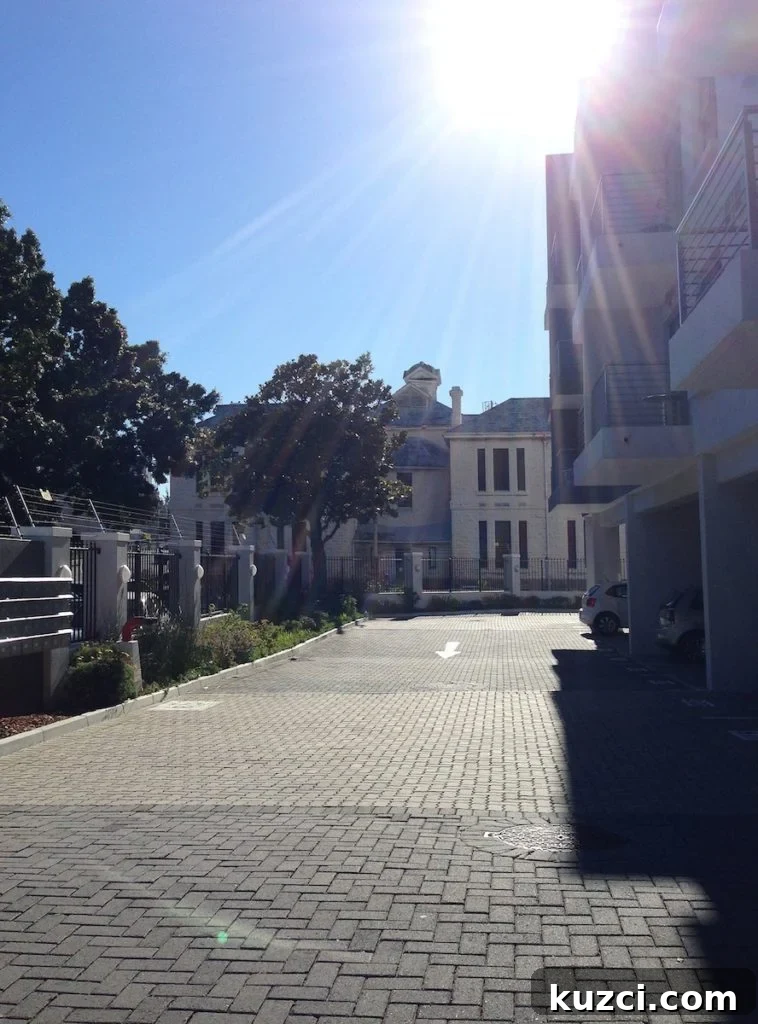
From the small parking lot outside our building, Devil’s Peak appears between the trees along the street. It is one of those everyday views that still feels special.
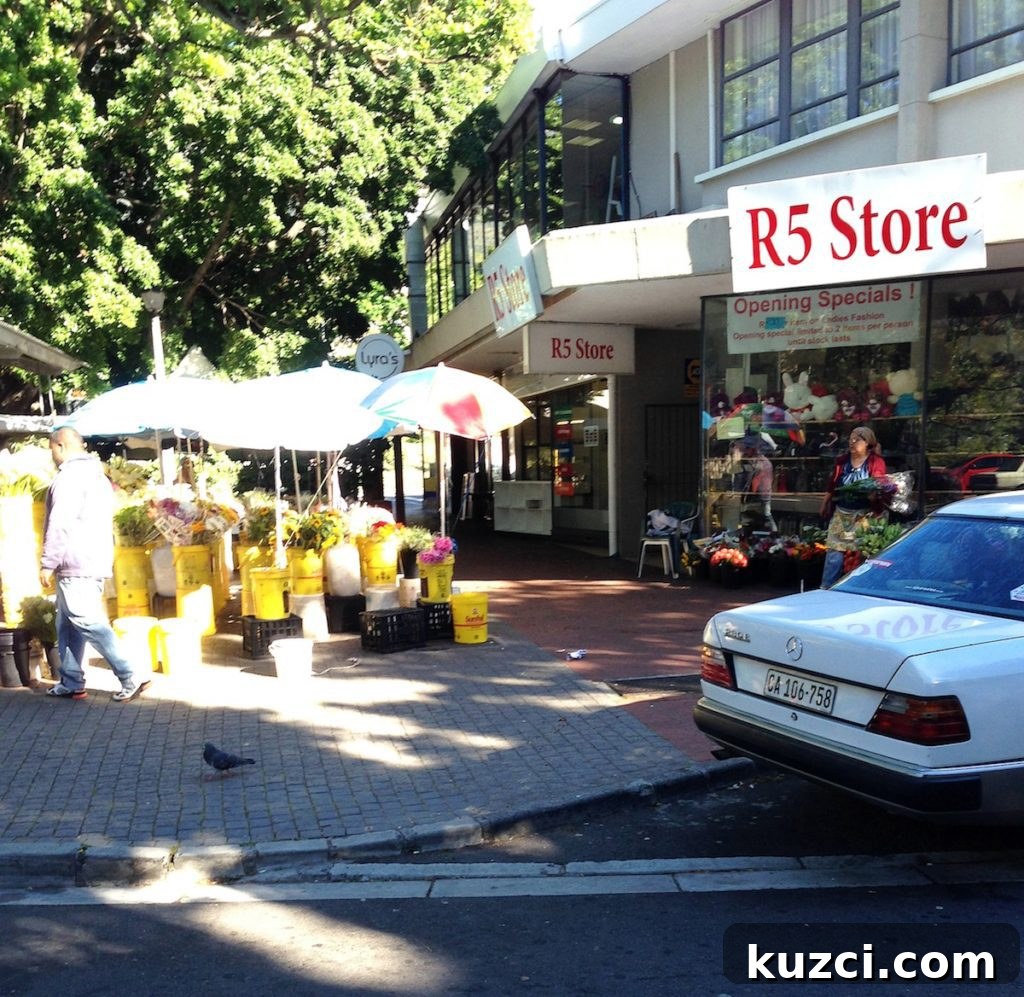
I cross the road carefully, which often means jaywalking in the local style, and pass a small flower stall and the 5 Rand store. Five Rand is about fifty cents, so it is exactly the kind of place that draws you in for small, inexpensive finds.
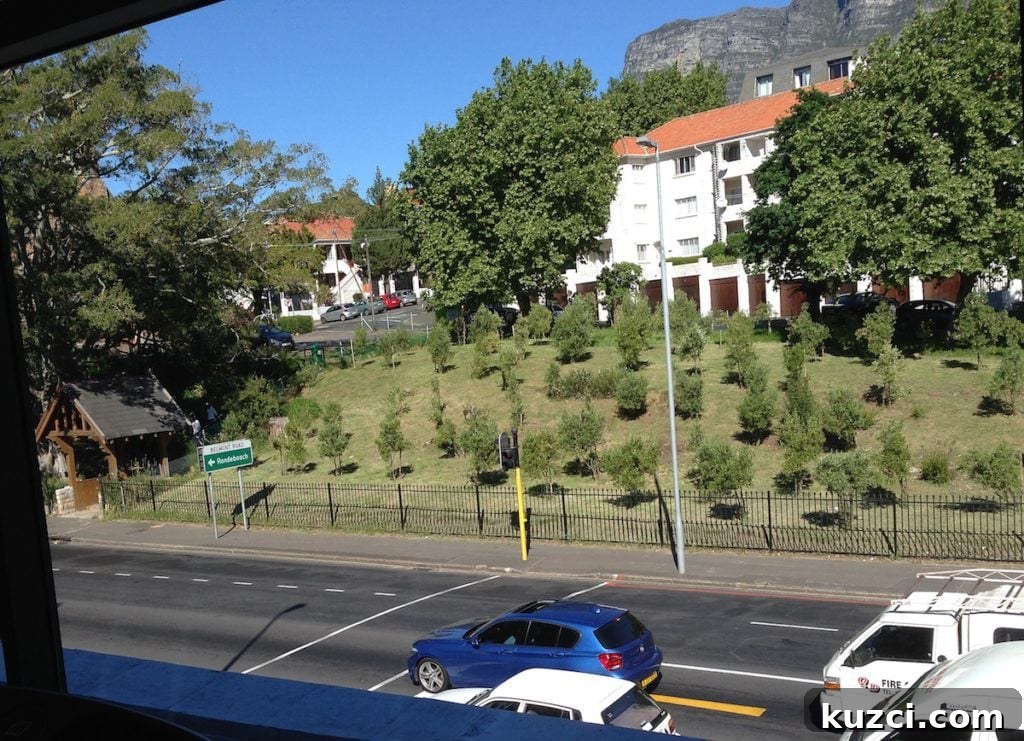
From there, I head up to my gym, which I have grown to really like. One of the best parts is the view from the treadmill. Exercising is much easier when you can look out at Cape Town’s mountains while you run.
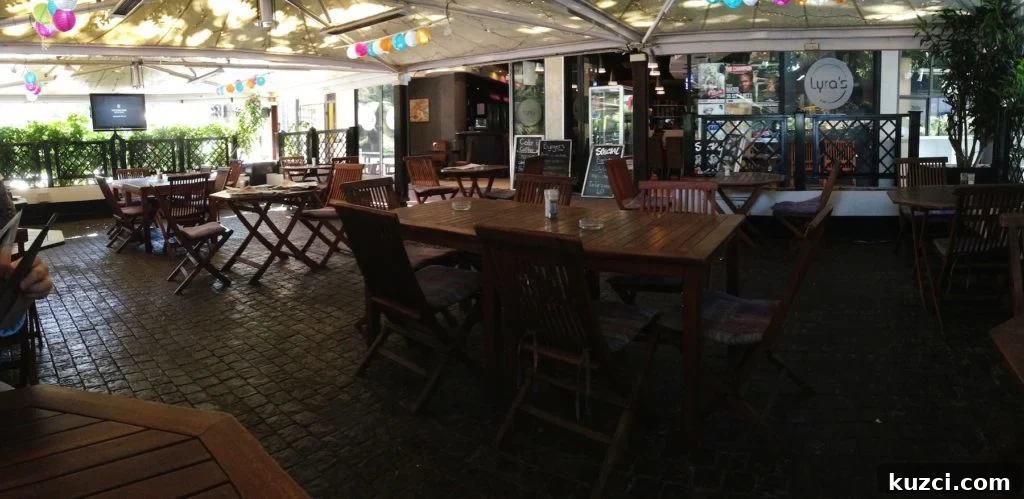
We have also become attached to a neighborhood restaurant called Lyra’s. It has a pleasant outdoor seating area with two televisions, so it has become one of our favorite places to watch rugby and cricket. On one visit, we paid R5 to enter a pool to guess the final score of a rugby match, and I actually won. Apparently, I have hidden rugby-prediction talent.
Public transportation in Cape Town has been one of the bigger adjustments for me. I come from Oregon, where cycling, walking, and public transit are common and well supported. Cape Town is much more car-oriented, and getting around without a vehicle can be difficult. Many people walk, but they often weave between cars in the middle of the street, which was stressful to watch when we first arrived. I have adapted somewhat, though I still try to cross more cautiously than many locals. You may see an occasional cyclist, but bike lanes are not common in our area.
The train and bus systems are improving and receiving more attention, but they still have a long way to go. Because many people commute from townships on the edges of the city into Cape Town and its suburbs, a mini-bus taxi system has developed to meet that need. These are not traditional metered taxis. Those exist too, and we use them fairly often, but the mini-bus taxis are a different part of daily Cape Town life.
As a rule-conscious and cautious Oregon driver, the mini-bus taxis can be overwhelming. They are useful because they transport many people affordably and provide a small business opportunity for drivers. At the same time, driving near them can be stressful. In South Africa, road rules often feel more like flexible guidelines than firm expectations, and drivers are more willing to take risks to get where they are going quickly. Mini-bus taxis seem to operate according to their own rhythm. Drivers or assistants call destinations out the window for pedestrians who might need a ride. In our neighborhood, we often hear “Wynberg!” shouted from taxis, along with whistling and honking. They may stop suddenly in the road to pick up or drop off passengers, change lanes abruptly, swerve into nearby lanes, make unexpected U-turns, or run lights. I still prefer when my fiancé drives while I sit in the passenger seat, wide-eyed, gripping the door and pressing my imaginary brake.
Because public transportation is limited, we sometimes use traditional cabs to get around the city. They are surprisingly affordable. A ride to the airport, which is outside the city, costs about R170, or roughly $15. A cab ride from our apartment in Portland to the airport, a similar distance, would cost at least $35. Affordable taxis are especially helpful when we want to enjoy South African wine and avoid driving afterward.
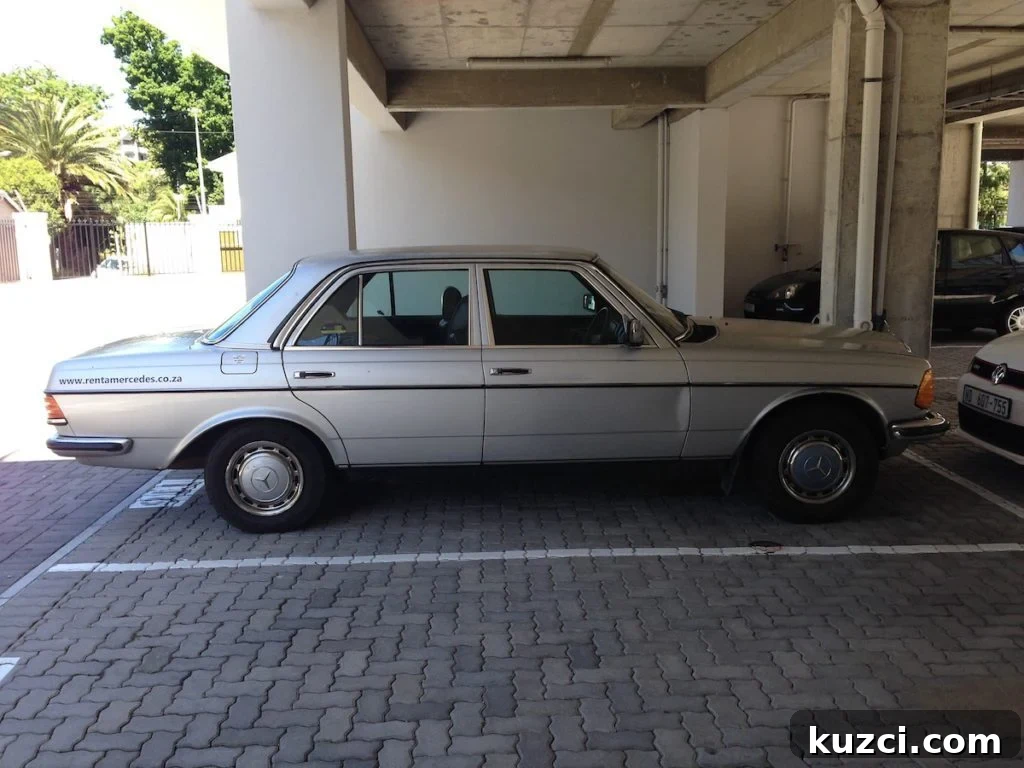
Most of the time, however, we use a rental car. If you visit South Africa, I highly recommend renting a car, especially in Cape Town or Johannesburg. Both cities are spread out, and driving is often the only practical way to see everything they have to offer. We use a long-term rental company that gives student discounts. The price is good, but the cars have a lot of personality. They are usually older Mercedes models. They run, but hills can be a challenge, and idling at traffic lights, which are called robots here, is not always their strongest skill. This is our current beauty:
Overall, I truly love living in Rondebosch, and I am so glad we chose this neighborhood. For anyone planning to study at UCT, it is a practical and comfortable area to consider. Grocery stores are easy to reach, the highways are close enough to make trips into the city simple, and campus is within walking distance.
Rondebosch has many wonderful places to explore, including Rhodes Memorial and the University of Cape Town, both of which I have written about before. It may not be the most famous part of Cape Town for visitors, but for us, Rondebosch has become home: convenient, scenic, complicated, and full of everyday moments that have made our time in South Africa memorable.