
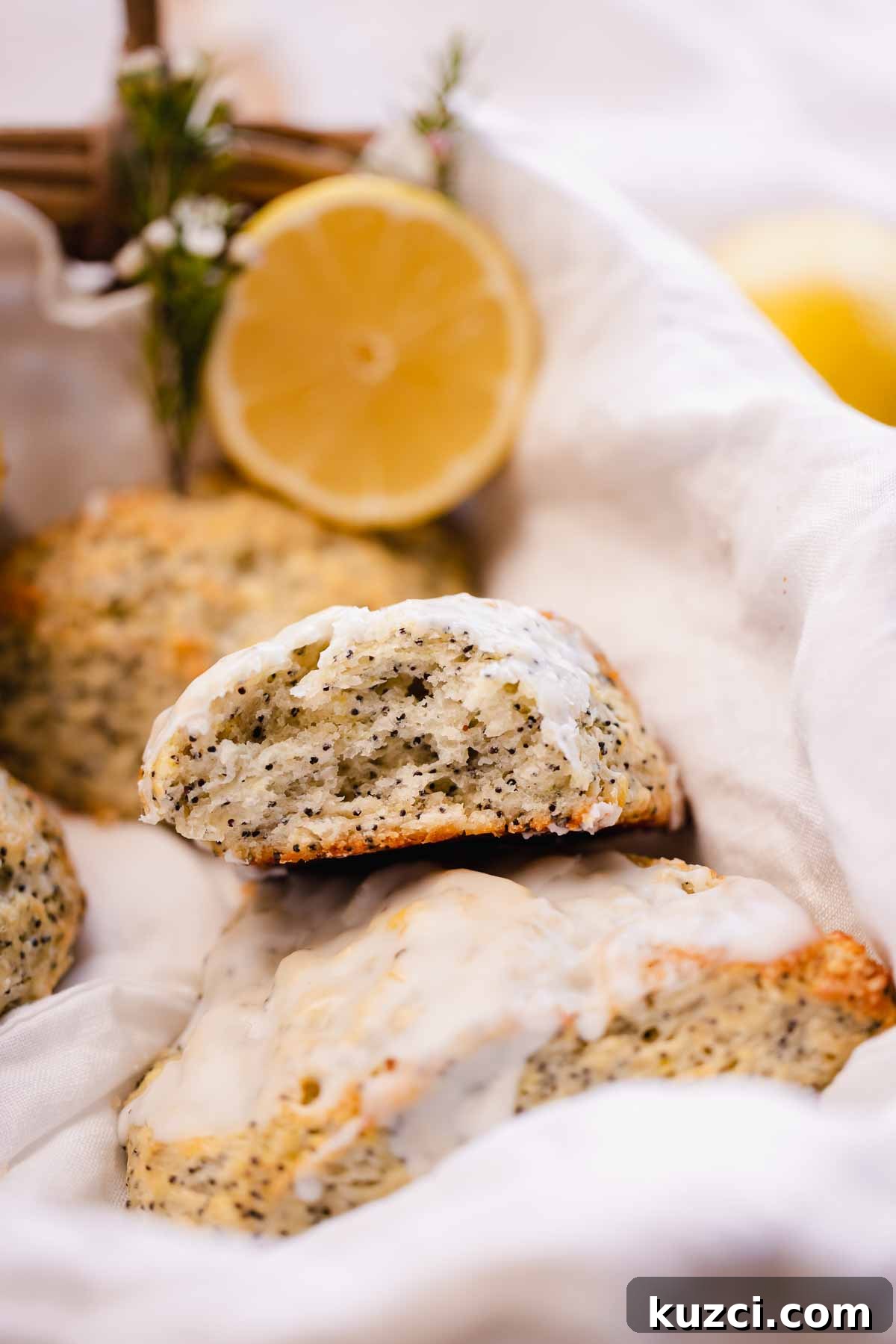
These lemon poppy seed scones are tender, cakey with a slight flake, and remain moist inside while developing a bakery-style crunchy top. They deliver bright lemon flavor from both zest and juice, a subtle tang from Greek yogurt, and a pleasant crunch from poppy seeds. Finish them with a simple lemon glaze and serve with butter, clotted cream, jam, or fruit curd for a delicious breakfast, brunch, or afternoon tea treat.

🍋 Why you’ll LOVE this recipe
- Zesty lemon & poppy seed: bright lemon flavor with tender scones and a pleasant poppy seed crunch.
- Moist and fluffy: a tested balance of cakey interior and flaky layers—soft, not dry.
- Bakery-style crunchy top: an egg wash and a sprinkle of coarse sugar create that irresistible crunch.
- Quick to make: minimal hands-on time and options to freeze the dough or bake-from-frozen pieces for convenience.
📝 Key ingredients
Read the notes below for tips that ensure success. Full ingredient amounts and steps are in the recipe section.
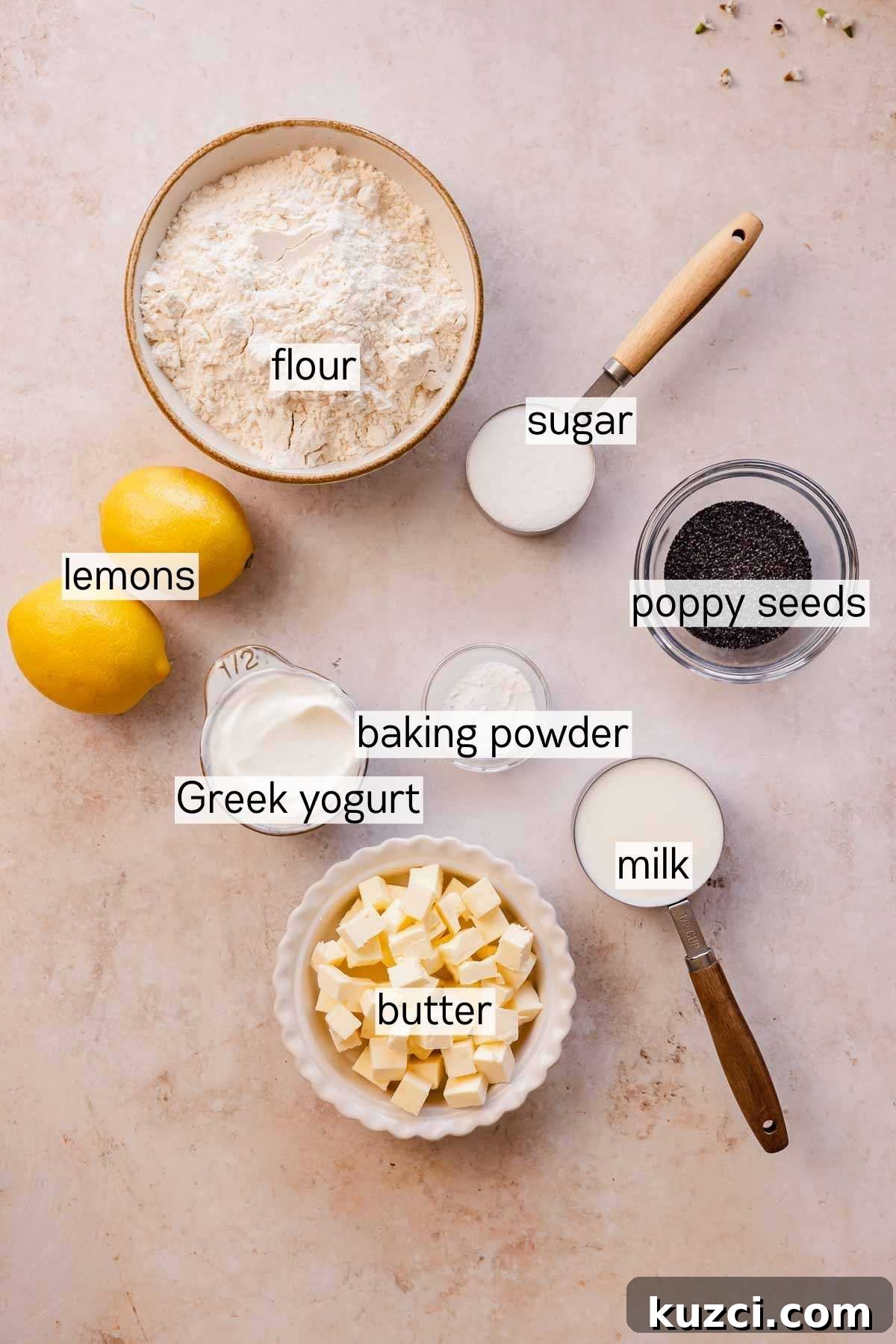
Fresh lemon: Use the zest of two lemons for maximum aroma and about 2 tablespoons of juice in the dough; reserve additional juice for the glaze.
Poppy seeds: They add texture and a nutty flavor—check freshness before using.
Greek yogurt: Thick Greek yogurt keeps the dough moist and adds a pleasant tang. Sour cream is an acceptable substitute; avoid thin regular yogurt, which makes the dough too wet.
All-purpose flour: For best results weigh the flour. If using cups, fluff the flour, spoon it into the cup, and level without packing.
Baking powder: Use fresh baking powder to ensure lift; test a small amount in hot water if you’re unsure.
Butter: Cold unsalted butter (preferably a good-quality butter) gives flavor and creates flaky layers. If you use salted butter, reduce or omit added salt.
👩🍳 How to make lemon poppy seed scones
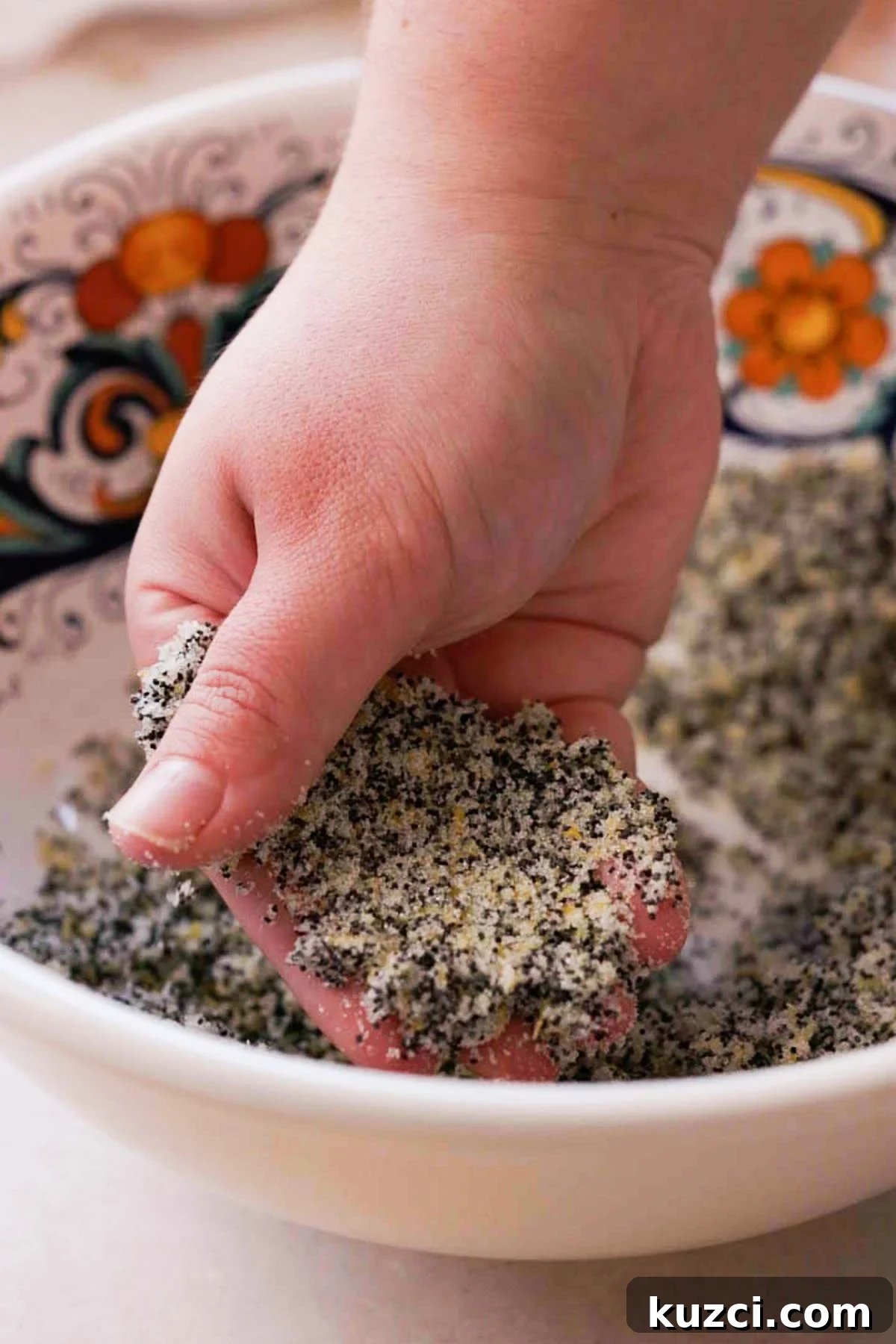
Step 1: Cut cold butter into small cubes and briefly chill if needed. In a large bowl, rub together granulated sugar, poppy seeds, and lemon zest until fragrant and slightly moistened.
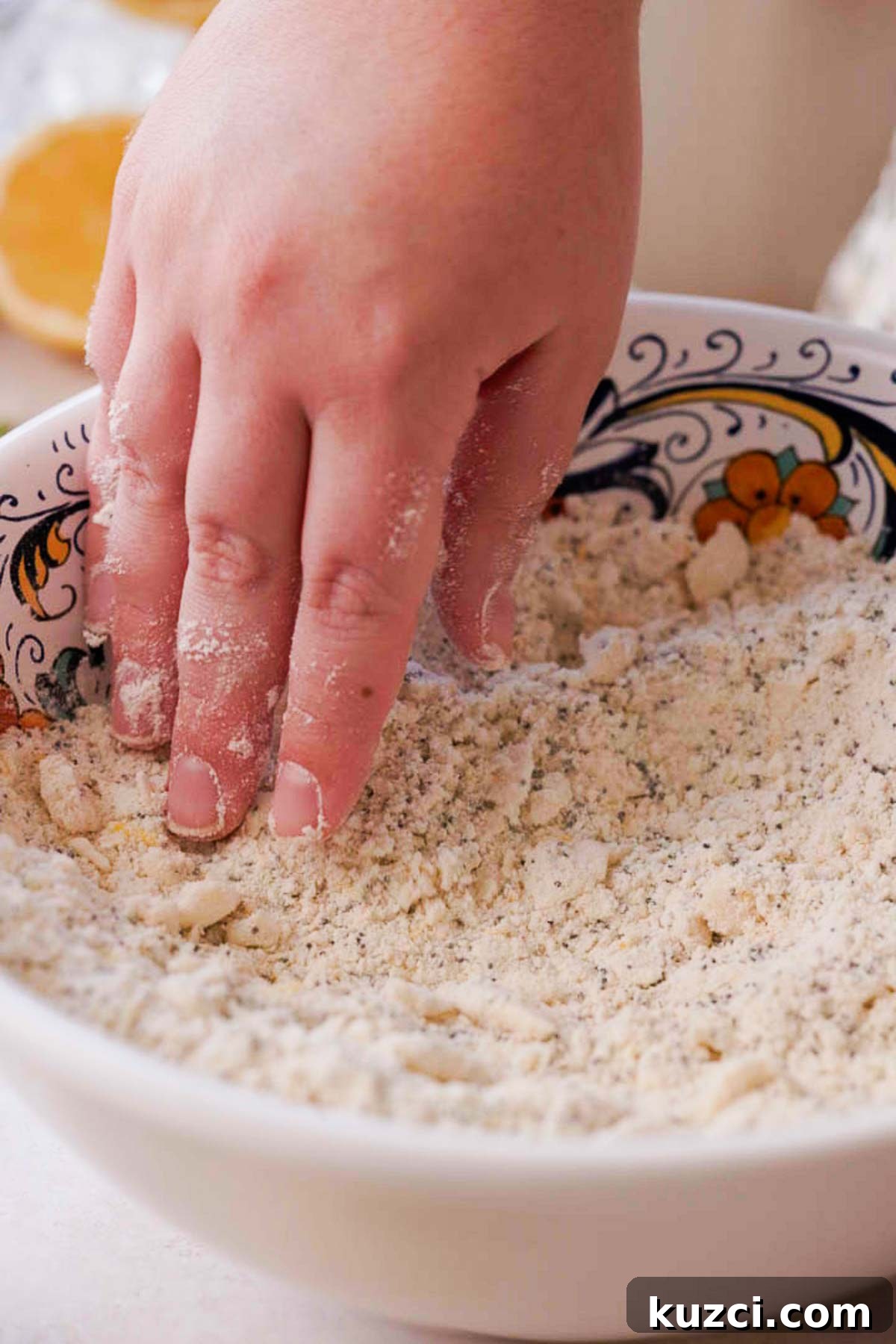
Step 2: Stir in flour, baking powder, and salt. Cut the butter into the dry mixture using a pastry cutter, food processor, or two knives until the mix resembles coarse crumbs with pea-sized pieces of butter.
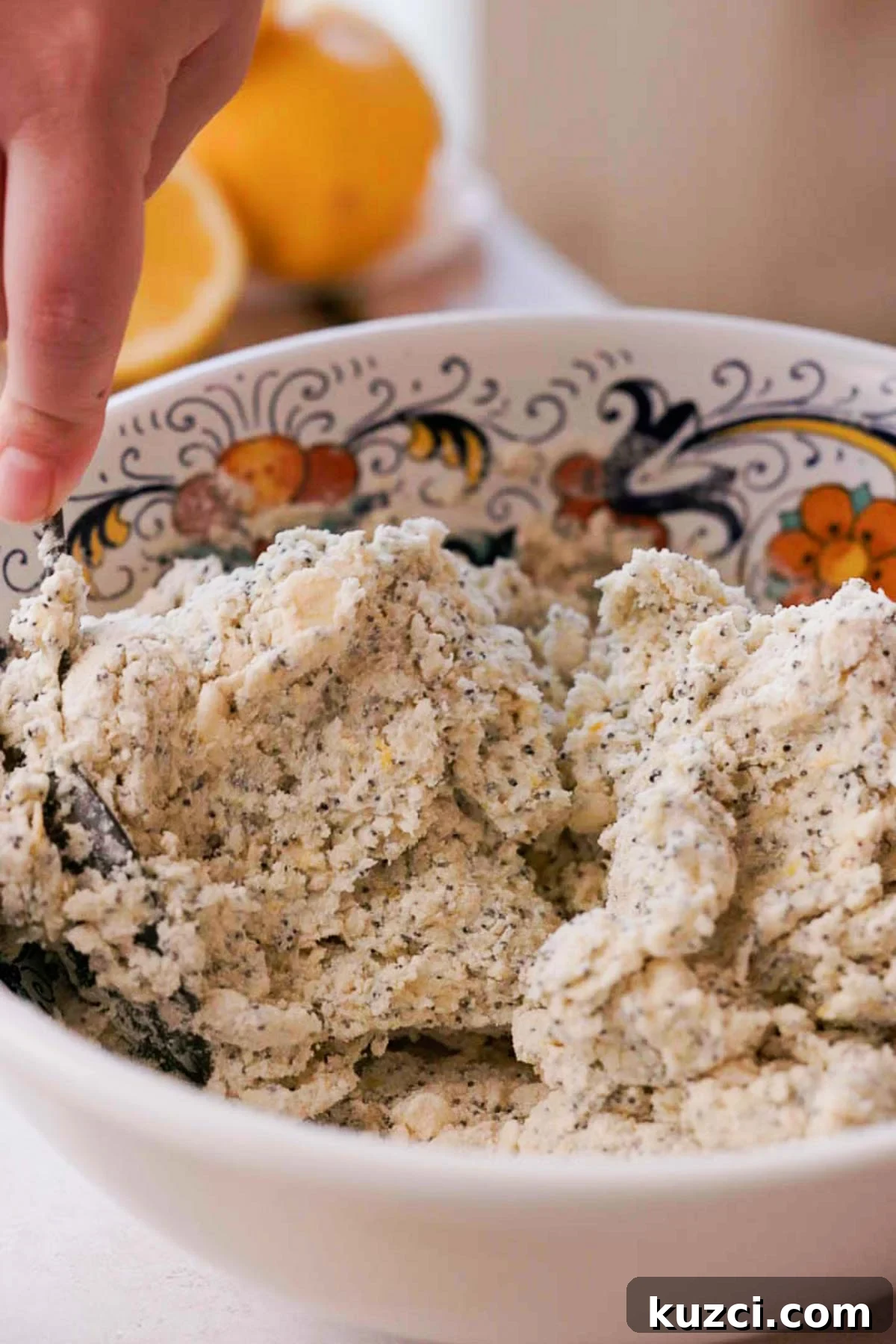
Step 3: Make a well in the center and add Greek yogurt, cold milk, lemon juice, and vanilla. Stir lightly until the mixture begins to clump into a shaggy dough—leave some dry bits; overmixing makes scones tough.
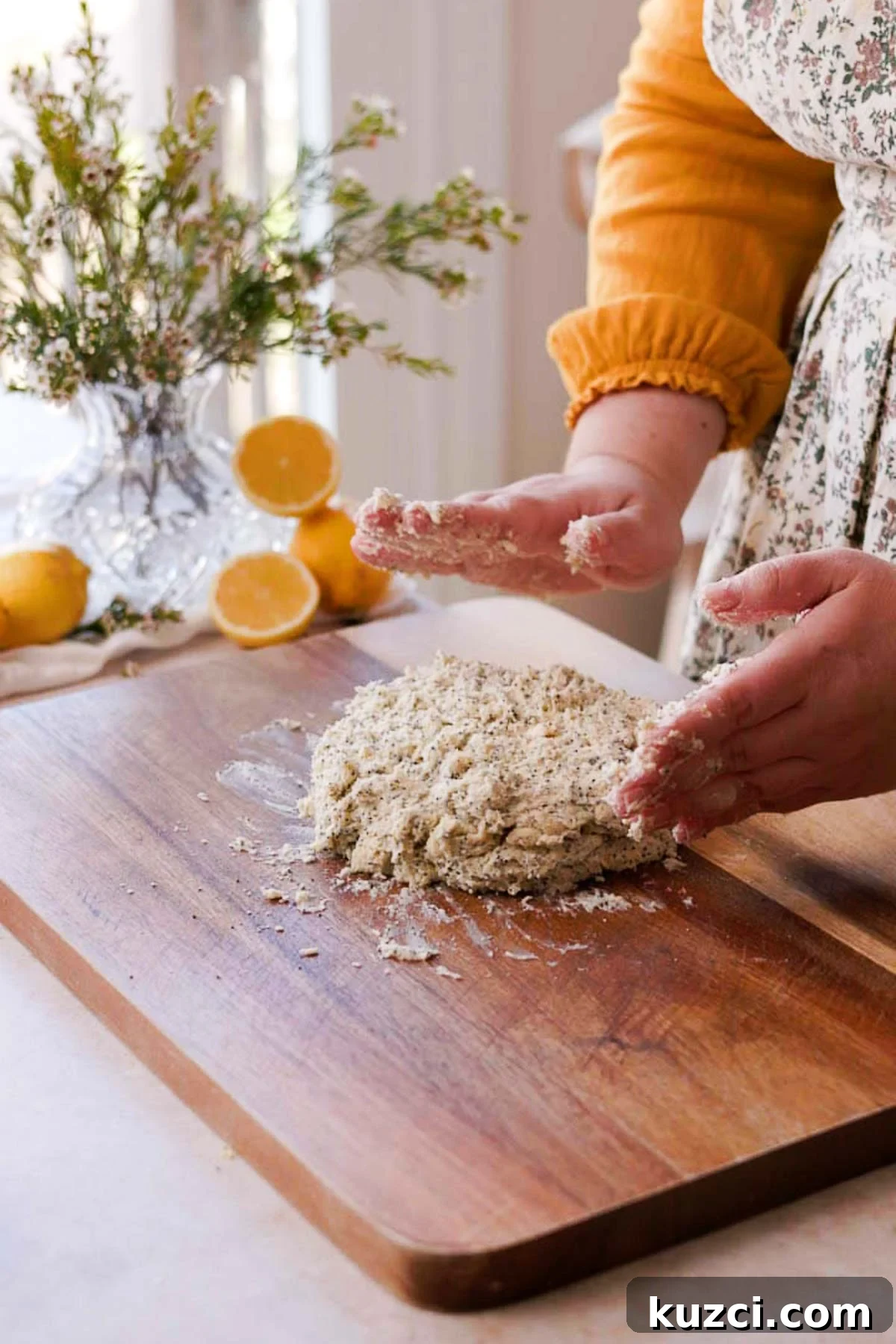
Step 4: Turn the dough onto parchment, gather into a ball, then flatten and fold the dough two times to create layers. Shape into an 8″ (20 cm) circle and chill in the freezer for 10–20 minutes.
Pro tip: Avoid adding extra flour to the dough—moisten your fingers with water if it sticks. Handling the dough quickly and keeping it cold preserves butter pockets that make the scones flaky.

Step 5: Preheat the oven to 420°F (215°C). Whisk one large egg with a tablespoon of milk for an egg wash, or brush with heavy cream as an egg-free alternative.
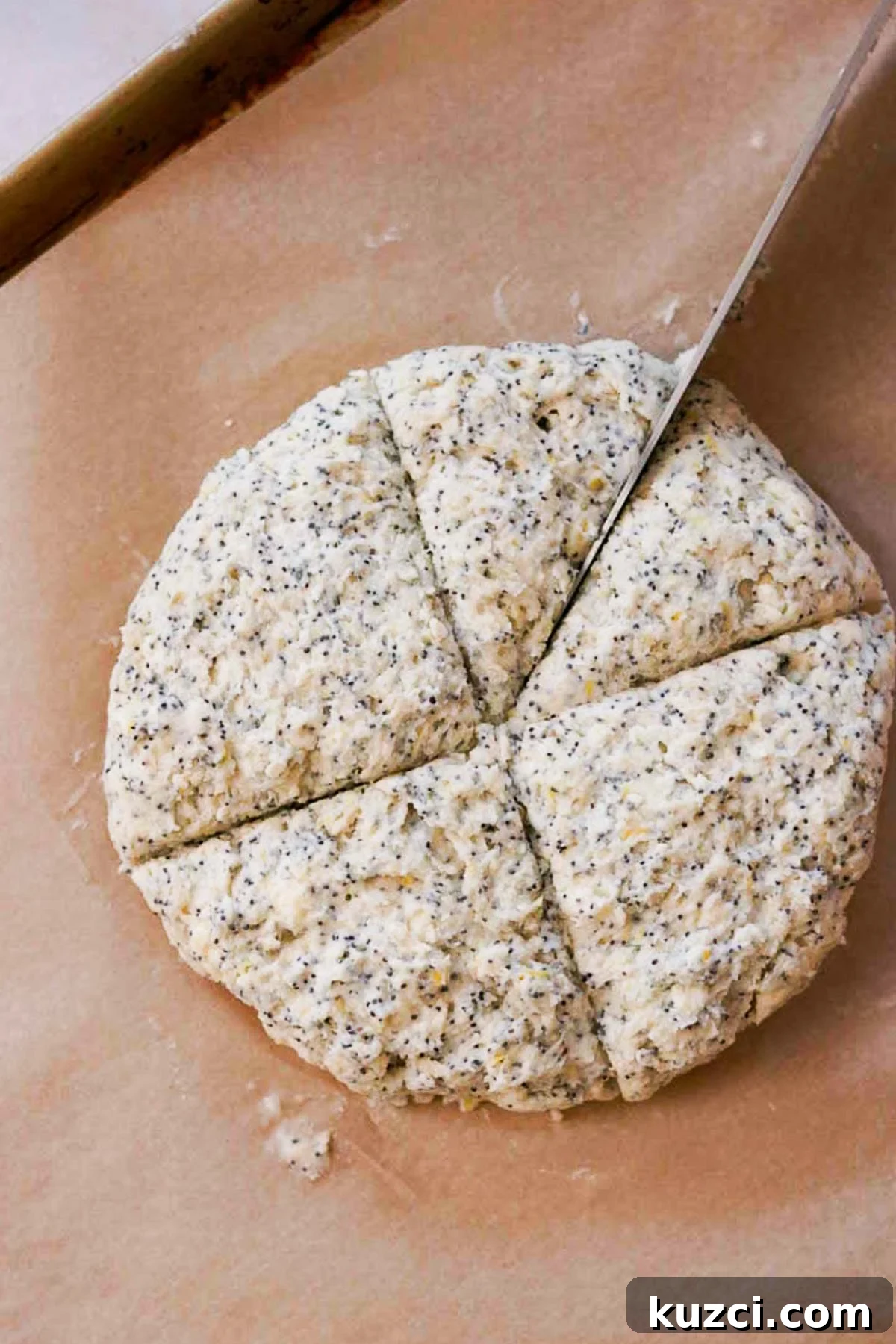
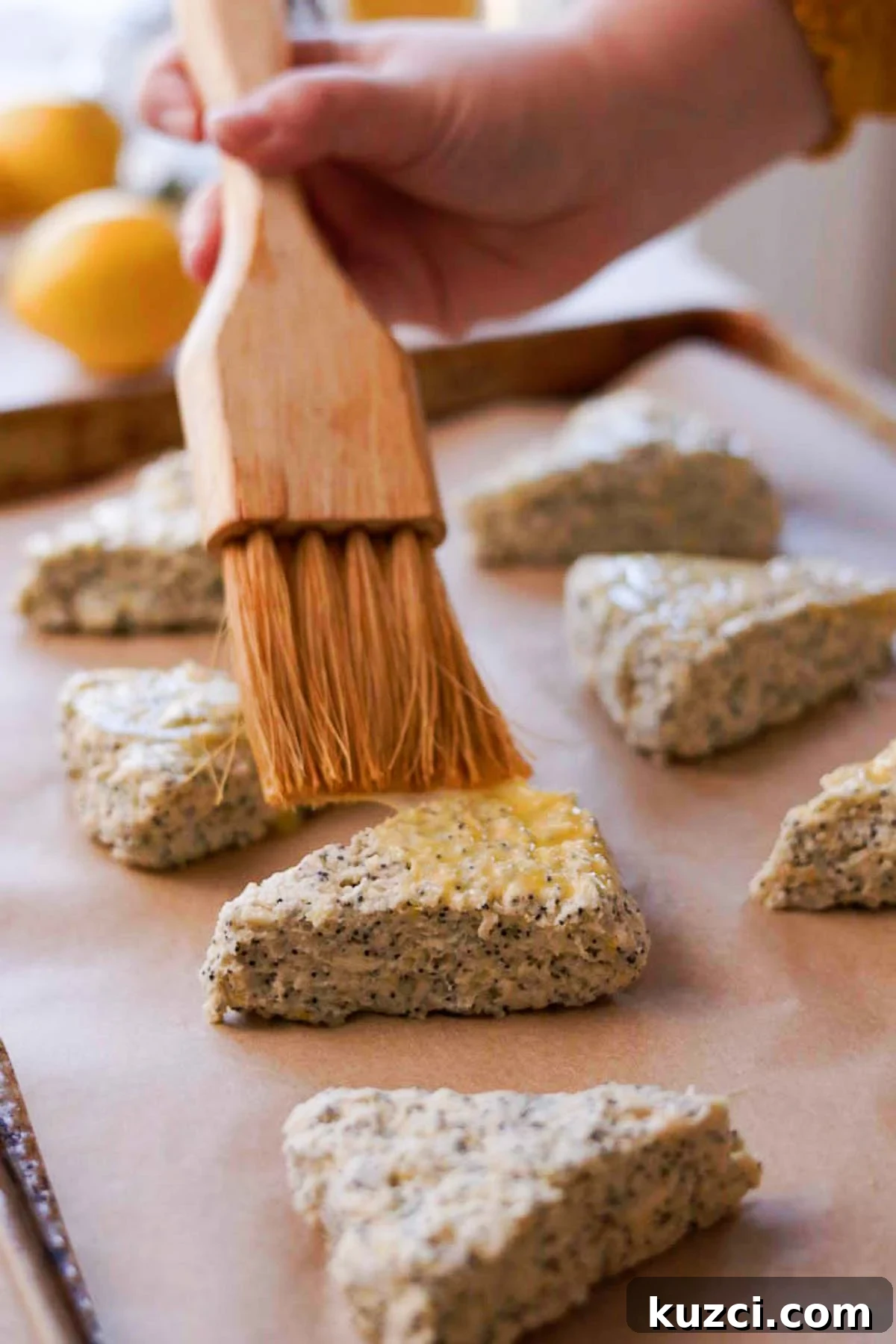
Step 6: Cut the chilled dough into 8 wedges, arrange on a parchment-lined baking sheet with about 2 inches (5 cm) between pieces, brush the tops with egg wash or cream, and sprinkle coarse sugar for a crunchy finish.
Step 7: Bake for 15–18 minutes, until the bottoms are golden and the tops are crisp. A toothpick inserted into the center should come out with a few moist crumbs but not wet batter.
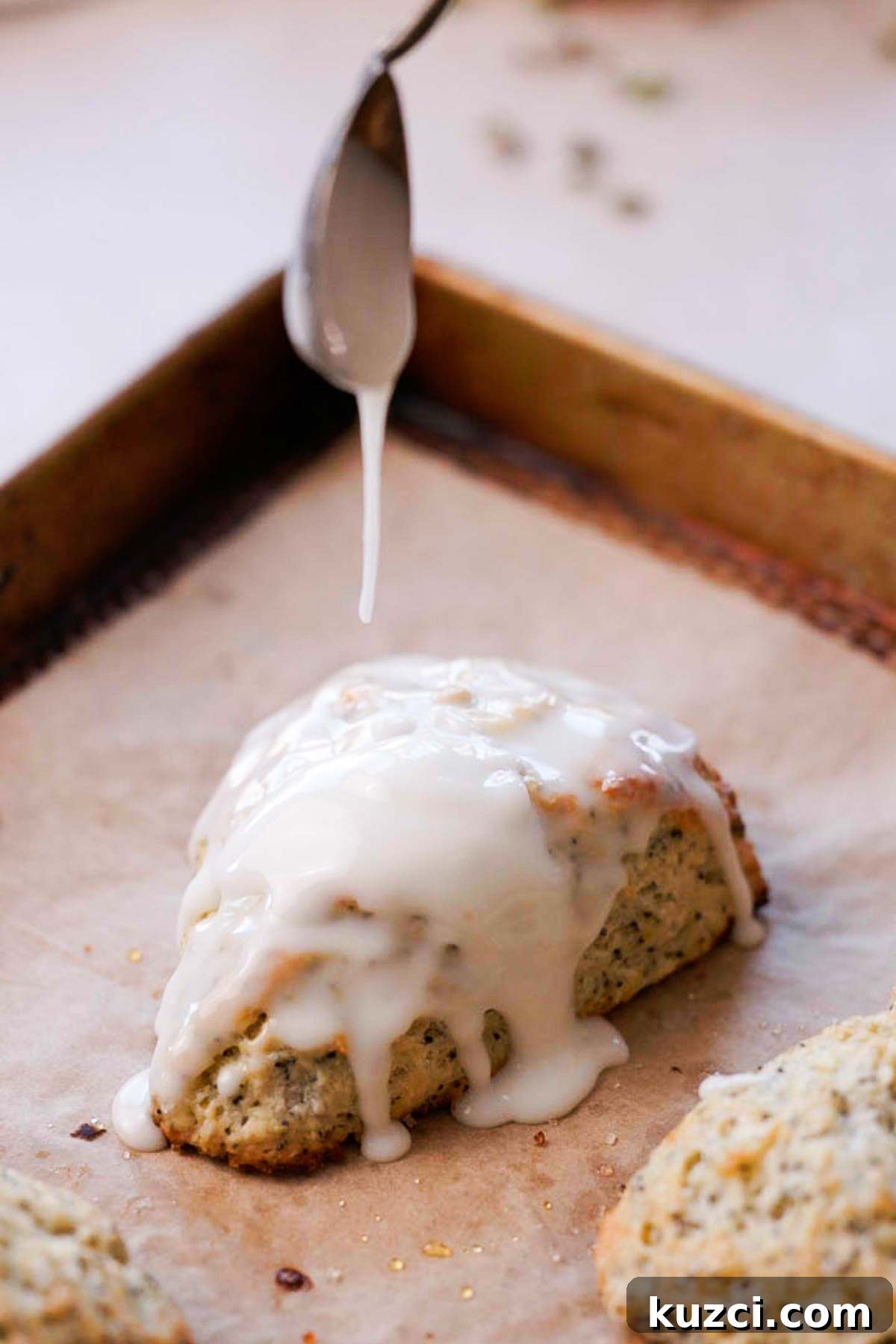
Step 8: For the glaze, mix powdered sugar with freshly squeezed lemon juice until you reach the desired thickness. Dip or drizzle over cooled scones and let set for a few minutes.
✔️ Top scone tips for success
- Weigh your flour: Accurate flour measurement prevents dry scones.
- Freeze the butter: Small frozen cubes stay cold longer and create flaky layers.
- Keep everything cold: Handle dough minimally and chill before baking for lift and flakiness.
- Skip extra flour on the surface: Use lightly moistened fingers if the dough sticks.
- Only brush the tops: Avoid getting egg wash on the sides so scones can rise properly.
- Don’t overbake: Pull them when lightly golden to keep the interior moist.

🥄 Make ahead and storage
Baked scones are best the day they are made. Store leftovers in an airtight container at room temperature for up to 3 days. Refrigeration can dry them; reheat briefly to soften before serving.
For convenience, freeze unbaked, cut scone wedges on a baking sheet until solid, then transfer to a freezer-safe bag for up to 3 months. Bake from frozen (add a minute or two if needed). Baked scones freeze well for up to 2 months if glazed and then thawed at room temperature.

🥐 The best scone texture
From testing, eggless scones made with yogurt or sour cream tend to be moister and more tender than egg-based versions. The result is a soft, cakey interior with some flakiness from cold butter pockets—ideal for lemon poppy seed scones.
💧 Easy two-ingredient lemon glaze
Whisk powdered sugar with freshly squeezed lemon juice until smooth. Adjust the lemon to reach the thickness you prefer—thicker glaze stays on the scone top, thinner glaze drizzles beautifully. Try glazing half and leaving half unglazed to enjoy both textures.

☕ Serving suggestions
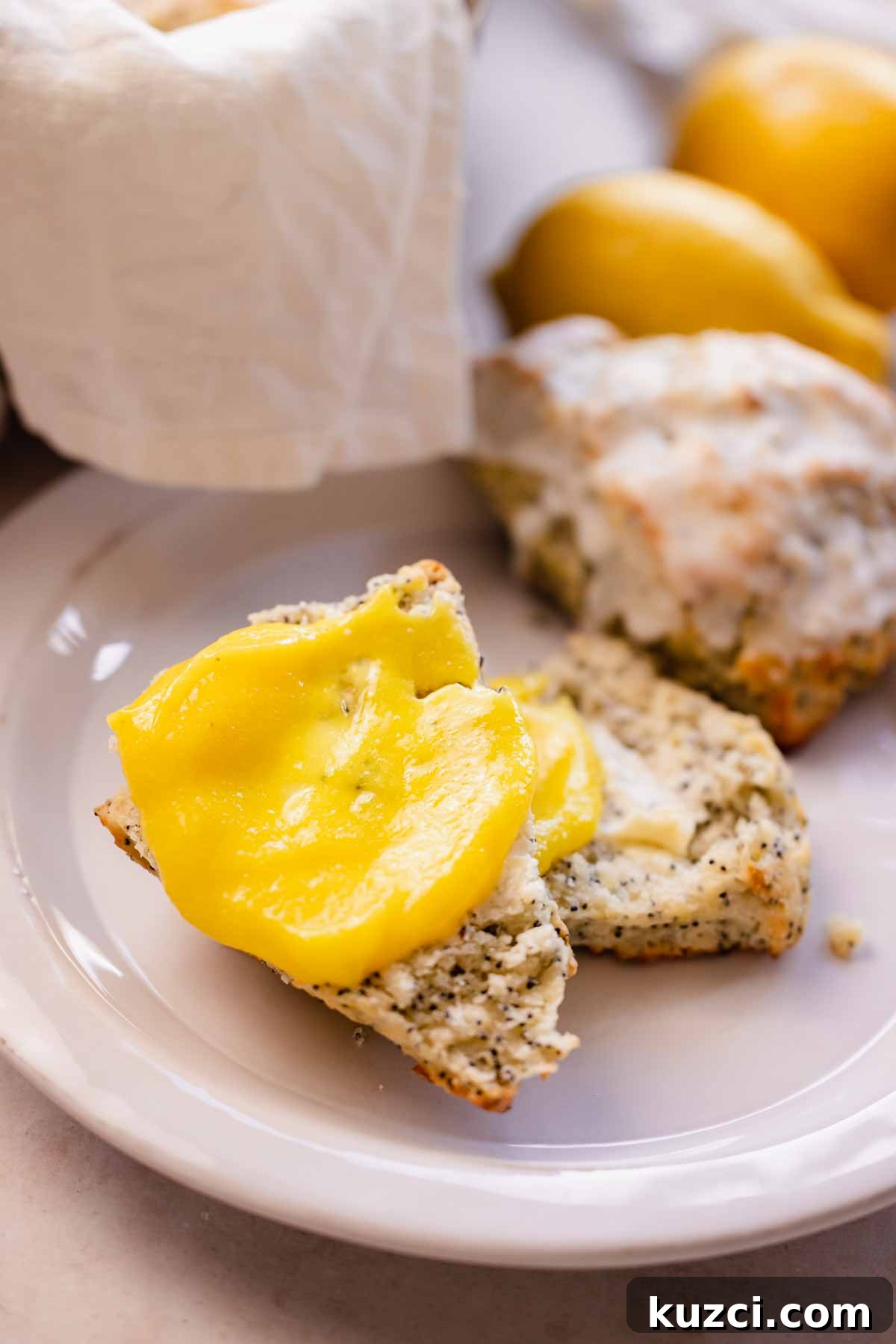
Serve warm scones with clotted cream and jam, or a good pat of butter. They pair wonderfully with lemon curd or other fruit curds for a brighter finish. A cup of tea or coffee completes the experience.
📖 Recipe FAQs
Why freeze the butter?
Frozen butter stays cold longer while you work it into the flour, creating small pockets that steam in the oven and give flaky layers.
Why brush only the tops with egg wash?
Egg wash on the sides can set early and restrict rising. Brushing only the tops gives a golden, crunchy finish without limiting lift.
What can I use instead of egg wash?
Heavy cream is a great alternative for brushing the tops if you prefer an egg-free option. Coarse sugar on top gives the signature bakery crunch.
How do I keep scones moist?
Use cold butter, work quickly, avoid overmixing, chill before baking, and remove from the oven as soon as they’re lightly golden.
📖 Recipe
Lemon Poppy Seed Scones
Yields: 8 scones • Prep: 10 mins • Cook: 20 mins • Total: 40 mins
Ingredients — Scone Dough
- ½ cup (113 g) unsalted butter, cold
- ½ cup granulated sugar
- 3 tablespoons poppy seeds
- Zest of 2 lemons
- 2 ¼ cups (270 g) all-purpose flour
- 1 tablespoon baking powder
- ¼ teaspoon sea salt
- ½ cup Greek yogurt (or sour cream), cold
- ½ cup milk, cold
- 2 tablespoons lemon juice, freshly squeezed (reserve a bit for glaze)
- 1 teaspoon vanilla extract
Egg wash (or heavy cream)
- 1 large egg
- 1 tablespoon milk
- 2 tablespoons coarse sugar for sprinkling
Lemon glaze (optional)
- 1 cup powdered sugar
- 1 tablespoon freshly squeezed lemon juice, more as needed
Instructions
- Cut butter into small cubes and chill briefly. In a bowl, rub sugar with poppy seeds and lemon zest until fragrant.
- Combine flour, baking powder, and salt with the sugar mixture. Cut butter in until the mixture looks like coarse crumbs with pea-sized bits.
- Make a well, add yogurt, milk, lemon juice, and vanilla. Stir lightly until a shaggy dough forms; don’t overmix.
- Turn dough onto parchment, gather into a ball, flatten and fold two times. Shape into an 8″ (20 cm) circle. Freeze 10–20 minutes.
- Preheat oven to 420°F (215°C). Whisk egg and milk for egg wash or prepare heavy cream.
- Cut into 8 wedges, place on a parchment-lined sheet with space between. Brush tops with egg wash or cream and sprinkle coarse sugar.
- Bake 15–18 minutes until golden and crisp on top. Cool slightly.
- Mix powdered sugar and lemon juice to desired glaze thickness. Dip or drizzle over scones and let set briefly before serving.
Notes
- Store baked scones at room temperature in an airtight container up to 3 days.
- Freeze unbaked wedges on a sheet until solid, then store in a freezer bag up to 3 months; bake from frozen, adding a minute or two if needed.
- Baked scones freeze well up to 2 months. Reheat gently to refresh texture.
Nutrition (approx. per scone)
- Calories: 402 kcal
- Carbohydrates: 63 g • Protein: 7 g • Fat: 15 g
If you try this recipe, leave a note with how it turned out and any tweaks you made. Enjoy your lemon poppy seed scones!