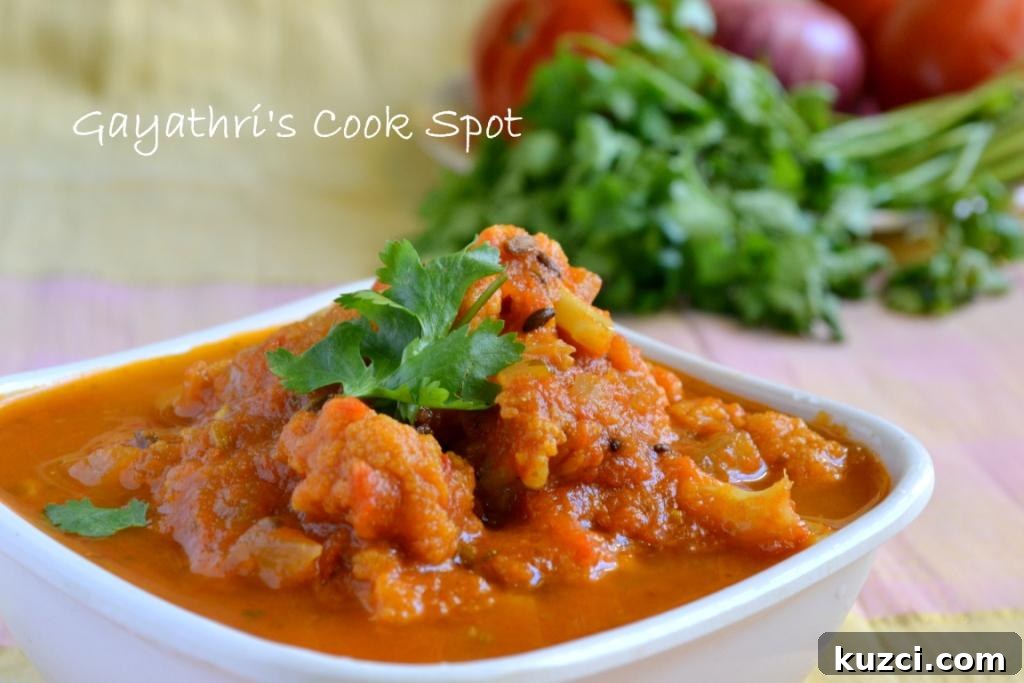
Yesterday morning I made a fresh tomato chutney to accompany chappathi. I used bright red chilies I picked up from Nilgiris, and they turned out to be extremely hot. There was some chutney left in the refrigerator with no one to finish it, so I decided to transform the leftovers into something everyone would enjoy. After a few moments of thinking, I created a flavorful gobi (cauliflower) masala using the chutney as a base. No one in the house realized the fiery chutney was part of the recipe — let’s keep that secret between us. Below is the chutney recipe and a clear, practical method for turning it into a delicious cauliflower gravy.

Ingredients
For the Tomato Chutney
Tomato – 5 medium
Onion – 2 medium
Garlic – 5–6 cloves
Fresh red chilies – 2–3 (I used 3 and found it very hot; reduce if you prefer milder chutney)
Oil – 2 tablespoons
Salt – to taste
For the Cauliflower Gravy (Gobi Masala)
Tomato chutney – 1 cup (prepared as below)
Cauliflower – 1 medium head, broken into small florets
Tomato – 2 medium (for the gravy)
Onion – 1 medium
Fennel seeds – 1 teaspoon
Cinnamon – a small piece
Sambar powder – 1/2 teaspoon (or a mild curry powder as substitute)
Turmeric – 1/2 teaspoon
Salt – to taste
Oil – 2 tablespoons
Cilantro (coriander leaves) – for garnish
Procedure
Making the Tomato Chutney
1. Heat the oil in a pan and sauté the garlic cloves briefly until they release their aroma.
2. Add the fresh red chilies and sauté for a short time, taking care not to burn them.
3. Add the sliced onions and cook on medium heat until they turn golden brown and soft.
4. Add the chopped tomatoes and simmer on a low flame until the tomatoes are cooked down and the mixture is soft and well combined.
5. Allow the mixture to cool, then grind it into a smooth paste. Adjust salt to taste. The chutney works beautifully with dosa, idli, or chapathi and also makes a great base for this cauliflower gravy.
Preparing the Gobi Masala (Gravy)
1. In a clean pan, heat the oil and add fennel seeds and the small piece of cinnamon. Allow them to splutter briefly to release their flavor.
2. Add the chopped onion and sauté until it turns translucent and starts to brown slightly.
3. Add the cauliflower florets and stir-fry for a couple of minutes so they pick up some of the aromatics.
4. Grind the two tomatoes into a coarse paste and add this to the pan along with one cup of the prepared tomato chutney.
5. Stir well, then add turmeric, sambar powder, and salt to taste. Mix until everything is evenly combined.
6. Pour in enough water to reach a gravy consistency you prefer. Bring the mixture to a boil, then reduce the heat to low and cover the pan.
7. Simmer gently until the cauliflower is tender and has absorbed the flavors, checking occasionally and stirring so nothing sticks to the bottom.
8. Once cooked, transfer the gobi masala to a serving bowl and garnish with fresh cilantro leaves.
Tips, Variations, and Serving Suggestions
– If your chutney is particularly spicy, balance the heat with a little coconut milk or yogurt added near the end of cooking. This will mellow the spice without masking the tomato flavor.
– For a nuttier texture, add a spoonful of roasted cashew paste or ground peanuts to the gravy when simmering.
– Adjust the thickness of the gravy by changing the amount of water. Cook a little longer for a thicker sauce or add extra water for a runnier curry.
– Serve gobi masala hot with chapathi, steamed rice, or as part of a larger meal. Leftovers keep well in the refrigerator for 2–3 days and can be reheated gently on the stove.
I’m sending this recipe to a couple of cooking event themes: Kitchen Chronicles – Cooking With Leftovers, and Healing Foods – Cauliflower. Both celebrate creative ways to use ingredients and to highlight nutritious vegetables like cauliflower.