
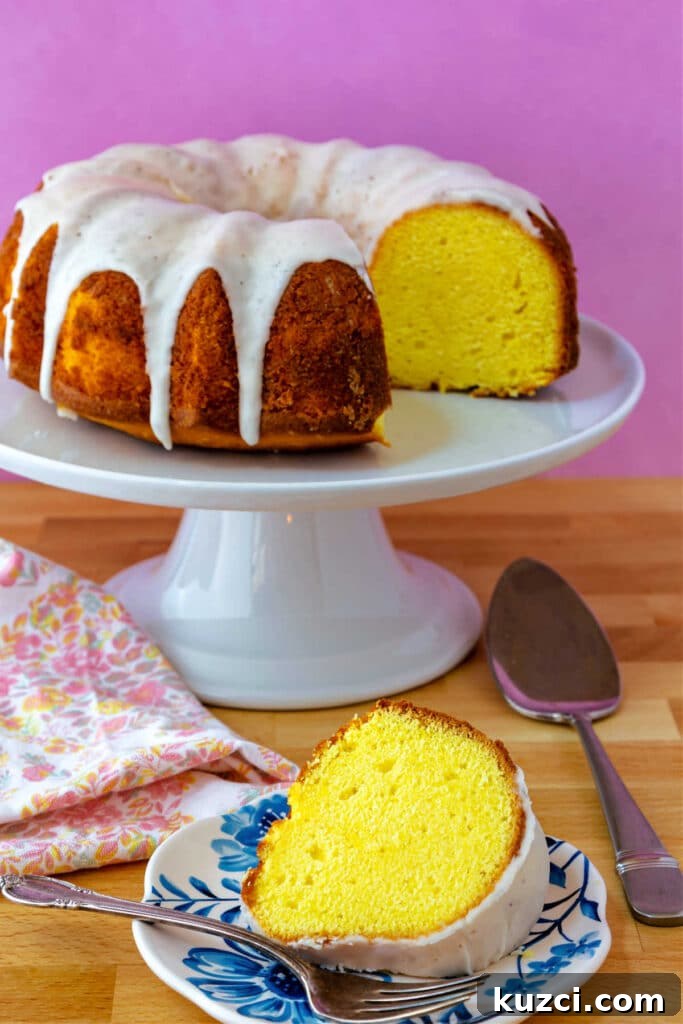
This is my updated version of the “Van Halen” lemon pound cake — what I believe is the best lemon pound cake you’ll ever bake. It layers lemon flavor in three ways: zest, fresh juice, and a touch of lemon extract or oil, plus a tang from yogurt (or buttermilk) for depth. If you enjoy lemon desserts, this recipe gives a fine, dense crumb that still melts in your mouth.
Hi Jenni, I love this recipe so much. Thanks to you I got the highest grade for my external exam using this recipe.
Reader and Culinary Student Donna
Table of Contents
What Makes This Recipe So Great
The secret to an outstanding pound cake is concentrating and layering the main flavors in several forms. For lemon pound cake, that means more than just extract — use zest, juice, and a small amount of extract or lemon oil. Each element contributes something different:
- Lemon zest — the peel holds the essential oils and gives bright perfume.
- Fresh lemon juice — adds acidity and the expected tartness that balances sweetness.
- Lemon extract or lemon oil — a few drops sharpen the lemon profile; avoid using too much to prevent artificial notes.
To reinforce the lemon character and add pleasant tang, I fold in Greek yogurt (you can substitute buttermilk or sour cream). The glaze is another chance to boost flavor: powdered sugar mixed with lemon juice, a little zest, and a pinch of salt finishes the cake beautifully.
How Did You Make It Yellow?

No artificial coloring is necessary. I add just 1/4 teaspoon of ground turmeric to the butter and sugar while creaming. Turmeric gives a subtle sunny hue without imparting a noticeable flavor at this small amount. If you prefer, you can omit it or use a few drops of yellow food coloring, but the turmeric trick keeps things natural.
Procedure
Ingredients
Below are the ingredients I use to make this lemon pound cake. Quantities are listed in the recipe section further down.
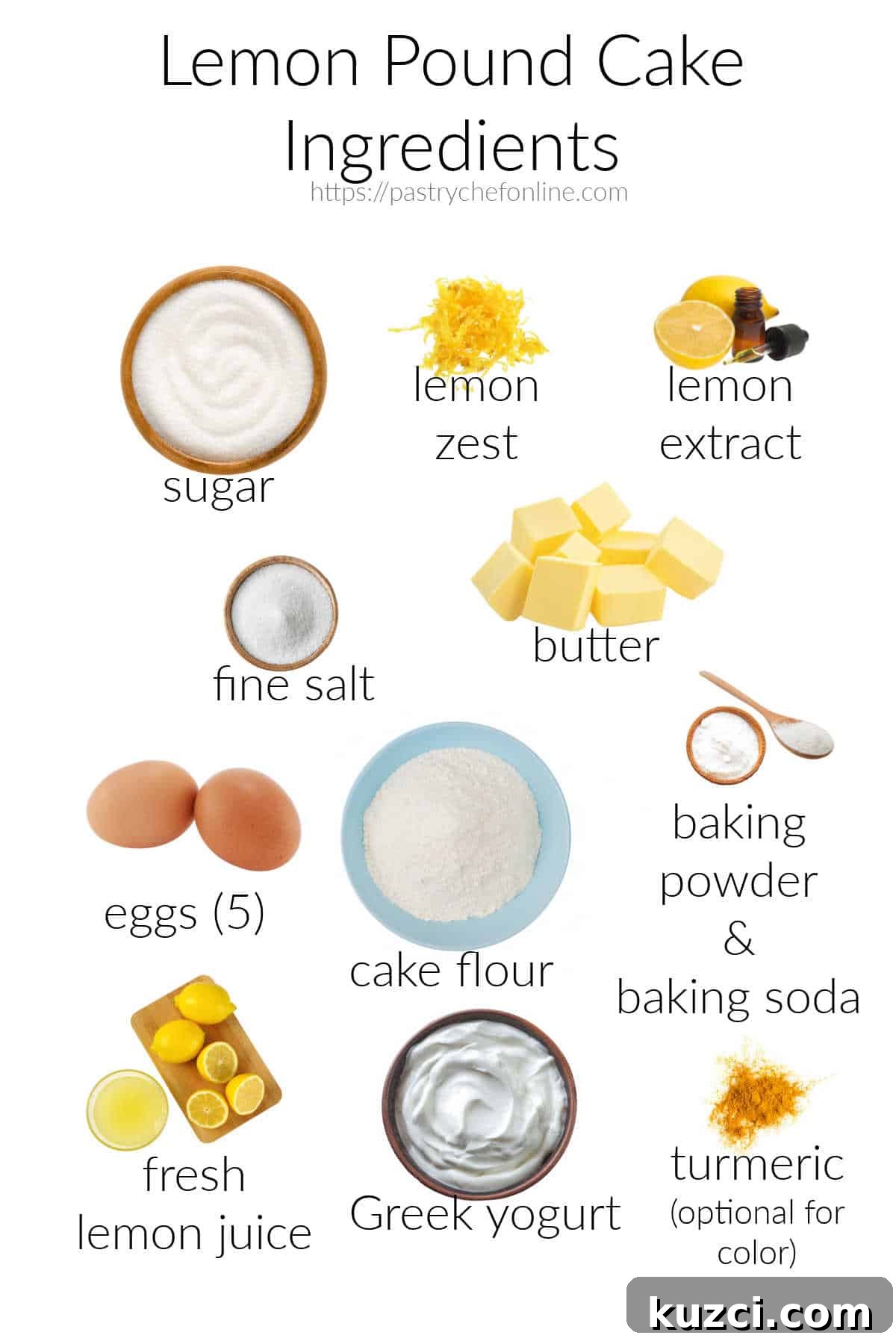
- Unsalted butter: cool, pliable butter (not soft); aim for 65–68°F.
- Granulated sugar: creamed with butter to incorporate air and create structure.
- Fine sea salt: or table salt; adjust if using coarse kosher salt.
- Lemon zest: from 4 small or 2 large lemons; a Microplane grater yields fine zest.
- Lemon extract or lemon oil: 1/2 teaspoon extract or about 3 drops of oil.
- Eggs: 5 large, brought to cool room temperature before mixing.
- Cake flour: yields the finest texture, though all-purpose will work with a slightly coarser crumb.
- Baking powder and baking soda: for lift and to balance acidity.
- Greek yogurt (thick): about 8 oz; full-fat or low-fat works best. Buttermilk or sour cream can be substituted.
- Fresh lemon juice: strained, about 2 oz.
- Optional turmeric: 1/4 teaspoon for color only.
Method (Creaming Method)
This cake is made using a modified creaming method. The high-level steps are:
- Cream together butter, sugar, salt, lemon zest, optional turmeric, and extract until very pale and fluffy.
- Beat the eggs lightly, then add them slowly to the creamed mixture, a little at a time.
- Whisk dry ingredients (flour, baking powder, baking soda) together.
- Combine the yogurt (or buttermilk) with the lemon juice.
- Alternate adding dry and wet ingredients in five additions, beginning and ending with dry (dry–wet–dry–wet–dry).
- Scrape the batter into a well-prepared 12-cup Bundt pan and bake until deeply golden and set.
Visual How-To
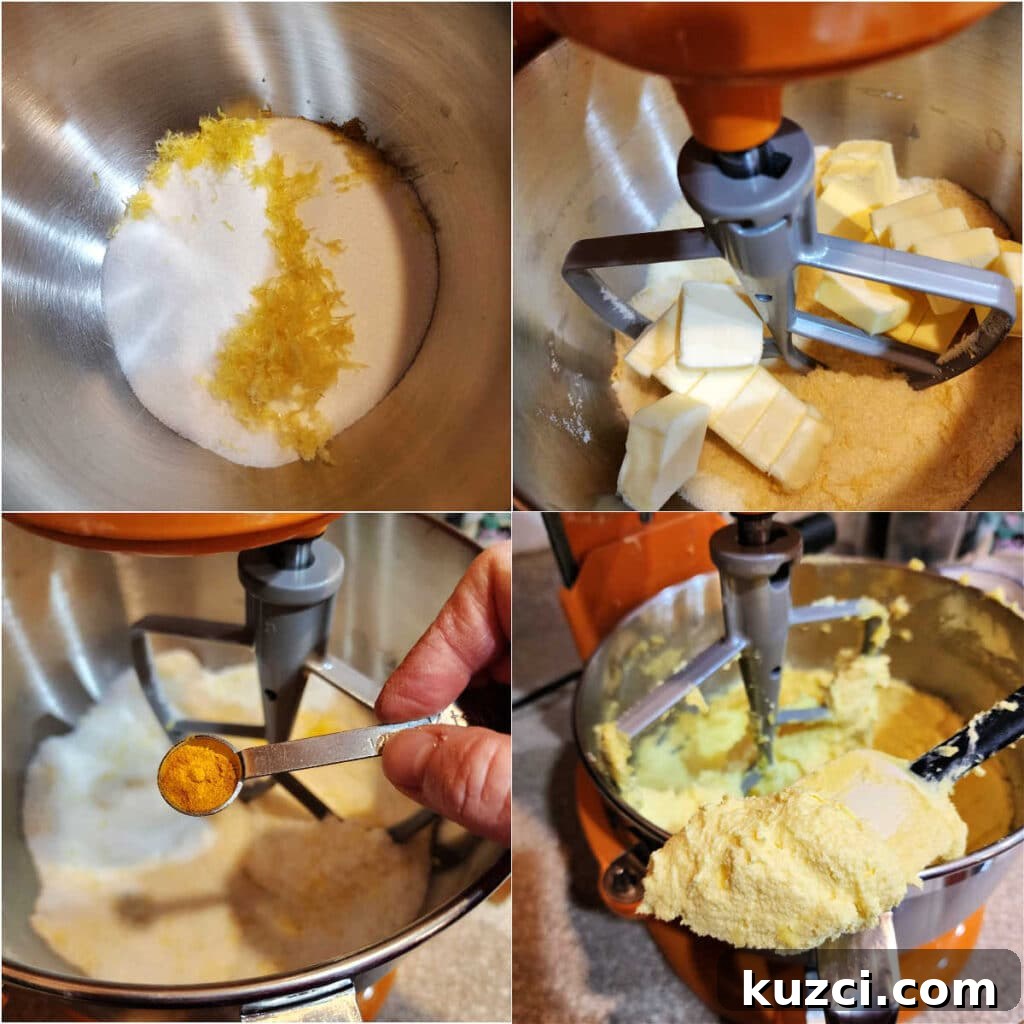
- Mix sugar and zest to perfume the sugar and begin releasing oils.
- Add butter (and turmeric if using) and beat until light, pale, and fluffy — this can take several minutes.
- Incorporate beaten eggs slowly until the batter is creamy and billowy.
- Alternate the dry and wet ingredients, scraping the bowl regularly and mixing briefly on low between additions.
- Turn the mixer on high for 2–3 seconds at the end to finish the mix, then scrape and fold any remaining streaks by hand.
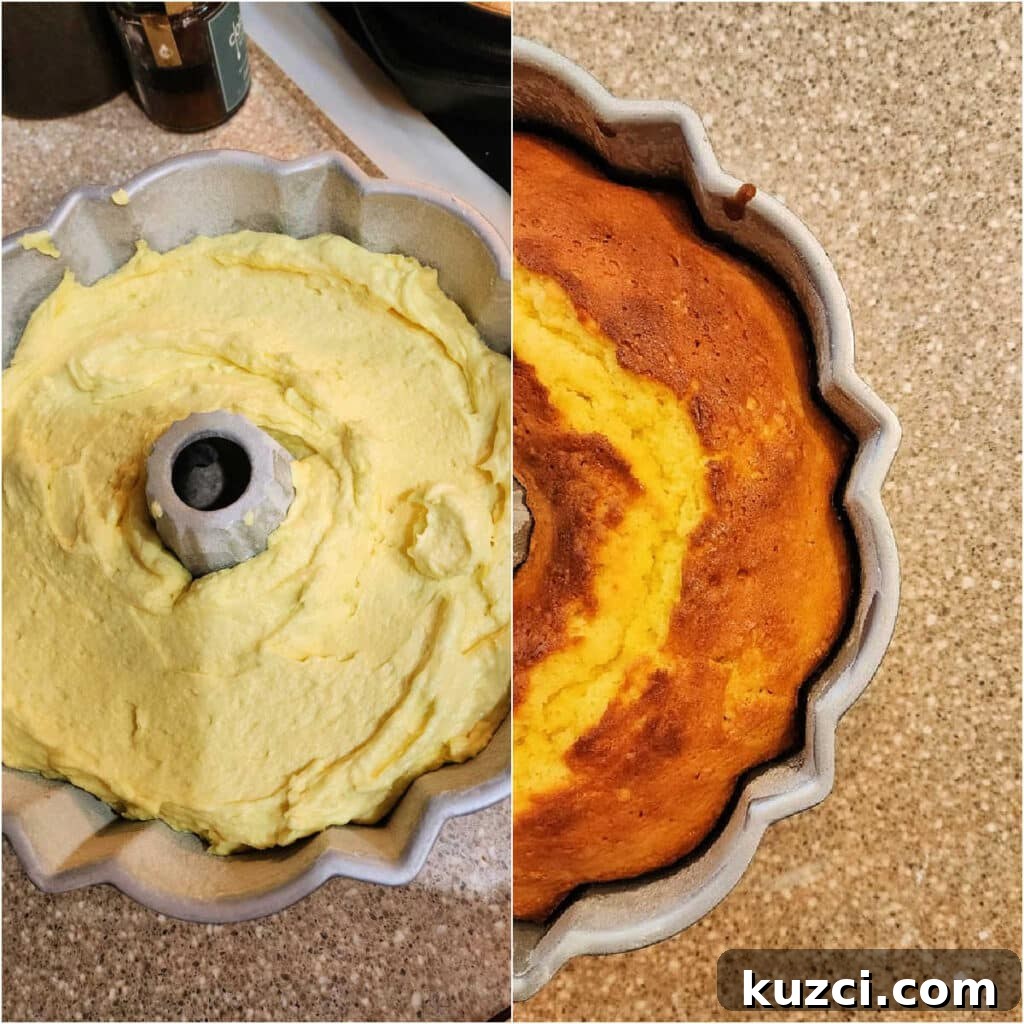
Spoon the batter evenly into the prepared pan. Bake at 350°F (one rack below center) for about an hour, until the cake is a deep golden brown with a sunshiny crack around the top. A skewer inserted into the crack should come out clean. Let the cake cool in the pan for about 20 minutes, then turn out onto a rack.
For extra moisture, wrap the still-warm cake tightly in plastic wrap while it cools; this traps steam and keeps the crumb tender.
Equipment You May Need
A stand mixer is ideal for thorough creaming, though a good hand mixer can also do the job. Use a classic 12-cup Bundt pan for this recipe. If you only have a 10-cup Bundt, you’ll have leftover batter for a small loaf or several cupcakes.
Variations
This formula works beautifully with other citrus fruits. Substitute lime, orange, or grapefruit zest, juice, and extract to make a different citrus pound cake while keeping the method the same.
Tips for Success
- Bring butter, eggs, and yogurt/buttermilk to cool room temperature before starting to prevent the batter from curdling.
- Bake on the rack one below center for the most even heat distribution.
- Take your time creaming the butter and sugar — the pale, aerated mixture is the foundation of a fine crumb.
- Grease and flour the Bundt pan thoroughly to ensure the cake releases cleanly.
Lemon Pound Cake Q & A
Yes. Use a reliable cup-for-cup gluten-free flour blend and let the batter rest for 30 minutes before baking so the flours hydrate fully.
Yes. Substitute a vegan stick-style butter (not tub margarine) and use a plant-based thick yogurt such as soy or coconut yogurt.
Absolutely. Store covered at room temperature for 4–5 days, or wrap slices or the whole cake tightly in plastic wrap and foil and freeze for up to 3 months. Thaw wrapped at room temperature.
Serving Suggestions

A simple tart glaze of powdered sugar, lemon juice, lemon zest, and a pinch of salt is perfect. For a lighter finish, serve slices with stabilized whipped cream. Heavy frostings can overwhelm the cake’s silky texture, so less is often more.
Questions?
A Note About Measurements
For baking precision, weigh ingredients when possible. Small adjustments in temperature, equipment, or ingredient brands can affect the result, so using a reliable kitchen scale is helpful.

Hi, I hope you enjoyed this recipe and found the tips helpful. If you’d like to receive occasional updates and new recipes, consider subscribing to my newsletter for recipe news and behind-the-scenes notes.
Lemon Pound Cake
Author: Jennifer Field
Summary: Made with a modified creaming method, this lemon pound cake has a tight, melting crumb and bright citrus flavor.
Prep Time: 30 mins • Cook Time: 1 hr • Total Time: 1 hr 30 mins
Servings: 24 • Calories: 285 kcal per serving
Ingredients
- 19 oz granulated sugar
- 12 oz unsalted butter, cool room temperature
- 1 gently rounded teaspoon fine sea salt
- Zest of 4 small-ish lemons (or 2 large)
- 1/2 teaspoon lemon extract (or ~3 drops lemon oil)
- Optional: 1/4 teaspoon ground turmeric (for color)
- 5 large eggs, lightly beaten
- 13 oz cake flour
- 3/4 teaspoon baking powder
- 1/4 teaspoon baking soda
- 8 oz thick Greek yogurt (or sour cream or buttermilk)
- 2 oz freshly squeezed lemon juice, strained
Instructions
- Preheat oven to 350°F and position the rack one below center. Thoroughly spray and flour a 12-cup Bundt pan.
- Cream butter, sugar, salt, lemon zest, extract, and optional turmeric until very pale and fluffy — this can take 8 minutes or more. Scrape the bowl as needed.
- Whisk together cake flour, baking powder, and baking soda. If lumpy, sift and set aside.
- Whisk yogurt (or buttermilk/sour cream) with lemon juice; set aside.
- Drizzle beaten eggs into the creamed mixture slowly over about 5 minutes, beating and scraping as needed.
- Alternately add dry and wet ingredients in five additions: half the dry, half the wet, half the remaining dry, the rest of the wet, then the remaining dry. Mix briefly on low between additions; do not overmix.
- Scrape batter into the prepared pan, smooth the top, and bake about 1 hour until the top is deep golden and a skewer inserted into the central crack comes out clean.
- Cool in the pan for 20 minutes (10 minutes for a small extra cake), then turn out onto a rack. For moistness, wrap the warm cake tightly in plastic wrap while it cools.
- Optional: While the cake is just warm, drizzle a glaze made from powdered sugar, lemon juice, lemon zest, and a pinch of salt.
Notes
- Take your time creaming the butter and sugar; the aeration at this stage is crucial for texture.
- Grease and flour the pan thoroughly to prevent sticking — a liberal brushing of shortening followed by flour works well.
- The cake keeps covered at room temperature for up to 5 days. For longer storage, wrap tightly and freeze for up to 3 months.
- For gluten-free versions, use a cup-for-cup gluten-free flour blend and rest the batter 30 minutes before baking.
So there you have it — a bright, sunshiny lemon pound cake that balances rich texture with lively citrus. I hope you love it as much as we do. Thanks for reading, and happy baking!