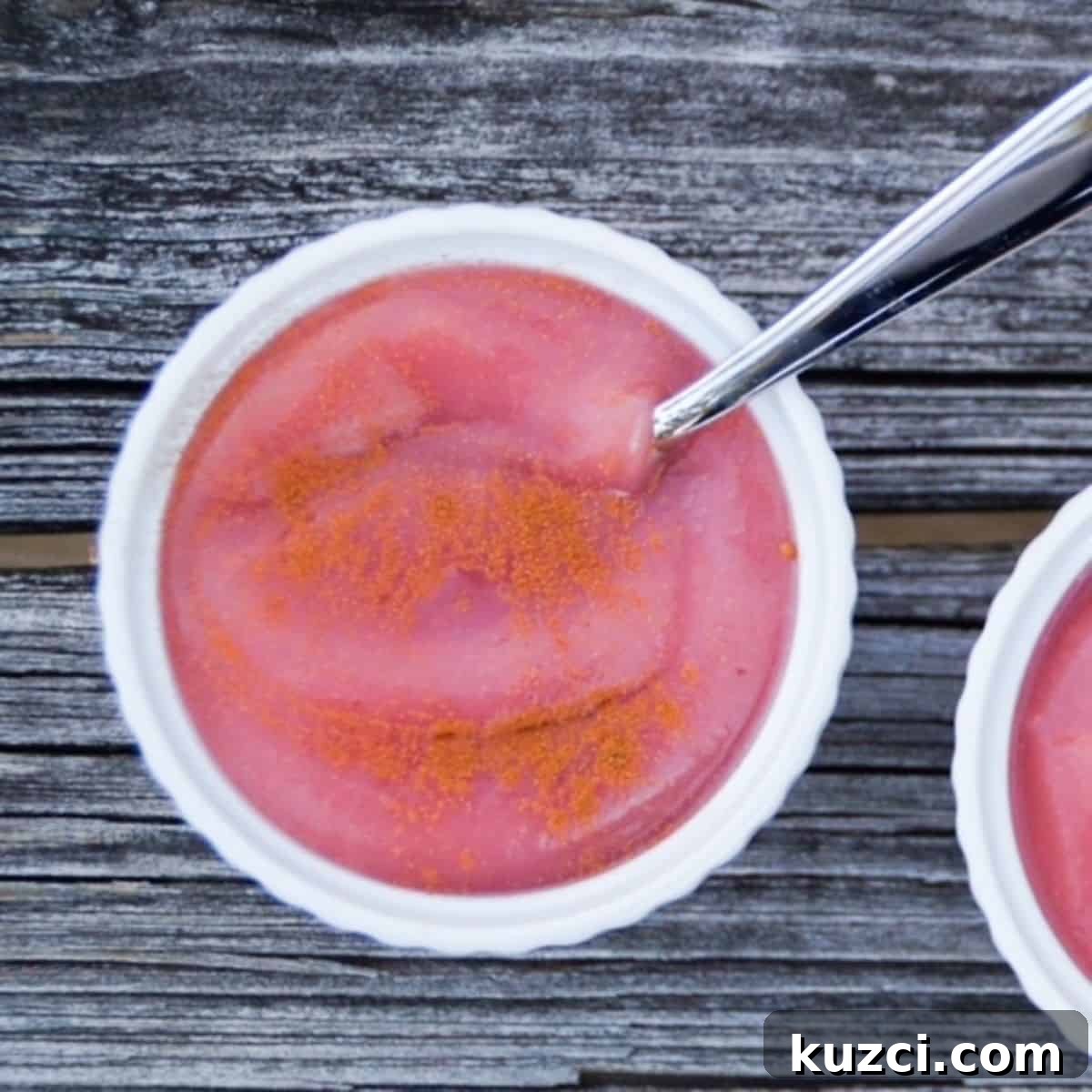
Make Homemade Unsweetened Applesauce with 2 ingredients in 30 minutes! You’ll love how simple and fresh this is—no need for the store-bought jars anymore.
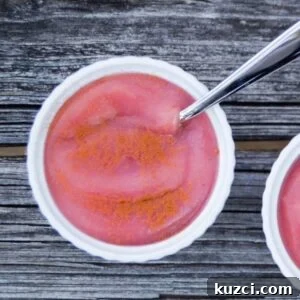
Use red apples for a naturally pink applesauce that’s as pretty as it is tasty.
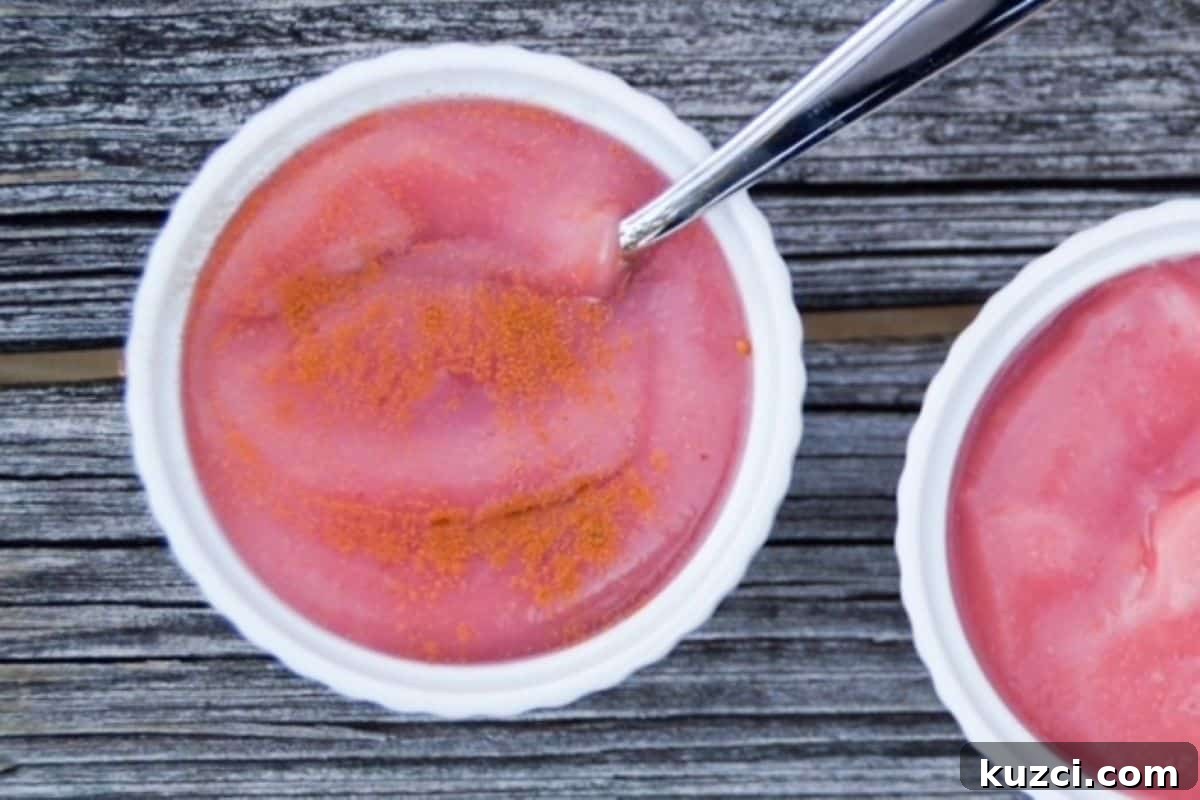
If you’ve seen my social channels, you probably know I joke about being a “wannabe homesteader.” Making applesauce at home is one of those small, satisfying projects that feels a little homestead-y—yet is totally achievable in an ordinary kitchen.
I’ve been making applesauce for years. I used to make chunky versions and spent more time peeling and mashing; now I prefer the smooth variety and use a blender or food mill to get a silky texture. Smooth applesauce is especially handy in baking and smooth-textured recipes.
Fresh apples and a bit of water are all you need. Below I’ll walk you through quick tips, the simple recipe, serving ideas, and storage suggestions so you can make and enjoy your own unsweetened applesauce.
[feast_advanced_jump_to]
Why You’ll Love This Recipe
- Totally simple. You cook apples in a little water and blend—no sugar, no additives. The flavor comes from the fruit itself.
- No added sugar. Choose sweeter apple varieties (Gala, Fuji, Golden Delicious, Jonagold) if you want a naturally sweet result. Tart apples like Granny Smith will yield a tangier sauce.
- Kid-friendly and versatile. Unsweetened applesauce is a healthy snack, pairs well with many meals, and works in baking to add moisture without extra sugar.
- Just two ingredients. Apples and water—nothing more is required. Simple, clean, and wholesome.
- Great for meal prep. This batch makes several cups. Once cooled, store in airtight containers or freeze portions for later use.
Dietitian Tips
All apples will work for applesauce, but varieties differ in sweetness, texture, and color. Mix varieties if you want balance — a sweet apple blended with a tart one creates complexity.
Because no sugar is added, the final sweetness depends on the apples you choose. Cortland, Jonagold, Fuji, Golden Delicious, and Gala are especially good choices for a naturally sweet result.
Note: Apples contain natural sugars (fructose), so “no added sugar” is accurate; calling real-fruit applesauce “sugar-free” is misleading.
Ingredient Notes
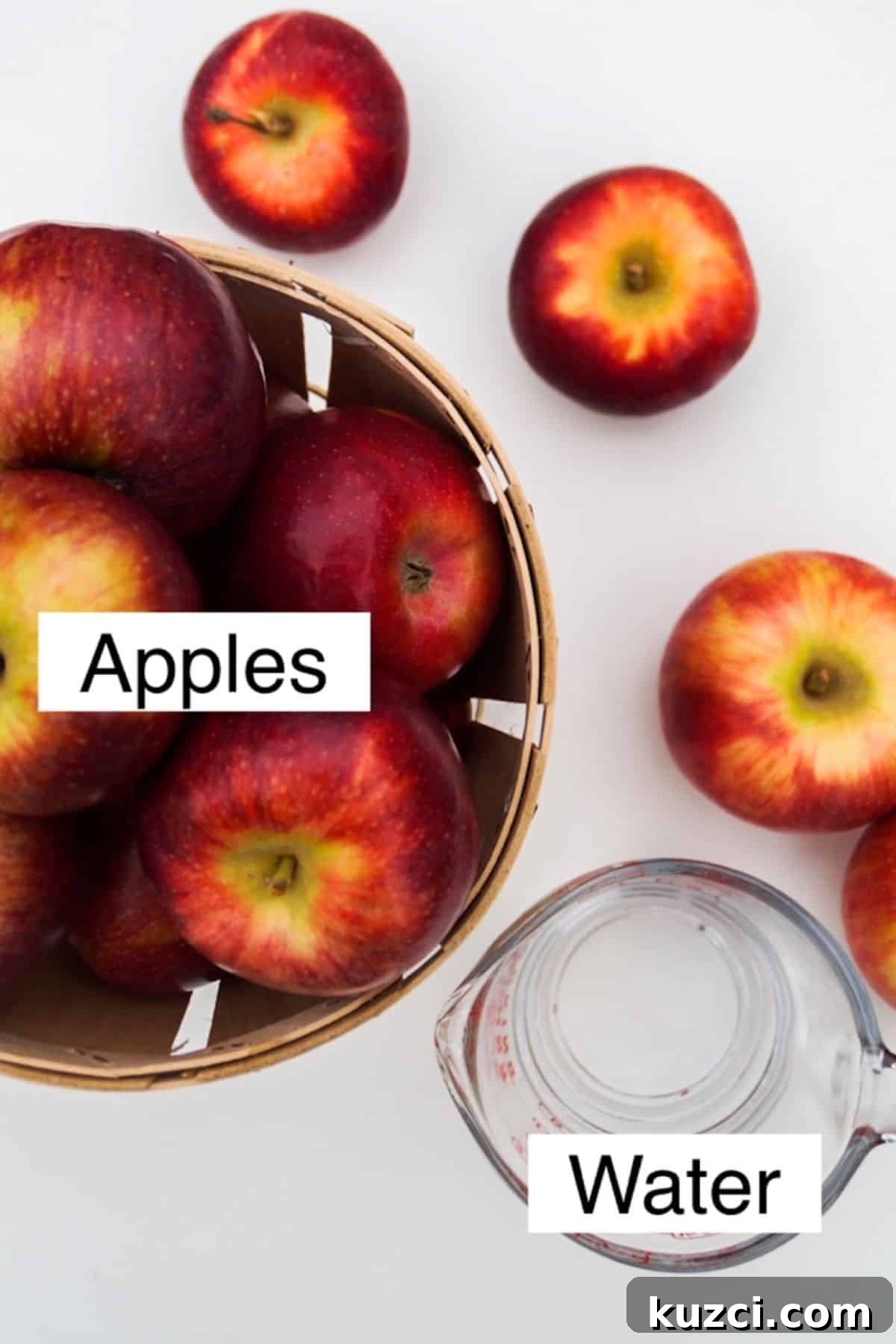
Apples — They are the star. For the best flavor, use good-quality apples and a mix of types if you want balance between sweet and tart. Apples provide fiber, vitamin C, pectin, and natural sweetness.
How to Make Unsweetened Applesauce
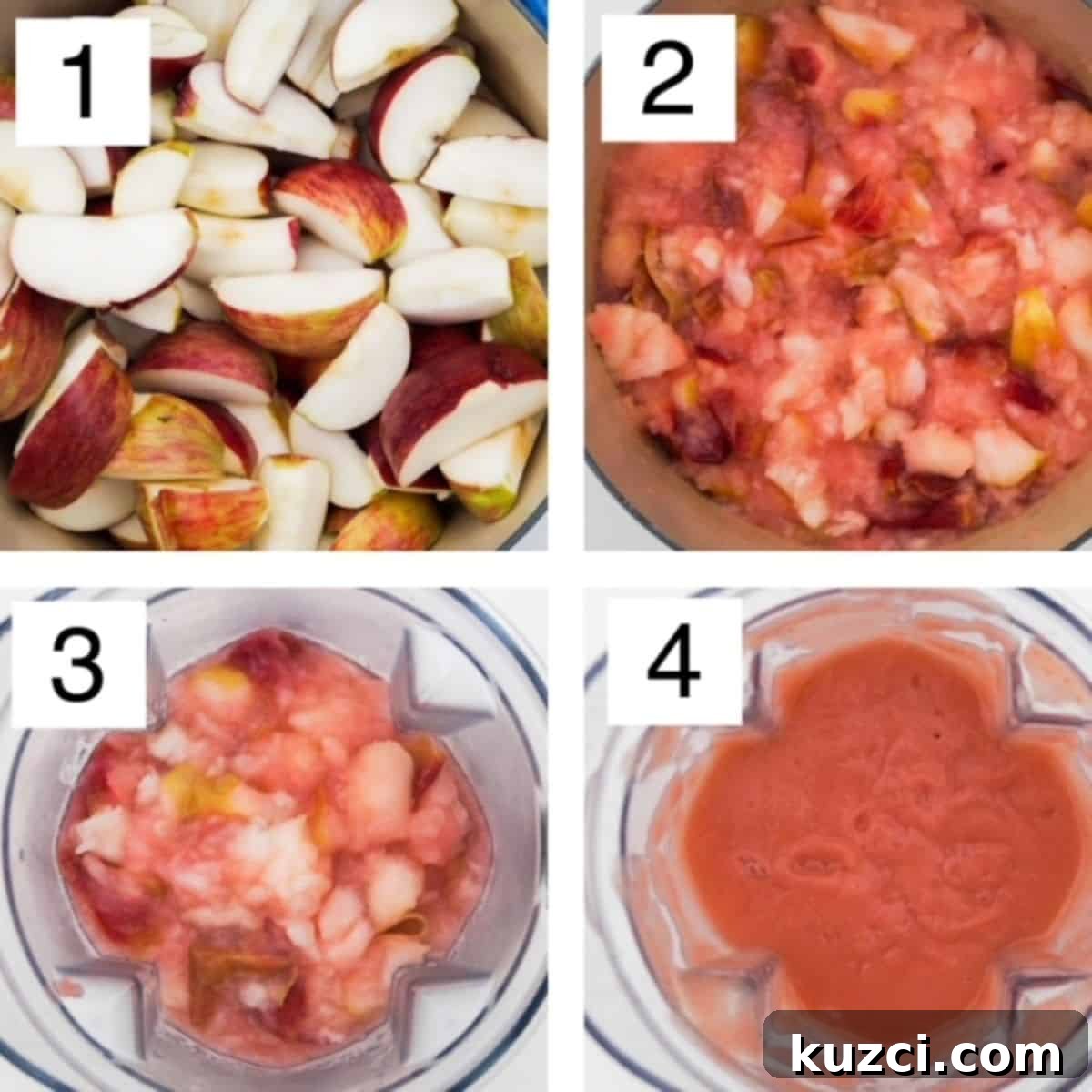
Overview: core and slice apples, simmer with a bit of water until soft, then blend or mill until smooth. Chill and store.
- Wash, core, and slice apples.
- Combine apple slices and water in a large pot or Dutch oven. Simmer over medium-high heat until apples are tender and starting to fall apart (about 15–20 minutes depending on apple type).
- Smooth the cooked apples using an immersion blender, a food mill, or a high-powered blender made for hot liquids. Blend in batches if needed and be careful with hot steam.
- Let the applesauce cool, then transfer to airtight containers. Refrigerate or freeze for longer storage.
How to Serve Applesauce
Applesauce is extremely flexible. It’s common to serve it with dinner in many homes, but it also makes a quick snack, breakfast topper, or baking ingredient.
Ideas:
- Top with granola for a sweet, crunchy breakfast or snack.
- Pack in lunches in leak-proof containers for an easy fruit serving.
- Serve as a side with pork, turkey burgers, roasted meats, or pasta dishes for a touch of fruitiness.
- Sprinkle with cinnamon for a simple dessert-style treat.
- Stir into plain yogurt to add natural sweetness and fruit.
- Use as a dip — some people enjoy applesauce with chips or crackers.
Helpful Tips
- Scrub apples well before slicing to remove any residue.
- An apple slicer saves time when coring and slicing many apples.
- The amount of water controls thickness: add more water to thin the sauce, but add it gradually so it doesn’t become too watery.
- For chunky applesauce, peel apples and mash with a potato masher when they are soft.
- Softer apples cook faster than firmer ones.
- Use red apples to produce pink-colored applesauce.
- If your blender is not rated for hot liquids, let the apple mixture cool before blending.
- Be cautious when transferring hot applesauce—use a heatproof measuring cup or ladle and work in batches.
- Store cooled applesauce in airtight containers in the refrigerator, or freeze portions for longer storage.
Questions You May Have
Cool the applesauce completely, then transfer to airtight containers and refrigerate for up to a week. For long-term storage, use freezer-safe containers or bags, leaving headspace for expansion. Label and date before freezing.
Applesauce pairs well with many mains—especially pork and poultry—works as a side to pasta or rice dishes, and is delicious mixed into yogurt or used in baking as a fat substitute.
Yes. Cool the applesauce completely, then pack into freezer-safe containers or bags. Remove excess air and freeze for best quality for several months.
Related Recipes
- Apple and Pear Crumble
- Air Fryer Apple Slices
- Roasted Peaches
- Homemade Apple Cranberry Sauce
More Side Dish Recipes
-
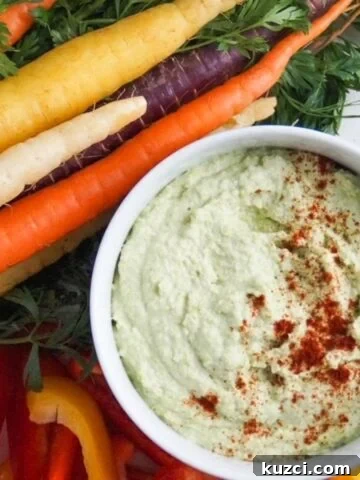
Easy Edamame Hummus
-
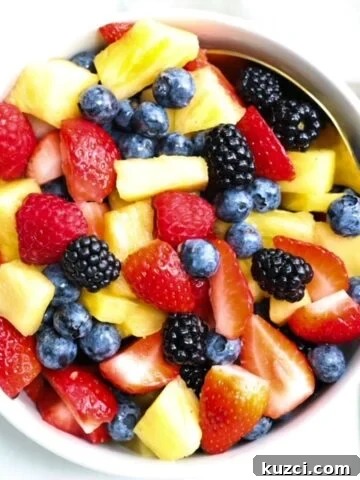
15-Minute Fresh Fruit Salad
-
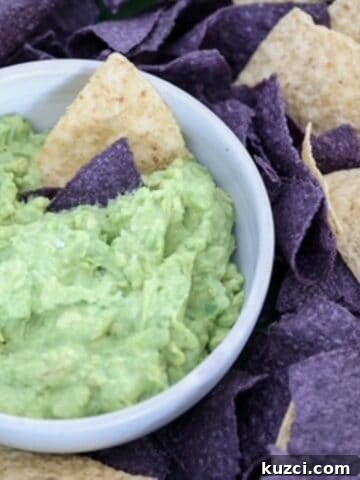
Simple Guacamole Recipe
-
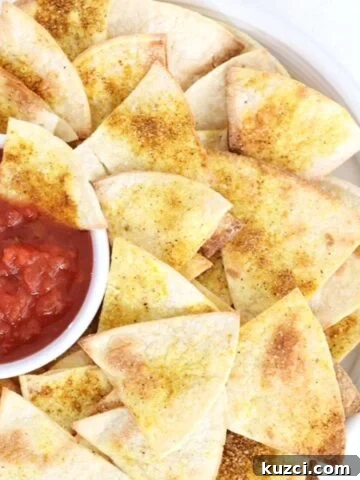
Easy Air Fryer Tortilla Chips
If you try this applesauce and enjoyed it, please leave a rating and comment below to share how it turned out!
📖 Recipe
Unsweetened Applesauce
Equipment
- High-powered blender or immersion blender (or a food mill)
- Large pot or Dutch oven
- Large glass measuring cup or heatproof ladle for transferring hot fruit
Ingredients
- 5.5 pounds apples, washed well
- 3/4 cup water (adjust as needed for thickness)
Instructions
- Core and slice the apples. Peeling is optional—keeping the skins adds color, fiber, and pectin.
- Place the apple slices and water into a large pot or Dutch oven.
- Cook over medium-high heat, stirring occasionally to prevent sticking, until the apples are very soft and breaking apart and the skins begin to separate, about 15–20 minutes depending on apple type.
- Remove the pot from heat. If using a blender that can handle hot liquids, carefully transfer the mixture in batches to the blender and blend until smooth. Alternatively, use an immersion blender or pass the cooked apples through a food mill.
- Blend gradually, working up to high speed, for about 30–60 seconds or until you reach the desired consistency.
- Allow the applesauce to cool to room temperature, then transfer to airtight containers. Refrigerate for short-term use or freeze portions for longer storage.
- Serve chilled or use in recipes that call for applesauce.
Notes
- The finished sweetness depends entirely on the apples you choose; try mixing sweet and tart varieties to suit your taste.
- Softer apples cook faster. If you prefer a thinner sauce, add water a little at a time while blending.
- Use a wooden spoon to stir while cooking to help apples cook evenly and to prevent burning on the bottom of the pot.
- If your blender is not built for hot liquids, allow the apple mixture to cool before blending and work in small batches.
- For the smoothest result, a high-speed blender designed for hot blending is best; an immersion blender or food mill also works well.