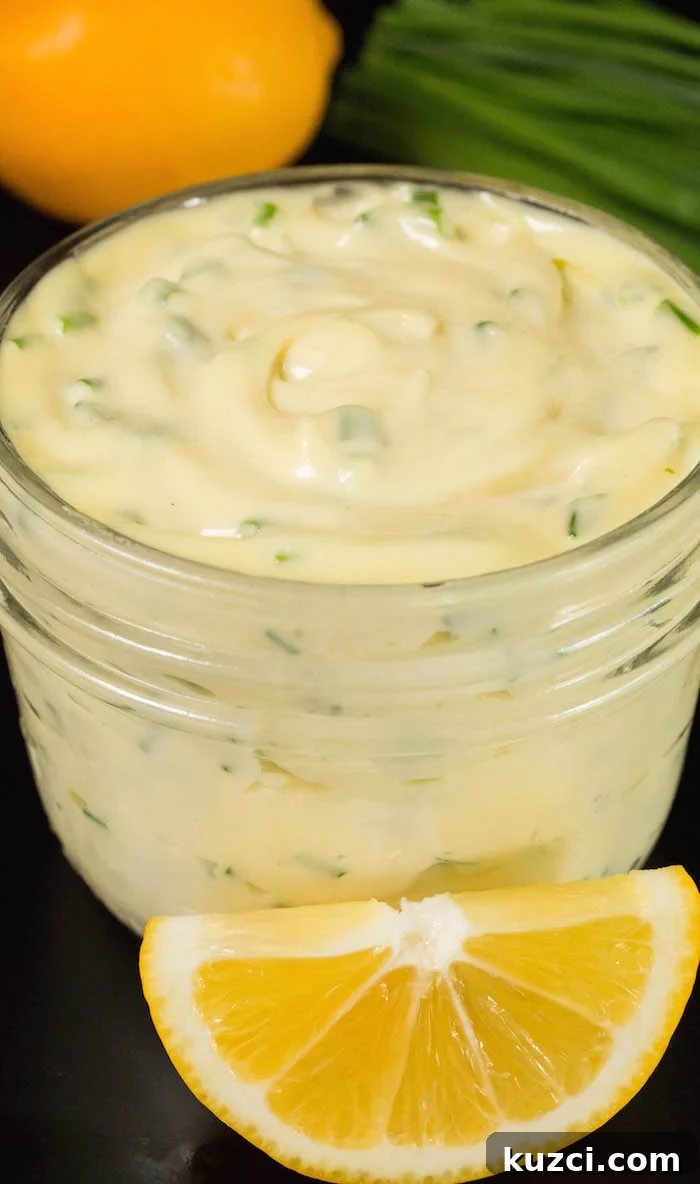
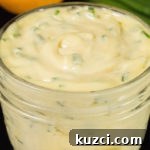
Lemon chive mayo is a bright, versatile condiment that complements seafood, fries, steamed vegetables, and sandwiches. It’s especially lovely with lobster rolls, crab cakes, and grilled fish.
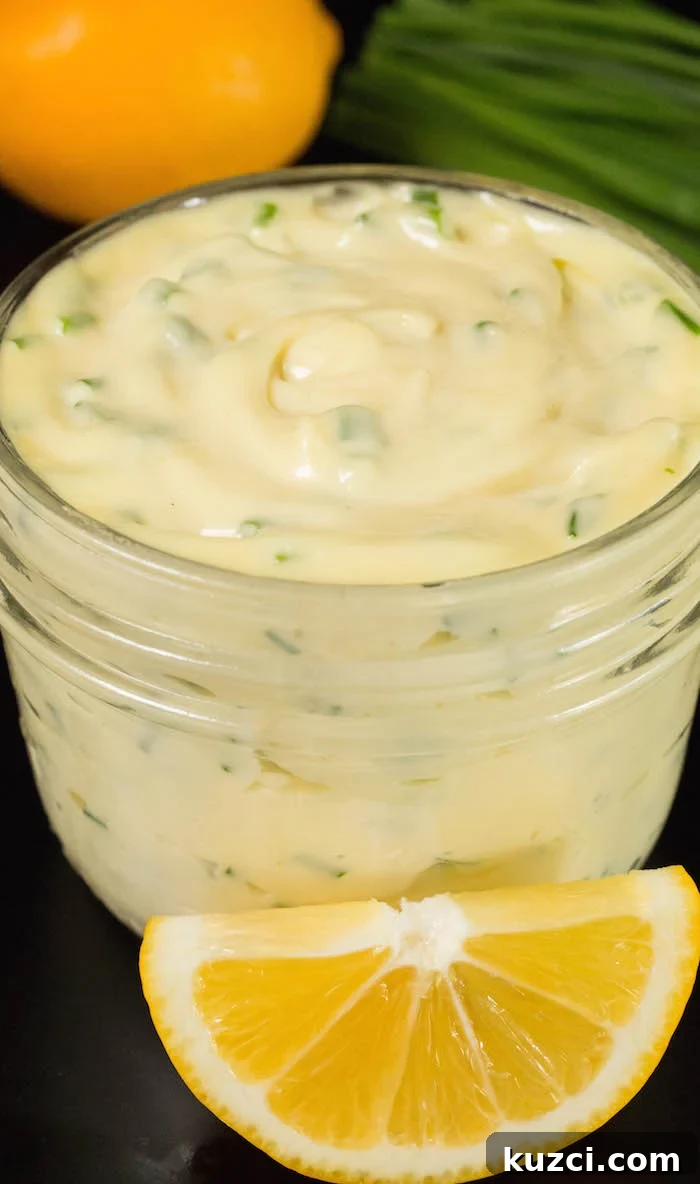
I use Meyer lemons a lot because I have a prolific tree, but any fresh lemon will work. This lemon chive mayonnaise takes classic mayo and lifts it with citrus brightness and the gentle oniony aroma of fresh chives. It’s a quick, homemade version of aioli that tastes far superior to most store-bought spreads and only takes minutes to prepare.
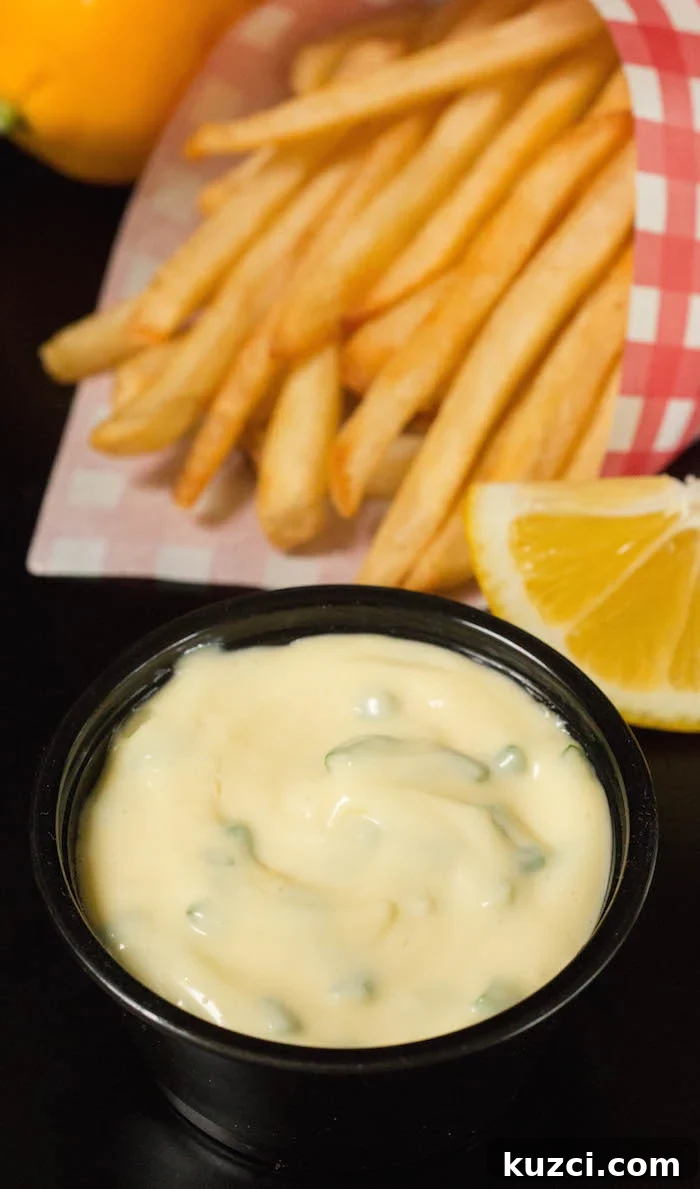
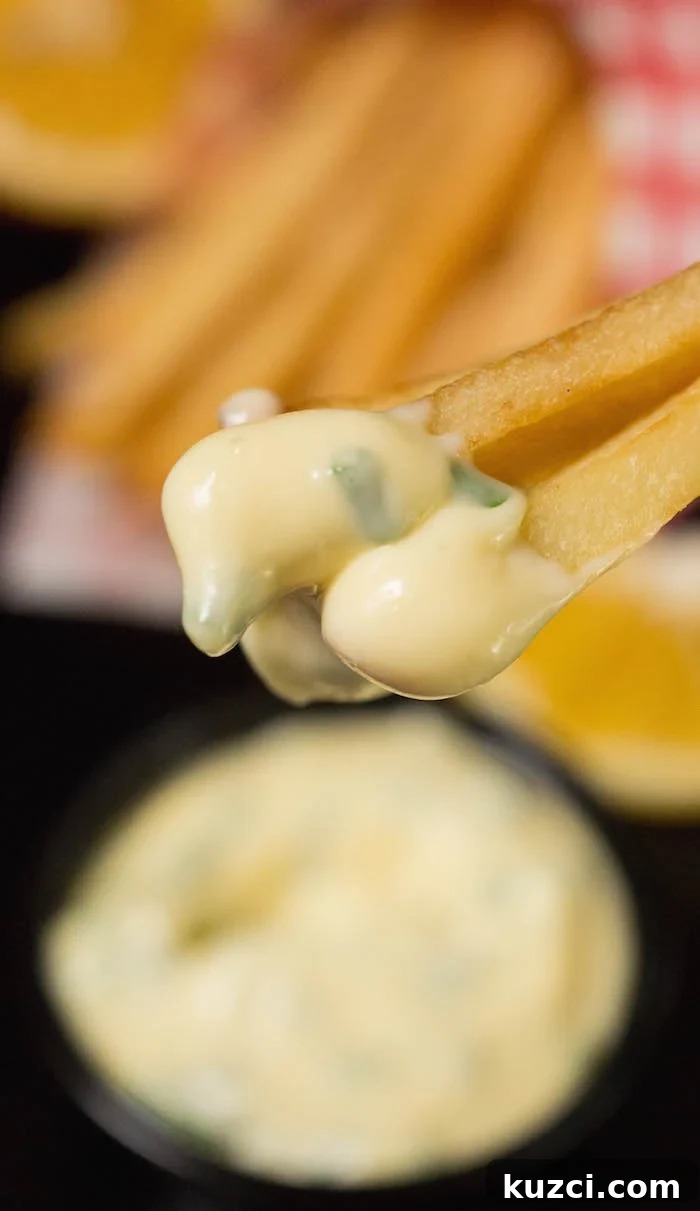
We first used this mayo as a dip for fries, then tried it in lobster rolls — and it was outstanding. It also pairs beautifully with salmon, crab cakes, po’ boys, roasted vegetables, and as a tangy spread on sandwiches. Because the lemon and chives are fresh, the flavor stays lively without overpowering the dish.
Ingredients
- Fresh lemon juice – For the brightest flavor, squeeze lemons just before making the mayo. Meyer or standard lemons both work.
- Egg – Mayo is emulsified egg and oil. Use a fresh egg at room temperature; for safety, consider pasteurized eggs if preferred.
- Oil – Neutral oils like vegetable, sunflower, or avocado work best. Light olive oil is acceptable; avoid strong extra-virgin olive oil which can dominate the flavor.
- Dijon mustard – A small amount helps stabilize the emulsion and adds subtle depth.
- Chives – Fresh chives sliced thin bring a mild onion note that complements the lemon.
- Salt – Just a pinch to taste; adjust as needed after emulsifying.
Homemade mayonnaise sounds fussy but is straightforward. The key is adding the oil slowly so it emulsifies with the egg and lemon. You can make this by hand with a whisk, use an immersion blender, or a food processor for a fast, dependable result.
Benefits of making your own mayo include a silkier texture and fresher flavor with the ability to control oil type, salt, and acidity. It’s also easy to customize — add herbs, garlic, or a touch of smoked paprika for different profiles.
Tools You’ll Need
- Citrus squeezer or reamer – To extract fresh lemon juice cleanly.
- Knife and cutting board – For slicing chives finely.
- Food processor, immersion blender, or a bowl and whisk – Any of these makes the emulsion process quick and easy. A food processor or immersion blender is the fastest and most consistent option.
More Lemon Recipe Ideas
- Meyer lemon and blueberry parfait (yogurt or custard with fresh berries)
- Dehydrated lemon slices for garnishes and snacks
- Meyer lemon cocktails like a lemon margarita or a lemon mule
- Meyer lemon curd for tarts, toast, or layered desserts
Meyer Lemon Chive Mayo
Ingredients
- 1 large egg, room temperature
- 2 tablespoons fresh lemon juice (about 1 lemon)
- 1 teaspoon Dijon mustard
- Pinch of salt, to taste
- 3/4 cup neutral oil (vegetable, sunflower, or avocado oil)
- 2 teaspoons fresh chives, sliced very thin
Instructions
- Add the egg, lemon juice, Dijon mustard, and a pinch of salt to your food processor, immersion blender cup, or a mixing bowl. Blend or whisk briefly until the mixture is smooth and slightly creamy, about 10–20 seconds with a processor.
- With the machine running or while whisking vigorously, pour the oil in a very slow, steady stream. Start with drops, then a thin steady stream as the emulsion forms. Continue until all the oil is incorporated and the mayonnaise is thick and glossy. This slow addition of oil is the crucial step for a stable mayo.
- Fold in the thinly sliced chives with a spatula. Taste and adjust seasoning with salt and a little more lemon if desired. Transfer to an airtight container and refrigerate.
- Store chilled for up to one week. If you used a fresh raw egg and have concerns, use pasteurized eggs or consume within a shorter period.
Notes
This recipe yields roughly sixteen 1-tablespoon servings. For a thicker mayo, use a little less oil; for a lighter texture, increase lemon juice slightly.
Variations: Add a minced garlic clove for garlic aioli, stir in a small pinch of smoked paprika for a smoky twist, or swap chives for finely chopped dill or tarragon to suit different dishes.
Nutrition
Per 1 tablespoon serving: approximately 95 kcal, 11 g fat, 0.5 g protein, 12 mg sodium. Values are estimates and will vary based on exact ingredients used.