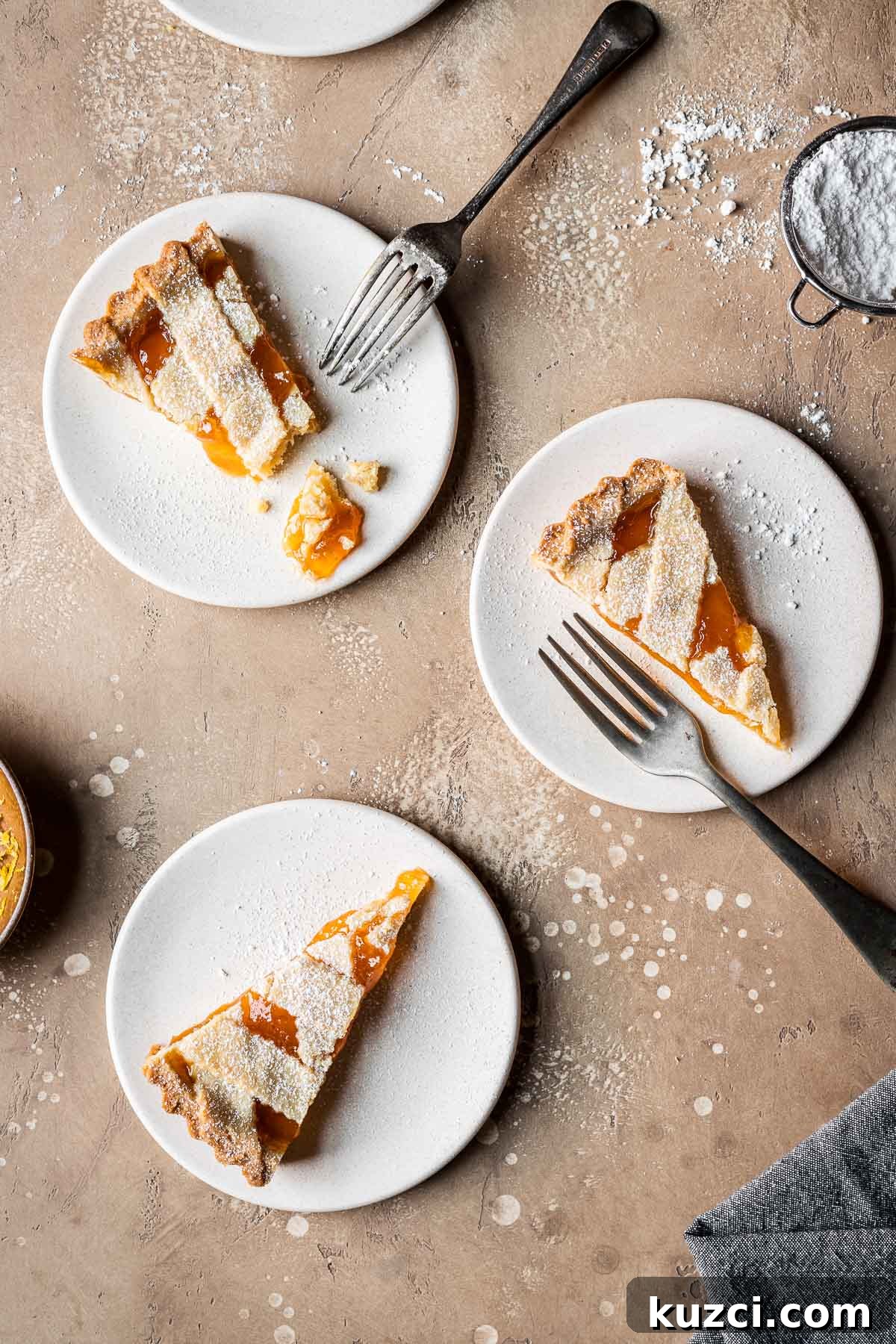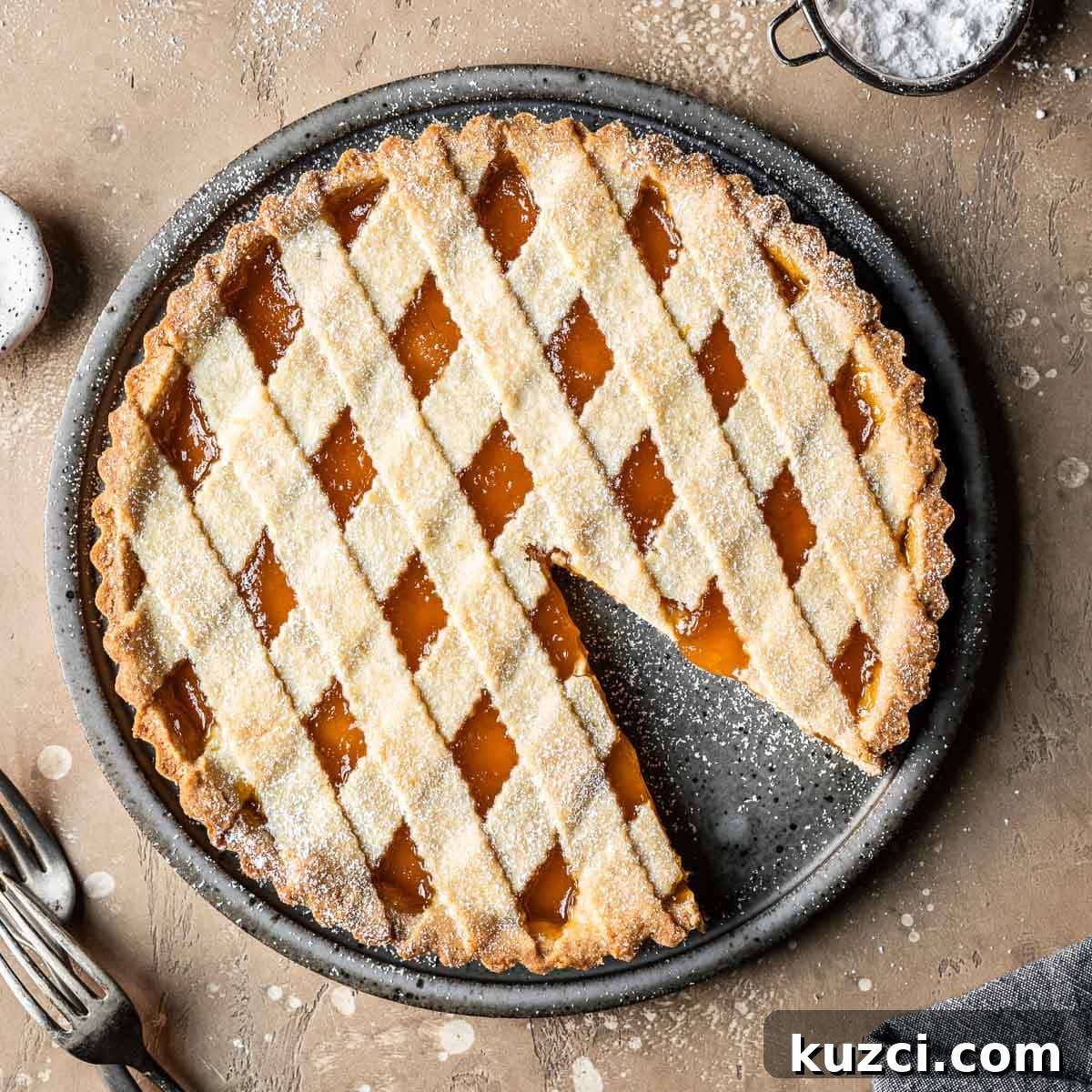
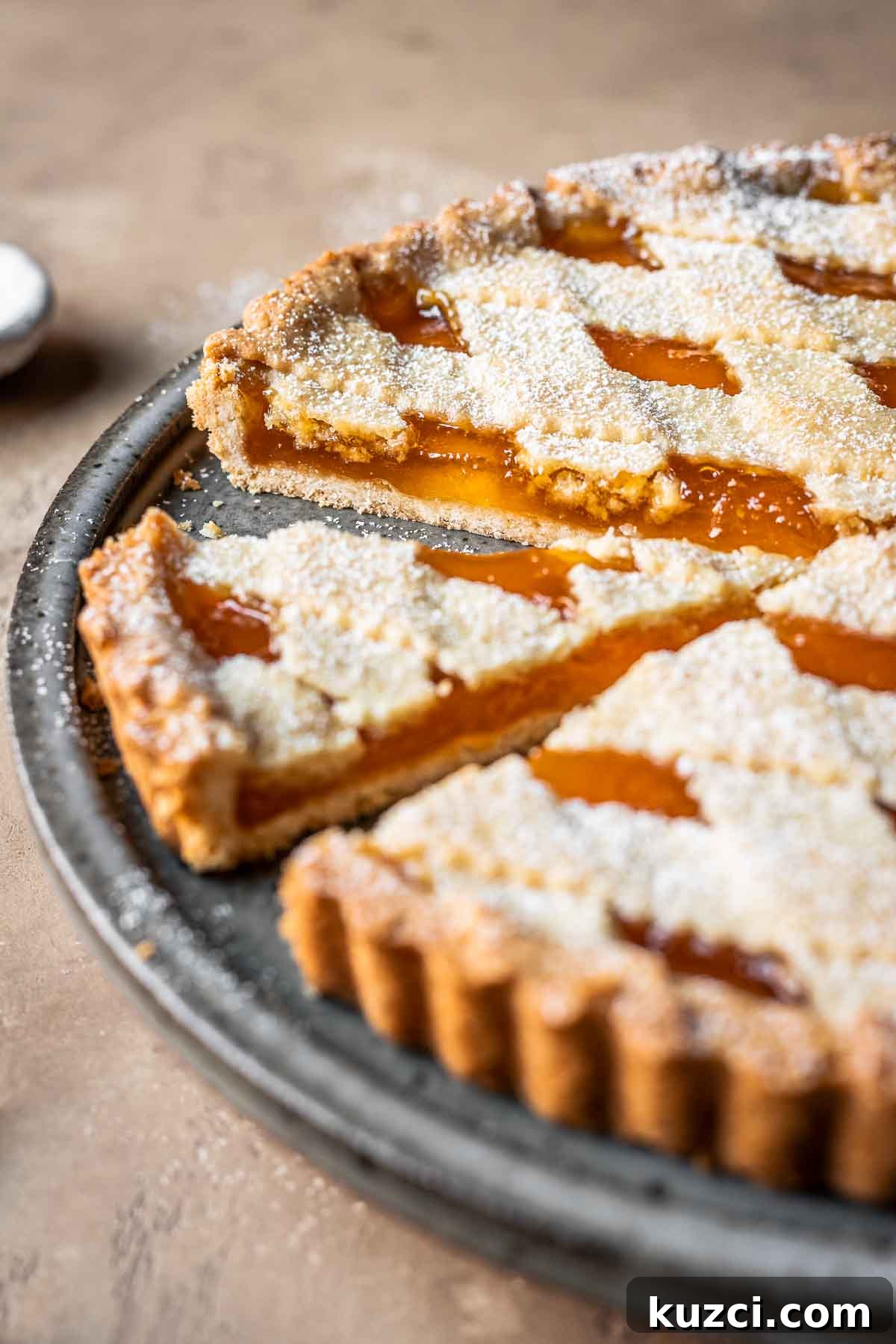
This crostata di marmellata (Italian jam tart) features a tender, buttery shortcrust and a sweet, flavorful apricot jam filling. For convenience this version uses a high-quality store-bought jam, though homemade preserves work wonderfully. The pastry is an easy-to-handle pasta frolla that forms a simple lattice top — no intricate weaving required.
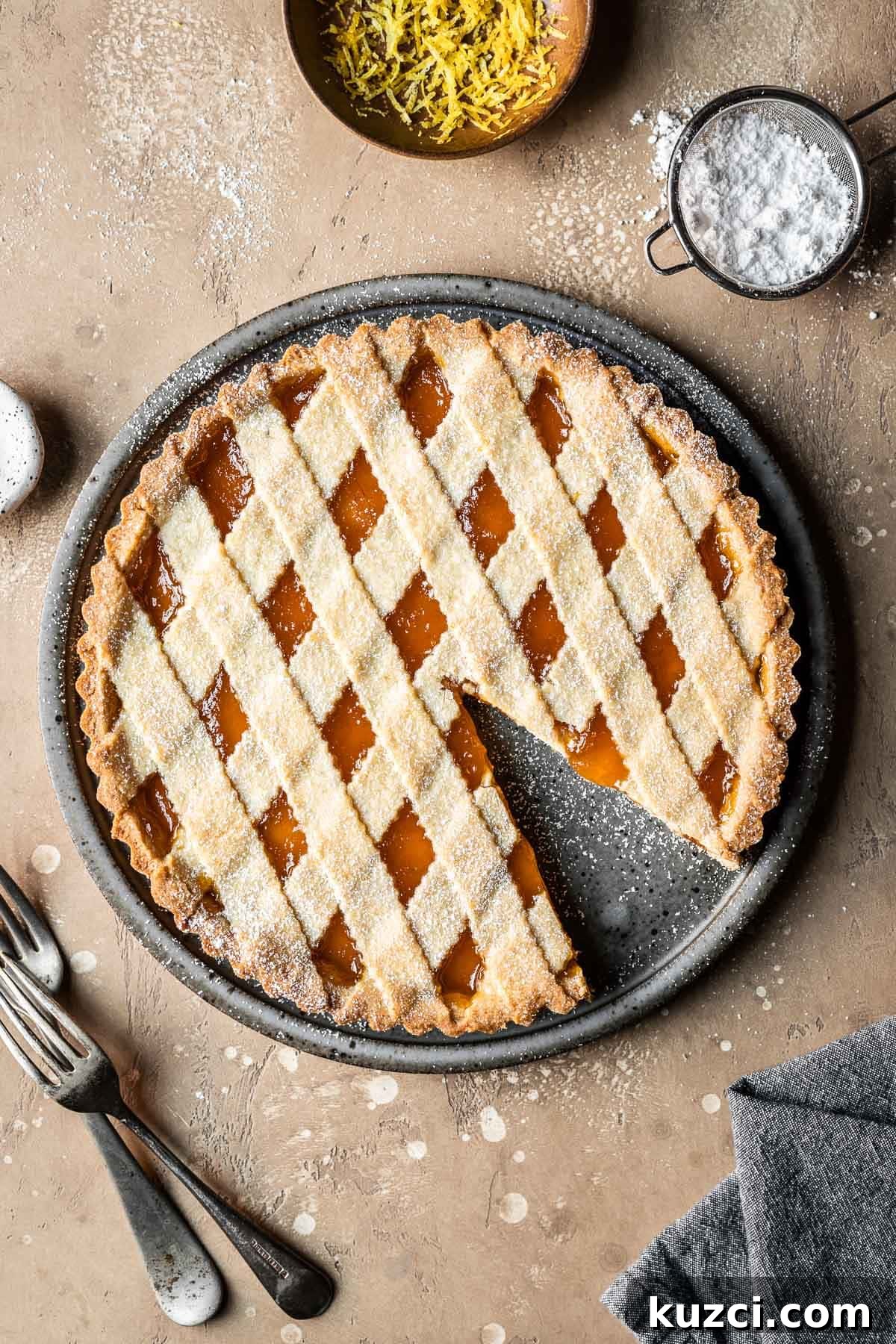
Crostata di marmellata is a rustic, widely loved Italian dessert. The dough used here is pasta frolla, a sweet shortcrust enriched with butter and made slightly lighter by a small amount of baking powder. This dough is versatile and forgiving: it rolls easily, holds its shape, and bakes to a tender but sturdy crust that pairs perfectly with jam fillings.
Traditional crostate often showcase the season’s fruit: apricot, peach, cherry, plum or mixed-fruit preserves. Because this tart is excellent year-round, a well-made store-bought jam is an easy, reliable choice. When buying jam, look for one with a short ingredient list (fruit, sugar, pectin, lemon or citric acid) and moderate sweetness.
If you need a pretty, no-fuss dessert for coffee, brunch or a dinner party, this crostata is an ideal option: visually appealing, simple to assemble, and delicious.
Ingredients
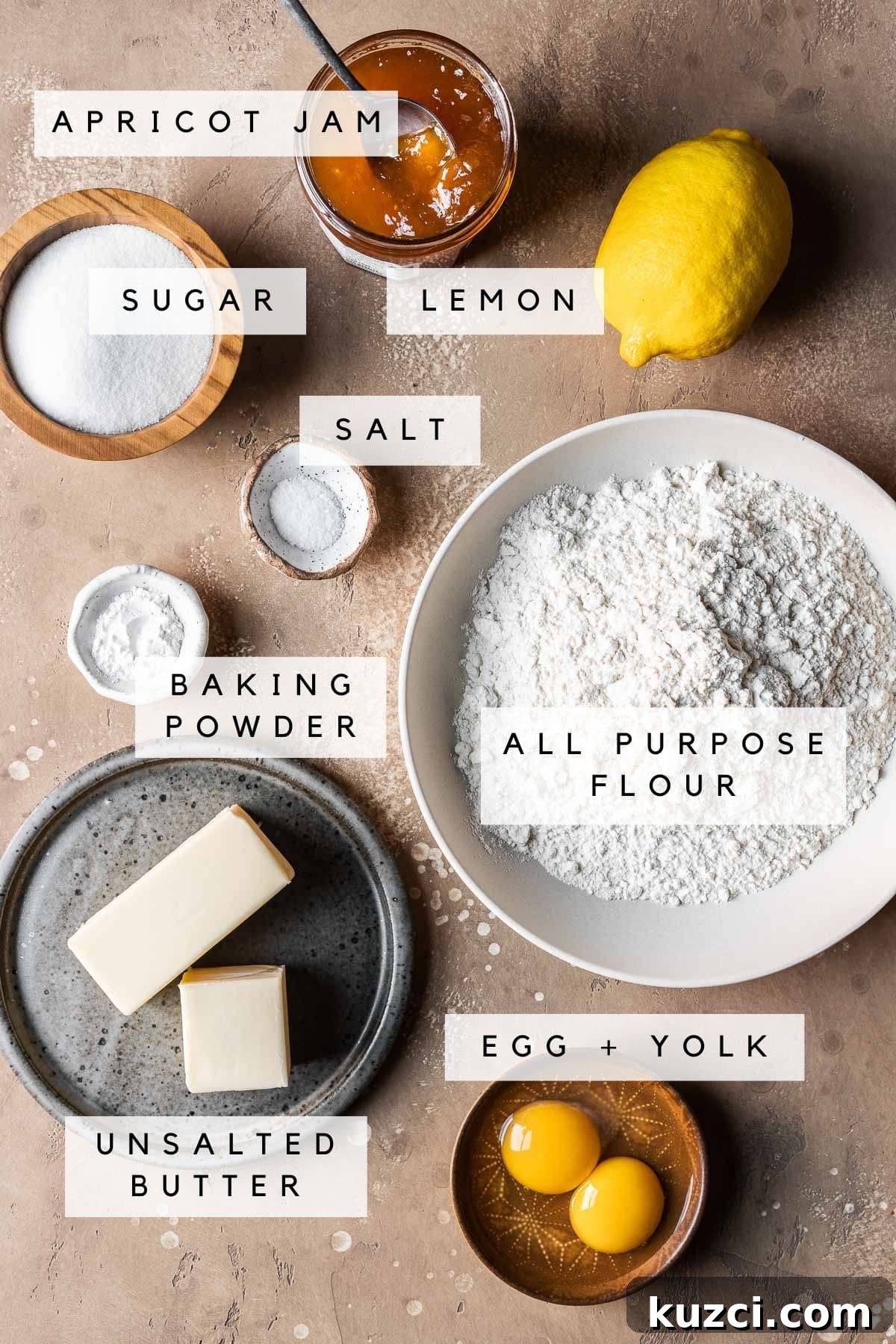
*Quantities shown below. Adjust as needed.
- 170 grams unsalted butter, room temperature
- 100 grams granulated sugar
- Lemon zest, from 1 lemon
- 300 grams all-purpose flour
- ½ teaspoon kosher salt
- 1 teaspoon baking powder
- 1 large egg, room temperature
- 1 large egg yolk, room temperature
- 370 grams apricot jam (about 13 ounces; you can use 340–450 g / 12–16 oz)
- 30 grams powdered sugar, for dusting (optional)
Instructions
All you need is a simple pasta frolla dough and a jar of jam. Follow these steps for an easy crostata with a neat lattice top.
Pasta frolla dough
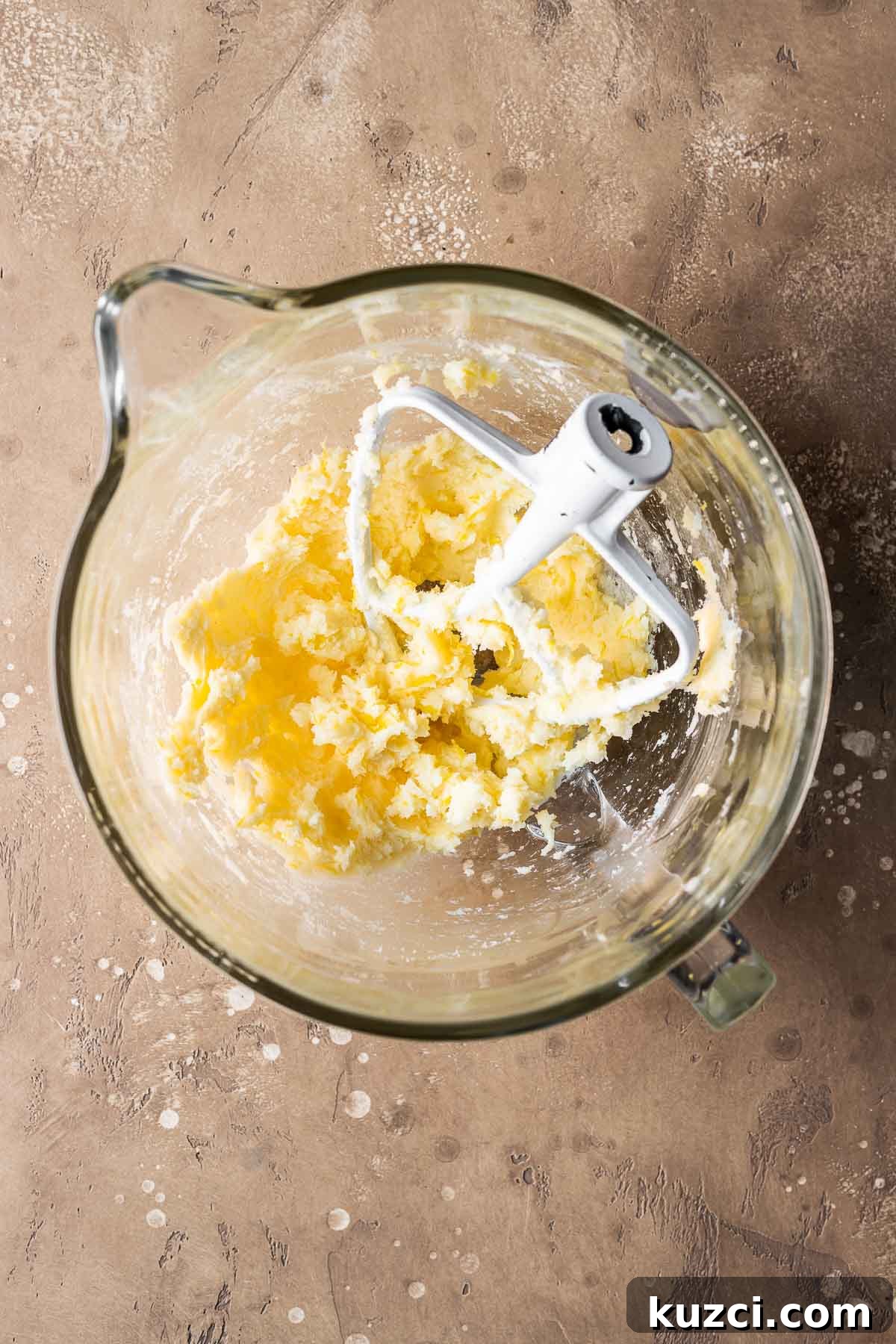
- In the bowl of a stand mixer fitted with the paddle (or with a hand mixer), beat the butter and sugar on medium speed until combined. Add the lemon zest and mix briefly.
- Add the flour, salt and baking powder. Mix on medium-low until the mixture resembles fine sand and no large lumps of butter remain. Scrape the bowl as needed.
- Add the whole egg and the egg yolk. Mix on low just until the dough comes together—do not overmix.
- Gather the dough into a rectangle, then divide it into two pieces: one piece about 2/3 of the dough for the tart base and the other about 1/3 for the lattice. Flatten both pieces into discs, wrap or cover, and chill.
Tart base
- Roll the larger dough disc between two sheets of parchment to about 1/8″ (3 mm) thickness. Make the circle an inch wider than your tart pan.
- Remove the top parchment, flip the dough onto the tart pan, peel off the remaining parchment, and gently press the dough into the pan. Patch any cracks with scraps.
- Trim excess dough using a knife held parallel to your work surface. Refrigerate the tart shell for at least 30 minutes.
Lattice strips
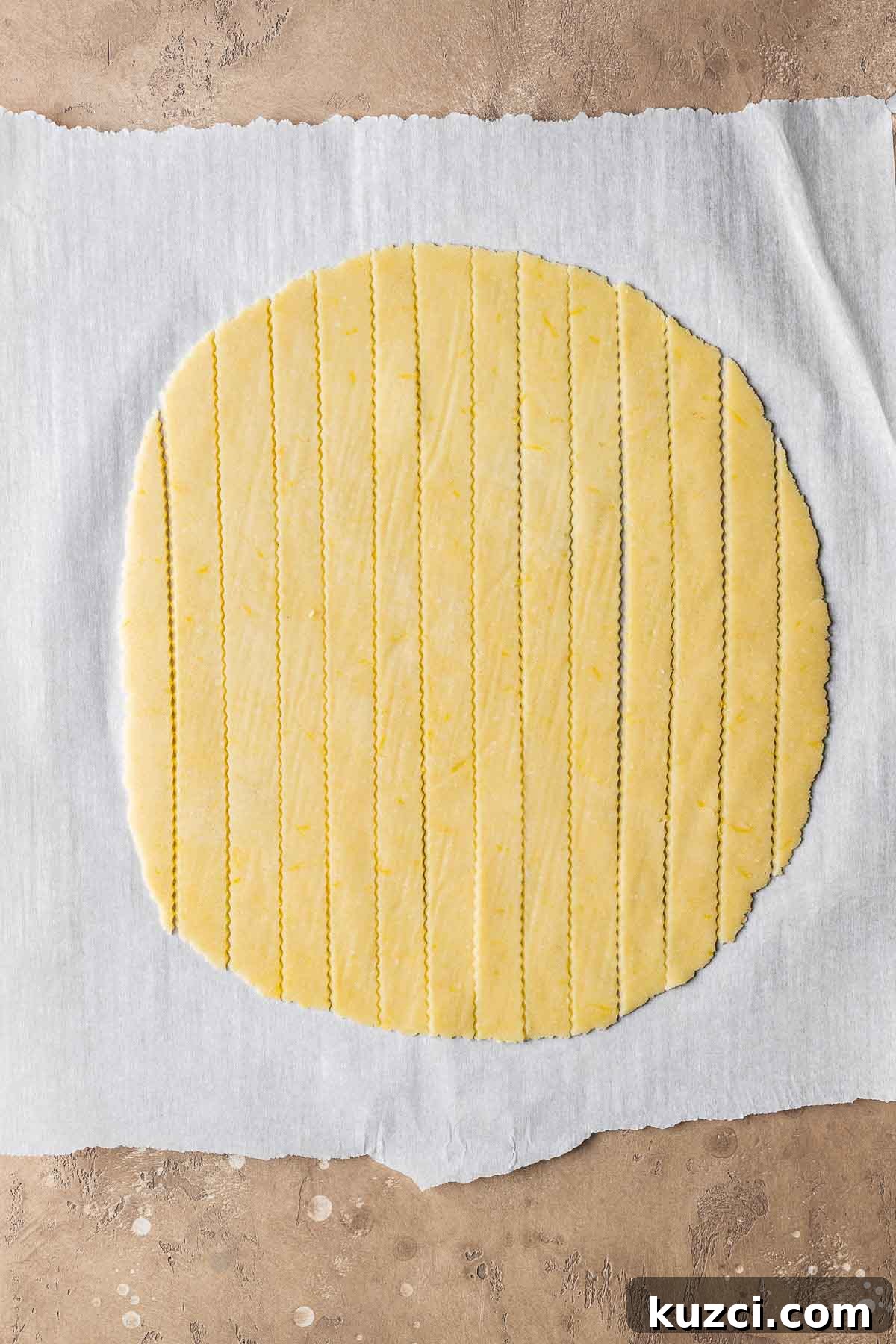
- Roll the remaining 1/3 of dough between parchment to 1/8″ thick. Chill on a sheet pan.
- After chilling, cut the dough into long strips about ¾” (2 cm) wide. Chill the strips until ready to use; cold dough is easier to handle.
Assemble and bake
- Preheat the oven to 350°F (177°C).
- Spoon the apricot jam into the chilled tart shell and smooth it so it reaches near the edge but doesn’t overflow.
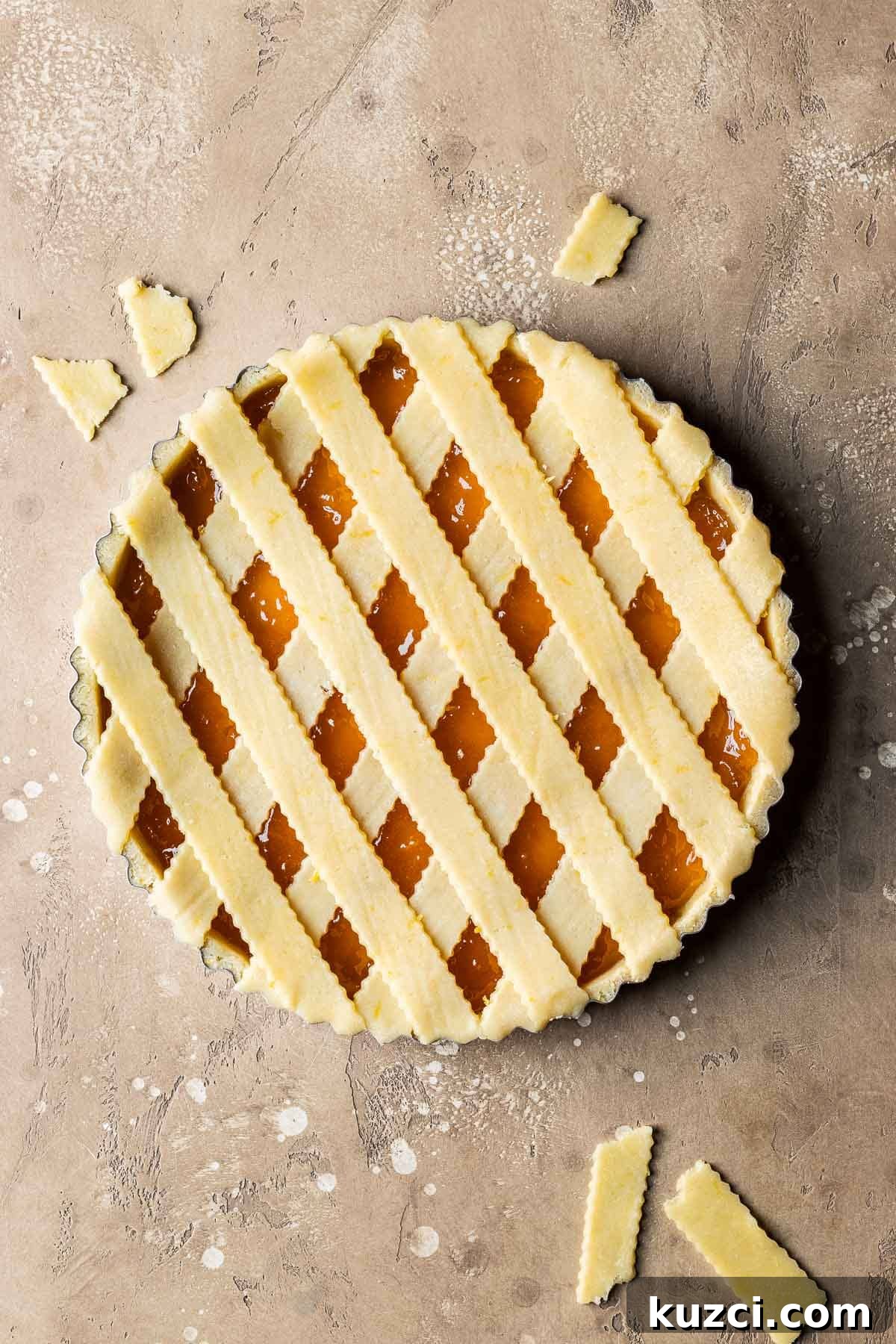
- Arrange half of the lattice strips across the tart in one direction, spacing them about ¾” apart and pressing the ends to seal. Add the remaining strips at an angle to form diamond-shaped openings. Trim overhangs and gently press the edges to seal.
- Place the assembled tart in the freezer or refrigerator for 10 minutes to ensure the dough is cold.
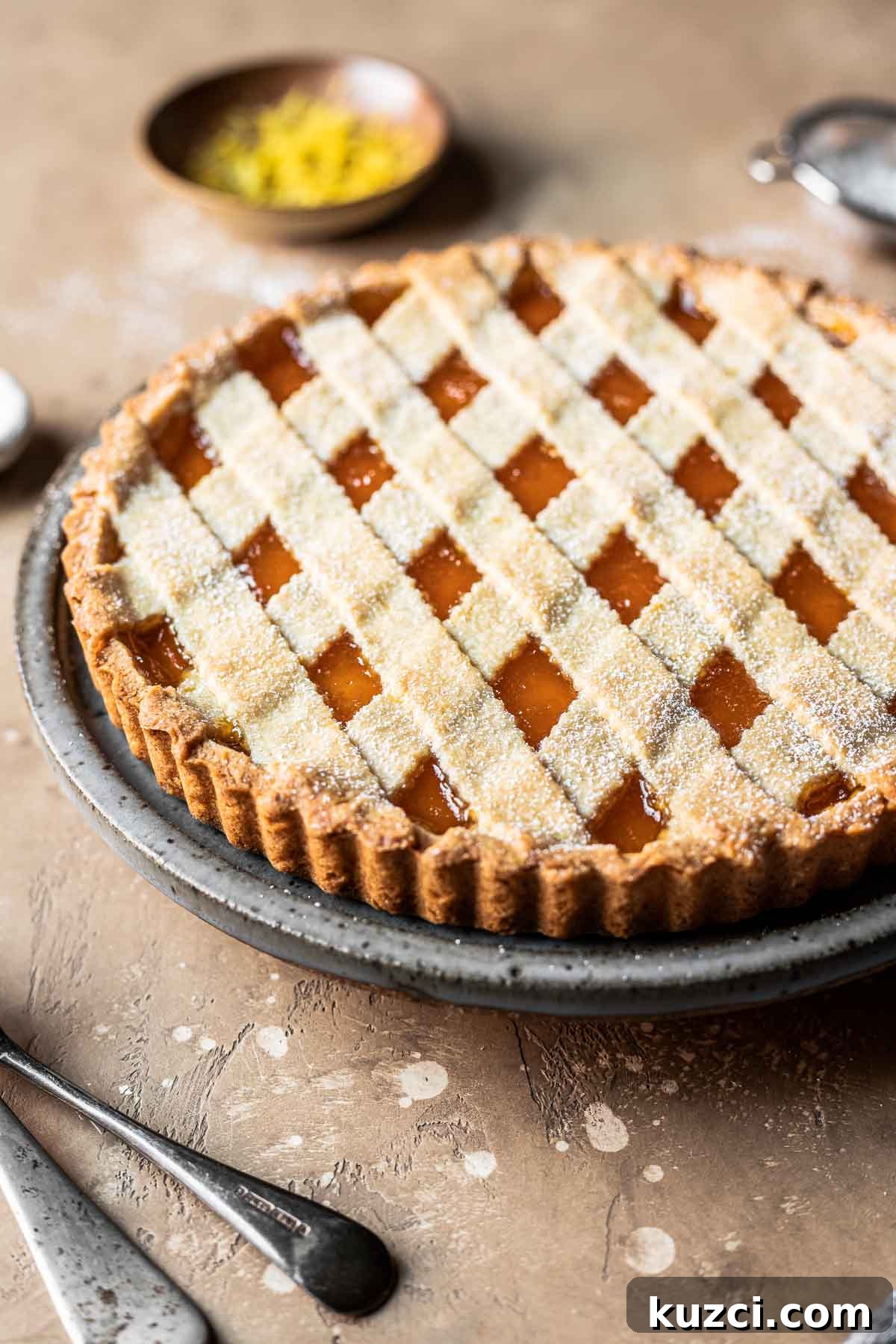
- Place the tart on a baking sheet and bake 32–34 minutes, until the crust and lattice are golden and the jam is bubbling. Cool completely on a wire rack.
- For clean slices, chill the tart in the refrigerator for at least 1 hour before serving. Dust with powdered sugar at the last minute, if desired.
Variations
- Different jams: Apricot is classic, but raspberry, blackberry, fig or plum all work well. Use what you enjoy.
- Less sweet: Replace one-third of the apricot jam with orange marmalade to reduce sweetness and add complexity.
- Citrus pairing: Match the dough zest to the jam: lemon with berries, orange with stone fruits, or lime with tropical jams.
- Spiced crust: Add a pinch of cinnamon, ginger, cardamom or nutmeg to the dough to complement the jam flavor.
Equipment
Helpful tools include a 9.5-inch (24 cm) round tart pan, a rolling pin and parchment paper. A pastry wheel or knife makes cutting strips easier. A baking sheet under the tart catches any drips and helps the bottom bake evenly.
Storage
The tart slices most cleanly when chilled. Keep the crostata wrapped in the refrigerator for up to 5 days. To freeze, wrap tightly and place in an airtight container for up to 3 months. Thaw in the refrigerator and remove plastic before serving to avoid condensation on the crust.
Frequently asked questions
How much jam is used? This recipe uses about 370 grams (13 ounces) of jam. You can use anywhere from 340–450 grams (12–16 ounces) depending on how full you like the tart.
More tart recipes
- Banoffee tart (caramel and banana)
- Chocolate cookie crust tarts
- Pâte sucrée (classic sweet tart dough)
- Chocolate tart dough
If you try this recipe, please consider leaving a comment and rating to help other bakers. Your tweaks and tips are always welcome!